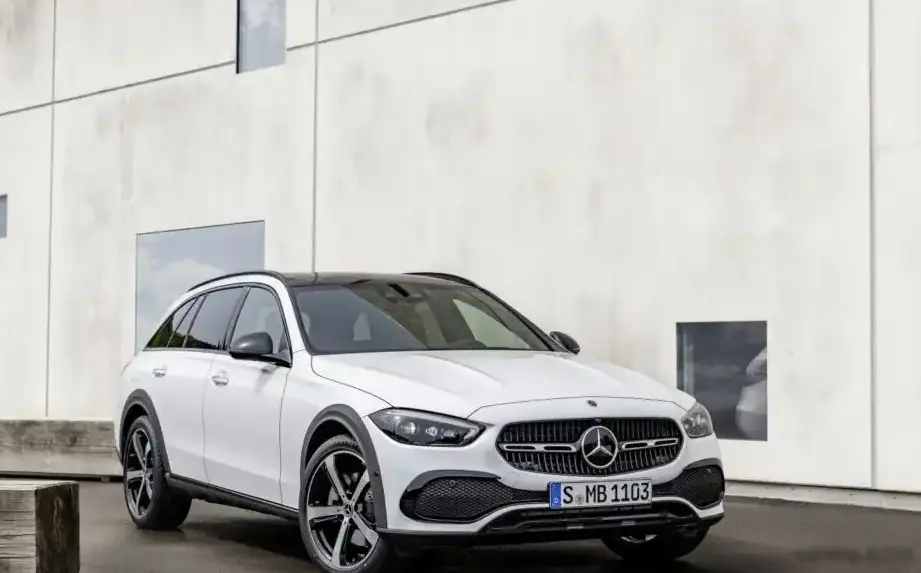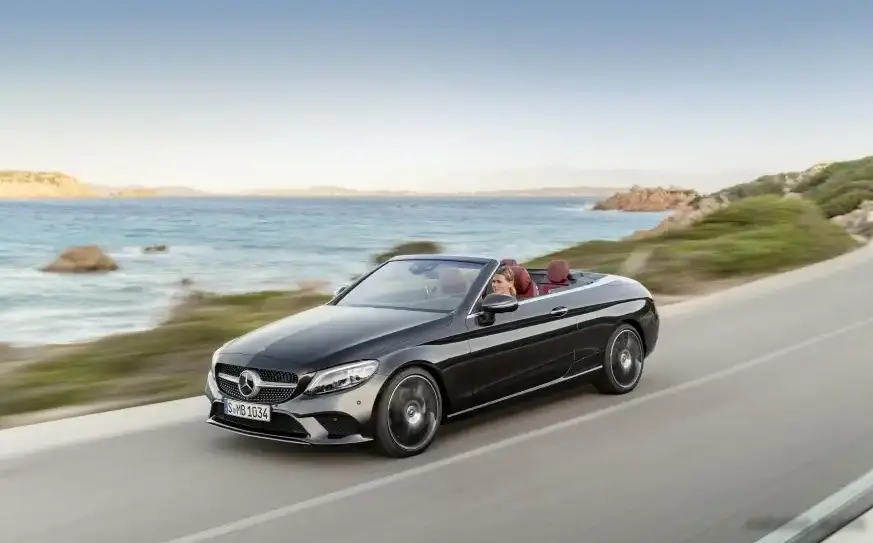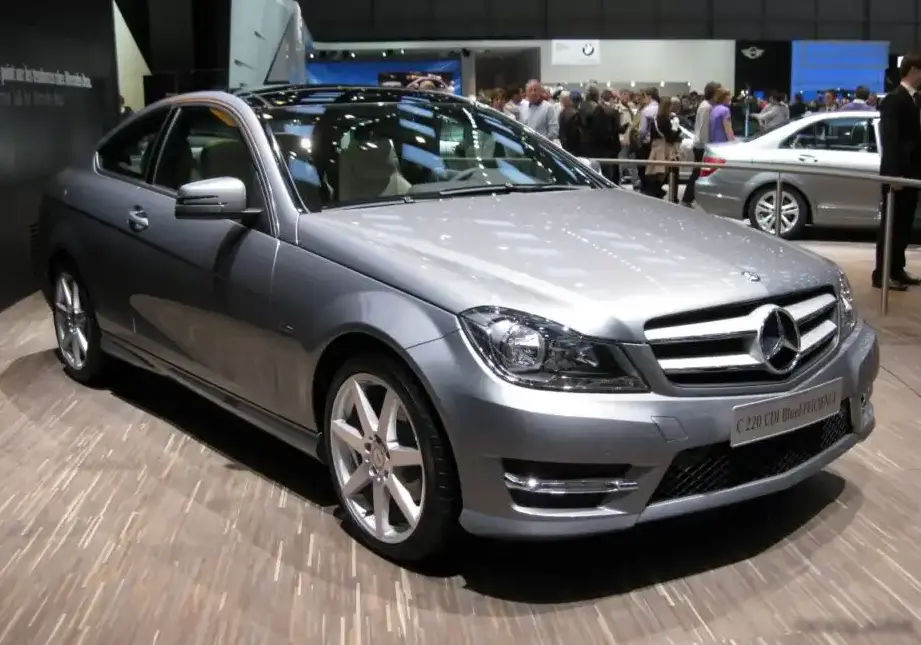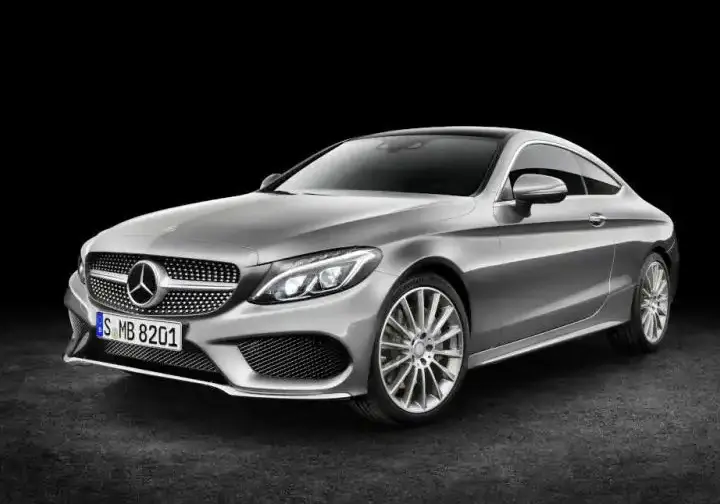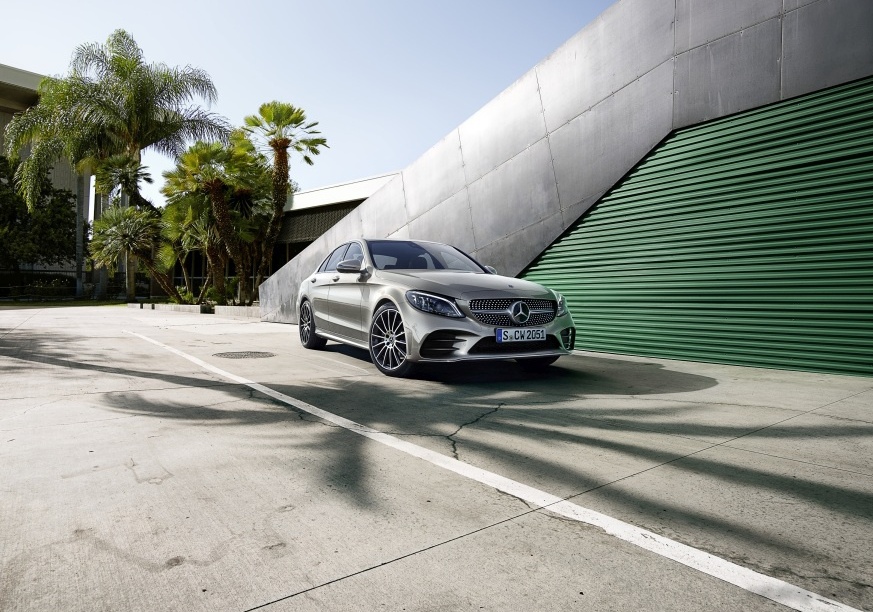
The Mercedes-Benz C 200d, part of the W205 C-Class facelift introduced in 2018, represented a significant offering in the compact executive car segment. Produced through 2021, this variant focused on fuel efficiency and refined driving experience, appealing to buyers prioritizing economy without sacrificing the Mercedes-Benz brand prestige. The C 200d occupied a middle ground within the W205 lineup, positioned above the base C 180d but below the more powerful C 220d and C 300 models. It was primarily marketed in Europe and other regions where diesel engines remained popular, offering a balance between performance and running costs.
Technical Specifications
| Brand | Mercedes-Benz |
| Model | C-class |
| Generation | C-class (W205, facelift 2018) |
| Type (Engine) | C 200d (160 Hp) |
| Start of production | 2018 |
| End of production | 2021 |
| Powertrain Architecture | Internal Combustion engine |
| Body type | Sedan |
| Seats | 5 |
| Doors | 4 |
| Fuel consumption at Low speed (WLTP) | 4.7 l/100 km (50 US mpg, 60.1 UK mpg, 21.3 km/l) |
| Fuel consumption at very high speed (WLTP) | 5.7 l/100 km (41.3 US mpg, 49.6 UK mpg, 17.5 km/l) |
| CO2 emissions (WLTP) | 124-151 g/km |
| Fuel consumption (economy) – urban | 5.0-5.5 l/100 km (47 – 42.8 US mpg, 56.5 – 51.4 UK mpg, 20 – 18.2 km/l) |
| Fuel consumption (economy) – extra urban | 3.6-3.9 l/100 km (65.3 – 60.3 US mpg, 78.5 – 72.4 UK mpg, 27.8 – 25.6 km/l) |
| Fuel consumption (economy) – combined | 4.1-4.5 l/100 km (57.4 – 52.3 US mpg, 68.9 – 62.8 UK mpg, 24.4 – 22.2 km/l) |
| CO2 emissions | 108-118 g/km |
| Fuel Type | Diesel |
| Acceleration 0 – 100 km/h | 8.5 sec |
| Acceleration 0 – 62 mph | 8.5 sec |
| Acceleration 0 – 60 mph | 8.1 sec |
| Maximum speed | 226 km/h (140.43 mph) |
| Emission standard | Euro 6 |
| Weight-to-power ratio | 9.3 kg/Hp, 108.1 Hp/tonne |
| Weight-to-torque ratio | 4.1 kg/Nm, 243.2 Nm/tonne |
| Power | 160 Hp |
| Power per litre | 100.2 Hp/l |
| Torque | 360 Nm @ 1600-2600 rpm (265.52 lb.-ft. @ 1600-2600 rpm) |
| Engine layout | Front, Longitudinal |
| Engine Model/Code | OM 654.916 |
| Engine displacement | 1597 cm3 (97.45 cu. in.) |
| Number of cylinders | 4 |
| Engine configuration | Inline |
| Number of valves per cylinder | 4 |
| Fuel injection system | Diesel Commonrail |
| Engine aspiration | Turbocharger, Intercooler |
| Engine oil capacity | 6.3 l (6.66 US qt | 5.54 UK qt) |
| Coolant | 10 l (10.57 US qt | 8.8 UK qt) |
| Kerb Weight | 1480 kg (3262.84 lbs.) |
| Max. weight | 2135 kg (4706.87 lbs.) |
| Max load | 655 kg (1444.03 lbs.) |
| Fuel tank capacity | 41 l (10.83 US gal | 9.02 UK gal) |
| Permitted trailer load with brakes (12%) | 1800 kg (3968.32 lbs.) |
| Permitted trailer load without brakes | 710 kg (1565.28 lbs.) |
| Length | 4686 mm (184.49 in.) |
| Width | 1810 mm (71.26 in.) |
| Height | 1442 mm (56.77 in.) |
| Wheelbase | 2840 mm (111.81 in.) |
| Front track | 1588 mm (62.52 in.) |
| Front overhang | 790 mm (31.1 in.) |
| Rear overhang | 1056 mm (41.57 in.) |
| Ride height (ground clearance) | 92 mm (3.62 in.) |
| Approach angle | 13.6° |
| Departure angle | 14.2° |
| Drivetrain Architecture | The Internal combustion engine (ICE) drives the rear wheels of the vehicle. |
| Drive wheel | Rear wheel drive |
| Number of gears and type of gearbox | 6 gears, manual transmission |
| Front brakes | Ventilated discs |
| Rear brakes | Ventilated discs |
| Assisting systems | ABS (Anti-lock braking system) |
| Steering type | Steering rack and pinion |
| Power steering | Electric Steering |
Powertrain & Engine Architecture
The C 200d was powered by the OM 654.916, a 1.6-liter inline-four diesel engine. This engine was a key component of Mercedes-Benz’s modular engine family, known for its lightweight construction and advanced technology. It featured a cast iron block with aluminum cylinder heads, and utilized a sophisticated diesel commonrail fuel injection system operating at extremely high pressures (typically around 2,500 bar) for optimized combustion. The engine also incorporated a turbocharger with variable geometry turbine (VGT) technology and an intercooler to enhance power and efficiency. The four valves per cylinder configuration, coupled with a relatively high compression ratio, contributed to the engine’s torque output of 360 Nm (265.52 lb.-ft.) available from 1600-2600 rpm. The 6-speed manual transmission was standard, providing a balance between fuel economy and driver engagement.
Driving Characteristics
The C 200d with the manual transmission offered a comfortable and refined driving experience, prioritizing fuel economy over outright performance. Acceleration from 0-100 km/h (0-62 mph) took approximately 8.5 seconds. While not particularly sporty, the engine provided sufficient torque for everyday driving situations, including highway overtaking. The manual gearbox, while not as quick-shifting as some performance-oriented transmissions, was precise and relatively light. Compared to the C 220d, the C 200d felt noticeably less powerful, especially at higher speeds. However, it offered a more economical alternative, particularly for drivers who primarily commute or undertake long journeys. The gear ratios were tuned for efficiency, with taller gearing in higher gears to reduce engine speed and fuel consumption during cruising.
Equipment & Trim Levels
The C 200d typically came standard with features such as automatic climate control, a multi-function steering wheel, power windows, and an infotainment system with a central display screen. Interior upholstery was generally fabric, with leather options available as an upgrade. Common optional extras included a sunroof, navigation system, parking sensors, and advanced driver-assistance systems like lane keeping assist and adaptive cruise control. Trim levels varied by market, but generally offered packages that bundled together popular options. The overall interior design emphasized luxury and sophistication, with high-quality materials and a modern aesthetic.
Chassis & Braking
The W205 C-Class featured a sophisticated chassis design with a four-wheel independent suspension system. The front suspension utilized a three-link design, while the rear employed a multi-link setup. This configuration provided a good balance between ride comfort and handling precision. The C 200d typically came equipped with ventilated disc brakes on all four wheels, providing ample stopping power. Anti-lock Braking System (ABS) was standard, along with Electronic Stability Program (ESP) to enhance safety. Stabilizer bars were fitted to both the front and rear axles to reduce body roll during cornering.
Market Reception & Comparison
The C 200d was generally well-received by automotive critics as a practical and efficient option within the C-Class range. Its fuel economy was a major selling point, particularly in Europe where diesel fuel was often cheaper than gasoline. However, some reviewers noted that the engine could feel strained when pushed hard, and that the manual transmission lacked the refinement of some competitors. Compared to the C 220d, the C 200d offered a lower purchase price and better fuel economy, but at the expense of performance. Against rivals like the BMW 320d and Audi A4 2.0 TDI, the C 200d offered a competitive package in terms of fuel efficiency, comfort, and build quality.
Legacy
The OM 654 engine family, including the 1.6-liter variant used in the C 200d, has proven to be remarkably reliable. While diesel engines are subject to stricter emissions regulations, the OM 654’s advanced technology and robust construction have contributed to its longevity. On the used car market, the C 200d remains a popular choice for buyers seeking a comfortable, economical, and well-equipped compact executive car. Maintenance costs are generally reasonable, and parts availability is good. However, potential buyers should be aware of the potential for issues with the diesel particulate filter (DPF), particularly if the vehicle has been primarily used for short journeys.