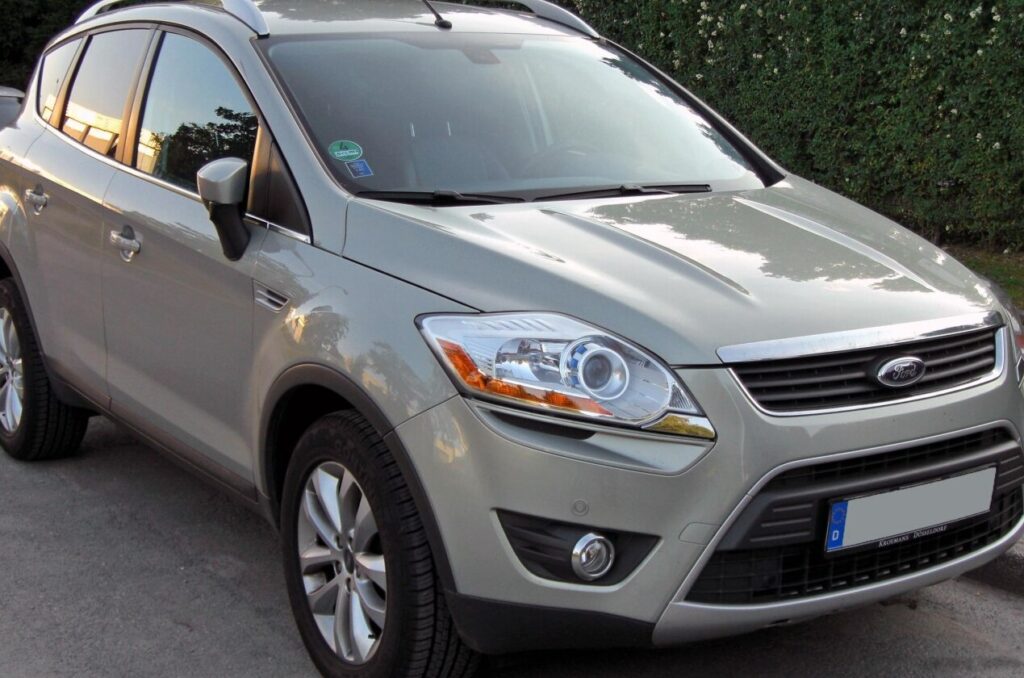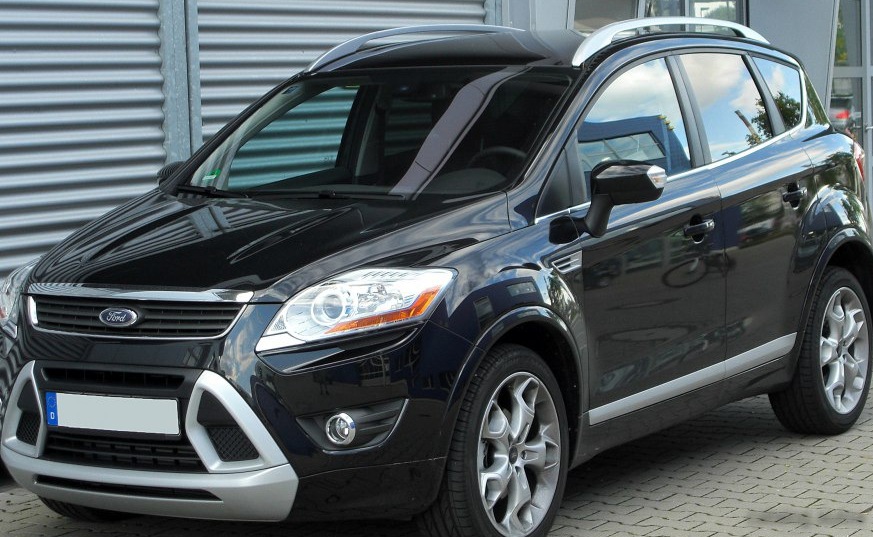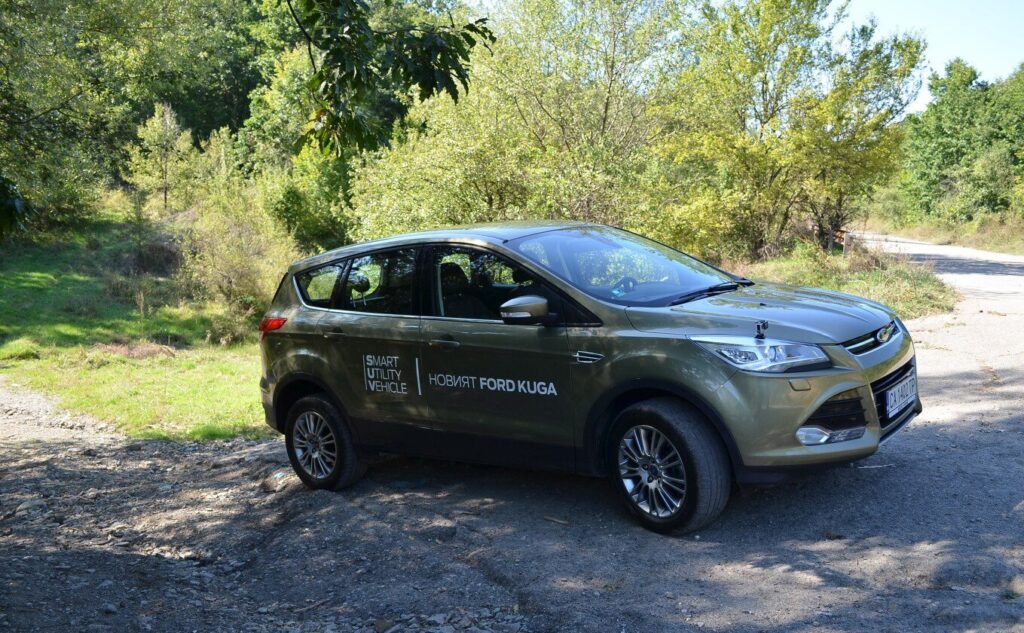
The Ford Kuga II 2.0 TDCi 4×4 Automatic, produced from 2012 to 2014, represented a significant offering in Ford’s European SUV lineup. Positioned as a mid-range trim within the second generation Kuga (also known as the Escape in North America), this variant combined a potent 2.0-liter turbodiesel engine with a six-speed automatic transmission and Ford’s intelligent four-wheel-drive system. It aimed to provide a balance of fuel efficiency, practicality, and all-weather capability for families and individuals seeking a versatile vehicle. The Kuga II itself was built on the Ford C-platform, shared with models like the Ford Focus, and marked a substantial improvement over the first-generation Kuga in terms of refinement, interior space, and technology.
Technical Specifications
| Brand | Ford |
| Model | Kuga |
| Generation | Kuga II |
| Type (Engine) | 2.0 TDCi (163 Hp) 4×4 Automatic |
| Start of production | 2012 |
| End of production | 2014 |
| Powertrain Architecture | Internal Combustion engine |
| Body type | SUV |
| Seats | 5 |
| Doors | 5 |
| Fuel consumption (urban) | 7.4 l/100 km (31.8 US mpg) |
| Fuel consumption (extra urban) | 5.5 l/100 km (42.8 US mpg) |
| Fuel consumption (combined) | 6.2 l/100 km (37.9 US mpg) |
| CO2 emissions | 162 g/km |
| Fuel Type | Diesel |
| Acceleration 0 – 100 km/h | 10.4 sec |
| Acceleration 0 – 62 mph | 10.4 sec |
| Acceleration 0 – 60 mph | 9.9 sec |
| Maximum speed | 196 km/h (121.79 mph) |
| Emission standard | Euro 5 |
| Weight-to-power ratio | 10.5 kg/Hp |
| Weight-to-torque ratio | 5 kg/Nm |
| Power | 163 Hp @ 3750 rpm |
| Torque | 340 Nm @ 2000-3250 rpm (250.77 lb.-ft.) |
| Engine layout | Front, Transverse |
| Engine Model/Code | TXDA, TXMA |
| Engine displacement | 1997 cm3 (121.86 cu. in.) |
| Number of cylinders | 4 |
| Engine configuration | Inline |
| Cylinder Bore | 85 mm (3.35 in.) |
| Piston Stroke | 88 mm (3.46 in.) |
| Compression ratio | 16:1 |
| Number of valves per cylinder | 4 |
| Fuel injection system | Diesel Commonrail |
| Engine aspiration | Turbocharger, Intercooler |
| Valvetrain | DOHC |
| Engine oil capacity | 5.7 l (6.02 US qt | 5.02 UK qt) |
| Coolant capacity | 8.5 l (8.98 US qt | 7.48 UK qt) |
| Kerb Weight | 1707 kg (3763.29 lbs.) |
| Max. weight | 2250 kg (4960.4 lbs.) |
| Max load | 543 kg (1197.11 lbs.) |
| Trunk (boot) space – minimum | 425 l (15.01 cu. ft.) |
| Trunk (boot) space – maximum | 1568 l (55.37 cu. ft.) |
| Fuel tank capacity | 60 l (15.85 US gal | 13.2 UK gal) |
| Length | 4524 mm (178.11 in.) |
| Width | 1838 mm (72.36 in.) |
| Height | 1701 mm (66.97 in.) |
| Wheelbase | 2690 mm (105.91 in.) |
| Front track | 1563 mm (61.54 in.) |
| Rear (Back) track | 1565 mm (61.61 in.) |
| Drive wheel | All wheel drive (4×4) |
| Number of gears | 6 |
| Gearbox type | automatic transmission |
Powertrain & Engine Architecture
At the heart of the Kuga II 2.0 TDCi 4×4 Automatic lies the Ford Duratorq 2.0-liter inline-four diesel engine. Engine codes TXDA and TXMA were commonly used for this configuration. This engine featured common-rail direct injection, a turbocharger with an intercooler, and a double overhead camshaft (DOHC) valvetrain with four valves per cylinder. The common-rail system, supplied by Bosch, operated at very high pressures to ensure efficient fuel atomization and complete combustion. The turbocharger provided a significant boost in power and torque, while the intercooler cooled the intake air, further enhancing performance. The six-speed automatic transmission, a Ford-developed unit (often referred to as the 6F35), was chosen for its smooth shifting and ability to handle the engine’s torque output. This transmission featured a torque converter and electronic control for optimized gear selection.
Driving Characteristics
The 163 horsepower and 340 Nm (250 lb-ft) of torque delivered by the 2.0 TDCi engine provided adequate performance for everyday driving. Acceleration from 0-60 mph took around 9.9 seconds, which was respectable for a vehicle of this size and weight. However, it wasn’t a particularly sporty vehicle; the focus was more on usability and fuel economy. The automatic transmission, while smooth, could sometimes feel hesitant during quick acceleration or downshifts. Compared to the manual transmission versions of the same engine, the automatic offered slightly reduced responsiveness. The four-wheel-drive system provided enhanced traction in slippery conditions, making it a capable vehicle for all-weather driving. The gear ratios were tuned for fuel efficiency, with a relatively tall final drive.
Equipment & Trim Levels
The 2.0 TDCi 4×4 Automatic trim typically included features such as air conditioning, power windows, power mirrors, a CD/MP3 stereo system, and alloy wheels. Higher trim levels, such as Titanium, added features like leather upholstery, a sunroof, parking sensors, and a more advanced infotainment system. Optional extras included navigation, heated seats, and a rear-view camera. Interior upholstery was generally cloth on the base models, with leather available as an upgrade. The dashboard layout was functional and well-designed, with clear instrumentation and easy-to-use controls.
Chassis & Braking
The Kuga II featured independent suspension all around, with MacPherson struts at the front and a multi-link setup at the rear. This provided a comfortable ride quality, although it wasn’t particularly sporty in handling. The four-wheel-drive system utilized a Haldex clutch to distribute torque between the front and rear axles as needed. Braking systems varied depending on the trim level, with lower trims often equipped with disc brakes at the front and drum brakes at the rear. Higher trims typically featured disc brakes on all four wheels. Anti-lock Braking System (ABS) was standard.
Market Reception & Comparison
The Kuga II 2.0 TDCi 4×4 Automatic was generally well-received by automotive critics. It was praised for its practicality, fuel efficiency, and comfortable ride. However, some critics noted that the automatic transmission could be slow to respond and that the interior, while well-built, lacked the premium feel of some competitors. Compared to the 1.6-liter EcoBoost petrol versions, the 2.0 TDCi offered significantly better fuel economy and torque, making it a more suitable choice for drivers who frequently tow or carry heavy loads. The 2.0 TDCi also offered a more refined driving experience than the lower-powered 1.6-liter diesel variants.
Legacy
The Ford Kuga II 2.0 TDCi 4×4 Automatic has proven to be a relatively reliable vehicle, with the Duratorq engine being known for its durability. However, like all diesel engines, it’s important to ensure regular maintenance, including oil changes and filter replacements. Common issues reported by owners include problems with the diesel particulate filter (DPF) and the dual-mass flywheel. In the used car market, these Kugas represent a good value proposition for buyers seeking a practical and fuel-efficient SUV. The combination of all-wheel drive and a diesel engine makes it a capable vehicle for a variety of driving conditions, and its relatively low running costs make it an attractive option for budget-conscious buyers.