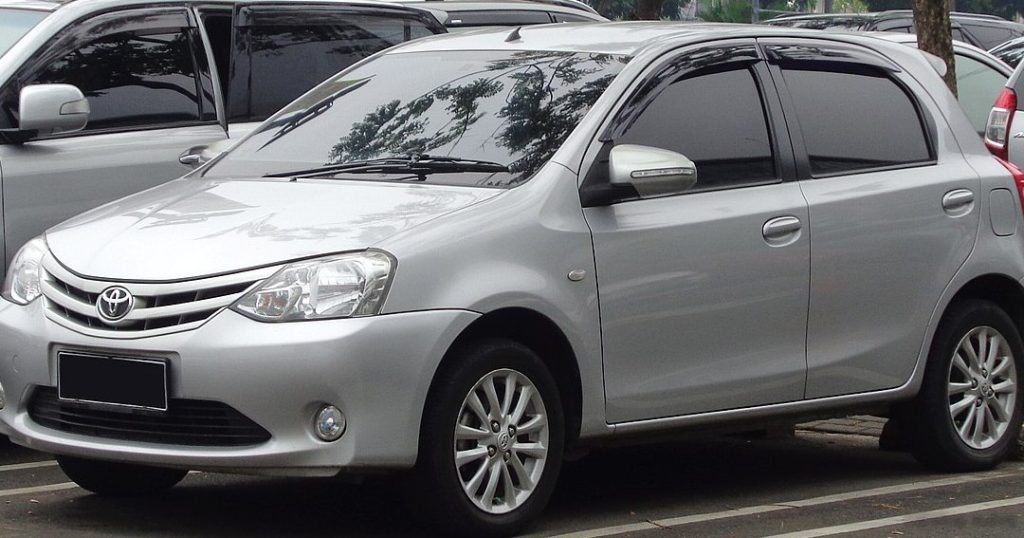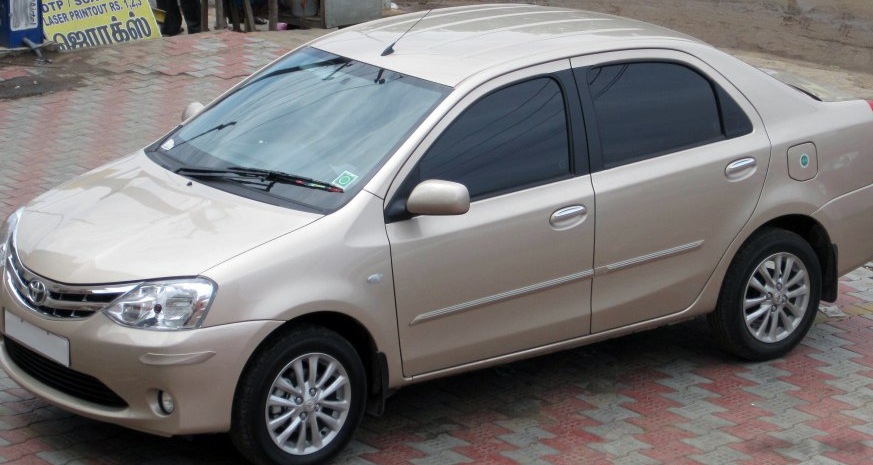
The Toyota Etios 1.5, producing 90 horsepower, was a subcompact sedan introduced by Toyota in 2010, primarily targeted at emerging markets like India, Brazil, and South Africa. It represented a departure for Toyota, focusing on cost-effectiveness and practicality rather than outright luxury or performance. The Etios was built on Toyota’s ‘i’ platform (specifically the B platform), designed for vehicles under 4 meters in length, and aimed to provide reliable transportation at an accessible price point. This particular 1.5-liter variant occupied a mid-range position within the Etios lineup, offering a step up in performance from the base 1.2-liter engine while remaining more affordable than potential future, higher-specification trims. Production continued until 2017, with the Etios being discontinued as Toyota shifted its focus towards more premium offerings in these markets.
Technical Specifications
| Brand | Toyota |
| Model | Etios |
| Generation | Etios |
| Type (Engine) | 1.5 (90 Hp) |
| Start of production | 2010 |
| Powertrain Architecture | Internal Combustion engine |
| Body type | Sedan |
| Seats | 5 |
| Doors | 4 |
| Fuel consumption (combined) | 6 l/100 km (39.2 US mpg, 47.1 UK mpg, 16.7 km/l) |
| Fuel Type | Petrol (Gasoline) |
| Power | 90 Hp @ 5600 rpm |
| Power per litre | 60.2 Hp/l |
| Torque | 132 Nm @ 3000 rpm (97.36 lb.-ft. @ 3000 rpm) |
| Engine layout | Front, Transverse |
| Engine Model/Code | 2NR-FE |
| Engine displacement | 1496 cm3 (91.29 cu. in.) |
| Number of cylinders | 4 |
| Engine configuration | Inline |
| Number of valves per cylinder | 4 |
| Engine aspiration | Naturally aspirated |
| Engine oil capacity | 3.3 l (3.49 US qt | 2.9 UK qt) |
| Coolant capacity | 4.1 l (4.33 US qt | 3.61 UK qt) |
| Trunk (boot) space (minimum) | 592 l (20.91 cu. ft.) |
| Fuel tank capacity | 45 l (11.89 US gal | 9.9 UK gal) |
| Length | 4369 mm (172.01 in.) |
| Width | 1695 mm (66.73 in.) |
| Height | 1510 mm (59.45 in.) |
| Wheelbase | 2550 mm (100.39 in.) |
| Minimum turning circle | 9.8 m (32.15 ft.) |
| Drivetrain | Front wheel drive |
| Number of gears and type of gearbox | 5 gears, manual transmission |
| Front suspension | Independent type McPherson |
| Rear suspension | Torsion |
| Front brakes | Ventilated discs |
| Rear brakes | Drum |
| Tires size | 175/70 R14; 185/60 R15 |
| Wheel rims size | 14; 15 |
Powertrain & Engine Architecture
The heart of the Etios 1.5 was the 2NR-FE engine, a 1.5-liter (1496 cc) inline-four cylinder gasoline engine. This engine utilized a dual overhead camshaft (DOHC) valvetrain with four valves per cylinder, contributing to its relatively efficient operation. The 2NR-FE employed multi-point fuel injection, a common system for its time, delivering fuel directly into the intake ports. While not a particularly advanced engine in terms of technology, it was known for its robustness and reliability. The engine was designed to prioritize fuel economy and low maintenance costs. The 5-speed manual transmission was the standard offering, chosen for its simplicity and affordability. The transmission’s gear ratios were tuned for everyday driving, prioritizing fuel efficiency over sporty acceleration.
Driving Characteristics
The Etios 1.5, with its 90 horsepower and 132 Nm (97 lb-ft) of torque, offered adequate performance for urban driving and highway cruising, though it wasn’t designed to be a performance car. Acceleration was modest, with a 0-60 mph time estimated around 11-12 seconds. The manual transmission allowed for reasonable control, but the engine’s peak torque arriving at 3000 rpm meant drivers needed to keep the engine revved to maintain momentum, especially when overtaking. Compared to the base 1.2-liter Etios, the 1.5 offered a noticeable improvement in responsiveness, making it a more comfortable choice for longer journeys or driving with a full load of passengers. The suspension, while simple, provided a reasonably comfortable ride, absorbing bumps and imperfections in the road surface effectively.
Equipment & Trim Levels
The Etios 1.5 typically came equipped with basic but functional features. Standard equipment generally included air conditioning, power steering, and a basic audio system with AM/FM radio and auxiliary input. Safety features were relatively limited, often including dual front airbags and Anti-lock Braking System (ABS) on higher trims. Interior upholstery was typically cloth, with a durable and practical design. Optional extras could include power windows, central locking, and a more advanced audio system. The trim levels varied depending on the market, but generally offered incremental upgrades in terms of features and aesthetics.
Chassis & Braking
The Etios utilized a front-wheel-drive layout with an independent McPherson strut suspension in the front and a torsion beam suspension in the rear. This setup provided a good balance between ride comfort and handling. The front brakes were ventilated discs, offering adequate stopping power, while the rear brakes were drums, a cost-saving measure common in this segment. The steering was hydraulically assisted, providing a light and easy driving experience. Tire sizes typically ranged from 175/70 R14 to 185/60 R15, depending on the trim level.
Market Reception & Comparison
The Toyota Etios 1.5 was generally well-received in its target markets as a practical and affordable option. Critics praised its reliability, fuel efficiency, and low running costs. However, it was often criticized for its basic interior, lack of advanced features, and somewhat uninspired styling. Compared to other subcompact sedans available at the time, such as the Maruti Suzuki Swift Dzire or the Hyundai Accent, the Etios offered a competitive price point and Toyota’s reputation for reliability. The 1.5-liter engine provided a noticeable performance advantage over the base 1.2-liter engine, making it a more appealing choice for drivers who frequently traveled on highways or carried passengers.
Legacy
The Toyota Etios, particularly the 1.5-liter variant, has developed a reputation for being a remarkably durable and reliable vehicle. The 2NR-FE engine is known for its longevity and relatively low maintenance requirements. In the used car market, Etios models are often sought after for their affordability and dependability. While not a particularly exciting or luxurious car, the Etios fulfilled its intended purpose of providing reliable and economical transportation for a wide range of customers. Its simple design and robust construction have ensured that many examples remain on the road today, a testament to Toyota’s engineering prowess.