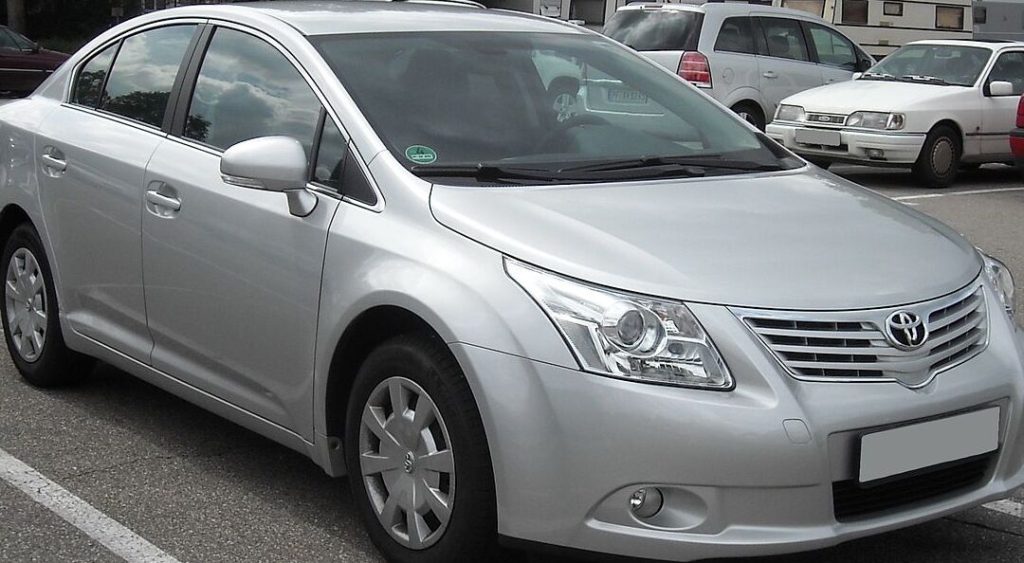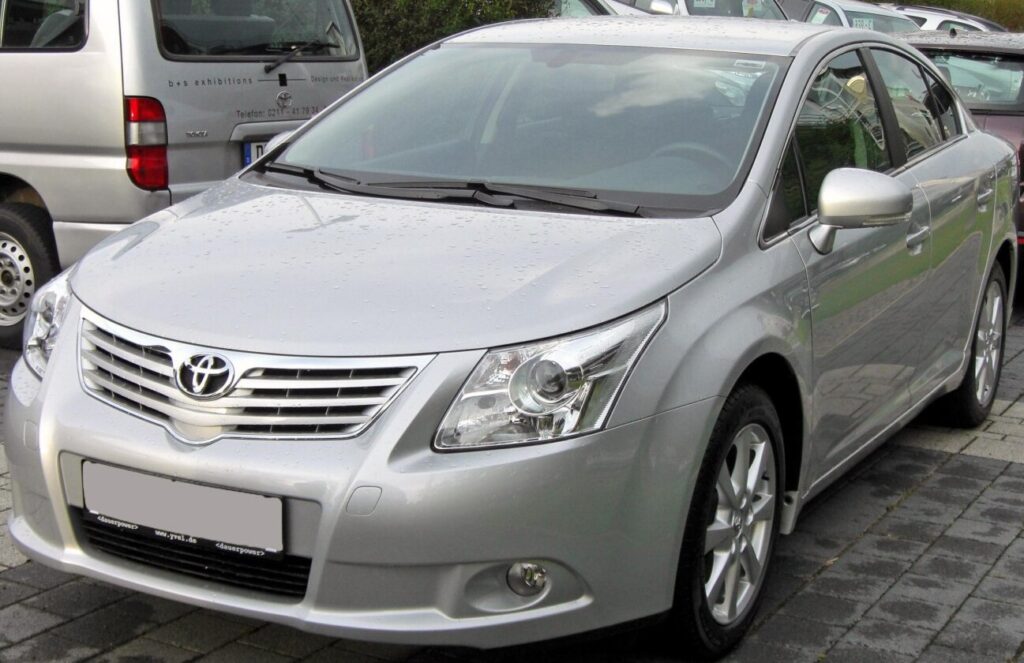
The Toyota Avensis III 2.0i (152 hp) Multidrive, produced between 2009 and 2011, represented a mid-range offering within the third generation Avensis lineup (T270). Positioned as a practical and comfortable family sedan, it aimed to balance performance with fuel efficiency, appealing to buyers seeking a reliable and well-equipped vehicle. This variant utilized Toyota’s Multidrive S continuously variable transmission (CVT), a key differentiator from the available manual transmission options. The Avensis, in its third iteration, continued Toyota’s commitment to building a strong presence in the European D-segment, competing with vehicles like the Ford Mondeo, Vauxhall/Opel Vectra, and Volkswagen Passat.
Technical Specifications
| Brand | Toyota |
| Model | Avensis |
| Generation | Avensis III |
| Type (Engine) | 2.0i (152 Hp) Multidrive |
| Start of production | 2009 |
| End of production | 2011 |
| Powertrain Architecture | Internal Combustion engine |
| Body type | Sedan |
| Seats | 5 |
| Doors | 4 |
| Fuel consumption (urban) | 9.2 l/100 km (25.6 US mpg) |
| Fuel consumption (extra urban) | 5.7 l/100 km (41.3 US mpg) |
| Fuel consumption (combined) | 7 l/100 km (33.6 US mpg) |
| Fuel Type | Petrol (Gasoline) |
| Acceleration 0 – 100 km/h | 10 sec |
| Acceleration 0 – 62 mph | 10 sec |
| Acceleration 0 – 60 mph | 9.5 sec |
| Maximum speed | 205 km/h (127.38 mph) |
| Emission standard | Euro 5 |
| Weight-to-power ratio | 9.4 kg/Hp |
| Weight-to-torque ratio | 7.3 kg/Nm |
| Power | 152 Hp @ 6200 rpm |
| Torque | 196 Nm @ 4000 rpm (144.56 lb.-ft. @ 4000 rpm) |
| Engine layout | Front, Transverse |
| Engine Model/Code | 3ZR-FAE |
| Engine displacement | 1987 cm3 (121.25 cu. in.) |
| Number of cylinders | 4 |
| Engine configuration | Inline |
| Number of valves per cylinder | 4 |
| Fuel injection system | Multi-port manifold injection |
| Engine aspiration | Naturally aspirated engine |
| Engine oil capacity | 4.2 l (4.44 US qt | 3.7 UK qt) |
| Coolant capacity | 6.2 l (6.55 US qt | 5.46 UK qt) |
| Kerb Weight | 1435 kg (3163.63 lbs.) |
| Max. weight | 2040 kg (4497.43 lbs.) |
| Max load | 605 kg (1333.8 lbs.) |
| Trunk (boot) space – minimum | 509 l (17.98 cu. ft.) |
| Fuel tank capacity | 60 l (15.85 US gal | 13.2 UK gal) |
| Length | 4695 mm (184.84 in.) |
| Width | 1810 mm (71.26 in.) |
| Height | 1480 mm (58.27 in.) |
| Wheelbase | 2700 mm (106.3 in.) |
| Front track | 1550 mm (61.02 in.) |
| Rear track | 1540 mm (60.63 in.) |
| Minimum turning circle | 10.8 m (35.43 ft.) |
Powertrain & Engine Architecture
The 2.0i Multidrive variant was powered by Toyota’s 3ZR-FAE engine, a 1.987-liter (121.25 cubic inches) inline-four cylinder gasoline engine. This engine featured a dual overhead camshaft (DOHC) valvetrain with four valves per cylinder, and utilized multi-port fuel injection. The 3ZR-FAE was known for its relatively smooth operation and decent power output for its displacement. The engine produced 152 horsepower at 6,200 rpm and 196 Nm (144.56 lb-ft) of torque at 4,000 rpm. The Multidrive S transmission, a type of continuously variable transmission (CVT), was a key component of this variant. Unlike traditional automatic transmissions with fixed gear ratios, the Multidrive S offered a seamless and continuously variable gear ratio, optimizing engine speed for efficiency or performance. It also featured a simulated seven-speed sequential shift mode for drivers who preferred a more conventional driving experience.
Driving Characteristics
The 2.0i Multidrive offered a comfortable and refined driving experience. The CVT transmission contributed to smooth acceleration and minimized shift shock. However, it lacked the direct feel and responsiveness of a traditional automatic or manual transmission. Acceleration from 0-60 mph took approximately 9.5 seconds, which was adequate for everyday driving but not particularly sporty. The CVT’s programming prioritized fuel efficiency, meaning the engine often held a lower rpm during cruising, resulting in a quieter cabin. When more power was needed, the CVT would seamlessly adjust the gear ratio to provide optimal acceleration. Compared to the 2.4-liter engine option in the Avensis III, the 2.0i offered less outright performance, but it provided better fuel economy. Against the diesel variants, the 2.0i traded fuel efficiency for a smoother, quieter engine and lower maintenance costs.
Equipment & Trim Levels
The 2.0i Multidrive typically came equipped with a respectable level of standard features. These generally included air conditioning, power windows and mirrors, a CD/radio system with auxiliary input, alloy wheels, and ABS brakes. Higher trim levels, such as the ‘T Spirit’ or ‘Elevation’ models, added features like automatic climate control, rain-sensing wipers, rear parking sensors, and upgraded interior trim. Interior upholstery was typically cloth, with options for leather available on higher trims. The dashboard layout was functional and well-designed, with easy-to-read instrumentation. Optional extras included a navigation system, sunroof, and premium audio system.
Chassis & Braking
The Avensis III utilized an independent McPherson strut suspension at the front and a double wishbone suspension at the rear, providing a comfortable ride and good handling characteristics. The 2.0i variant, being a mid-range model, typically featured ventilated disc brakes at the front and solid disc brakes at the rear. Anti-lock Braking System (ABS) was standard. The steering was electrically assisted, providing light and precise control. Stabilizer bars were fitted to both the front and rear axles to reduce body roll during cornering. The suspension tuning was geared towards comfort rather than outright sportiness, making it well-suited for long-distance cruising.
Market Reception & Comparison
The Toyota Avensis III 2.0i Multidrive was generally well-received by automotive critics. It was praised for its comfortable ride, spacious interior, and reliable powertrain. The Multidrive S transmission was noted for its smoothness and fuel efficiency, although some reviewers found it lacking in responsiveness. Compared to its competitors, the Avensis offered a strong value proposition, with a good level of equipment and a reputation for reliability. Fuel economy was a strong point, achieving around 33.6 US mpg on the combined cycle. Reliability was also a key strength, with Toyota consistently ranking highly in reliability surveys. However, some critics found the styling to be somewhat conservative compared to more visually striking competitors.
Legacy
The 3ZR-FAE engine and Multidrive S transmission combination proved to be a reliable and durable powertrain. The Avensis III, in general, has a good reputation for long-term reliability, and well-maintained examples continue to be a popular choice in the used car market. While not known for being particularly exciting to drive, the 2.0i Multidrive offers a practical and dependable option for buyers seeking a comfortable and fuel-efficient family sedan. Common issues are relatively minor, often relating to routine maintenance items such as oil leaks or worn suspension components. The Multidrive S transmission, if properly maintained with regular fluid changes, is generally considered to be a robust unit.