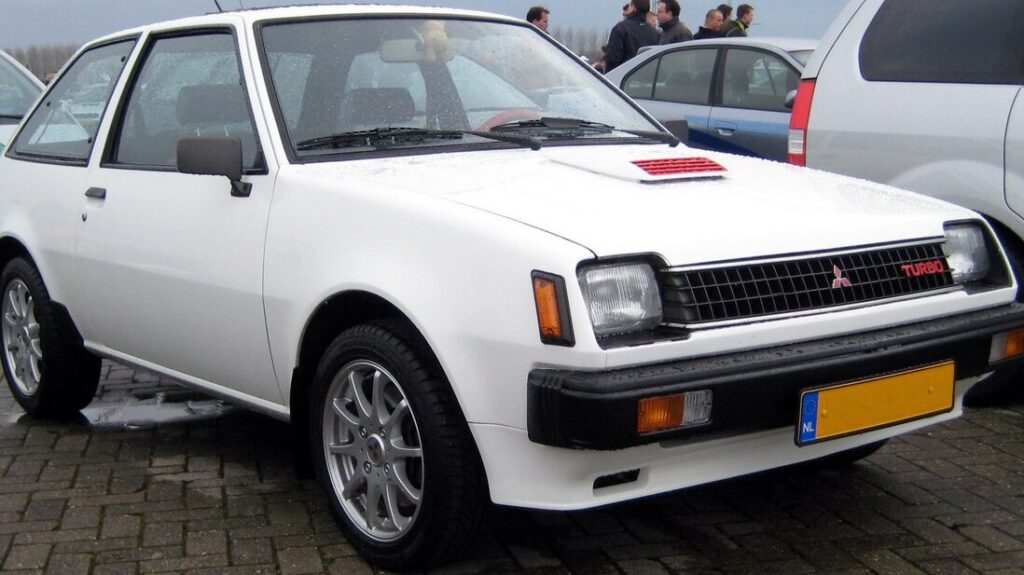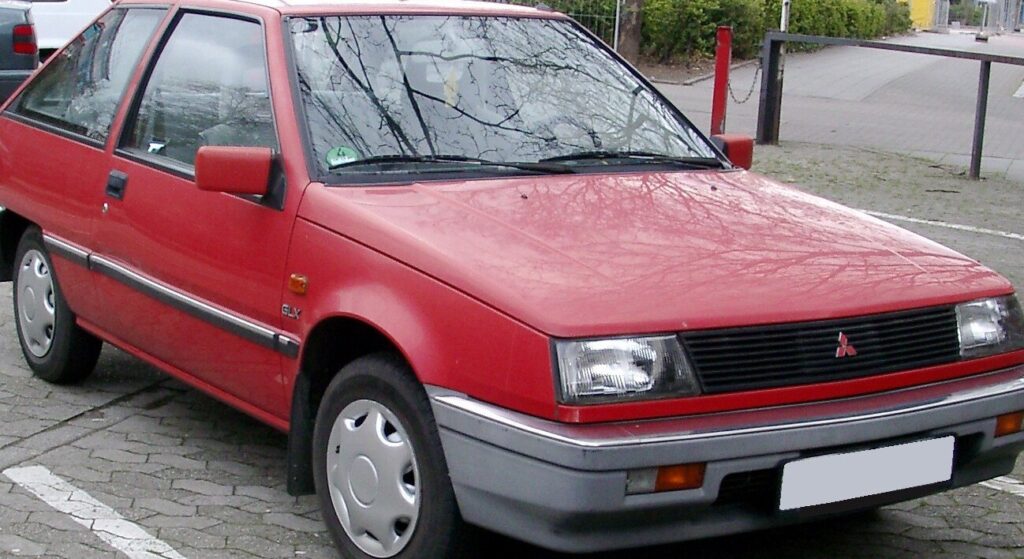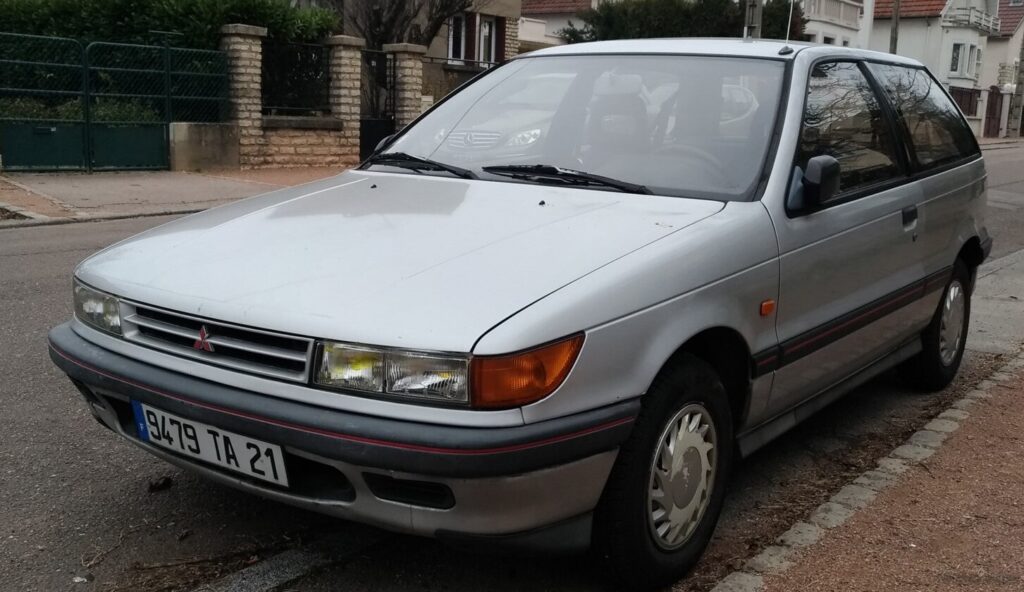
The Mitsubishi Colt III (C50) 1.6 DOHC, produced between 1988 and 1990, represented a performance-oriented variant within the third generation of the Colt. Positioned as a sporty offering, this model aimed to attract buyers seeking a more engaging driving experience than the standard Colt configurations. It was a key part of Mitsubishi’s strategy to offer a diverse range of options within the popular supermini segment, primarily targeted towards the European and Japanese markets. The C50 chassis, part of the broader Colt lineage, provided a relatively lightweight platform for the potent 1.6-liter engine.
Technical Specifications
| Brand | Mitsubishi |
| Model | Colt |
| Generation | Colt III (C50) |
| Type (Engine) | 1.6 DOHC (160 Hp) |
| Start of production | 1988 |
| End of production | 1990 |
| Powertrain Architecture | Internal Combustion engine |
| Body type | Hatchback |
| Seats | 5 |
| Doors | 3 |
| Fuel consumption (urban) | 10 l/100 km (23.5 US mpg, 28.2 UK mpg, 10 km/l) |
| Fuel consumption (extra urban) | 6.6 l/100 km (35.6 US mpg, 42.8 UK mpg, 15.2 km/l) |
| Fuel consumption (combined) | 9.2 l/100 km (25.6 US mpg, 30.7 UK mpg, 10.9 km/l) |
| Fuel Type | Petrol (Gasoline) |
| Acceleration 0 – 100 km/h | 6.7 sec |
| Acceleration 0 – 62 mph | 6.7 sec |
| Acceleration 0 – 60 mph | 6.4 sec |
| Maximum speed | 203 km/h (126.14 mph) |
| Weight-to-power ratio | 6.3 kg/Hp, 158.4 Hp/tonne |
| Weight-to-torque ratio | 4.6 kg/Nm, 218.8 Nm/tonne |
| Power | 160 Hp @ 6000 rpm |
| Power per litre | 100.3 Hp/l |
| Torque | 221 Nm @ 2500 rpm (163 lb.-ft. @ 2500 rpm) |
| Engine layout | Front, Transverse |
| Engine displacement | 1595 cm3 (97.33 cu. in.) |
| Number of cylinders | 4 |
| Engine configuration | Inline |
| Cylinder Bore | 82.3 mm (3.24 in.) |
| Piston Stroke | 75 mm (2.95 in.) |
| Compression ratio | 8:1 |
| Number of valves per cylinder | 4 |
| Fuel injection system | Multi-port manifold injection |
| Engine aspiration | Turbocharger |
| Valvetrain | DOHC |
| Kerb Weight | 1010 kg (2226.67 lbs.) |
| Trunk (boot) space – minimum | 222 l (7.84 cu. ft.) |
| Trunk (boot) space – maximum | 1050 l (37.08 cu. ft.) |
| Fuel tank capacity | 50 l (13.21 US gal, 11 UK gal) |
| Length | 3950 mm (155.51 in.) |
| Width | 1670 mm (65.75 in.) |
| Height | 1380 mm (54.33 in.) |
| Wheelbase | 2385 mm (93.9 in.) |
| Front track | 1430 mm (56.3 in.) |
| Rear (Back) track | 1430 mm (56.3 in.) |
| Drivetrain Architecture | The Internal combustion engine (ICE) drives the front wheels of the vehicle. |
| Drive wheel | Front wheel drive |
| Number of gears and type of gearbox | 5 gears, manual transmission |
| Front suspension | Coil spring |
| Rear suspension | Coil spring |
| Front brakes | Ventilated discs |
| Rear brakes | Drum |
| Assisting systems | ABS (Anti-lock braking system) |
| Steering type | Steering rack and pinion |
| Power steering | Hydraulic Steering |
| Tires size | 175/70 R13 |
Powertrain & Engine Architecture
The heart of the Colt III 1.6 DOHC was its 1595cc inline-four cylinder engine. This engine, often identified by its internal codes, featured a double overhead camshaft (DOHC) valvetrain and a turbocharger, a relatively uncommon feature for cars in this class at the time. The turbocharger significantly boosted power output to 160 horsepower at 6000 rpm and 221 Nm (163 lb-ft) of torque at 2500 rpm. Fuel delivery was managed by a multi-port fuel injection system, contributing to improved efficiency and responsiveness. The engine’s 8:1 compression ratio was a compromise between performance and reliability, suitable for the fuel quality available in European and Japanese markets. The engine was transversely mounted, driving the front wheels through a five-speed manual transmission. This configuration maximized interior space and contributed to the car’s nimble handling.
Driving Characteristics
The 1.6 DOHC Colt offered a noticeably more spirited driving experience compared to lower-spec models. The turbocharger provided a surge of power in the mid-range, making overtaking and highway cruising considerably easier. While not a dedicated sports car, the 0-60 mph time of around 6.4 seconds was respectable for the late 1980s. The five-speed manual transmission allowed drivers to keep the engine in its optimal power band. The relatively lightweight chassis and front-wheel drive configuration contributed to a balanced feel, although torque steer could be noticeable under hard acceleration. Compared to naturally aspirated versions of the Colt, the 1.6 DOHC felt significantly more powerful and responsive, but the turbocharger did introduce a slight degree of lag.
Equipment & Trim Levels
The 1.6 DOHC variant typically came with a higher level of standard equipment than base models. This often included features like alloy wheels, a more comprehensive instrument cluster, and upgraded interior trim. Interior upholstery was typically cloth, with options for more premium materials available. Power steering was standard, enhancing ease of maneuverability. Optional extras could include a sunroof, upgraded audio systems, and electric windows. The overall interior design was functional and relatively simple, reflecting the car’s focus on practicality and affordability.
Chassis & Braking
The Colt III utilized a relatively simple chassis design, featuring coil springs and a stabilizer bar for both front and rear suspension. The front brakes were ventilated discs, providing adequate stopping power, while the rear brakes were drums. ABS (Anti-lock Braking System) was often included as standard equipment, enhancing safety. The suspension was tuned to provide a balance between comfort and handling, offering a reasonably compliant ride without sacrificing too much agility. The car’s relatively light weight contributed to its nimble handling characteristics.
Market Reception & Comparison
The Mitsubishi Colt III 1.6 DOHC was generally well-received by automotive critics, who praised its performance and value for money. It was often compared to other hot hatches of the era, such as the Peugeot 205 GTI and the Volkswagen Golf GTI, although it typically offered a more affordable alternative. Fuel economy was reasonable for a turbocharged engine, averaging around 25.6 US mpg in combined driving. Reliability was generally good, although the turbocharger did require more careful maintenance than naturally aspirated engines. Compared to the standard 1.3 and 1.5-liter Colt models, the 1.6 DOHC offered a significant performance upgrade, but at a higher price point.
Legacy
The Mitsubishi Colt III 1.6 DOHC remains a fondly remembered model among enthusiasts. While not as iconic as some of its rivals, it offered a compelling combination of performance, affordability, and practicality. The 4G61 engine, in its turbocharged form, proved to be relatively durable, and well-maintained examples can still be found on the used car market today. The car’s legacy lies in its demonstration of Mitsubishi’s ability to produce engaging and affordable performance cars, paving the way for future sporty models.