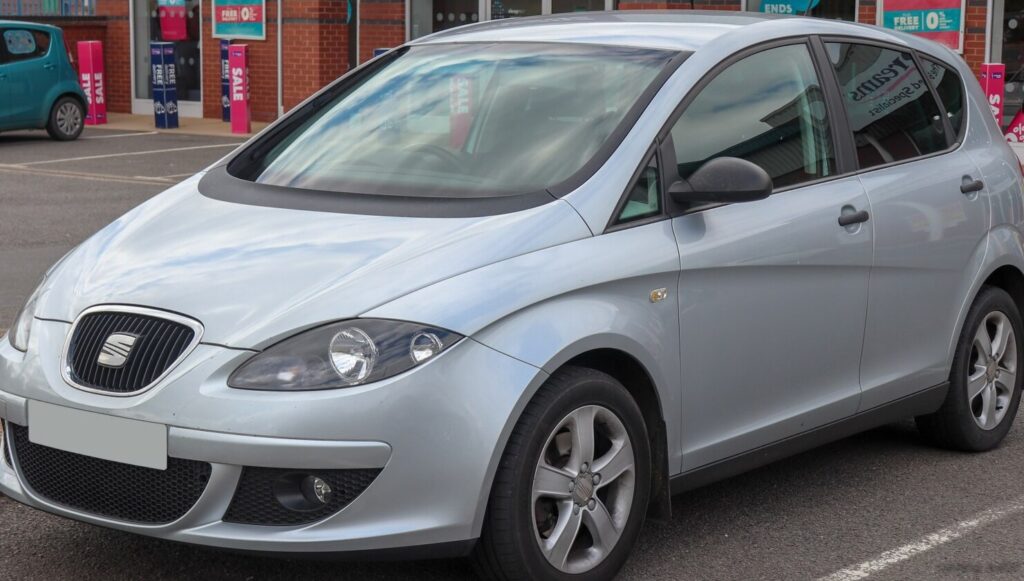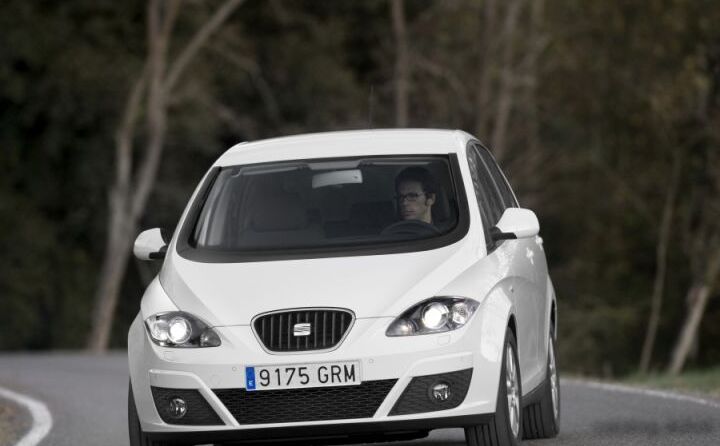
The Seat Altea 1.6 TDI, specifically the 105 horsepower variant produced from October 2009 to August 2015, represents a key offering within the refreshed second generation of the Altea model line. Positioned as a mainstream, fuel-efficient option, this version of the Altea aimed to broaden the car’s appeal in the European market, where compact MPVs were highly popular. The facelifted Altea (internally designated as the 5P) built upon the original’s distinctive styling and practical interior, offering a blend of space, functionality, and modern technology. This particular engine and transmission combination served as a core model, appealing to buyers prioritizing economy and everyday usability over outright performance.
Technical Specifications
| Brand | Seat |
| Model | Altea |
| Generation | Altea (facelift 2009) |
| Type (Engine) | 1.6 TDI (105 Hp) |
| Start of production | October, 2009 |
| End of production | August, 2015 |
| Powertrain Architecture | Internal Combustion engine |
| Body type | MPV |
| Seats | 5 |
| Doors | 5 |
| Fuel consumption (urban) | 5.9 l/100 km (39.9 US mpg, 47.9 UK mpg, 16.9 km/l) |
| Fuel consumption (extra urban) | 4.2 l/100 km (56 US mpg, 67.3 UK mpg, 23.8 km/l) |
| Fuel consumption (combined) | 4.8 l/100 km (49 US mpg, 58.9 UK mpg, 20.8 km/l) |
| CO2 emissions | 126 g/km |
| Fuel Type | Diesel |
| Acceleration 0 – 100 km/h | 12.2 sec |
| Acceleration 0 – 62 mph | 12.2 sec |
| Acceleration 0 – 60 mph | 11.6 sec |
| Maximum speed | 183 km/h (113.71 mph) |
| Emission standard | Euro 5 |
| Weight-to-power ratio | 13.9 kg/Hp, 72.2 Hp/tonne |
| Weight-to-torque ratio | 5.8 kg/Nm, 171.8 Nm/tonne |
| Power | 105 Hp @ 4400 rpm |
| Power per litre | 65.7 Hp/l |
| Torque | 250 Nm @ 1500-2500 rpm (184.39 lb.-ft. @ 1500-2500 rpm) |
| Engine layout | Front, Transverse |
| Engine Model/Code | CAYC |
| Engine displacement | 1598 cm3 (97.52 cu. in.) |
| Number of cylinders | 4 |
| Engine configuration | Inline |
| Cylinder Bore | 79.5 mm (3.13 in.) |
| Piston Stroke | 80.5 mm (3.17 in.) |
| Compression ratio | 16.5:1 |
| Number of valves per cylinder | 4 |
| Fuel injection system | Diesel Commonrail |
| Engine aspiration | Turbocharger, Intercooler |
| Engine oil capacity | 4.3 l (4.54 US qt | 3.78 UK qt) |
| Kerb Weight | 1455 kg (3207.73 lbs.) |
| Max. weight | 1975 kg (4354.13 lbs.) |
| Max load | 520 kg (1146.4 lbs.) |
| Trunk (boot) space – minimum | 409 l (14.44 cu. ft.) |
| Fuel tank capacity | 55 l (14.53 US gal | 12.1 UK gal) |
| Length | 4282 mm (168.58 in.) |
| Width | 1768 mm (69.61 in.) |
| Height | 1576 mm (62.05 in.) |
| Wheelbase | 2578 mm (101.5 in.) |
| Front track | 1527-1541 mm (60.12 – 60.67 in.) |
| Rear (Back) track | 1503-1517 mm (59.17 – 59.72 in.) |
| Minimum turning circle | 10.7 m (35.1 ft.) |
| Drivetrain Architecture | The Internal combustion engine (ICE) drives the front wheels of the vehicle. |
| Drive wheel | Front wheel drive |
| Number of gears and type of gearbox | 5 gears, manual transmission |
| Front suspension | Independent, type McPherson with coil spring and anti-roll bar |
| Rear suspension | Independent multi-link suspension |
| Front brakes | Ventilated discs |
| Rear brakes | Disc |
| Assisting systems | ABS (Anti-lock braking system) |
| Steering type | Steering rack and pinion |
| Tires size | 195/65 R15 91H; 205/55 R16 91V; 225/45 R17 91W; 225/40 R18 92Y |
| Wheel rims size | 6J x 15 ET47; 6.5J x 16 ET50; 7J x 17 ET54; 7.5J x 18 ET51 |
Powertrain & Engine Architecture
The heart of this Altea variant is the CAYC engine, a 1.6-liter inline-four cylinder diesel. This engine is part of the Volkswagen Group’s common rail diesel family, known for its efficiency and relatively low emissions. The CAYC utilizes a turbocharger with an intercooler to boost power output, achieving 105 horsepower at 4400 rpm and 250 Nm (184 lb-ft) of torque between 1500 and 2500 rpm. The engine features four valves per cylinder and a compression ratio of 16.5:1. Fuel is delivered via a Bosch common rail direct injection system, optimizing combustion and reducing noise. The 5-speed manual transmission was the standard offering, chosen for its simplicity and contribution to fuel economy. While a DSG (Direct-Shift Gearbox) was available on higher-spec Altea models, it wasn’t typically paired with this base-level engine.
Driving Characteristics
The 1.6 TDI 105 hp Altea offered a practical and economical driving experience. Acceleration from 0-60 mph took around 11.6 seconds, and top speed was approximately 114 mph. The engine’s torque delivery was its strong suit, providing adequate pulling power for everyday driving and overtaking maneuvers. However, it wasn’t a particularly sporty engine; power tapered off noticeably at higher RPMs. The 5-speed gearbox was well-matched to the engine’s characteristics, with gear ratios optimized for fuel efficiency. Compared to the more powerful 2.0 TDI variants, the 1.6 TDI felt noticeably slower, but it offered a smoother and more relaxed driving experience. The manual transmission allowed for greater driver control, but the engine lacked the responsiveness of its higher-powered siblings.
Equipment & Trim Levels
The 1.6 TDI 105 hp Altea typically came with a reasonable level of standard equipment. This included air conditioning, electric front windows, central locking, and a basic audio system. Safety features such as ABS, front airbags, and seatbelt pretensioners were also standard. Higher trim levels, such as Style and Sport, added features like alloy wheels, climate control, rear parking sensors, and upgraded interior trim. Optional extras included a sunroof, navigation system, and leather upholstery. The interior generally featured durable, if somewhat basic, plastics. Upholstery was typically cloth, with a focus on practicality rather than luxury.
Chassis & Braking
The Altea’s chassis featured independent suspension all around – McPherson struts at the front and a multi-link setup at the rear. This provided a comfortable ride quality, absorbing bumps and imperfections in the road effectively. The front brakes were ventilated discs, while the rear brakes were solid discs. The steering was a rack and pinion system, offering reasonable precision and feedback. Stabilizer bars were fitted to both the front and rear axles to reduce body roll during cornering. The suspension setup was tuned for comfort rather than outright handling prowess, making it well-suited for everyday driving.
Market Reception & Comparison
The Seat Altea 1.6 TDI 105 hp was generally well-received by critics as a sensible and economical choice. It was praised for its fuel efficiency, spacious interior, and practical design. However, some reviewers noted that the engine lacked power, particularly when fully loaded or driving uphill. Compared to other compact MPVs of the time, such as the Renault Scenic and Citroën C4 Picasso, the Altea offered a more driver-focused experience, but it wasn’t as refined or luxurious. The 1.6 TDI offered significantly better fuel economy than the 2.0 TDI models, but at the cost of performance. Reliability was generally good, with the CAYC engine proving to be a durable unit.
Legacy
The Seat Altea 1.6 TDI 105 hp remains a relatively common sight on European roads today. The CAYC engine has proven to be reasonably reliable, although regular maintenance is essential to prevent issues with the turbocharger and fuel injection system. The Altea’s practical design and spacious interior continue to appeal to buyers looking for a versatile and affordable MPV. In the used car market, these models represent good value for money, offering a blend of economy, practicality, and reliability. While not a performance icon, the 1.6 TDI Altea served as a solid and dependable workhorse for many owners.