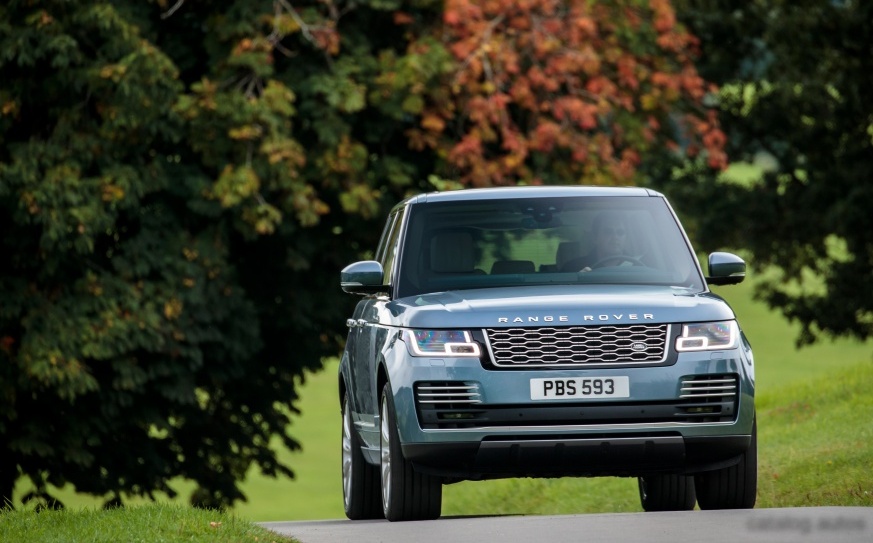
The Land Rover Range Rover IV (facelift, specifically the 2017-2018 model year) 3.0 V6 Supercharged represents a significant refinement of the fourth-generation Range Rover, introduced in 2012. This variant, powered by the 306PS engine, occupied a sweet spot in the lineup, offering a compelling blend of performance, luxury, and capability. Positioned above the entry-level diesel models but below the flagship supercharged V8, the 3.0 V6 Supercharged catered to buyers seeking a powerful yet relatively efficient Range Rover experience. It was a key offering in the North American and European markets, where Range Rover sought to balance prestige with practicality.
Technical Specifications
| Brand | Land Rover |
| Model | Range Rover |
| Generation | Range Rover IV (facelift 2017) |
| Type (Engine) | 3.0 V6 (380 Hp) AWD Automatic Supercharged |
| Start of production | 2017 |
| End of production | 2018 |
| Powertrain Architecture | Internal Combustion engine |
| Body type | SUV |
| Seats | 5 |
| Doors | 5 |
| Fuel consumption (economy) – urban | 13.6 l/100 km (17.3 US mpg, 20.8 UK mpg, 7.4 km/l) |
| Fuel consumption (economy) – extra urban | 8.5 l/100 km (27.7 US mpg, 33.2 UK mpg, 11.8 km/l) |
| Fuel consumption (economy) – combined | 10.7 l/100 km (22 US mpg, 26.4 UK mpg, 9.3 km/l) |
| CO2 emissions | 248 g/km |
| Fuel Type | Petrol (Gasoline) |
| Acceleration 0 – 100 km/h | 7.3 sec |
| Acceleration 0 – 62 mph | 7.3 sec |
| Acceleration 0 – 60 mph | 6.9 sec |
| Maximum speed | 209 km/h (129.87 mph) |
| Emission standard | Euro 6 |
| Weight-to-power ratio | 5.9 kg/Hp, 168.4 Hp/tonne |
| Weight-to-torque ratio | 5 kg/Nm, 199.5 Nm/tonne |
| Power | 380 Hp |
| Power per litre | 126.9 Hp/l |
| Torque | 450 Nm (331.9 lb.-ft.) |
| Engine layout | Front, Longitudinal |
| Engine Model/Code | 306PS |
| Engine displacement | 2995 cm3 (182.77 cu. in.) |
| Number of cylinders | 6 |
| Engine configuration | V-engine |
| Cylinder Bore | 84.5 mm (3.33 in.) |
| Piston Stroke | 89 mm (3.5 in.) |
| Compression ratio | 10.5:1 |
| Number of valves per cylinder | 4 |
| Fuel injection system | Multi-port manifold injection |
| Engine aspiration | Supercharger, Intercooler |
| Engine oil capacity | 8 l (8.45 US qt | 7.04 UK qt) |
| Coolant | 8.05 l (8.51 US qt | 7.08 UK qt) |
| Kerb Weight | 2256 kg (4973.63 lbs.) |
| Trunk (boot) space – minimum | 900 l (31.78 cu. ft.) |
| Fuel tank capacity | 103.5 l (27.34 US gal | 22.77 UK gal) |
| Max. roof load | 100 kg (220.46 lbs.) |
| Permitted trailer load with brakes (12%) | 3500 kg (7716.18 lbs.) |
| Permitted trailer load without brakes | 750 kg (1653.47 lbs.) |
| Length | 5000 mm (196.85 in.) |
| Width with mirrors folded | 2073 mm (81.61 in.) |
| Width including mirrors | 2220 mm (87.4 in.) |
| Height | 1869 mm (73.58 in.) |
| Wheelbase | 2922 mm (115.04 in.) |
| Front track | 1693 mm (66.65 in.) |
| Rear (Back) track | 1685 mm (66.34 in.) |
| Front overhang | 883 mm (34.76 in.) |
| Rear overhang | 1195 mm (47.05 in.) |
| Ride height (ground clearance) | 220 mm (8.66 in.) |
| Drag coefficient (Cd) | 0.34 |
| Minimum turning circle (turning diameter) | 12.33 m (40.45 ft.) |
| Approach angle | 26° |
| Departure angle | 24.6° |
| Ramp-over (brakeover) angle | 20.1° |
| Wading depth | 900 mm (35.43 in.) |
| Drive wheel | All wheel drive (4×4) |
| Number of gears and type of gearbox | 8 gears, automatic transmission |
| Front suspension | Wishbone, Air suspension |
| Rear suspension | Independent multi-link suspension, Air suspension |
| Front brakes | Ventilated discs |
| Rear brakes | Ventilated discs |
| Assisting systems | ABS (Anti-lock braking system) |
| Steering type | Steering rack and pinion |
| Power steering | Electric Steering |
INTRODUCTION
The 2017-2018 Range Rover IV facelift, featuring the 3.0-liter V6 supercharged engine paired with an eight-speed automatic transmission, represented a significant evolution of Land Rover’s flagship SUV. Built on the 1HX0/A3 platform, this iteration benefited from styling updates, enhanced technology, and improved refinement. The 3.0 V6 Supercharged model aimed to provide a balance between the fuel efficiency of the four-cylinder and diesel options and the outright performance of the larger supercharged V8. It quickly became a popular choice for buyers prioritizing a luxurious driving experience with ample power for both on-road and moderate off-road adventures.
Powertrain & Engine Architecture
At the heart of this Range Rover variant lies the Jaguar-Land Rover AJ306 engine, a 3.0-liter V6 boasting a supercharger. This engine, internally designated as 306PS, produces 380 horsepower and 450 Nm (331.9 lb.-ft.) of torque. The engine utilizes a Roots-type supercharger for instant throttle response and a robust power delivery across the rev range. Fuel is delivered via multi-port fuel injection, and the engine features four valves per cylinder. The engine is longitudinally mounted in the front of the vehicle. The eight-speed automatic transmission, sourced from ZF, is a crucial component of this powertrain. Known for its smooth shifts and wide gear ratio spread, it contributes to both performance and fuel efficiency. The transmission is electronically controlled and features selectable driving modes, including Sport and Eco, to tailor the driving experience.
Driving Characteristics
The 3.0 V6 Supercharged Range Rover delivers a refined and capable driving experience. Acceleration from 0-60 mph takes approximately 6.9 seconds, making it brisk enough for most drivers. The supercharger provides immediate power, eliminating turbo lag and offering strong acceleration in any gear. The eight-speed automatic transmission is generally smooth and responsive, although some drivers may find it slightly hesitant during quick downshifts. Compared to the higher-output V8 models, the V6 feels less overtly powerful, but it offers a more manageable and fuel-efficient driving experience. Against the diesel variants, the V6 provides a more spirited and responsive feel, albeit with slightly higher fuel consumption. The air suspension provides a comfortable ride, absorbing bumps and imperfections in the road with ease.
Equipment & Trim Levels
The 3.0 V6 Supercharged Range Rover typically came well-equipped, reflecting its position as a premium SUV. Standard features included leather upholstery, heated front seats, a touchscreen infotainment system with navigation, a premium sound system, and a panoramic sunroof. Optional extras included upgraded leather packages, rear-seat entertainment, adaptive cruise control, and a variety of exterior styling enhancements. Trim levels varied depending on the market, but generally included HSE and Autobiography options, with the latter offering even more luxurious appointments and exclusive features. The interior design emphasized luxury and comfort, with high-quality materials and meticulous attention to detail.
Chassis & Braking
The Range Rover IV utilizes a robust chassis and sophisticated suspension system. The 3.0 V6 models feature an independent air suspension system at both the front and rear, providing adjustable ride height and exceptional comfort. The front suspension employs a double-wishbone design, while the rear utilizes a multi-link setup. Braking duties are handled by ventilated discs on all four wheels, providing ample stopping power. The vehicle is equipped with ABS (Anti-lock Braking System) and electronic stability control to enhance safety. The air suspension allows for adjustable ride height, improving off-road capability and providing a more comfortable ride on varied terrain.
Market Reception & Comparison
The 2017-2018 Range Rover IV 3.0 V6 Supercharged received generally positive reviews from automotive critics. It was praised for its blend of performance, luxury, and capability. Fuel economy, while not exceptional, was considered reasonable for a vehicle of its size and weight. Compared to the V8 models, the V6 offered a more affordable entry point into the Range Rover lineup without sacrificing too much performance. Reliability was generally good, although some owners reported minor issues with the infotainment system and air suspension. The V6 Supercharged proved to be a popular choice for buyers seeking a well-rounded and luxurious SUV.
Legacy
The 3.0 V6 Supercharged engine has proven to be a relatively reliable powertrain, although regular maintenance is crucial. The ZF eight-speed automatic transmission is known for its durability. In the used car market, these Range Rovers hold their value reasonably well, particularly well-maintained examples with low mileage. Common maintenance items include oil changes, brake pad replacements, and air suspension component checks. The 2017-2018 facelift models are generally considered to be more refined and reliable than earlier versions of the fourth-generation Range Rover, making them a desirable option for buyers seeking a luxurious and capable SUV.