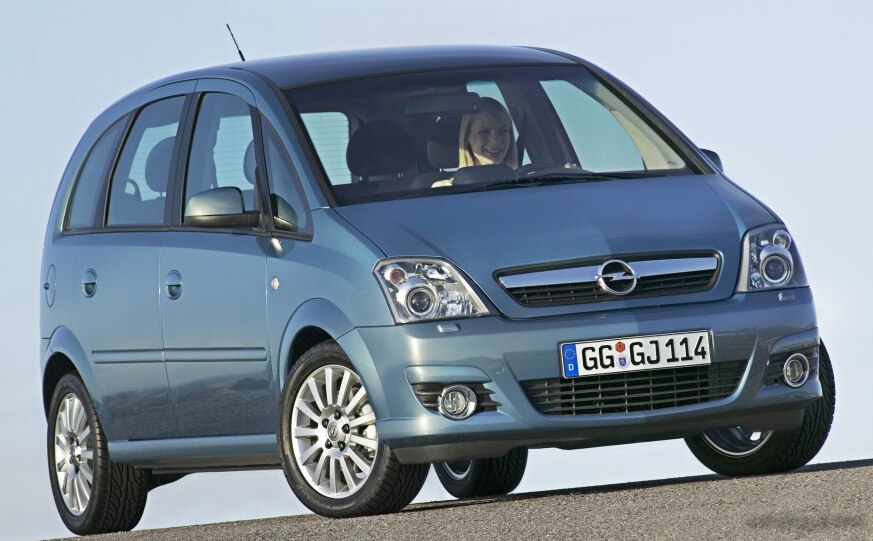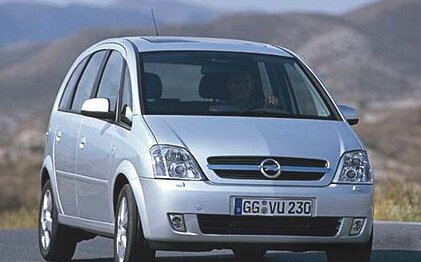
The Opel Meriva A 1.6i, producing 87 horsepower, was a key variant in the first generation of the Meriva, produced between May 2003 and June 2004. Positioned as an entry-level to mid-range offering, it aimed to provide affordable and practical transportation within the compact MPV (Multi-Purpose Vehicle) segment, primarily targeted at European families. The Meriva A, built on the GM’s H platform (also known as the 1HX0/A3 platform), represented Opel’s attempt to capitalize on the growing popularity of small, versatile people carriers. This particular 1.6-liter engine and five-speed manual transmission combination offered a balance between fuel efficiency and acceptable performance for everyday driving.
Technical Specifications
| Brand | Opel |
| Model | Meriva |
| Generation | Meriva A |
| Type (Engine) | 1.6i (87 Hp) |
| Start of production | May, 2003 |
| End of production | June, 2004 |
| Powertrain Architecture | Internal Combustion engine |
| Body type | Minivan |
| Seats | 5 |
| Doors | 5 |
| Fuel consumption (urban) | 10.5 l/100 km (22.4 US mpg, 26.9 UK mpg, 9.5 km/l) |
| Fuel consumption (extra urban) | 6.2 l/100 km (37.9 US mpg, 45.6 UK mpg, 16.1 km/l) |
| Fuel consumption (combined) | 7.8 l/100 km (30.2 US mpg, 36.2 UK mpg, 12.8 km/l) |
| Fuel Type | Petrol (Gasoline) |
| Acceleration 0 – 100 km/h | 14.5 sec |
| Acceleration 0 – 62 mph | 14.5 sec |
| Acceleration 0 – 60 mph | 13.8 sec |
| Maximum speed | 170 km/h (105.63 mph) |
| Weight-to-power ratio | 15.5 kg/Hp, 64.4 Hp/tonne |
| Weight-to-torque ratio | 9.8 kg/Nm, 102.2 Nm/tonne |
| Power | 87 Hp @ 5400 rpm |
| Power per litre | 54.4 Hp/l |
| Torque | 138 Nm @ 3000 rpm (101.78 lb.-ft. @ 3000 rpm) |
| Engine layout | Front, Transverse |
| Engine Model/Code | Z16SE |
| Engine displacement | 1598 cm3 (97.52 cu. in.) |
| Number of cylinders | 4 |
| Engine configuration | Inline |
| Cylinder Bore | 79 mm (3.11 in.) |
| Piston Stroke | 81.5 mm (3.21 in.) |
| Compression ratio | 9.6:1 |
| Number of valves per cylinder | 2 |
| Fuel injection system | Multi-port manifold injection |
| Engine aspiration | Naturally aspirated engine |
| Valvetrain | SOHC |
| Engine oil capacity | 3.5 l (3.7 US qt | 3.08 UK qt) |
| Coolant | 6.8 l (7.19 US qt | 5.98 UK qt) |
| Kerb Weight | 1350 kg (2976.24 lbs.) |
| Max. weight | 1805 kg (3979.34 lbs.) |
| Max load | 455 kg (1003.1 lbs.) |
| Trunk (boot) space – minimum | 350 l (12.36 cu. ft.) |
| Trunk (boot) space – maximum | 1410 l (49.79 cu. ft.) |
| Fuel tank capacity | 53 l (14 US gal | 11.66 UK gal) |
| Length | 4042 mm (159.13 in.) |
| Width | 1694 mm (66.69 in.) |
| Height | 1624 mm (63.94 in.) |
| Wheelbase | 2630 mm (103.54 in.) |
| Front track | 1449 mm (57.05 in.) |
| Rear (Back) track | 1464 mm (57.64 in.) |
| Drag coefficient (Cd) | 0.32 |
| Drivetrain Architecture | The Internal combustion engine (ICE) drives the front wheels of the vehicle. |
| Drive wheel | Front wheel drive |
| Number of gears and type of gearbox | 5 gears, manual transmission |
| Front suspension | Coil spring |
| Rear suspension | Coil spring |
| Front brakes | Ventilated discs |
| Rear brakes | Disc |
| Assisting systems | ABS (Anti-lock braking system) |
| Steering type | Steering rack and pinion |
| Power steering | Hydraulic Steering |
| Tires size | 185/60 R15 |
| Wheel rims size | 6J x 15 |
Powertrain & Engine Architecture
The heart of the Meriva A 1.6i was the Z16SE engine, a 1.6-liter inline-four cylinder petrol engine. This engine was a common sight in various Opel/Vauxhall models of the era, known for its relative simplicity and reliability. It featured a single overhead camshaft (SOHC) valvetrain operating two valves per cylinder. Fuel delivery was handled by a multi-port fuel injection system, providing adequate atomization for efficient combustion. The engine produced 87 horsepower at 5400 rpm and 138 Nm (101.78 lb-ft) of torque at 3000 rpm. The five-speed manual transmission was the standard offering for this variant, providing a reasonably direct connection between the engine and the front wheels. The transmission’s gear ratios were tuned for fuel economy and everyday drivability rather than outright performance.
Driving Characteristics
The 1.6i Meriva A offered modest performance. Acceleration from 0 to 100 km/h (0-62 mph) took around 14.5 seconds, and top speed was limited to 170 km/h (105.63 mph). Compared to higher-spec Merivas equipped with the 1.8-liter engine, the 1.6i felt noticeably slower, particularly when fully loaded with passengers and luggage. However, the 1.6i’s lighter weight and less stressed engine contributed to better fuel economy. The five-speed manual transmission allowed drivers to keep the engine in its optimal power band, but frequent downshifts were often necessary for overtaking or climbing hills. The steering was light and easy, making it well-suited for urban driving, but lacked the precision and feedback desired by more enthusiastic drivers.
Equipment & Trim Levels
The 1.6i Meriva A typically came with a basic level of equipment. Standard features included power steering, ABS brakes, a driver’s airbag, and central locking. The interior was typically finished with durable cloth upholstery. Optional extras included air conditioning, alloy wheels, a CD player, and electric windows. The trim level was generally considered entry-level, focusing on providing essential features at an affordable price point. Higher trim levels, often paired with the 1.8-liter engine, offered more luxurious appointments such as upgraded upholstery, additional airbags, and more sophisticated audio systems.
Chassis & Braking
The Meriva A featured a relatively simple chassis design. Both the front and rear suspension utilized coil springs and dampers. The front suspension employed MacPherson struts, while the rear used a torsion beam setup. This configuration provided a comfortable ride quality, but didn’t offer particularly sporty handling. The braking system consisted of ventilated discs on the front wheels and solid discs on the rear. ABS (Anti-lock Braking System) was standard, enhancing safety by preventing wheel lockup during hard braking. The relatively light weight of the 1.6i variant helped to compensate for the modest braking performance.
Market Reception & Comparison
The Opel Meriva A 1.6i was generally well-received as a practical and affordable family vehicle. Critics praised its spacious interior, versatile seating arrangements, and reasonable fuel economy. However, the 1.6-liter engine was often criticized for being underpowered, especially when compared to the more potent 1.8-liter option. The 1.8-liter Meriva offered significantly improved performance, but came at a higher price. The 1.7 CDTI diesel variant provided excellent fuel economy but was more expensive to purchase initially. The 1.6i struck a balance between cost and usability, making it a popular choice for budget-conscious buyers.
Legacy
The Opel Meriva A 1.6i, while not a performance standout, proved to be a reliable and durable vehicle. The Z16SE engine is known for its longevity, and with proper maintenance, can withstand high mileage. In the used car market, these Merivas are often sought after as affordable and practical transportation. Common issues include wear and tear on suspension components and occasional problems with the fuel injection system. However, parts are readily available and relatively inexpensive, making them easy to repair. The Meriva A 1.6i represents a solid, if unspectacular, example of early 2000s European compact MPV design.