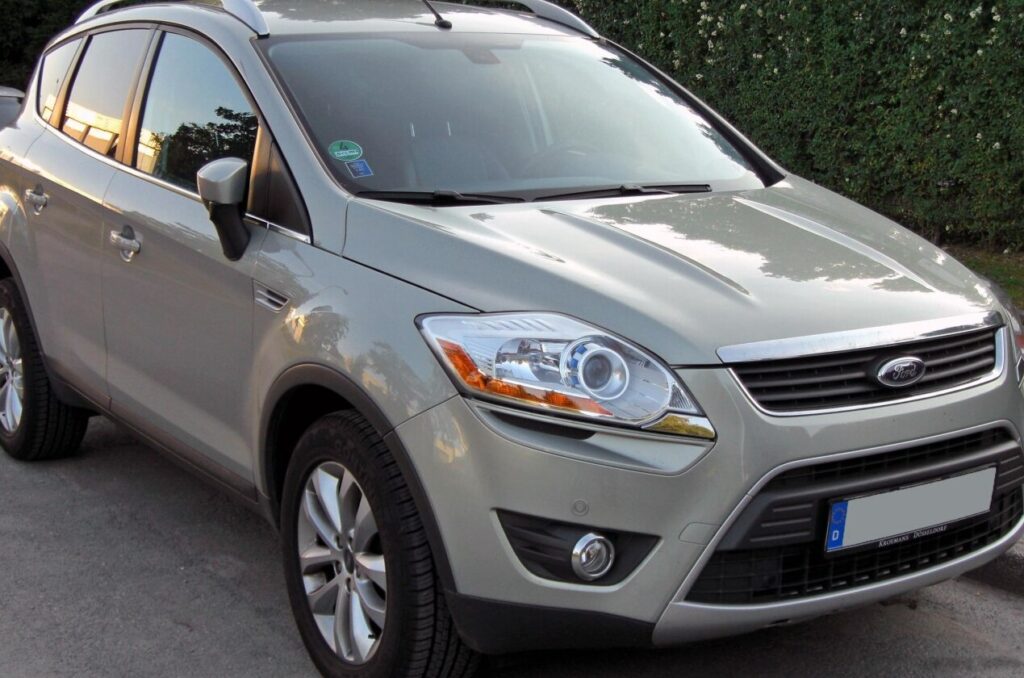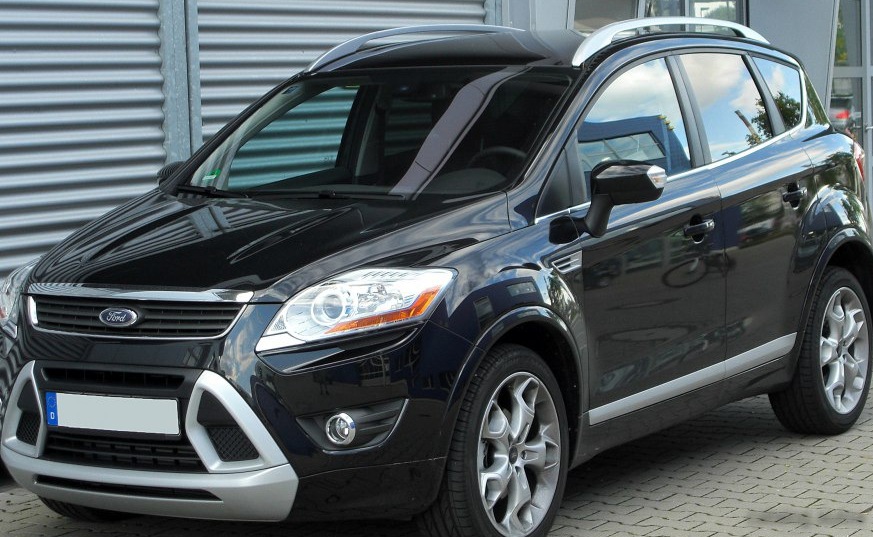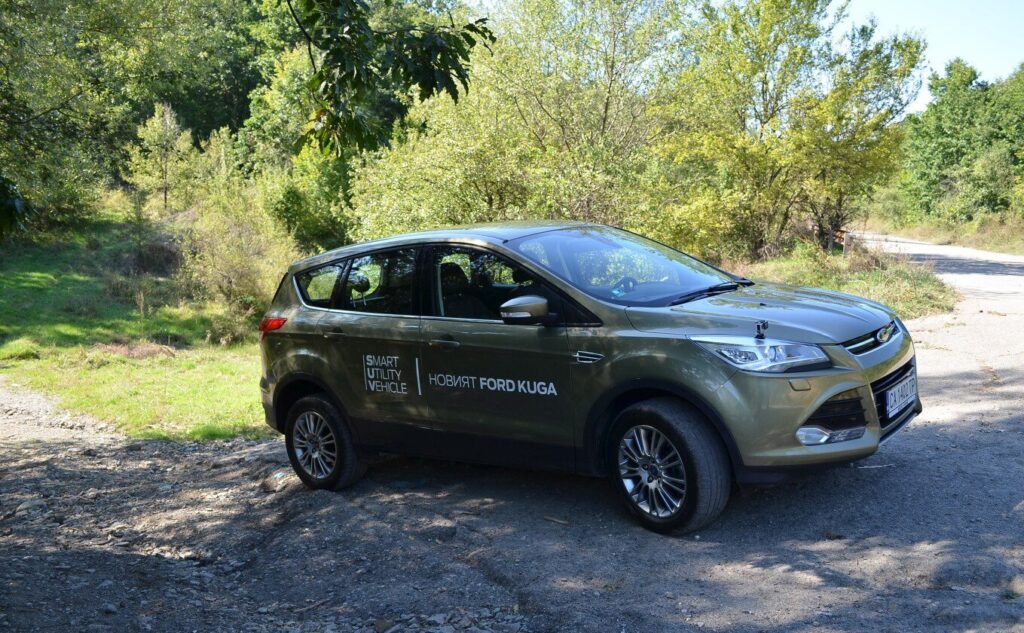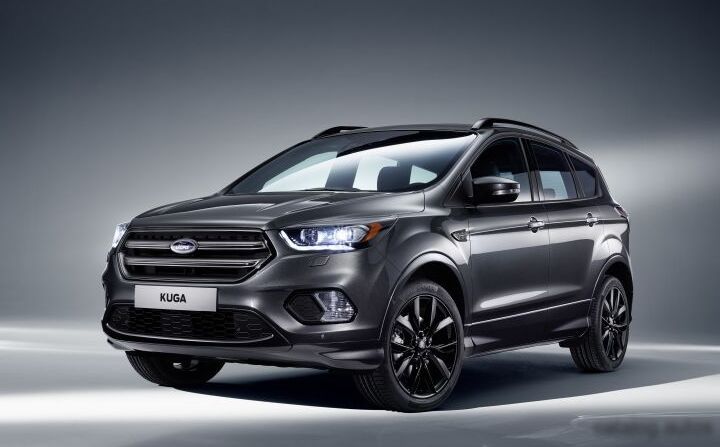
The Ford Kuga II (facelift, produced 2016-2018) equipped with the 1.5 EcoBoost 150 horsepower engine represents a significant iteration of Ford’s popular compact SUV for the European market. This variant, positioned as a mid-range offering, aimed to balance fuel efficiency with acceptable performance for everyday driving. It built upon the foundation of the Kuga II, which itself was based on the Ford C-MAX platform (also known as the 1HX0/A3 platform), offering a practical and versatile vehicle for families and individuals alike. The facelift brought styling updates and refinements to the existing Kuga II, enhancing its appeal and competitiveness within the crowded SUV segment.
Technical Specifications
| Brand | Ford |
| Model | Kuga |
| Generation | Kuga II (facelift 2016) |
| Type (Engine) | 1.5 EcoBoost (150 Hp) |
| Start of production | 2016 |
| End of production | 2018 |
| Powertrain Architecture | Internal Combustion engine |
| Body type | SUV |
| Seats | 5 |
| Doors | 5 |
| Fuel consumption (urban) | 7.9 l/100 km (29.8 US mpg, 35.8 UK mpg, 12.7 km/l) |
| Fuel consumption (extra urban) | 5.4 l/100 km (43.6 US mpg, 52.3 UK mpg, 18.5 km/l) |
| Fuel consumption (combined) | 6.3 l/100 km (37.3 US mpg, 44.8 UK mpg, 15.9 km/l) |
| CO2 emissions | 145 g/km |
| Fuel Type | Petrol (Gasoline) |
| Acceleration 0 – 100 km/h | 9.7 sec |
| Acceleration 0 – 62 mph | 9.7 sec |
| Acceleration 0 – 60 mph | 9.2 sec |
| Maximum speed | 195 km/h (121.17 mph) |
| Emission standard | Euro 6 |
| Weight-to-power ratio | 10.5 kg/Hp, 95 Hp/tonne |
| Weight-to-torque ratio | 6.6 kg/Nm, 152 Nm/tonne |
| Power | 150 Hp @ 6000 rpm |
| Power per litre | 100.1 Hp/l |
| Torque | 240 Nm @ 1600-4000 rpm (177.01 lb.-ft. @ 1600-4000 rpm) |
| Engine layout | Front, Transverse |
| Engine Model/Code | M8MA, M8MB, M8MC, M8MD |
| Engine displacement | 1498 cm3 (91.41 cu. in.) |
| Number of cylinders | 4 |
| Engine configuration | Inline |
| Cylinder Bore | 79 mm (3.11 in.) |
| Piston Stroke | 76.4 mm (3.01 in.) |
| Compression ratio | 10:1 |
| Number of valves per cylinder | 4 |
| Fuel injection system | Direct injection |
| Engine aspiration | Turbocharger, Intercooler |
| Valvetrain | DOHC |
| Engine oil capacity | 4.05 l (4.28 US qt | 3.56 UK qt) |
| Coolant | 9.5 l (10.04 US qt | 8.36 UK qt) |
| Kerb Weight | 1579 kg (3481.1 lbs.) |
| Max. weight | 2100 kg (4629.71 lbs.) |
| Max load | 521 kg (1148.61 lbs.) |
| Trunk (boot) space – minimum | 456 l (16.1 cu. ft.) |
| Trunk (boot) space – maximum | 1603 l (56.61 cu. ft.) |
| Fuel tank capacity | 60 l (15.85 US gal | 13.2 UK gal) |
| Max. roof load | 75 kg (165.35 lbs.) |
| Permitted trailer load with brakes (12%) | 2000 kg (4409.25 lbs.) |
| Permitted trailer load without brakes | 750 kg (1653.47 lbs.) |
| Permitted towbar download | 100 kg (220.46 lbs.) |
| Length | 4531 mm (178.39 in.) |
| Width | 1838 mm (72.36 in.) |
| Width with mirrors folded | 1911 mm (75.24 in.) |
| Width including mirrors | 2086 mm (82.13 in.) |
| Height | 1703 mm (67.05 in.) |
| Wheelbase | 2690 mm (105.91 in.) |
| Front track | 1573 mm (61.93 in.) |
| Rear (Back) track | 1583 mm (62.32 in.) |
| Minimum turning circle | 11.1 m (36.42 ft.) |
| Drivetrain Architecture | ICE, Front wheel drive |
| Drive wheel | Front wheel drive |
| Number of gears | 6 |
| Gearbox type | Manual transmission |
| Front suspension | Independent type McPherson |
| Rear suspension | Independent multi-link suspension |
| Front brakes | Ventilated discs |
| Rear brakes | Disc |
| Assisting systems | ABS (Anti-lock braking system) |
| Steering type | Steering rack and pinion |
| Power steering | Electric Steering |
| Tires size | 235/50 R18 |
| Wheel rims size | 7.5 J x 18 |
INTRODUCTION
The Ford Kuga II facelift, specifically the 1.5 EcoBoost 150 hp variant, was a key model in Ford of Europe’s lineup from 2016 to 2018. It represented a move towards smaller, more efficient engines without sacrificing practicality. This version of the Kuga aimed to appeal to buyers seeking a comfortable and well-equipped SUV with reasonable running costs. The 1.5 EcoBoost engine was a relatively new addition to Ford’s engine family, designed to replace larger displacement engines while maintaining competitive performance. Positioned within the Kuga II range, this trim sat between the lower-powered 1.5 EcoBoost 120 hp model and the more potent 1.5 EcoBoost 182 hp and diesel options.
Powertrain & Engine Architecture
The heart of this Kuga variant is the 1.5-liter EcoBoost inline-four cylinder engine, bearing engine codes such as M8MA, M8MB, M8MC, and M8MD depending on specific calibration and market. This engine utilizes direct fuel injection, a technology that improves fuel efficiency and reduces emissions by injecting fuel directly into the combustion chamber. The engine also features a single turbocharger with an intercooler, which forces more air into the cylinders, boosting power output. The valvetrain employs a Dual Overhead Camshaft (DOHC) design with four valves per cylinder, optimizing airflow for improved performance. The 150 hp version of the 1.5 EcoBoost produces 240 Nm (177 lb-ft) of torque between 1600 and 4000 rpm, providing a broad torque band for flexible driving. This particular model was typically paired with a six-speed manual transmission, although an automatic transmission was also available as an option. The automatic transmission, a six-speed torque converter unit, was tuned for smooth shifts and fuel efficiency.
Driving Characteristics
The 1.5 EcoBoost 150 hp Kuga offers a comfortable and generally capable driving experience. Acceleration from 0-60 mph takes around 9.2 seconds, which is adequate for everyday driving but doesn’t provide particularly sporty performance. The engine’s torque delivery is relatively strong at lower RPMs, making it easy to navigate city traffic and execute overtaking maneuvers. However, the engine can feel somewhat strained when pushed hard, especially when fully loaded. Compared to the higher-output 182 hp version, the 150 hp model feels noticeably less powerful, particularly at higher speeds. The manual transmission offers precise shifts, while the automatic provides smooth and convenient operation. The Kuga’s suspension is tuned for comfort, absorbing bumps and imperfections in the road well. The steering is light and easy to use, but lacks significant feedback.
Equipment & Trim Levels
The 1.5 EcoBoost 150 hp Kuga typically came equipped with a reasonable level of standard features. These included air conditioning, power windows, power mirrors, a basic audio system with USB connectivity, and alloy wheels. Higher trim levels, such as Titanium and Vignale, added features like automatic climate control, a larger touchscreen infotainment system with navigation, leather upholstery, parking sensors, and a rearview camera. Optional extras included a panoramic sunroof, heated seats, and advanced driver-assistance systems like adaptive cruise control and lane-keeping assist. Interior upholstery was typically cloth on lower trims, with leather options available on higher-spec models. The dashboard layout was functional and well-designed, with a focus on ease of use.
Chassis & Braking
The Kuga II utilizes an independent McPherson strut suspension setup at the front and an independent multi-link suspension at the rear, providing a good balance of ride comfort and handling. The front brakes are ventilated discs, while the rear brakes are solid discs. Anti-lock Braking System (ABS) is standard. The Kuga’s chassis is relatively lightweight, contributing to its fuel efficiency and agility. Stabilizer bars are fitted to both the front and rear axles to reduce body roll during cornering. The steering system is an electric power-assisted rack and pinion system, providing light and precise steering feel.
Market Reception & Comparison
The 1.5 EcoBoost 150 hp Kuga was generally well-received by automotive critics. It was praised for its fuel efficiency, comfortable ride, and spacious interior. However, some reviewers noted that the engine could feel underpowered, especially when fully loaded or driving uphill. Compared to the 1.5 EcoBoost 182 hp version, the 150 hp model offered better fuel economy but less performance. The diesel variants provided even better fuel economy but came with a higher purchase price and potential concerns about diesel emissions. The Kuga’s main competitors included the Nissan Qashqai, Hyundai Tucson, and Kia Sportage.
Legacy
The 1.5 EcoBoost engine proved to be a reliable unit, although some early models experienced issues with timing belt failures. Regular maintenance, including oil changes and timing belt replacements, is crucial for ensuring long-term reliability. Today, the 1.5 EcoBoost 150 hp Kuga remains a popular choice in the used car market, offering a good balance of practicality, fuel efficiency, and affordability. Its relatively simple engine design and readily available parts make it a relatively easy vehicle to maintain. The Kuga II, in general, established Ford as a major player in the European compact SUV segment, and the 1.5 EcoBoost variant played a significant role in its success.