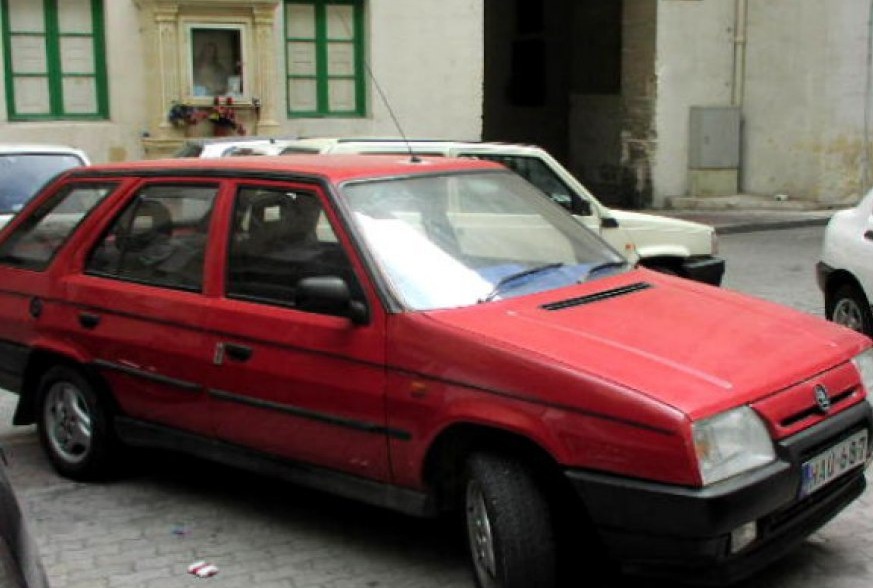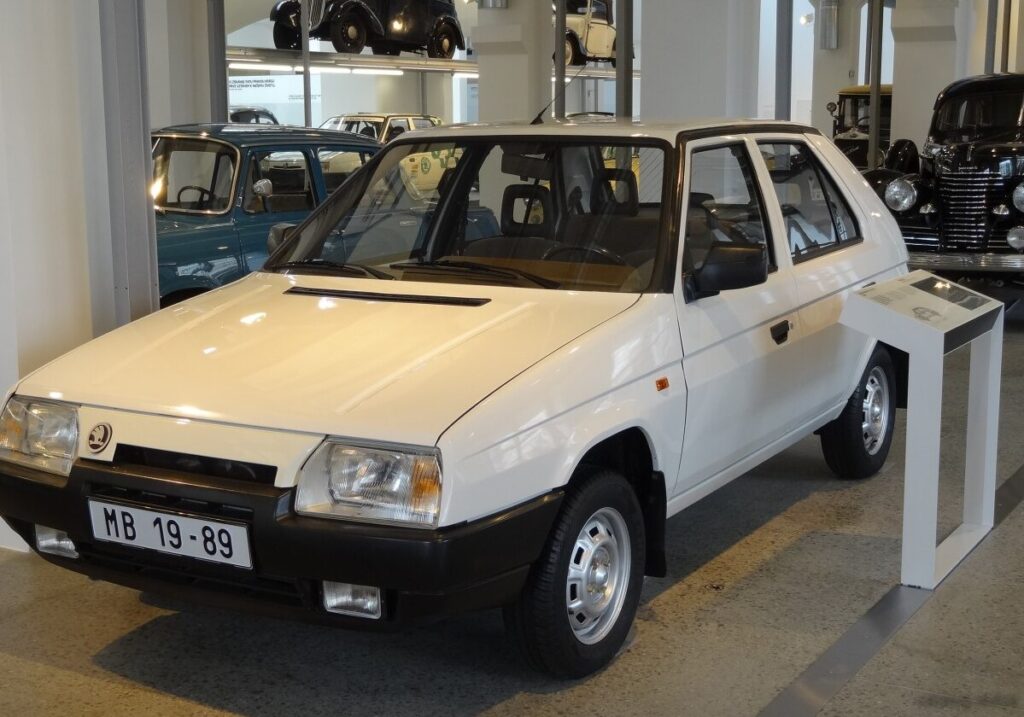
The Skoda Favorit 1.3, specifically the 781 series with the 135L engine producing 58 horsepower, represents a pivotal moment in the Czech automaker’s history. Produced from June 1989 to December 1993, this variant was a key component of the Favorit range (781), which itself was built upon the new-for-Skoda, front-wheel-drive platform. It marked a significant departure from the rear-engined designs that had characterized Skoda production for decades, aligning the brand with modern automotive engineering practices. The 1.3L engine and 5-speed manual transmission combination served as a foundational model within the Favorit lineup, offering an affordable and practical entry point for consumers.
Technical Specifications
| Brand | Skoda |
| Model | Favorit |
| Generation | Favorit (781) |
| Type (Engine) | 1.3 135L (781) (58 Hp) |
| Start of production | June, 1989 |
| End of production | December, 1993 |
| Powertrain Architecture | Internal Combustion engine |
| Body type | Hatchback |
| Seats | 5 |
| Doors | 5 |
| Fuel consumption (urban) | 7.9 l/100 km (29.8 US mpg) |
| Fuel consumption (extra urban) | 5.5 l/100 km (42.8 US mpg) |
| Fuel Type | Petrol (Gasoline) |
| Acceleration 0 – 100 km/h | 15 sec |
| Acceleration 0 – 62 mph | 15 sec |
| Acceleration 0 – 60 mph | 14.3 sec |
| Maximum speed | 150 km/h (93.21 mph) |
| Weight-to-power ratio | 15.1 kg/Hp |
| Weight-to-torque ratio | 9.3 kg/Nm |
| Power | 58 Hp @ 5000 rpm |
| Power per litre | 45 Hp/l |
| Torque | 94 Nm @ 3000 rpm (69.33 lb.-ft. @ 3000 rpm) |
| Engine layout | Front, Transverse |
| Engine Model/Code | 781.135 |
| Engine displacement | 1289 cm3 (78.66 cu. in.) |
| Number of cylinders | 4 |
| Engine configuration | Inline |
| Cylinder Bore | 75.5 mm (2.97 in.) |
| Piston Stroke | 72 mm (2.83 in.) |
| Compression ratio | 8.8:1 |
| Number of valves per cylinder | 2 |
| Fuel injection system | Carburettor |
| Engine aspiration | Naturally aspirated |
| Valvetrain | OHV |
| Engine oil capacity | 4.5 l (4.76 US qt | 3.96 UK qt) |
| Coolant capacity | 6 l (6.34 US qt | 5.28 UK qt) |
| Kerb Weight | 875 kg (1929.04 lbs.) |
| Max. weight | 1325 kg (2921.12 lbs.) |
| Max load | 450 kg (992.08 lbs.) |
| Trunk (boot) space – minimum | 251 l (8.86 cu. ft.) |
| Trunk (boot) space – maximum | 1038 l (36.66 cu. ft.) |
| Fuel tank capacity | 47 l (12.42 US gal | 10.34 UK gal) |
| Permitted trailer load with brakes (12%) | 750 kg (1653.47 lbs.) |
| Permitted trailer load without brakes | 400 kg (881.85 lbs.) |
| Length | 3815 mm (150.2 in.) |
| Width | 1620 mm (63.78 in.) |
| Height | 1415 mm (55.71 in.) |
| Wheelbase | 2450 mm (96.46 in.) |
| Front track | 1400 mm (55.12 in.) |
| Rear track | 1365 mm (53.74 in.) |
| Ride height (ground clearance) | 120 mm (4.72 in.) |
| Drivetrain Architecture | Front wheel drive |
| Number of gears and type of gearbox | 5 gears, manual transmission |
| Front suspension | Independent, McPherson with coil spring and anti-roll bar |
| Rear suspension | Coil spring |
| Front brakes | Disc, 236 mm |
| Rear brakes | Drum, 200 mm |
| Steering type | Steering rack and pinion |
| Power steering | Hydraulic |
| Tires size | 165/70 R13 |
| Wheel rims size | 4.5J x 13 |
Powertrain & Engine Architecture
The heart of the Favorit 1.3 was the 781.135 engine, a 1.3-liter, inline-four cylinder unit. This engine, while relatively simple by modern standards, represented a significant technological leap for Skoda. It featured a single overhead valve (OHV) valvetrain and utilized a carburetor for fuel delivery. The carburetor system, while common for the time, contributed to the engine’s relatively modest power output of 58 horsepower at 5000 rpm and 69.33 lb-ft of torque at 3000 rpm. The engine’s transverse mounting and front-wheel-drive configuration were entirely new for Skoda, requiring a complete overhaul of their manufacturing processes. The 5-speed manual transmission was a standard feature, providing a reasonable balance between fuel economy and drivability. The engine’s design prioritized durability and ease of maintenance over outright performance.
Driving Characteristics
The Favorit 1.3 5-speed offered a practical, if not exhilarating, driving experience. Acceleration to 60 mph took around 14.3 seconds, and top speed was limited to 93 mph. The carburetor and relatively low compression ratio (8.8:1) meant that power delivery was somewhat peaky, requiring frequent gear changes to maintain momentum, especially when loaded or climbing hills. Compared to later Favorit variants with larger engines (like the 1.6) or fuel injection, the 1.3 felt noticeably underpowered. However, the 5-speed gearbox helped mitigate this, allowing drivers to keep the engine within its optimal operating range. The steering, while hydraulic, lacked the precision of more modern systems, but provided adequate assistance for maneuvering in urban environments. The suspension, while basic, offered a comfortable ride on most road surfaces.
Equipment & Trim Levels
The Favorit 1.3 served as the entry-level model, and as such, came with a relatively basic level of equipment. Standard features typically included cloth upholstery, a simple dashboard layout with analog gauges, and manual windows and door locks. Optional extras, such as a radio, upgraded interior trim, and even a sunroof, were available, but added to the vehicle’s cost. The interior was functional and durable, prioritizing practicality over luxury. The exterior trim was also fairly basic, with black plastic bumpers and relatively small steel wheels with hubcaps being common features.
Chassis & Braking
The Favorit’s chassis featured an independent McPherson strut suspension in the front, providing a reasonable level of ride comfort and handling. The rear suspension utilized a simple coil spring setup. Braking was accomplished via disc brakes on the front wheels and drum brakes on the rear. The braking system, while adequate for the vehicle’s weight and performance, lacked the stopping power of more modern systems. The steering was a rack-and-pinion system with hydraulic assistance, offering reasonable maneuverability.
Market Reception & Comparison
The Skoda Favorit 1.3 was generally well-received in its primary markets, particularly in Eastern Europe and Czechoslovakia (before its split). It offered a modern, affordable, and reliable alternative to older, rear-engined Skoda models. Critics praised its spacious interior, practical hatchback design, and relatively fuel-efficient engine. However, the 1.3 engine was often criticized for its lack of power, especially when compared to competitors like the Fiat Uno or Renault Clio. The 1.6-liter versions of the Favorit offered significantly improved performance, but came at a higher price point. The 1.3’s affordability and simplicity made it a popular choice for first-time car buyers and those seeking a practical, economical vehicle.
Legacy
The Skoda Favorit 1.3, while not a performance icon, played a crucial role in modernizing the Skoda brand and establishing its presence in the European automotive market. The 781 series laid the foundation for future Skoda models, and the 1.3 engine proved to be remarkably durable and reliable. Today, the Favorit 1.3 is gaining recognition as a classic car, particularly among enthusiasts who appreciate its simplicity, affordability, and historical significance. While finding well-maintained examples can be challenging, the Favorit 1.3 remains a testament to Skoda’s engineering ingenuity and its transition into a modern automaker. Parts availability can be limited, but the engine’s robust design and relatively simple mechanics make it relatively easy to repair for those with mechanical skills.