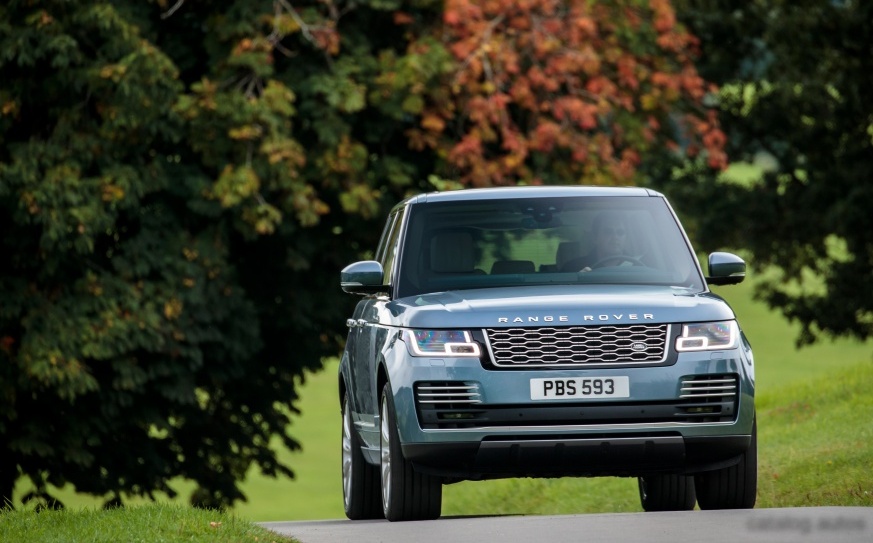
Technical Specifications
| Brand | Land Rover |
| Model | Range Rover |
| Generation | Range Rover IV (facelift 2017) |
| Type (Engine) | 4.4 V8 (339 Hp) AWD Automatic |
| Start of production | 2017 |
| End of production | 2018 |
| Powertrain Architecture | Internal Combustion engine |
| Body type | SUV |
| Seats | 5 |
| Doors | 5 |
| Fuel consumption (urban) | 10.8 l/100 km (21.8 US mpg, 26.2 UK mpg, 9.3 km/l) |
| Fuel consumption (extra urban) | 7.6 l/100 km (30.9 US mpg, 37.2 UK mpg, 13.2 km/l) |
| Fuel consumption (combined) | 8.4 l/100 km (28 US mpg, 33.6 UK mpg, 11.9 km/l) |
| CO2 emissions | 182 g/km |
| Fuel Type | Diesel |
| Acceleration 0 – 100 km/h | 6.9 sec |
| Acceleration 0 – 62 mph | 6.9 sec |
| Acceleration 0 – 60 mph | 6.6 sec |
| Maximum speed | 220 km/h (136.7 mph) |
| Emission standard | Euro 6 |
| Weight-to-power ratio | 7.4 kg/Hp, 135.4 Hp/tonne |
| Weight-to-torque ratio | 3.4 kg/Nm, 295.5 Nm/tonne |
| Power | 339 Hp |
| Power per litre | 77.6 Hp/l |
| Torque | 740 Nm (545.8 lb.-ft.) |
| Engine layout | Front, Longitudinal |
| Engine Model/Code | 448DT |
| Engine displacement | 4367 cm3 (266.49 cu. in.) |
| Number of cylinders | 8 |
| Engine configuration | V-engine |
| Cylinder Bore | 84 mm (3.31 in.) |
| Piston Stroke | 98.5 mm (3.88 in.) |
| Compression ratio | 16:1 |
| Number of valves per cylinder | 4 |
| Fuel injection system | Diesel Commonrail |
| Engine aspiration | BiTurbo, Intercooler |
| Engine oil capacity | 9.4 l (9.93 US qt | 8.27 UK qt) |
| Coolant | 7.13 l (7.53 US qt | 6.27 UK qt) |
| Kerb Weight | 2504 kg (5520.38 lbs.) |
| Trunk (boot) space – minimum | 900 l (31.78 cu. ft.) |
| Trunk (boot) space – maximum | 1943 l (68.62 cu. ft.) |
| Fuel tank capacity | 86 l (22.72 US gal | 18.92 UK gal) |
| Max. roof load | 100 kg (220.46 lbs.) |
| Permitted trailer load with brakes (12%) | 3500 kg (7716.18 lbs.) |
| Permitted trailer load without brakes | 750 kg (1653.47 lbs.) |
| Length | 5000 mm (196.85 in.) |
| Width with mirrors folded | 2073 mm (81.61 in.) |
| Width including mirrors | 2220 mm (87.4 in.) |
| Height | 1869 mm (73.58 in.) |
| Wheelbase | 2922 mm (115.04 in.) |
| Front track | 1693 mm (66.65 in.) |
| Rear (Back) track | 1685 mm (66.34 in.) |
| Front overhang | 883 mm (34.76 in.) |
| Rear overhang | 1195 mm (47.05 in.) |
| Ride height (ground clearance) | 220 mm (8.66 in.) |
| Drag coefficient (Cd) | 0.34 |
| Minimum turning circle (turning diameter) | 12.33 m (40.45 ft.) |
| Approach angle | 26° |
| Departure angle | 24.6° |
| Ramp-over (brakeover) angle | 20.1° |
| Wading depth | 900 mm (35.43 in.) |
| Drive wheel | All wheel drive (4×4) |
| Number of gears and type of gearbox | 8 gears, automatic transmission |
| Front suspension | Wishbone, Air suspension |
| Rear suspension | Independent multi-link suspension, Air suspension |
| Front brakes | Ventilated discs |
| Rear brakes | Ventilated discs |
| Assisting systems | ABS (Anti-lock braking system) |
| Steering type | Steering rack and pinion |
| Power steering | Electric Steering |
The 2017-2018 Range Rover 4.4 V8 Diesel Automatic represents the culmination of Land Rover’s engineering prowess in the luxury SUV segment. Built upon the robust aluminum architecture of the fourth-generation Range Rover (L405), this facelifted model benefited from refinements to both its exterior styling and interior technology. The 4.4-liter diesel V8, a powerplant sourced from BMW, was positioned as the premium engine choice, offering a significant step up in performance and refinement compared to the lower-powered four and six-cylinder options. This variant was primarily marketed towards buyers in Europe and other regions where diesel engines remained popular, offering a compelling combination of fuel efficiency and substantial torque.
Powertrain & Engine Architecture
At the heart of this Range Rover variant lies the BMW-sourced 4.4-liter (4367 cc) V8 diesel engine, designated as the 448DT. This engine utilizes a sophisticated bi-turbocharger system with a variable geometry turbine (VGT) to deliver both strong low-end torque and high-end power. The engine employs a common-rail direct injection system, operating at a compression ratio of 16:1. The engine’s architecture features four valves per cylinder and an intercooler to enhance efficiency. The eight-speed automatic transmission, developed by ZF, is a crucial component of this powertrain. This transmission is known for its smooth shifting characteristics and wide gear ratio spread, optimizing both performance and fuel economy. The transmission features a torque converter lock-up clutch for improved efficiency at cruising speeds.
Driving Characteristics
The 339 horsepower and 740 Nm (545.8 lb-ft) of torque produced by the 4.4 V8 diesel engine translate into impressive performance. Acceleration from 0 to 60 mph is achieved in approximately 6.6-6.9 seconds, and the vehicle boasts a top speed of 136.7 mph. The eight-speed automatic transmission plays a vital role in delivering this performance, providing quick and seamless gear changes. Compared to the lower-powered Range Rover variants, the V8 diesel offers a more effortless driving experience, particularly when fully loaded or towing. While not as overtly sporty as some competitors, the Range Rover prioritizes a smooth, refined, and comfortable ride. The air suspension system contributes significantly to this, providing a plush ride quality both on and off-road. The gear ratios are tuned for a balance between acceleration and fuel efficiency, with taller gears for highway cruising.
Equipment & Trim Levels
The Range Rover 4.4 V8 Diesel Automatic typically came equipped with a high level of standard features. These included leather upholstery, heated and ventilated front seats, a premium sound system, a touchscreen infotainment system with navigation, and a comprehensive suite of safety features. Optional extras included features such as a panoramic sunroof, rear-seat entertainment, adaptive cruise control, and a variety of exterior styling enhancements. Trim levels varied depending on the market, but generally included HSE and Autobiography models, with the Autobiography representing the highest level of luxury and equipment.
Chassis & Braking
The Range Rover IV utilizes a lightweight aluminum monocoque chassis, contributing to its impressive strength and rigidity. The suspension system features a double-wishbone front suspension and an independent multi-link rear suspension, both incorporating air springs and adaptive dampers. This allows for adjustable ride height and damping rates, optimizing both on-road comfort and off-road capability. Braking duties are handled by ventilated disc brakes on all four wheels, coupled with an advanced anti-lock braking system (ABS) and electronic stability control (ESC). The braking system is designed to provide confident stopping power even under demanding conditions.
Market Reception & Comparison
The Range Rover 4.4 V8 Diesel Automatic was generally well-received by automotive critics. It was praised for its powerful engine, refined driving experience, luxurious interior, and impressive off-road capability. Compared to the petrol-powered Range Rovers, the diesel variant offered superior fuel economy and torque. However, it was also noted that the diesel engine was more expensive than the petrol alternatives. Compared to competitors such as the Porsche Cayenne and BMW X5, the Range Rover offered a unique blend of luxury, off-road prowess, and British heritage.
Legacy
The 4.4 V8 diesel engine, while no longer in production due to tightening emissions regulations, has proven to be a relatively reliable powerplant when properly maintained. The ZF eight-speed automatic transmission is also known for its durability. In the used car market, these Range Rovers continue to hold their value, particularly well-maintained examples with low mileage. However, potential buyers should be aware of the potential for expensive repairs associated with complex air suspension systems and electronic components. Overall, the 2017-2018 Range Rover 4.4 V8 Diesel Automatic remains a desirable and capable luxury SUV, offering a compelling combination of performance, refinement, and off-road capability.