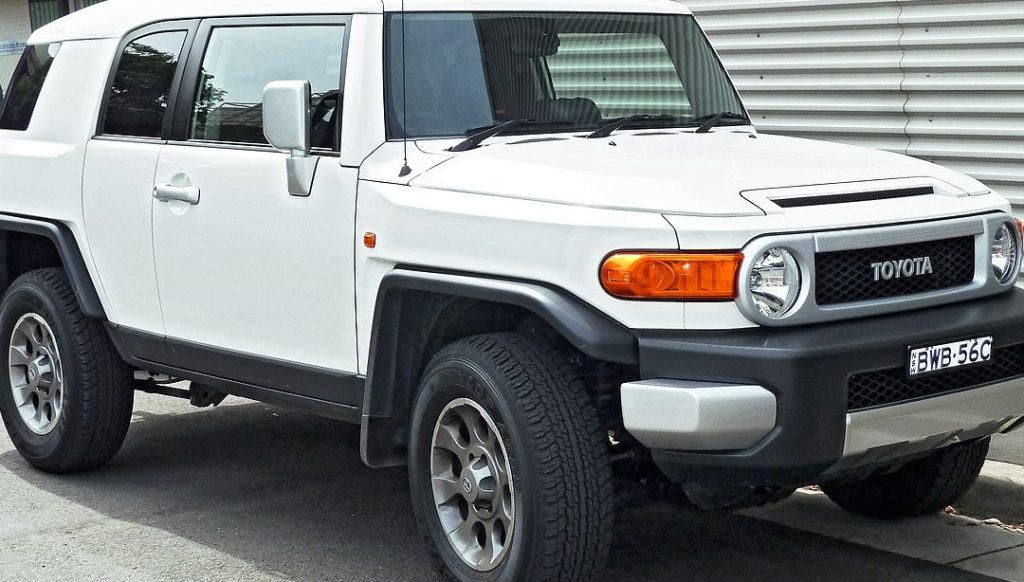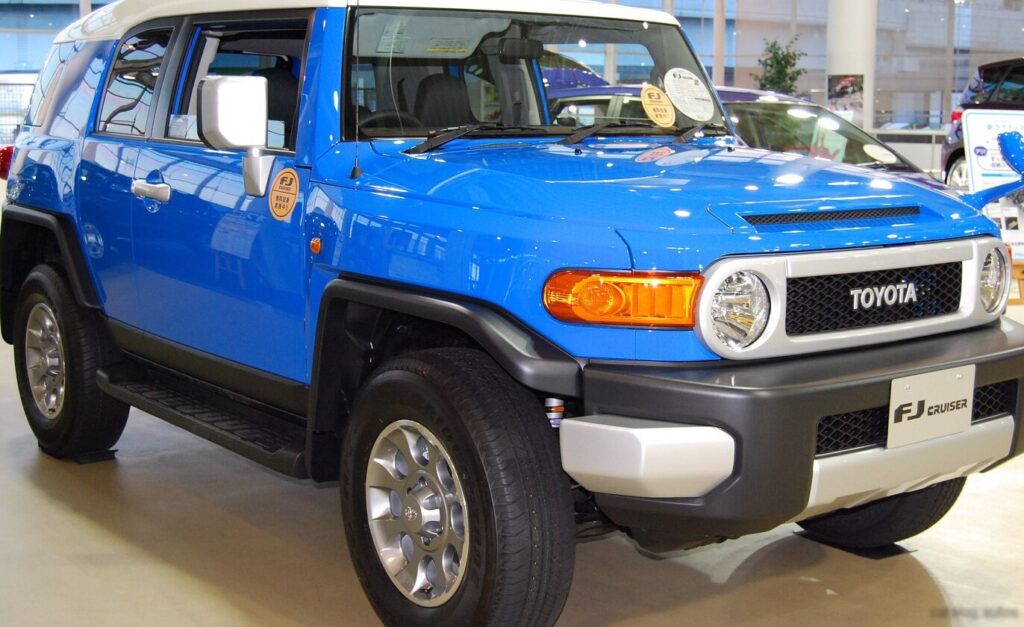
The Toyota FJ Cruiser 4.0 V6 4WD, produced from 2010 to 2014, represents a distinctive iteration of Toyota’s retro-styled off-road SUV. Inspired by the original Toyota Land Cruiser (FJ40), the FJ Cruiser aimed to recapture some of that legendary vehicle’s rugged spirit and off-road capability, but with modern conveniences and safety features. This particular variant, equipped with the 4.0-liter V6 engine and a six-speed manual transmission, occupied a key position in the FJ Cruiser lineup, offering a balance of power, capability, and relative affordability compared to the limited-production, automatic-transmission equipped models. It was primarily marketed towards enthusiasts seeking a capable and unique vehicle for both on and off-road adventures.
Technical Specifications
| Brand | Toyota |
| Model | FJ Cruiser |
| Generation | FJ Cruiser |
| Type (Engine) | 4.0 V6 (260 Hp) 4WD |
| Start of production | 2010 |
| End of production | 2014 |
| Powertrain Architecture | Internal Combustion engine |
| Body type | Off-road vehicle, SUV |
| Seats | 5 |
| Doors | 5 |
| Fuel consumption (urban) | 15.7 l/100 km (15 US mpg, 18 UK mpg, 6.4 km/l) |
| Fuel consumption (extra urban) | 11.8 l/100 km (19.9 US mpg, 23.9 UK mpg, 8.5 km/l) |
| Fuel Type | Petrol (Gasoline) |
| Emission standard | LEV-II |
| Weight-to-power ratio | 7.6 kg/Hp, 132.3 Hp/tonne |
| Weight-to-torque ratio | 5.4 kg/Nm, 186.8 Nm/tonne |
| Power | 260 Hp @ 5600 rpm |
| Power per litre | 65.7 Hp/l |
| Torque | 367 Nm @ 4400 rpm (270.69 lb.-ft. @ 4400 rpm) |
| Engine layout | Front, Longitudinal |
| Engine Model/Code | 1GR-FE |
| Engine displacement | 3956 cm3 (241.41 cu. in.) |
| Number of cylinders | 6 |
| Engine configuration | V-engine |
| Cylinder Bore | 94 mm (3.7 in.) |
| Piston Stroke | 95 mm (3.74 in.) |
| Compression ratio | 10.4:1 |
| Number of valves per cylinder | 4 |
| Fuel injection system | Multi-port manifold injection |
| Engine aspiration | Naturally aspirated engine |
| Valvetrain | DOHC, Dual VVT-i |
| Engine oil capacity | 6.1 l (6.45 US qt | 5.37 UK qt) |
| Coolant capacity | 9.8 l (10.36 US qt | 8.62 UK qt) |
| Kerb Weight | 1965 kg (4332.08 lbs.) |
| Max. weight | 2527 kg (5571.08 lbs.) |
| Max load | 562 kg (1239 lbs.) |
| Trunk (boot) space – minimum | 790 l (27.9 cu. ft.) |
| Trunk (boot) space – maximum | 1892 l (66.82 cu. ft.) |
| Fuel tank capacity | 72 l (19.02 US gal | 15.84 UK gal) |
| Permitted trailer load with brakes (12%) | 2268 kg (5000.08 lbs.) |
| Length | 4671 mm (183.9 in.) |
| Width | 1905 mm (75 in.) |
| Height | 1829 mm (72.01 in.) |
| Wheelbase | 2690 mm (105.91 in.) |
| Front track | 1605 mm (63.19 in.) |
| Rear (Back) track | 1615 mm (63.58 in.) |
| Ride height (ground clearance) | 244 mm (9.61 in.) |
| Minimum turning circle (turning diameter) | 12.4 m (40.68 ft.) |
| Approach angle | 34° |
| Departure angle | 31° |
| Ramp-over (brakeover) angle | 27° |
| Drivetrain Architecture | The Internal combustion engine (ICE) drives permanently the four wheels of the vehicle. |
| Drive wheel | All wheel drive (4×4) |
| Number of gears and type of gearbox | 6 gears, manual transmission |
| Front suspension | Double wishbone, Transverse stabilizer |
| Rear suspension | Independent multi-link spring suspension with stabilizer |
| Front brakes | Disc |
| Rear brakes | Ventilated discs |
| Assisting systems | ABS (Anti-lock braking system) |
| Steering type | Steering rack and pinion |
| Power steering | Hydraulic Steering |
| Tires size | 265/70 R17 |
| Wheel rims size | 7.5J x 17 |
Powertrain & Engine Architecture
The heart of the FJ Cruiser 4.0 V6 is the 1GR-FE engine, a 3.956-liter (241.41 cubic inches) naturally aspirated V6. This engine utilizes a cast iron block with an aluminum cylinder head, incorporating Toyota’s Dual VVT-i (Variable Valve Timing-intelligent) system for both intake and exhaust valves. This technology optimizes engine performance and fuel efficiency across a wider range of engine speeds. The engine employs multi-port fuel injection, delivering fuel directly to the intake ports. The 1GR-FE is known for its durability and relatively simple design, contributing to its long-term reliability. Paired with this engine is a robust six-speed manual transmission, providing drivers with full control over gear selection. This manual transmission was a less common option than the five-speed automatic, appealing to drivers who preferred a more engaging driving experience.
Driving Characteristics
The 260 horsepower and 270.69 lb-ft of torque produced by the 4.0L V6, combined with the six-speed manual transmission, provided a noticeably more spirited driving experience compared to the automatic-equipped FJ Cruisers. The manual gearbox allowed for precise control and better utilization of the engine’s power band, particularly during off-road driving. While not a sports car, the FJ Cruiser 4.0 6MT offered respectable acceleration and the ability to comfortably maintain highway speeds. The six-speed transmission’s gear ratios were well-suited for both on-road cruising and low-speed rock crawling. The manual transmission also contributed to slightly improved fuel economy compared to the automatic.
Equipment & Trim Levels
The FJ Cruiser, even in its base form, came reasonably well-equipped. Standard features on the 4.0 V6 4WD model included air conditioning, power windows and locks, a CD player with auxiliary input, and ABS brakes. The interior featured durable, easy-to-clean materials, reflecting the vehicle’s intended use as a rugged off-roader. Optional extras included a sunroof, upgraded audio system, and various off-road packages that added features like a locking rear differential, crawl control, and skid plates. Interior upholstery was typically a durable cloth, with leather options available as an upgrade. The dashboard layout was functional and straightforward, prioritizing usability over luxury.
Chassis & Braking
The FJ Cruiser utilized a body-on-frame construction, providing a robust and durable platform for off-road adventures. The front suspension consisted of a double wishbone setup with a transverse stabilizer bar, while the rear featured an independent multi-link spring suspension, also with a stabilizer bar. Brakes were disc brakes on all four wheels, with ventilated discs at the rear for improved heat dissipation. The relatively high ground clearance of 9.61 inches, combined with the short wheelbase, contributed to the FJ Cruiser’s excellent off-road capability.
Market Reception & Comparison
The FJ Cruiser was generally well-received by automotive critics, who praised its unique styling, off-road capability, and rugged construction. However, some criticisms were leveled at its on-road ride quality, which could be somewhat stiff, and its limited rear visibility. The 4.0 V6 manual transmission variant was particularly appreciated by enthusiasts who valued driver engagement and control. Compared to the automatic transmission models, the manual offered a more direct connection to the engine and a more rewarding driving experience. Fuel economy, while not exceptional, was comparable to other SUVs in its class.
Legacy
The Toyota FJ Cruiser, despite its relatively short production run, has developed a strong following among off-road enthusiasts and collectors. The 4.0 V6 engine, particularly when paired with the manual transmission, is considered a reliable and durable powertrain. Used FJ Cruisers, especially well-maintained examples, hold their value relatively well. The 1GR-FE engine is known for its longevity, and with proper maintenance, can easily exceed 200,000 miles. The FJ Cruiser remains a distinctive and capable vehicle, representing a unique chapter in Toyota’s history.