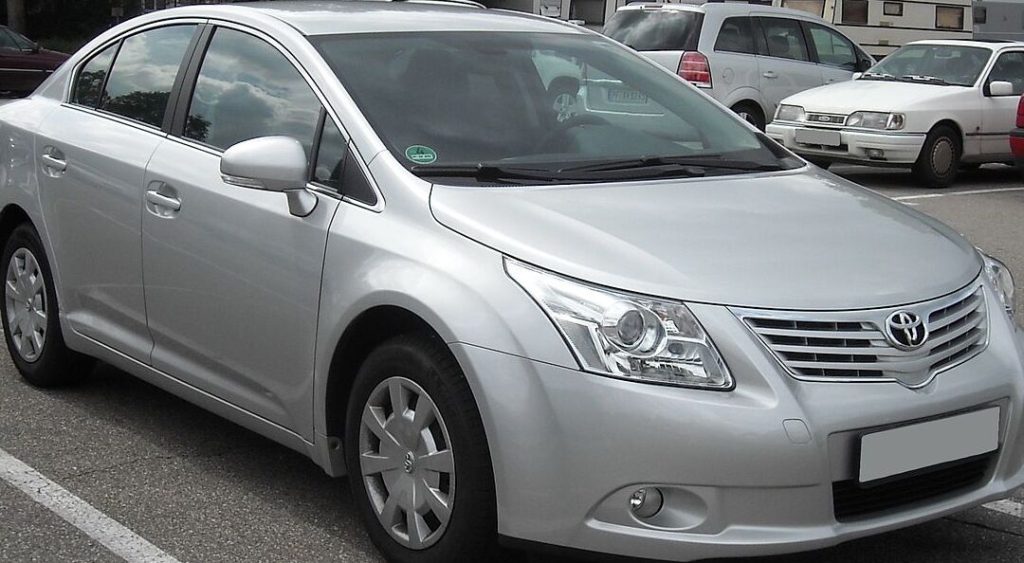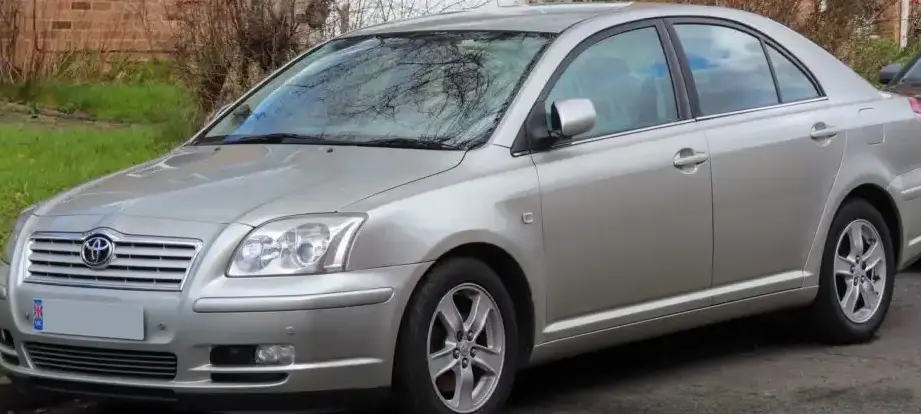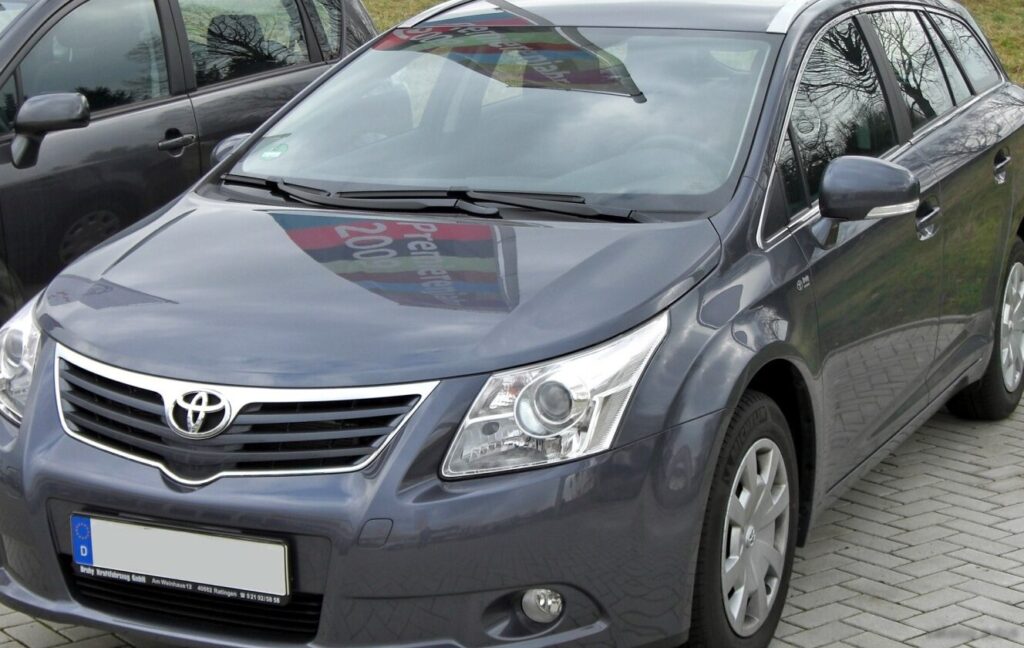
The Toyota Avensis III Wagon 1.8i Multidrive S, produced between 2009 and 2011, represented a key offering in Toyota’s European D-segment lineup. Positioned as a practical and comfortable family vehicle, this variant aimed to balance fuel efficiency with adequate performance. It was part of the larger Avensis III generation (T27), which saw Toyota attempting to elevate the Avensis’s standing in a highly competitive market dominated by European brands. The “Multidrive S” designation refers to Toyota’s continuously variable transmission (CVT), a significant feature of this particular trim level. This wagon body style, popular in Europe, offered increased cargo capacity compared to the sedan version.
Technical Specifications
| Brand | Toyota |
| Model | Avensis |
| Generation | Avensis III Wagon |
| Type (Engine) | 1.8i (147 Hp) Multidrive S |
| Start of production | 2009 |
| End of production | 2011 |
| Powertrain Architecture | Internal Combustion engine |
| Body type | Station wagon (estate) |
| Seats | 5 |
| Doors | 5 |
| Fuel consumption (urban) | 8.6 l/100 km (27.4 US mpg) |
| Fuel consumption (extra urban) | 5.6 l/100 km (42 US mpg) |
| Fuel consumption (combined) | 6.7 l/100 km (35.1 US mpg) |
| Fuel Type | Petrol (Gasoline) |
| Acceleration 0 – 100 km/h | 10.7 sec |
| Acceleration 0 – 62 mph | 10.7 sec |
| Acceleration 0 – 60 mph | 10.2 sec |
| Maximum speed | 200 km/h (124.27 mph) |
| Emission standard | Euro 5 |
| Weight-to-power ratio | 9.6 kg/Hp |
| Weight-to-torque ratio | 7.8 kg/Nm |
| Power | 147 Hp @ 6000 rpm |
| Torque | 180 Nm @ 4000 rpm (132.76 lb.-ft. @ 4000 rpm) |
| Engine layout | Front, Transverse |
| Engine Model/Code | 2ZR-FAE |
| Engine displacement | 1798 cm3 (109.72 cu. in.) |
| Number of cylinders | 4 |
| Engine configuration | Inline |
| Number of valves per cylinder | 4 |
| Fuel injection system | Multi-port manifold injection |
| Engine aspiration | Naturally aspirated engine |
| Valvetrain | DOHC |
| Engine oil capacity | 4.2 l (4.44 US qt | 3.7 UK qt) |
| Coolant capacity | 6.2 l (6.55 US qt | 5.46 UK qt) |
| Kerb Weight | 1405 kg (3097.49 lbs.) |
| Max. weight | 2000 kg (4409.25 lbs.) |
| Max load | 595 kg (1311.75 lbs.) |
| Trunk (boot) space – minimum | 543 l (19.18 cu. ft.) |
| Trunk (boot) space – maximum | 1609 l (56.82 cu. ft.) |
| Fuel tank capacity | 60 l (15.85 US gal | 13.2 UK gal) |
| Length | 4765 mm (187.6 in.) |
| Width | 1810 mm (71.26 in.) |
| Height | 1480 mm (58.27 in.) |
| Wheelbase | 2700 mm (106.3 in.) |
| Front track | 1550 mm (61.02 in.) |
| Rear track | 1540 mm (60.63 in.) |
| Minimum turning circle | 10.8 m (35.43 ft.) |
Powertrain & Engine Architecture
The Avensis 1.8i Multidrive S utilized the 2ZR-FAE engine, a 1.8-liter inline-four cylinder gasoline engine. This engine featured a double overhead camshaft (DOHC) valvetrain and multi-port fuel injection. The 2ZR-FAE was known for its relatively smooth operation and decent fuel economy, though it wasn’t a performance powerhouse. The engine produced 147 horsepower at 6000 rpm and 180 Nm (132.76 lb-ft) of torque at 4000 rpm. The Multidrive S transmission was Toyota’s branded CVT, offering stepless gear changes designed to optimize fuel efficiency and provide a smooth driving experience. Unlike traditional automatic transmissions with fixed gear ratios, the CVT continuously adjusts the gear ratio to keep the engine operating in its most efficient range. This CVT featured a simulated “shift” mode to mimic the feel of a conventional automatic for drivers who preferred it.
Driving Characteristics
The 1.8i Multidrive S offered a comfortable and relaxed driving experience. Acceleration from 0-60 mph took around 10.2 seconds, which was adequate for everyday driving but not particularly sporty. The CVT transmission contributed to a smooth, linear power delivery, but it could sometimes feel less responsive than a traditional automatic or manual transmission, especially during quick acceleration maneuvers. The CVT’s programming prioritized fuel economy, meaning the engine would often hold lower RPMs unless significant throttle input was provided. Compared to the higher-output 2.0-liter or 2.4-liter Avensis variants, the 1.8i felt noticeably less powerful. However, it offered a significant improvement in fuel economy. The manual transmission versions of the 1.8L offered slightly better acceleration and a more engaging driving experience, but the Multidrive S appealed to buyers prioritizing convenience and ease of use.
Equipment & Trim Levels
The 1.8i Multidrive S trim typically included standard features such as air conditioning, power windows, power mirrors, a CD player with MP3 compatibility, and alloy wheels. Safety features included ABS brakes, electronic brakeforce distribution (EBD), and multiple airbags. Higher trim levels offered options like leather upholstery, a sunroof, a navigation system, and automatic climate control. The Avensis was generally well-equipped for its class, focusing on providing a comfortable and practical experience for families. The wagon body style added to the practicality with its generous cargo space.
Chassis & Braking
The Avensis III Wagon featured an independent McPherson strut suspension in the front and a double wishbone suspension in the rear. This setup provided a comfortable ride quality and decent handling characteristics. The front brakes were ventilated discs, while the rear brakes were solid discs. ABS (Anti-lock Braking System) was standard, enhancing braking performance and safety. Stabilizer bars were fitted to both the front and rear axles to reduce body roll during cornering. The suspension tuning was geared towards comfort rather than sporty handling, making it well-suited for long-distance cruising.
Market Reception & Comparison
The Avensis 1.8i Multidrive S was generally well-received by critics as a practical and reliable family car. However, it wasn’t often praised for its exciting driving dynamics. Its main competitors included the Ford Mondeo, Volkswagen Passat, and Vauxhall/Opel Insignia. Compared to these rivals, the Avensis often scored well in reliability surveys, but it sometimes lagged behind in terms of driving engagement and interior design. The CVT transmission was a point of contention for some reviewers, who found it less responsive than traditional automatics. Fuel economy was a strong point, and the Avensis offered a competitive level of equipment for its price.
Legacy
The 2ZR-FAE engine and Multidrive S transmission proved to be relatively reliable powertrains. While not without their occasional issues (such as CVT belt wear over very high mileage), they generally required minimal maintenance and offered good longevity. In the used car market, the Avensis III Wagon 1.8i Multidrive S remains a popular choice for buyers seeking a practical, affordable, and reliable family vehicle. Its reputation for dependability and relatively low running costs continues to make it an attractive option, even as newer models have emerged. Parts availability is generally good, and the Avensis benefits from Toyota’s strong dealer network.