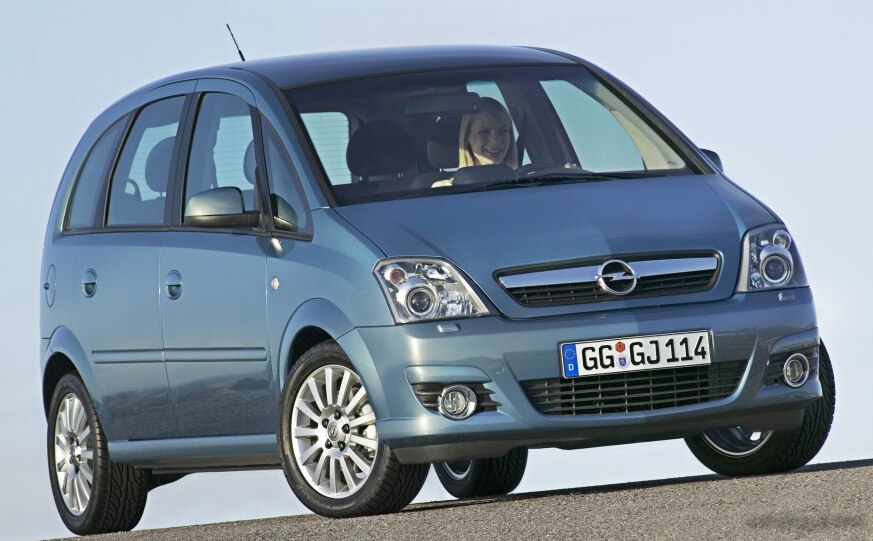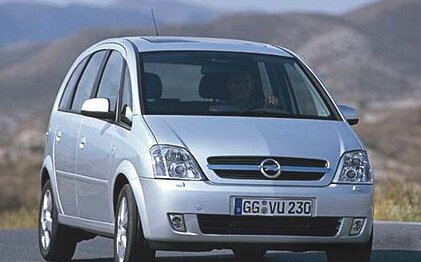
The Opel Meriva A 1.7 CDTI, producing 75 horsepower, was a key variant in the first generation of the Meriva, produced between May 2003 and March 2005. Positioned as an entry-level diesel option, it aimed to provide economical transportation within the compact MPV (Multi-Purpose Vehicle) segment. The Meriva A, built on the GM’s H platform (internally designated as 1HX0/A3), was Opel’s attempt to capture a larger share of the growing family vehicle market in Europe, offering a blend of practicality, space, and affordability. This particular 1.7 CDTI model represented a balance between fuel efficiency and acceptable performance for everyday driving.
Technical Specifications
| Brand | Opel |
| Model | Meriva |
| Generation | Meriva A |
| Type (Engine) | 1.7 CDTI (75 Hp) |
| Start of production | May, 2003 |
| End of production | March, 2005 |
| Powertrain Architecture | Internal Combustion engine |
| Body type | Minivan |
| Seats | 5 |
| Doors | 5 |
| Fuel consumption (urban) | 6.9 l/100 km (34.1 US mpg, 40.9 UK mpg, 14.5 km/l) |
| Fuel consumption (extra urban) | 4.5 l/100 km (52.3 US mpg, 62.8 UK mpg, 22.2 km/l) |
| Fuel consumption (combined) | 5.4 l/100 km (43.6 US mpg, 52.3 UK mpg, 18.5 km/l) |
| Fuel Type | Diesel |
| Acceleration 0 – 100 km/h | 17 sec |
| Acceleration 0 – 62 mph | 17 sec |
| Acceleration 0 – 60 mph | 16.2 sec |
| Maximum speed | 161 km/h (100.04 mph) |
| Weight-to-power ratio | 18.6 kg/Hp, 53.8 Hp/tonne |
| Weight-to-torque ratio | 8.4 kg/Nm, 118.4 Nm/tonne |
| Power | 75 Hp @ 4400 rpm |
| Power per litre | 44.5 Hp/l |
| Torque | 165 Nm @ 1800 rpm (121.7 lb.-ft. @ 1800 rpm) |
| Engine layout | Front, Transverse |
| Engine Model/Code | Y17DT |
| Engine displacement | 1686 cm3 (102.89 cu. in.) |
| Number of cylinders | 4 |
| Engine configuration | Inline |
| Cylinder Bore | 79 mm (3.11 in.) |
| Piston Stroke | 86 mm (3.39 in.) |
| Compression ratio | 18.4:1 |
| Number of valves per cylinder | 4 |
| Fuel injection system | Diesel Commonrail |
| Engine aspiration | Turbocharger, Intercooler |
| Valvetrain | DOHC |
| Engine oil capacity | 4.5 l (4.76 US qt | 3.96 UK qt) |
| Coolant | 6.7 l (7.08 US qt | 5.9 UK qt) |
| Kerb Weight | 1393 kg (3071.04 lbs.) |
| Max. weight | 1870 kg (4122.64 lbs.) |
| Max load | 477 kg (1051.6 lbs.) |
| Trunk (boot) space – minimum | 350 l (12.36 cu. ft.) |
| Trunk (boot) space – maximum | 1410 l (49.79 cu. ft.) |
| Fuel tank capacity | 53 l (14 US gal | 11.66 UK gal) |
| Length | 4042 mm (159.13 in.) |
| Width | 1694 mm (66.69 in.) |
| Height | 1624 mm (63.94 in.) |
| Wheelbase | 2630 mm (103.54 in.) |
| Front track | 1449 mm (57.05 in.) |
| Rear (Back) track | 1464 mm (57.64 in.) |
| Drag coefficient (Cd) | 0.32 |
| Drivetrain Architecture | The Internal combustion engine (ICE) drives the front wheels of the vehicle. |
| Drive wheel | Front wheel drive |
| Number of gears and type of gearbox | 5 gears, manual transmission |
| Front suspension | Coil spring |
| Rear suspension | Coil spring |
| Front brakes | Ventilated discs |
| Rear brakes | Disc |
| Assisting systems | ABS (Anti-lock braking system) |
| Steering type | Steering rack and pinion |
| Power steering | Hydraulic Steering |
| Tires size | 185/60 R15 |
| Wheel rims size | 6J X 15 |
Powertrain & Engine Architecture
The heart of the Meriva A 1.7 CDTI was the Y17DT engine, a 1.7-liter inline-four cylinder diesel. This engine was part of Opel/Fiat’s joint diesel engine program, and it utilized a common rail direct injection system for improved fuel efficiency and reduced emissions. The Y17DT featured a single overhead camshaft (SOHC) design operating four valves per cylinder (DOHC). A turbocharger with an intercooler was employed to boost power output, bringing it to 75 horsepower at 4400 rpm and 165 Nm (121.7 lb-ft) of torque at 1800 rpm. The five-speed manual transmission was the only gearbox option available with this engine configuration. The engine’s design prioritized fuel economy and low-end torque, making it suitable for urban driving and carrying passengers/cargo.
Driving Characteristics
The 1.7 CDTI-equipped Meriva A offered modest performance. Acceleration from 0 to 100 km/h (0-62 mph) took around 17 seconds, and top speed was limited to 161 km/h (100 mph). While not particularly quick, the engine provided sufficient power for everyday driving situations. The turbocharger helped to mitigate some of the power deficit, providing a noticeable boost in acceleration when needed. The five-speed manual transmission was well-matched to the engine’s characteristics, with gear ratios optimized for fuel efficiency and drivability. Compared to the more powerful 1.8-liter gasoline engine or the later 1.7 CDTI variants with increased horsepower, this 75 hp version felt noticeably slower, especially when fully loaded. However, it excelled in fuel economy, making it a popular choice for drivers prioritizing cost-effectiveness.
Equipment & Trim Levels
The 1.7 CDTI typically represented the base trim level for the Meriva A. Standard equipment included power steering, ABS brakes, a driver’s airbag, and basic audio system. Interior upholstery was typically cloth, and the dashboard featured a functional, if somewhat basic, design. Optional extras included air conditioning, alloy wheels, electric windows, and a passenger airbag. The Meriva A’s interior was designed with practicality in mind, offering a flexible seating arrangement with folding rear seats to maximize cargo space. The 1.7 CDTI trim was aimed at budget-conscious buyers who valued functionality and fuel efficiency over luxury features.
Chassis & Braking
The Meriva A featured a MacPherson strut front suspension and a twist-beam rear suspension. This setup provided a comfortable ride quality, although handling was not particularly sporty. The front brakes were ventilated discs, while the rear brakes were solid discs. The braking system was adequate for the vehicle’s weight and performance, with ABS providing additional safety. The suspension was tuned to prioritize ride comfort and stability, making it well-suited for carrying passengers and cargo. The relatively light weight of the 1.7 CDTI variant, compared to higher-spec models, contributed to its decent handling characteristics.
Market Reception & Comparison
The Opel Meriva A 1.7 CDTI was generally well-received by critics as an affordable and economical MPV. It was praised for its spacious interior, flexible seating arrangement, and fuel-efficient engine. However, some reviewers criticized its modest performance and somewhat basic interior. Compared to the 1.8-liter gasoline version, the 1.7 CDTI offered significantly better fuel economy but lacked the same level of performance. The later, more powerful 1.7 CDTI variants provided a better balance between performance and economy, but at a higher price point. The Meriva A 1.7 CDTI competed with other compact MPVs such as the Renault Scenic, Citroën Xsara Picasso, and Ford Focus C-Max.
Legacy
The Opel Meriva A 1.7 CDTI has proven to be a relatively reliable powertrain. The Y17DT engine, while not without its quirks, is generally considered durable and capable of high mileage with proper maintenance. Common issues include turbocharger wear and potential problems with the fuel injection system. In the used car market, the 1.7 CDTI variant remains a popular choice for buyers seeking an affordable and economical MPV. Its fuel efficiency and practicality continue to appeal to budget-conscious drivers. While not a performance icon, the Meriva A 1.7 CDTI played a significant role in establishing the Meriva as a successful and versatile family vehicle in Europe.