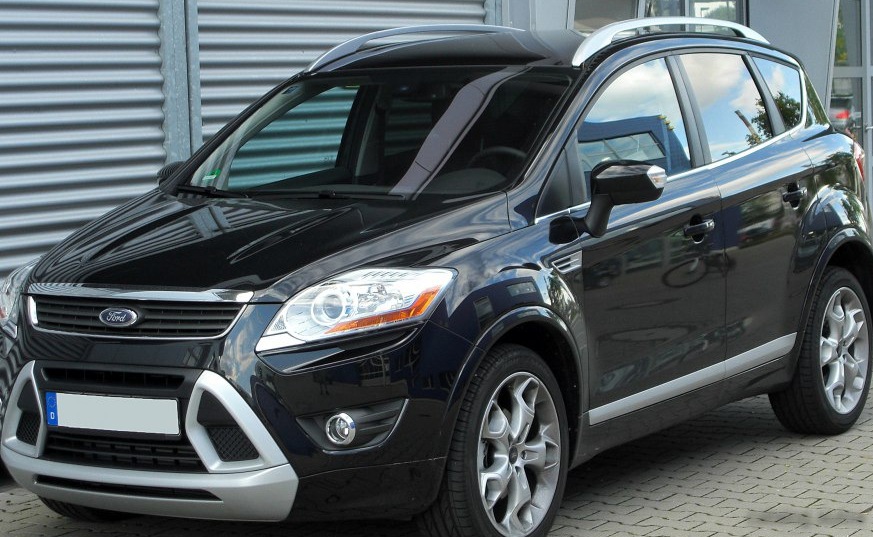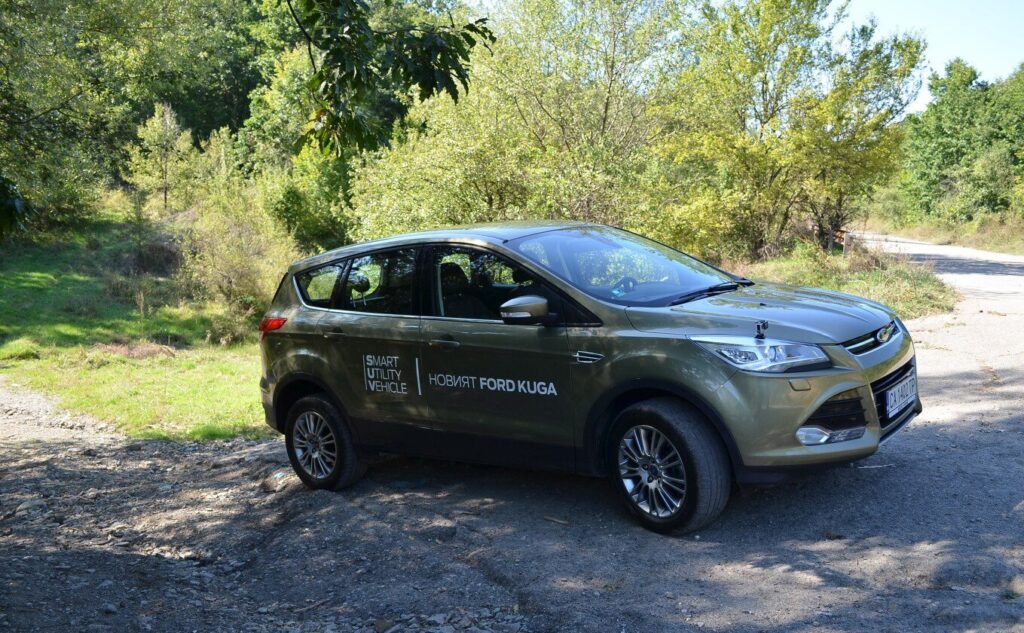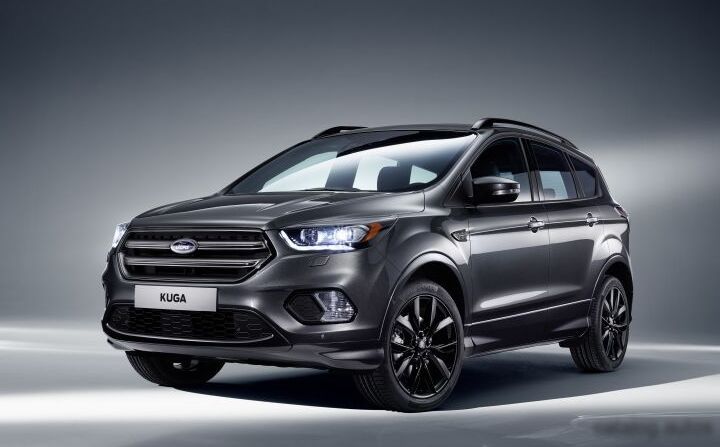
The Ford Kuga II (facelift, produced 2016-2019) 1.5 TDCI 120 horsepower variant represented a key entry point into the Kuga range for European buyers. Positioned as a fuel-efficient and practical compact SUV, it aimed to balance affordability with the Kuga’s established reputation for versatility. This facelift brought updated styling and technology to the Kuga II, which itself was based on the Ford C-MAX/Focus platform (Mk2). The 1.5 TDCI engine was a relatively new addition to the Ford lineup, intended to meet increasingly stringent emissions standards while providing adequate performance for everyday driving.
Technical Specifications
| Brand | Ford |
| Model | Kuga |
| Generation | Kuga II (facelift 2016) |
| Type (Engine) | 1.5 TDCI (120 Hp) |
| Start of production | 2016 |
| End of production | 2019 |
| Powertrain Architecture | Internal Combustion engine |
| Body type | SUV |
| Seats | 5 |
| Doors | 5 |
| Fuel consumption (urban) | 4.8 l/100 km (49 US mpg, 58.9 UK mpg, 20.8 km/l) |
| Fuel consumption (extra urban) | 4.2 l/100 km (56 US mpg, 67.3 UK mpg, 23.8 km/l) |
| Fuel consumption (combined) | 4.4 l/100 km (53.5 US mpg, 64.2 UK mpg, 22.7 km/l) |
| CO2 emissions | 115 g/km |
| Fuel Type | Diesel |
| Acceleration 0 – 100 km/h | 12.7 sec |
| Acceleration 0 – 62 mph | 12.7 sec |
| Acceleration 0 – 60 mph | 12.1 sec |
| Maximum speed | 173 km/h (107.5 mph) |
| Emission standard | Euro 6 |
| Weight-to-power ratio | 13.3 kg/Hp, 75.4 Hp/tonne |
| Weight-to-torque ratio | 5.9 kg/Nm, 169.7 Nm/tonne |
| Power | 120 Hp @ 3600 rpm |
| Power per litre | 80.1 Hp/l |
| Torque | 270 Nm @ 1500-2000 rpm (199.14 lb.-ft. @ 1500-2000 rpm) |
| Engine layout | Front, Transverse |
| Engine Model/Code | XWMB |
| Engine displacement | 1499 cm3 (91.47 cu. in.) |
| Number of cylinders | 4 |
| Engine configuration | Inline |
| Cylinder Bore | 73.5 mm (2.89 in.) |
| Piston Stroke | 88.3 mm (3.48 in.) |
| Compression ratio | 16:1 |
| Number of valves per cylinder | 2 |
| Fuel injection system | Diesel Commonrail |
| Engine aspiration | Turbocharger, Intercooler |
| Valvetrain | SOHC |
| Engine oil capacity | 3.85 l (4.07 US qt, 3.39 UK qt) |
| Coolant | 7.3 l (7.71 US qt, 6.42 UK qt) |
| Kerb Weight | 1591 kg (3507.55 lbs.) |
| Max. weight | 2100 kg (4629.71 lbs.) |
| Max load | 509 kg (1122.15 lbs.) |
| Trunk (boot) space – minimum | 456 l (16.1 cu. ft.) |
| Trunk (boot) space – maximum | 1603 l (56.61 cu. ft.) |
| Fuel tank capacity | 60 l (15.85 US gal, 13.2 UK gal) |
| Max. roof load | 75 kg (165.35 lbs.) |
| Permitted trailer load with brakes (12%) | 1200 kg (2645.55 lbs.) |
| Permitted trailer load without brakes | 750 kg (1653.47 lbs.) |
| Permitted towbar download | 100 kg (220.46 lbs.) |
| Length | 4531 mm (178.39 in.) |
| Width | 1838 mm (72.36 in.) |
| Width with mirrors folded | 1911 mm (75.24 in.) |
| Width including mirrors | 2086 mm (82.13 in.) |
| Height | 1703 mm (67.05 in.) |
| Wheelbase | 2690 mm (105.91 in.) |
| Front track | 1573 mm (61.93 in.) |
| Rear (Back) track | 1583 mm (62.32 in.) |
| Minimum turning circle | 11.1 m (36.42 ft.) |
| Drivetrain Architecture | Front wheel drive |
| Number of gears and type of gearbox | 6 gears, manual transmission |
| Front suspension | Independent type McPherson |
| Rear suspension | Independent multi-link suspension |
| Front brakes | Ventilated discs |
| Rear brakes | Disc |
| Assisting systems | ABS (Anti-lock braking system) |
| Steering type | Steering rack and pinion |
| Power steering | Electric Steering |
| Tires size | 235/50 R18 |
| Wheel rims size | 7.5 J x 18 |
Powertrain & Engine Architecture
The 1.5 TDCI engine (Ford internal code XWMB) was a three-cylinder diesel engine, a departure from Ford’s traditionally four-cylinder diesel offerings. This engine utilized a turbocharger with an intercooler to boost power and efficiency. It featured a common-rail direct fuel injection system, delivering fuel at extremely high pressure for optimized combustion. The engine employed a single overhead camshaft (SOHC) valvetrain, operating two valves per cylinder. The 1.5 TDCI was designed to be lightweight, contributing to the Kuga’s overall efficiency. The six-speed manual transmission was the standard offering for this variant, providing a balance between fuel economy and drivability. While an automatic transmission was available on other Kuga trims, it wasn’t offered with the base 1.5 TDCI engine.
Driving Characteristics
The 120 horsepower 1.5 TDCI Kuga offered adequate, but not exhilarating, performance. Acceleration from 0-60 mph took around 12.1 seconds, making it suitable for everyday commuting and relaxed driving. The engine’s 270 Nm (199 lb-ft) of torque, available from 1500-2000 rpm, provided sufficient pulling power for overtaking and navigating hills. Compared to the more powerful 1.5 TDCI variants or the petrol-powered Kugas, this version felt noticeably slower. The manual transmission’s gear ratios were tuned for fuel efficiency, meaning the engine often needed to be revved to access its full potential. The driving experience was generally comfortable, thanks to the Kuga’s well-tuned suspension, but it wasn’t designed for sporty handling.
Equipment & Trim Levels
The 1.5 TDCI 120 horsepower Kuga typically came with a base level of equipment, focusing on practicality and value. Standard features generally included air conditioning, power windows, a basic audio system with USB connectivity, and alloy wheels. Safety features such as ABS, electronic stability control, and multiple airbags were also standard. Higher trim levels, such as Zetec and Titanium, added features like climate control, a larger touchscreen infotainment system, parking sensors, and upgraded interior trim. Optional extras included a panoramic sunroof, leather upholstery, and a navigation system.
Chassis & Braking
The Kuga II utilized an independent McPherson strut suspension setup at the front and an independent multi-link suspension at the rear, providing a comfortable ride and decent handling. The front brakes were ventilated discs, while the rear brakes were solid discs. The steering was electrically assisted, offering a light and precise feel. The 1.5 TDCI models typically featured a slightly smaller stabilizer bar compared to the higher-powered variants, reflecting the lower weight and power output. The suspension was tuned to prioritize comfort over outright sportiness.
Market Reception & Comparison
The 1.5 TDCI 120 horsepower Kuga was generally well-received as an affordable and fuel-efficient option in the compact SUV segment. Critics praised its practicality, spacious interior, and comfortable ride. However, some reviewers noted its relatively slow acceleration and basic interior trim. Compared to the more powerful Kuga variants, the 1.5 TDCI offered significantly better fuel economy, making it an attractive choice for drivers prioritizing running costs. Against competitors like the Nissan Qashqai and Kia Sportage, the Kuga offered a competitive package in terms of price, space, and features.
Legacy
The 1.5 TDCI engine, while relatively new at the time, proved to be generally reliable. Common issues reported included diesel particulate filter (DPF) problems, particularly on vehicles used primarily for short journeys. However, with regular maintenance and proper driving habits, the engine could provide years of dependable service. On the used car market, the 1.5 TDCI Kuga represents a good value proposition for buyers seeking an affordable and practical SUV. Its fuel efficiency and relatively low running costs continue to make it an appealing option, although potential buyers should be aware of the potential for DPF issues and ensure the vehicle has been properly maintained.