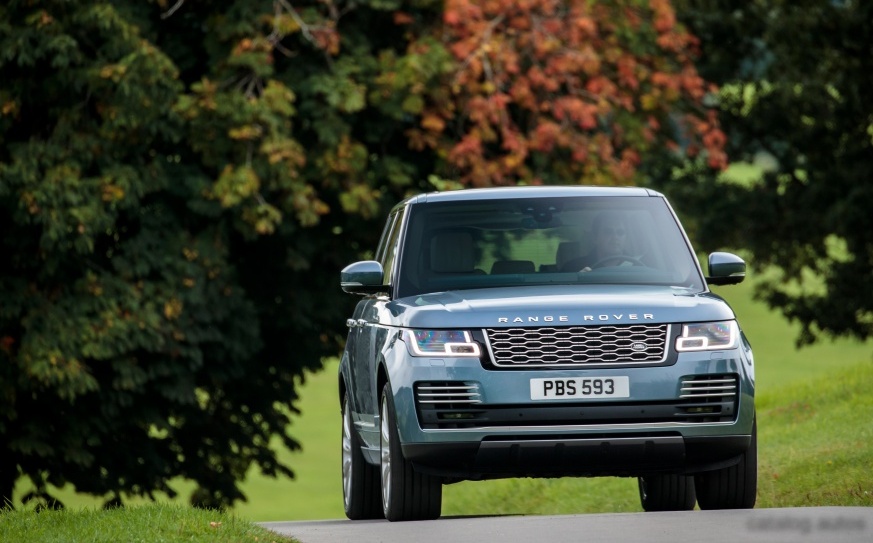
The Land Rover Range Rover IV (facelift, introduced in 2017) 5.0 V8 Supercharged represents the pinnacle of luxury and performance within the fourth-generation Range Rover lineup. Produced from 2017 through October 2021, this variant occupied the top-tier position, offering substantial power and a comprehensive suite of features. It built upon the already successful L405 platform (internally designated as the 1HX0/A3), enhancing both its aesthetic appeal and technological sophistication. This model catered to buyers seeking uncompromising capability combined with a refined driving experience, solidifying the Range Rover’s reputation as a world-class luxury SUV.
Technical Specifications
| Brand | Land Rover |
| Model | Range Rover |
| Generation | Range Rover IV (facelift 2017) |
| Type (Engine) | 5.0 V8 (525 Hp) AWD Automatic Supercharged |
| Start of production | 2017 |
| End of production | October, 2021 |
| Powertrain Architecture | Internal Combustion engine |
| Body type | SUV |
| Seats | 5 |
| Doors | 5 |
| Fuel consumption (economy) – urban | 17.9 l/100 km (13.1 US mpg, 15.8 UK mpg, 5.6 km/l) |
| Fuel consumption (economy) – extra urban | 9.6 l/100 km (24.5 US mpg, 29.4 UK mpg, 10.4 km/l) |
| Fuel consumption (economy) – combined | 12.7 l/100 km (18.5 US mpg, 22.2 UK mpg, 7.9 km/l) |
| CO2 emissions | 294 g/km |
| Fuel Type | Petrol (Gasoline) |
| Acceleration 0 – 100 km/h | 5.4 sec |
| Acceleration 0 – 62 mph | 5.4 sec |
| Acceleration 0 – 60 mph | 5.1 sec |
| Maximum speed | 225 km/h (139.81 mph) |
| Emission standard | Euro 6 |
| Weight-to-power ratio | 4.5 kg/Hp, 220.3 Hp/tonne |
| Weight-to-torque ratio | 3.8 kg/Nm, 262.3 Nm/tonne |
| Power | 525 Hp |
| Power per litre | 105 Hp/l |
| Torque | 625 Nm (460.98 lb.-ft.) |
| Engine layout | Front, Longitudinal |
| Engine Model/Code | 508PS |
| Engine displacement | 5000 cm3 (305.12 cu. in.) |
| Number of cylinders | 8 |
| Engine configuration | V-engine |
| Cylinder Bore | 92.5 mm (3.64 in.) |
| Piston Stroke | 93 mm (3.66 in.) |
| Compression ratio | 9.5:1 |
| Number of valves per cylinder | 4 |
| Fuel injection system | Multi-port manifold injection |
| Engine aspiration | Supercharger, Intercooler |
| Engine oil capacity | 8 l (8.45 US qt | 7.04 UK qt) |
| Coolant | 8.83 l (9.33 US qt | 7.77 UK qt) |
| Kerb Weight | 2383 kg (5253.62 lbs.) |
| Trunk (boot) space – minimum | 900 l (31.78 cu. ft.) |
| Fuel tank capacity | 103.5 l (27.34 US gal | 22.77 UK gal) |
| Max. roof load | 100 kg (220.46 lbs.) |
| Permitted trailer load with brakes (12%) | 3500 kg (7716.18 lbs.) |
| Permitted trailer load without brakes | 750 kg (1653.47 lbs.) |
| Length | 5000 mm (196.85 in.) |
| Width with mirrors folded | 2073 mm (81.61 in.) |
| Width including mirrors | 2220 mm (87.4 in.) |
| Height | 1869 mm (73.58 in.) |
| Wheelbase | 2922 mm (115.04 in.) |
| Front track | 1693 mm (66.65 in.) |
| Rear (Back) track | 1685 mm (66.34 in.) |
| Front overhang | 883 mm (34.76 in.) |
| Rear overhang | 1195 mm (47.05 in.) |
| Ride height (ground clearance) | 220 mm (8.66 in.) |
| Drag coefficient (Cd) | 0.35 |
| Minimum turning circle (turning diameter) | 12.33 m (40.45 ft.) |
| Approach angle | 26° |
| Departure angle | 24.6° |
| Ramp-over (brakeover) angle | 20.1° |
| Wading depth | 900 mm (35.43 in.) |
| Drive wheel | All wheel drive (4×4) |
| Number of gears and type of gearbox | 8 gears, automatic transmission |
| Front suspension | Wishbone, Air suspension |
| Rear suspension | Independent multi-link suspension, Air suspension |
| Front brakes | Ventilated discs |
| Rear brakes | Ventilated discs |
| Assisting systems | ABS (Anti-lock braking system) |
| Steering type | Steering rack and pinion |
| Power steering | Electric Steering |
Powertrain & Engine Architecture
At the heart of the 2017-2021 Range Rover 5.0 V8 Supercharged lies the Jaguar-Land Rover 5.0-liter supercharged V8 engine, internally designated as the 508PS. This engine is a significant evolution of the AJ-V8 family, featuring a Roots-type supercharger for forced induction. The engine utilizes multi-port fuel injection and variable valve timing to optimize performance and efficiency. The engine produces 525 horsepower and 625 Nm (460.98 lb-ft) of torque. The engine is longitudinally mounted and paired with an eight-speed automatic transmission, developed by ZF. This transmission offers smooth and responsive shifts, contributing to the vehicle’s refined driving experience. The transmission is electronically controlled and features selectable driving modes, including Sport and Eco, to tailor the vehicle’s performance to the driver’s preferences.
Driving Characteristics
The 5.0 V8 Supercharged Range Rover delivers exhilarating performance. The 0-60 mph sprint is achieved in approximately 5.1 seconds, and the vehicle boasts a top speed of 139.81 mph. The supercharger provides instant throttle response and a broad torque curve, making for effortless acceleration in various driving situations. While the eight-speed automatic transmission is generally smooth, it can occasionally exhibit slight hesitation during downshifts. Compared to the diesel variants (like the TD6), the supercharged V8 offers significantly more power and a more engaging driving experience, but at the cost of increased fuel consumption. The air suspension provides a comfortable ride, effectively isolating passengers from road imperfections. However, the vehicle’s substantial weight is noticeable during spirited driving, reducing agility compared to lighter SUVs.
Equipment & Trim Levels
The 5.0 V8 Supercharged trim came standard with a luxurious array of features. These included premium leather upholstery, heated and ventilated front and rear seats, a panoramic sunroof, a Meridian sound system, and a comprehensive suite of driver-assistance technologies such as adaptive cruise control, lane departure warning, and automatic emergency braking. Optional extras included executive rear seating with individual climate control and massage functions, a rear entertainment system, and various exterior styling enhancements. The interior typically featured wood or metal trim options, allowing buyers to personalize the vehicle to their tastes.
Chassis & Braking
The Range Rover IV utilizes a robust aluminum monocoque chassis, contributing to its strength and relatively low weight. The suspension system features air suspension with electronic dampers, providing adjustable ride height and damping rates. The front suspension employs a double-wishbone design, while the rear utilizes an independent multi-link setup. Braking duties are handled by ventilated discs on all four wheels, coupled with an advanced anti-lock braking system (ABS) and electronic brake-force distribution (EBD). The braking system provides ample stopping power, even under demanding conditions.
Market Reception & Comparison
The 2017-2021 Range Rover 5.0 V8 Supercharged was widely praised by automotive critics for its luxurious interior, powerful engine, and impressive off-road capability. However, its high price tag and relatively poor fuel economy were often cited as drawbacks. Compared to the Range Rover TD6 (diesel), the supercharged V8 offered superior performance but significantly lower fuel efficiency. The TD6 appealed to buyers prioritizing economy and long-distance comfort, while the V8 catered to those seeking a more exhilarating driving experience. Reliability was generally good, although some owners reported minor issues with the infotainment system and air suspension.
Legacy
The 5.0 V8 Supercharged Range Rover IV remains a desirable vehicle in the used car market. Its combination of luxury, performance, and off-road capability continues to appeal to discerning buyers. While maintenance costs can be higher than those of diesel variants, the engine has proven to be relatively durable when properly maintained. The 2017 facelift brought significant improvements to the Range Rover’s design and technology, solidifying its position as a benchmark luxury SUV. The model represents a high point in the Range Rover lineage, offering a compelling blend of refinement and capability.