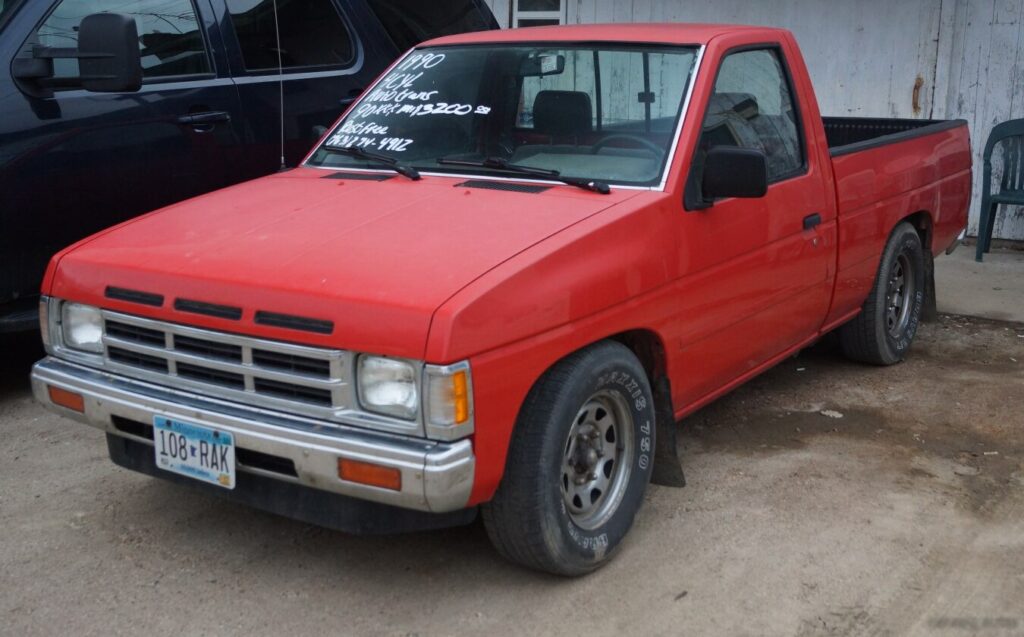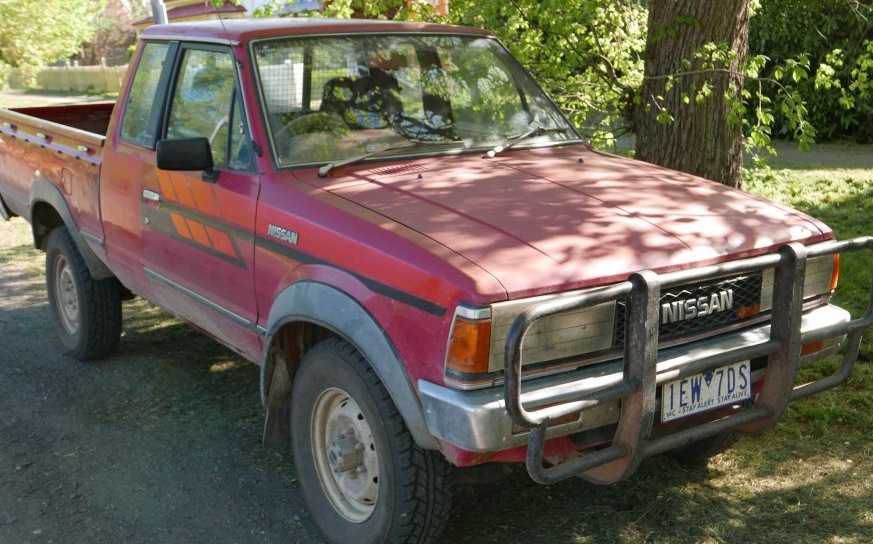
The Nissan Pickup (720), produced from 1983 to 1986, represented a significant step forward for Nissan’s compact truck offerings in the North American market. This generation, designated the D21 internally, built upon the success of the earlier 620 model, offering increased size, improved comfort, and a wider range of configurations. The 2.2-liter (97 hp) 4WD variant occupied a crucial position in the lineup, appealing to buyers seeking a capable and reliable work truck with the added benefit of all-wheel drive. It served as a workhorse for both personal and commercial use, competing directly with offerings from Chevrolet, Ford, and Toyota.
Technical Specifications
| Brand | Nissan |
| Model | Pick UP (720) |
| Generation | Pick UP (720) |
| Type (Engine) | 2.2 (97 Hp) 4WD |
| Start of production | 1983 |
| End of production | 1986 |
| Powertrain Architecture | Internal Combustion engine |
| Body type | Pick-up |
| Fuel Type | Petrol (Gasoline) |
| Power | 97 Hp |
| Engine aspiration | Naturally aspirated engine |
Powertrain & Engine Architecture
The heart of the 720 2.2 4WD was the Z24 engine, a 2.2-liter inline-four cylinder gasoline engine. This engine was a naturally aspirated, overhead valve (OHV) design. It featured a cast iron block and cylinder head, contributing to its durability and longevity. The Z24 utilized a single barrel carburetor for fuel delivery, a common setup for the time, though less efficient than fuel injection systems found in later vehicles. The engine produced 97 horsepower at approximately 4,800 rpm and 118 lb-ft of torque at 3,200 rpm. The 4WD system was a part-time system, engaged via a manually operated transfer case. This system allowed the driver to switch between 2WD, 4HI, and 4LO, providing versatility for various terrains and driving conditions. The transmission paired with the Z24 in this configuration was typically a four-speed automatic, though a five-speed manual was also available. The automatic transmission, while offering convenience, was not known for its performance or fuel efficiency compared to the manual option.
Driving Characteristics
The 720 2.2 4WD, with its 97 horsepower and automatic transmission, offered adequate, but not exhilarating, performance. Acceleration was modest, particularly when loaded or tackling steep inclines. The automatic transmission’s gear ratios were geared towards utility and fuel economy rather than quick acceleration. The 4WD system provided enhanced traction on loose surfaces like gravel, dirt, and snow, making it a capable off-road vehicle for light to moderate duty. However, the part-time 4WD system required the driver to manually engage and disengage it, and driving on dry pavement in 4WD was not recommended due to potential drivetrain damage. The suspension, consisting of independent front suspension with coil springs and a leaf spring rear suspension, provided a reasonably comfortable ride for a pickup truck, though it could become bouncy when the bed was unloaded. Steering was relatively slow and lacked the precision of more modern systems.
Equipment & Trim Levels
The 720 2.2 4WD was generally offered in a fairly basic trim level, reflecting its intended use as a work truck. Standard equipment typically included a vinyl bench seat, basic instrumentation (speedometer, fuel gauge, temperature gauge), and a heater. Air conditioning, a more comfortable cloth bench seat, and a stereo were often available as optional extras. The interior was functional and durable, designed to withstand the rigors of daily use. The exterior featured a simple, utilitarian design with a steel bed and basic chrome trim. The 4WD models were often distinguished by their slightly higher ride height and the presence of a transfer case lever inside the cabin. Nissan offered various bed lengths (short bed and long bed) with the 720, providing buyers with options to suit their needs.
Chassis & Braking
The 720 2.2 4WD utilized a body-on-frame construction, a common practice for pickup trucks of the era. This provided a robust and durable chassis capable of handling heavy loads. The front suspension featured independent coil springs, while the rear suspension employed leaf springs. This combination offered a balance between ride comfort and load-carrying capacity. Braking was accomplished via drum brakes on all four wheels, which were adequate for the vehicle’s weight and performance, but lacked the stopping power and modulation of disc brakes. Power steering was often an optional extra, making maneuvering easier, especially at low speeds. The 4WD system added to the vehicle’s weight and complexity, but also significantly enhanced its off-road capability.
Market Reception & Comparison
The Nissan 720 2.2 4WD was generally well-received by critics and consumers alike. It was praised for its reliability, durability, and affordability. Compared to its competitors, such as the Chevrolet S-10, Ford Ranger, and Toyota Pickup, the 720 offered a competitive combination of features and value. The 2.2-liter engine, while not the most powerful in its class, provided sufficient power for most tasks. The automatic transmission, while not a performance standout, offered convenience for drivers who preferred not to shift gears manually. Fuel economy was typical for a pickup truck of the era, averaging around 18-22 mpg. The 720’s reputation for reliability and low maintenance costs made it a popular choice among buyers seeking a dependable work truck. Compared to the manual transmission versions, the automatic offered less fuel efficiency and slightly reduced performance, but appealed to a broader range of drivers.
Legacy
The Nissan 720 2.2 4WD has earned a reputation as a durable and reliable vehicle, and well-maintained examples are still found on the road today. The Z24 engine is known for its longevity, and with proper maintenance, can last for hundreds of thousands of miles. The 720’s simple design and readily available parts make it relatively easy to repair and maintain. In the used car market, the 720 2.2 4WD commands a modest price, reflecting its age and mileage. However, its reputation for reliability and its growing popularity among classic truck enthusiasts have helped to maintain its value. The 720 laid the foundation for Nissan’s continued success in the North American pickup truck market, paving the way for the popular Frontier and Titan models that followed. It remains a testament to the enduring appeal of a simple, rugged, and dependable work truck.