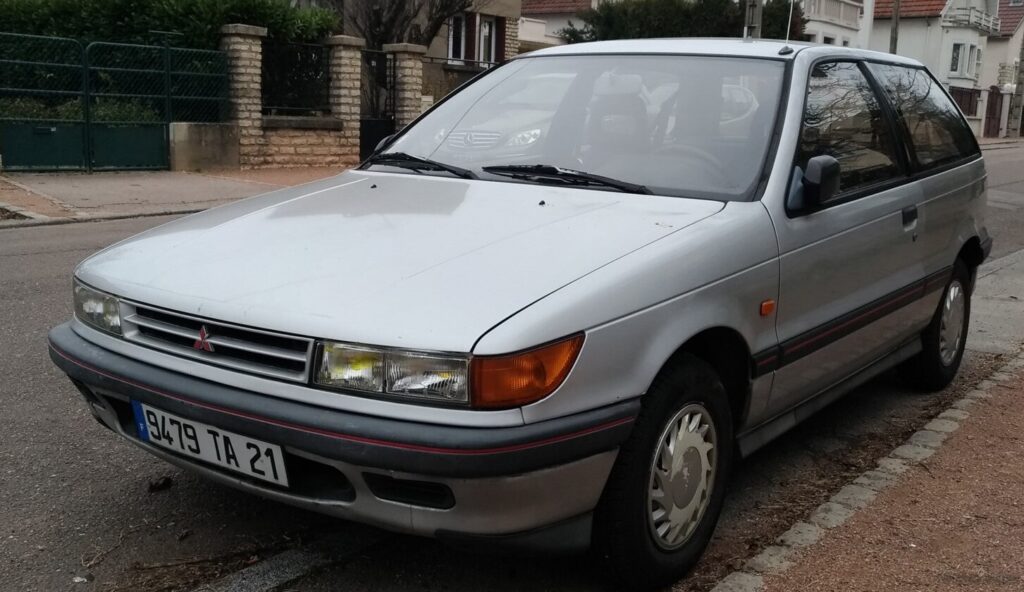
The Mitsubishi Colt III (C50) 1.8 GTi 16V (C58A) CAT, produced between 1990 and 1992, represented a performance-oriented variant within the third generation of the Mitsubishi Colt. Positioned as the flagship model in the C50 range, it aimed to provide a sporty driving experience in a compact hatchback package. The C50 Colt was primarily marketed in Europe, offering a more affordable and accessible alternative to larger, more expensive hot hatches of the era. This model played a significant role in establishing Mitsubishi’s presence in the European small car market.
Technical Specifications
| Brand | Mitsubishi |
| Model | Colt |
| Generation | Colt III (C50) |
| Type | 1.8 GTi 16V (C58A) CAT (136 Hp) |
| Start of production | 1990 |
| End of production | 1992 |
| Powertrain Architecture | Internal Combustion engine |
| Body type | Hatchback |
| Seats | 5 |
| Doors | 3 |
| Fuel consumption (urban) | 11.1 l/100 km (21.2 US mpg) |
| Fuel consumption (extra urban) | 6.4 l/100 km (36.8 US mpg) |
| Fuel consumption (combined) | 8.1 l/100 km (29 US mpg) |
| Fuel Type | Petrol (Gasoline) |
| Acceleration 0 – 100 km/h | 7.9 sec |
| Acceleration 0 – 62 mph | 7.9 sec |
| Acceleration 0 – 60 mph | 7.5 sec |
| Maximum speed | 235 km/h (146.02 mph) |
| Weight-to-power ratio | 7.3 kg/Hp |
| Weight-to-torque ratio | 6.1 kg/Nm |
| Power | 136 Hp @ 6500 rpm |
| Torque | 162 Nm @ 4500 rpm (119.49 lb.-ft. @ 4500 rpm) |
| Engine layout | Front, Transverse |
| Engine displacement | 1836 cm3 (112.04 cu. in.) |
| Number of cylinders | 4 |
| Engine configuration | Inline |
| Cylinder Bore | 81.5 mm (3.21 in.) |
| Piston Stroke | 88 mm (3.46 in.) |
| Compression ratio | 10.5:1 |
| Number of valves per cylinder | 4 |
| Fuel injection system | Multi-port manifold injection |
| Engine aspiration | Naturally aspirated engine |
| Valvetrain | DOHC |
| Kerb Weight | 990 kg (2182.58 lbs.) |
| Max. weight | 1550 kg (3417.17 lbs.) |
| Max load | 560 kg (1234.59 lbs.) |
| Trunk (boot) space – minimum | 222 l (7.84 cu. ft.) |
| Trunk (boot) space – maximum | 1050 l (37.08 cu. ft.) |
| Fuel tank capacity | 50 l (13.21 US gal | 11 UK gal) |
| Length | 3950 mm (155.51 in.) |
| Width | 1670 mm (65.75 in.) |
| Height | 1380 mm (54.33 in.) |
| Wheelbase | 2385 mm (93.9 in.) |
| Front track | 1430 mm (56.3 in.) |
| Rear (Back) track | 1430 mm (56.3 in.) |
| Drivetrain Architecture | Front wheel drive |
| Number of gears | 5 |
| Gearbox type | Manual transmission |
| Front suspension | Coil spring |
| Rear suspension | Coil spring |
| Front brakes | Ventilated discs |
| Rear brakes | Disc |
| Assisting systems | ABS (Anti-lock braking system) |
| Steering type | Steering rack and pinion |
| Power steering | Hydraulic Steering |
| Tires size | 175/70 R14 |
Powertrain & Engine Architecture
The heart of the Colt 1.8 GTi 16V was the 4G91 engine, a 1.8-liter (1836 cc) inline-four cylinder gasoline engine. This engine, often referred to by its engine code 4G91, featured a double overhead camshaft (DOHC) valvetrain with four valves per cylinder, contributing to its relatively high power output for its displacement. The engine utilized multi-port fuel injection, a common technology for the time, to deliver fuel efficiently and precisely. The 10.5:1 compression ratio further enhanced performance. The engine was transversely mounted, driving the front wheels. The five-speed manual transmission was specifically chosen to complement the engine’s power band, offering precise gear changes and a sporty driving feel. The catalytic converter (“CAT” in the model designation) indicated the vehicle met European emissions standards of the time.
Driving Characteristics
The 1.8 GTi 16V offered a noticeable step up in performance compared to the lower-spec Colt models. With 136 horsepower, it could accelerate from 0 to 60 mph in approximately 7.5 seconds and achieve a top speed of 146 mph. While not in the same league as dedicated hot hatches like the Peugeot 205 GTI or Volkswagen Golf GTI, it provided a lively and engaging driving experience. The five-speed manual transmission allowed drivers to keep the engine in its optimal power band. The gear ratios were tuned for acceleration, but the engine remained reasonably tractable at lower speeds. Compared to the base model Colts, the GTi offered a firmer suspension setup, reducing body roll and improving handling. However, this came at the expense of some ride comfort.
Equipment & Trim Levels
The 1.8 GTi 16V was the best-equipped variant of the C50 Colt. Standard features included power steering, front ventilated disc brakes, and an anti-lock braking system (ABS), which was relatively advanced for a car in this class at the time. The interior featured sport seats with enhanced bolstering, providing better support during cornering. A sporty three-spoke steering wheel and upgraded instrumentation were also standard. Optional extras included a sunroof, alloy wheels, and a more sophisticated audio system. The interior trim was typically dark grey or black, with a focus on functionality and a sporty aesthetic.
Chassis & Braking
The Colt C50 utilized a relatively simple chassis design, featuring coil springs and a torsion beam rear suspension. The GTi model benefited from a slightly stiffer suspension setup compared to the standard Colt, improving handling and reducing body roll. The front brakes were ventilated discs, providing ample stopping power, while the rear brakes were solid discs. The ABS system further enhanced braking performance and safety. The steering was a rack-and-pinion system with hydraulic power assistance, offering precise and responsive steering feel.
Market Reception & Comparison
The Mitsubishi Colt 1.8 GTi 16V was generally well-received by automotive critics. It was praised for its lively performance, engaging handling, and relatively affordable price. However, some reviewers noted that the interior was somewhat basic compared to its rivals. Compared to other hot hatches of the era, the Colt GTi offered a good balance of performance and practicality. It was more affordable than the Peugeot 205 GTI and Volkswagen Golf GTI, but it didn’t quite match their level of refinement or performance. Fuel economy was respectable for a performance car of the time, averaging around 29 US mpg in combined driving.
Legacy
The Mitsubishi Colt C50 1.8 GTi 16V has become a sought-after classic among enthusiasts. The 4G91 engine is known for its reliability and durability, although regular maintenance is essential. Finding well-maintained examples can be challenging, as many have been subjected to years of use. Rust can be a concern, particularly in regions with harsh winters. Today, the Colt GTi represents a relatively affordable entry point into the world of classic hot hatches, offering a fun and engaging driving experience for those seeking a nostalgic taste of 1990s performance.