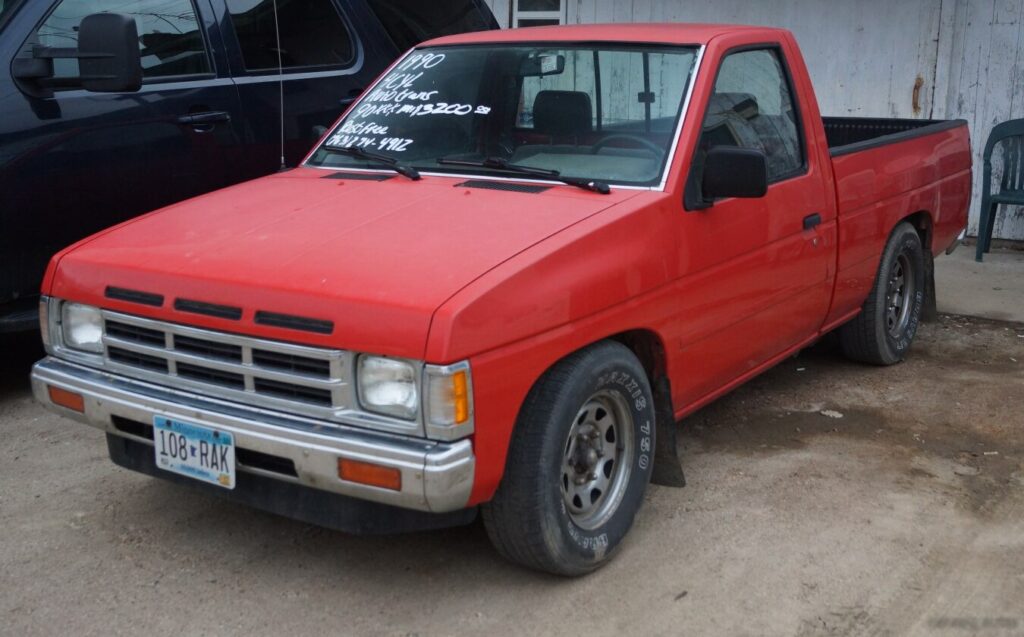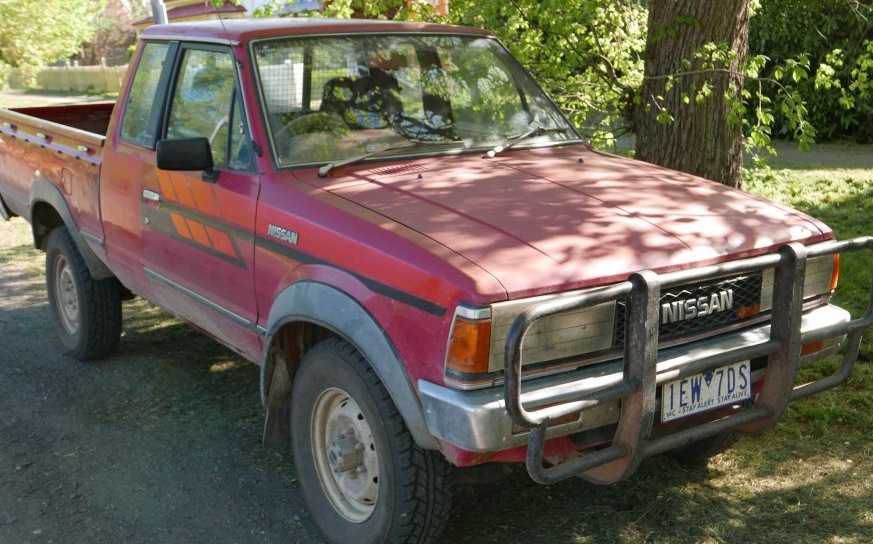
The Nissan Pickup (720), produced from 1983 to 1986, represented a significant evolution in Nissan’s compact truck offerings. This generation, designated the D21 internally, built upon the success of the earlier 620 model, offering increased size, improved comfort, and a wider range of engine options. The 2.3 D variant, equipped with a naturally aspirated diesel engine producing 69 horsepower, occupied a specific niche within the 720 lineup, primarily aimed at buyers prioritizing fuel efficiency and durability over outright performance. It was a workhorse configuration, popular with farmers, ranchers, and those needing a reliable, no-frills transportation solution. The 720 series was a crucial model for Nissan in establishing a strong foothold in the North American pickup truck market, competing directly with offerings from Toyota, Chevrolet, and Ford.
Technical Specifications
| Brand | Nissan |
| Model | Pick UP (720) |
| Generation | Pick UP (720) |
| Type (Engine) | 2.3 D (69 Hp) |
| Start of production | 1983 |
| End of production | 1986 |
| Powertrain Architecture | Internal Combustion engine |
| Body type | Pick-up |
| Fuel Type | Diesel |
| Power | 69 Hp |
| Engine aspiration | Naturally aspirated engine |
Powertrain & Engine Architecture
The heart of the 2.3 D 720 Pickup was the SD23 diesel engine, a 2.3-liter inline-four cylinder powerplant. This engine was a robust, indirect injection diesel, known for its simplicity and longevity. Unlike many contemporary diesel engines, the SD23 utilized a mechanical fuel injection pump, rather than a more sophisticated electronic system. This contributed to its reliability, but also limited its refinement and power output. The engine featured a cast iron block and head, further enhancing its durability. The 69 horsepower output was achieved at a relatively low engine speed, prioritizing torque over peak power. The engine’s torque curve was flat, providing usable pulling power across a broad RPM range. The transmission paired with the 2.3 D was typically a four-speed manual, though a three-speed automatic transmission was also available, albeit less common. The automatic, while offering convenience, further reduced the truck’s acceleration and fuel economy. The drivetrain was generally rear-wheel drive, with a part-time four-wheel drive option available for increased traction in challenging conditions.
Driving Characteristics
The driving experience in a 720 Pickup equipped with the 2.3 D and either transmission was decidedly utilitarian. Acceleration was slow, particularly with the automatic transmission. The engine lacked the responsiveness of gasoline counterparts, requiring careful planning when merging onto highways or overtaking other vehicles. However, the engine’s strong low-end torque made it well-suited for hauling loads and navigating rough terrain. The four-speed manual transmission allowed for more control over engine RPMs, enabling drivers to maximize power and efficiency. The suspension, consisting of leaf springs in the rear and independent coil springs in the front, provided a reasonably comfortable ride, even when the truck was loaded. Steering was relatively slow and lacked power assistance in most models, requiring some effort at lower speeds. Compared to the gasoline-powered 720s, the 2.3 D offered significantly better fuel economy, making it an attractive option for those covering long distances or frequently using the truck for work purposes. The manual transmission version offered the best fuel economy, while the automatic traded efficiency for ease of use.
Equipment & Trim Levels
The 2.3 D 720 Pickup was typically offered in a base trim level, reflecting its focus on practicality and affordability. Standard features included a basic vinyl interior, a simple dashboard with minimal instrumentation, and steel wheels. Air conditioning was often an optional extra, as were power steering and upgraded audio systems. The bed was typically equipped with a standard drop-in bedliner, and a tonneau cover was available as an aftermarket accessory. Interior upholstery was generally durable but lacked the refinement of higher-trim models. The dashboard layout was functional, with clearly labeled controls for essential functions. Optional extras, such as chrome bumpers and upgraded wheels, were available to enhance the truck’s appearance, but were rarely specified on the 2.3 D variant, which prioritized function over form.
Chassis & Braking
The 720 Pickup’s chassis was a traditional body-on-frame construction, providing a robust and durable platform. The rear suspension utilized leaf springs, capable of handling substantial payloads. The front suspension featured independent coil springs, offering a more comfortable ride compared to solid axles. Braking systems varied depending on the year and trim level. Earlier models typically featured drum brakes on all four wheels, while later models offered front disc brakes as an upgrade. Power brakes were not standard, requiring more pedal effort to achieve effective stopping power. The steering system was a recirculating ball setup, providing a stable but somewhat indirect steering feel. Stabilizer bars were not typically included on the base 2.3 D models, contributing to a slightly more pronounced body roll during cornering.
Market Reception & Comparison
The 2.3 D 720 Pickup received generally positive reviews for its reliability, fuel efficiency, and durability. Critics acknowledged its lack of performance, but recognized its suitability for specific applications, such as farming, ranching, and light hauling. Compared to the gasoline-powered 720 models, the 2.3 D offered significantly better fuel economy, but at the expense of acceleration and overall refinement. The 2.4-liter gasoline engine, producing around 100 horsepower, provided a more responsive driving experience, but was less fuel-efficient. The 2.3 D was often seen as a more economical alternative to the larger, more powerful pickups offered by domestic manufacturers. Its simplicity and robust construction made it a popular choice among those seeking a dependable work truck that could withstand harsh conditions.
Legacy
The Nissan 720 Pickup, particularly the 2.3 D variant, has developed a loyal following among enthusiasts and collectors. The SD23 diesel engine is known for its longevity and relative simplicity, making it a relatively easy engine to maintain and repair. While not particularly powerful by modern standards, the 2.3 D remains a capable and reliable powerplant. Today, well-maintained 720 Pickups are increasingly sought after by those seeking a classic, utilitarian truck with a strong reputation for durability. Parts availability can be a challenge, but a dedicated aftermarket supports the 720 community. The 2.3 D variant, while not the most desirable trim level among collectors, represents an important part of the 720’s history and continues to provide reliable transportation for those who appreciate its simple, rugged design.