Technical Specifications
| Brand | Skoda |
| Model | Favorit Forman |
| Generation | Favorit Forman (785) |
| Type (Engine) | 1.3 (135) (60 Hp) |
| Start of production | 1991 |
| End of production | 1995 |
| Powertrain Architecture | Internal Combustion engine |
| Body type | Station wagon (estate) |
| Seats | 5 |
| Doors | 5 |
| Fuel Type | Petrol (Gasoline) |
| Power | 60 Hp |
| Engine Model/Code | 781.135 |
| Engine aspiration | Naturally aspirated engine |
| Engine oil capacity | 4.5 l (4.76 US qt | 3.96 UK qt) |
| Coolant capacity | 6 l (6.34 US qt | 5.28 UK qt) |
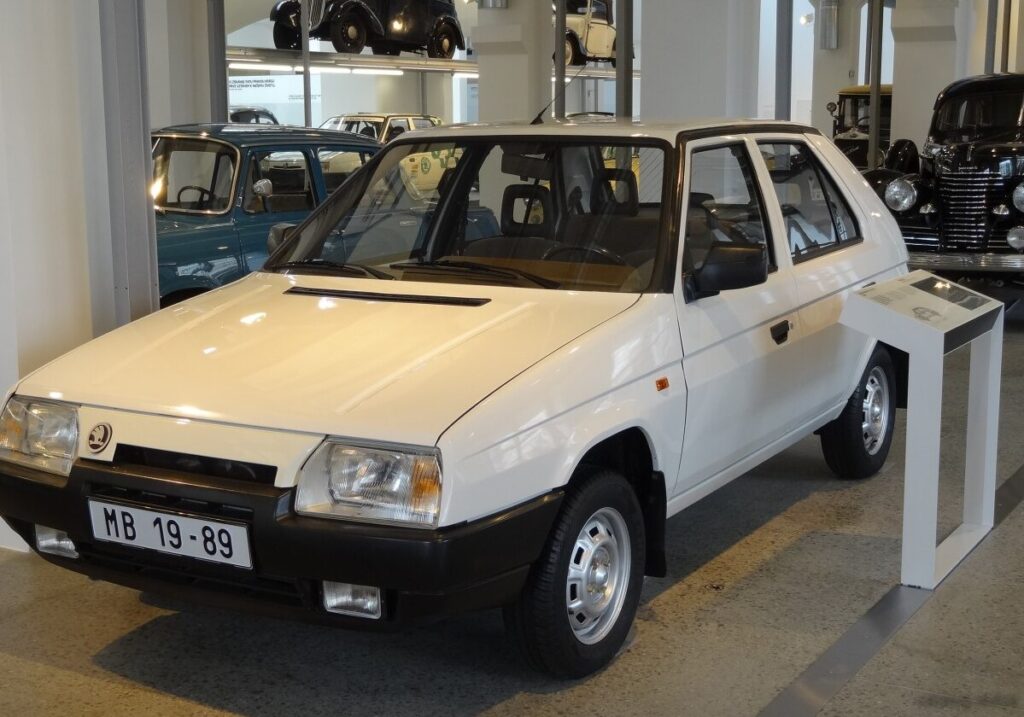
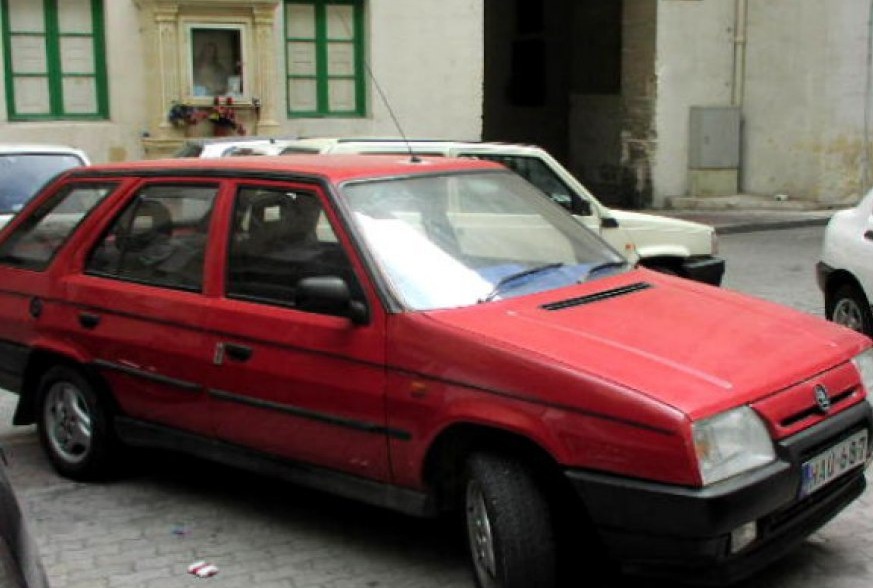
The Skoda Favorit Forman 1.3 (135), producing 60 horsepower, was a practical and affordable station wagon produced between 1991 and 1995. It represented a key evolution of the original Favorit, extending the body style to offer increased cargo capacity and versatility. The Forman, designated internally as the 785 series, was primarily aimed at the Eastern European market and offered a budget-friendly option for families and commercial users. It was built upon the Favorit platform, a significant step forward for Skoda in terms of modern design and engineering compared to its predecessors.
Powertrain & Engine Architecture
The heart of the Favorit Forman 1.3 (135) was the 781.135 engine, a 1.3-liter, inline-four cylinder petrol engine. This engine was a relatively simple design, reflecting the cost-conscious nature of the vehicle. It featured a single overhead camshaft (SOHC) operating two valves per cylinder. Fuel delivery was managed by a carburetor, a technology becoming less common in Western Europe at the time but still prevalent in Eastern European automotive manufacturing. The carburetor provided adequate, if not particularly refined, fuel atomization. The engine produced 60 horsepower at approximately 5,500 rpm and 77 lb-ft of torque at 3,200 rpm. The engine was mated to a four-speed manual transmission as standard, though a three-speed automatic transmission was offered as an option, albeit less frequently chosen. The automatic transmission was a fairly basic unit, designed for durability rather than performance. It featured a torque converter and planetary gearsets. This three-speed automatic was a common design for its era, prioritizing simplicity and cost-effectiveness over advanced features like overdrive or electronically controlled shifting.
Driving Characteristics
The 1.3-liter engine and automatic transmission combination in the Favorit Forman resulted in modest performance. Acceleration was slow, particularly when fully loaded. The automatic transmission’s gear ratios were spaced to prioritize fuel economy over spirited driving. The car felt most comfortable cruising at highway speeds, though overtaking required careful planning. Compared to the five-speed manual version, the automatic Forman was noticeably slower. The manual transmission allowed the engine to operate within its optimal power band more effectively. The suspension, while simple, provided a reasonably comfortable ride, absorbing bumps and imperfections in the road surface adequately. Steering was light and easy, making the Forman manageable in urban environments. The automatic transmission did detract from the overall driving experience, feeling somewhat sluggish and lacking the responsiveness of a modern automatic. The wide gear spacing of the three-speed automatic meant the engine often felt strained during acceleration, and downshifts were not particularly quick or smooth.
Equipment & Trim Levels
The Skoda Favorit Forman 1.3 (135) was generally sparsely equipped, reflecting its position as an entry-level vehicle. Standard features typically included cloth upholstery, basic instrumentation (speedometer, fuel gauge, temperature gauge), and a heater. Power steering was not standard, and air conditioning was rarely fitted. The dashboard was constructed from durable plastics and featured a functional, if uninspired, design. Optional extras included upgraded upholstery, a radio cassette player, and, on some models, rear window wiper. Trim levels were minimal; the Forman 1.3 (135) represented the base model, with limited opportunities for customization. The focus was on providing a reliable and affordable means of transportation rather than luxury or advanced features. The automatic transmission models didn’t typically offer any additional standard equipment compared to the manual versions, further emphasizing the focus on basic transportation.
Chassis & Braking
The Favorit Forman utilized a relatively simple chassis design. It featured a front MacPherson strut suspension and a rear twist-beam axle. The suspension was tuned for comfort and durability rather than sporty handling. Braking was accomplished via front disc brakes and rear drum brakes. The braking system was adequate for the vehicle’s weight and performance, but lacked the stopping power of more modern systems. Stabilizer bars were typically absent on the base 1.3 (135) model, contributing to a slightly more pronounced body roll during cornering. The steering system was a recirculating ball type, providing a relatively indirect steering feel. The rear drum brakes, while cost-effective, offered less stopping power and were more prone to fade under heavy use compared to rear disc brakes.
Market Reception & Comparison
The Skoda Favorit Forman 1.3 (135) was well-received in its target markets, particularly in Eastern Europe, where affordability and practicality were paramount. Critics generally praised its spacious interior, reasonable fuel economy (around 35-40 mpg), and robust construction. However, the engine’s lack of power and the automatic transmission’s sluggishness were frequently cited as drawbacks. Compared to other vehicles in its class, such as the Lada Niva or the Dacia 1300, the Forman offered a more modern design and a slightly more refined driving experience. However, it lacked the off-road capability of the Niva and the larger engine options available on the Dacia. The automatic transmission version was less popular than the manual, as buyers seeking fuel efficiency or performance generally opted for the manual gearbox. The Forman offered a compelling value proposition for families needing a practical and reliable vehicle, even if it wasn’t particularly exciting to drive.
Legacy
The Skoda Favorit Forman 1.3 (135) powertrain, while not particularly sophisticated, proved to be remarkably durable and reliable. Many examples remain on the road today, testament to its robust construction. The 781.135 engine is relatively easy to maintain and repair, and spare parts are still reasonably available. In the used car market, the Forman 1.3 (135) is valued for its affordability and simplicity. The automatic transmission versions are less sought after due to their lower performance and potentially higher maintenance costs. The Forman played a significant role in Skoda’s transition from a state-owned manufacturer to a modern, internationally competitive automotive brand. It laid the groundwork for the more advanced models that followed, and its practicality and affordability cemented Skoda’s reputation as a maker of sensible, value-for-money vehicles. The Forman’s success helped establish Skoda as a viable alternative to Western European brands, particularly in price-sensitive markets.