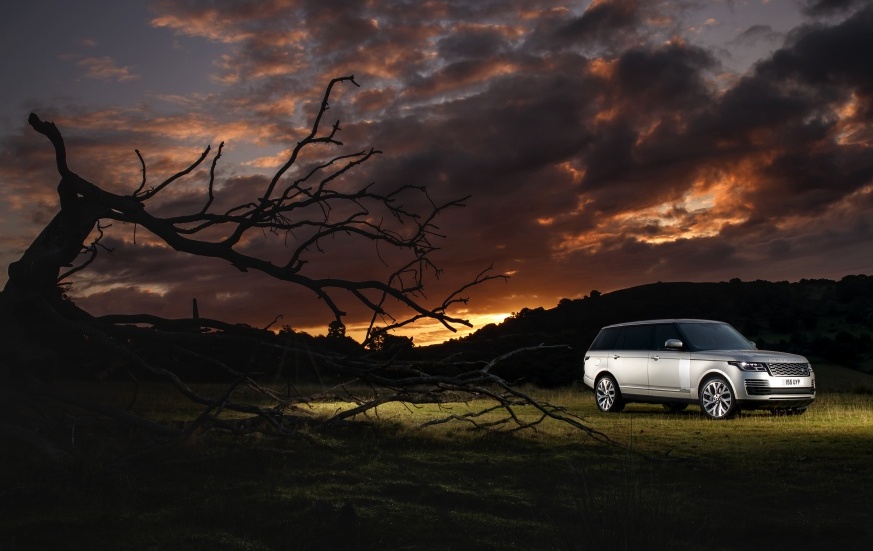
The Land Rover Range Rover IV (facelift, 2017) Long 3.0 SDV6, produced from 2018 to July 2020, represents a significant iteration of Land Rover’s flagship SUV. This variant, positioned as a mid-to-high range offering within the fourth-generation Range Rover lineup (L405 chassis), combined a potent diesel engine with a luxurious long-wheelbase body style. It catered to buyers seeking a blend of performance, refinement, and practicality, particularly in markets where diesel engines remained popular. The “Long” designation indicates an extended wheelbase, providing increased rear passenger legroom and enhancing the vehicle’s overall presence. This model aimed to deliver a sophisticated driving experience while maintaining the Range Rover’s renowned off-road capability.
Technical Specifications
| Brand | Land Rover |
| Model | Range Rover |
| Generation | Range Rover IV (facelift 2017) Long |
| Type (Engine) | 3.0 SDV6 (249 Hp) AWD Automatic |
| Start of production | 2018 |
| End of production | July, 2020 |
| Powertrain Architecture | Internal Combustion engine |
| Body type | SUV |
| Seats | 5 |
| Doors | 5 |
| Fuel consumption (combined) | 7.6 l/100 km (30.9 US mpg, 37.2 UK mpg, 13.2 km/l) |
| CO2 emissions | 201 g/km |
| Fuel Type | Diesel |
| Acceleration 0 – 100 km/h | 8.1 sec |
| Acceleration 0 – 62 mph | 8.1 sec |
| Acceleration 0 – 60 mph | 7.7 sec |
| Maximum speed | 209 km/h (129.87 mph) |
| Weight-to-power ratio | 9.6 kg/Hp, 104.1 Hp/tonne |
| Weight-to-torque ratio | 4 kg/Nm, 250.9 Nm/tonne |
| Power | 249 Hp @ 3500-4250 rpm |
| Power per litre | 83.2 Hp/l |
| Torque | 600 Nm @ 1500-2250 rpm (442.54 lb.-ft. @ 1500-2250 rpm) |
| Engine layout | Front, Longitudinal |
| Engine Model/Code | 306DT |
| Engine displacement | 2993 cm3 (182.64 cu. in.) |
| Number of cylinders | 6 |
| Engine configuration | V-engine |
| Cylinder Bore | 84 mm (3.31 in.) |
| Piston Stroke | 90 mm (3.54 in.) |
| Compression ratio | 16:1 |
| Number of valves per cylinder | 4 |
| Fuel injection system | Diesel Commonrail |
| Engine aspiration | Turbocharger, Intercooler |
| Engine oil capacity | 6 l (6.34 US qt | 5.28 UK qt) |
| Coolant | 8.93 l (9.44 US qt | 7.86 UK qt) |
| Kerb Weight | 2391 kg (5271.25 lbs.) |
| Max. weight | 3170 kg (6988.65 lbs.) |
| Max load | 779 kg (1717.4 lbs.) |
| Fuel tank capacity | 86 l (22.72 US gal | 18.92 UK gal) |
| Max. roof load | 100 kg (220.46 lbs.) |
| Permitted trailer load with brakes (12%) | 3500 kg (7716.18 lbs.) |
| Permitted trailer load without brakes | 750 kg (1653.47 lbs.) |
| Permitted towbar download | 150 kg (330.69 lbs.) |
| Length | 5200 mm (204.72 in.) |
| Width with mirrors folded | 2073 mm (81.61 in.) |
| Width including mirrors | 2220 mm (87.4 in.) |
| Height | 1868 mm (73.54 in.) |
| Wheelbase | 3120 mm (122.83 in.) |
| Front track | 1693 mm (66.65 in.) |
| Rear (Back) track | 1685 mm (66.34 in.) |
| Ride height (ground clearance) | 221-297 mm (8.7 – 11.69 in.) |
| Minimum turning circle | 13.4 m (43.96 ft.) |
| Approach angle | 25.5-29.7° |
| Departure angle | 24.5-27.6° |
| Ramp-over angle | 20-25.6° |
| Wading depth | 900 mm (35.43 in.) |
| Drive wheel | All wheel drive (4×4) |
| Number of gears and type of gearbox | 8 gears, automatic transmission |
| Front brakes | Ventilated discs, 349 mm |
| Rear brakes | Ventilated discs, 325 mm |
| Assisting systems | ABS (Anti-lock braking system) |
| Steering type | Steering rack and pinion |
| Power steering | Electric Steering |
Powertrain & Engine Architecture
At the heart of the Range Rover IV 3.0 SDV6 lies the 306DT engine, a 3.0-liter V6 turbodiesel. This engine is part of Land Rover’s Ingenium engine family, though the 306DT predates the fully modular Ingenium designs. It utilizes a cast iron block with aluminum cylinder heads, a configuration chosen for its balance of strength and weight. The engine employs a common-rail direct injection system, delivering fuel at extremely high pressures for optimized combustion. A single variable geometry turbocharger (VGT) with an intercooler provides forced induction, boosting power and torque. The engine produces 249 horsepower at 3500-4250 rpm and a substantial 600 Nm (442.54 lb-ft) of torque between 1500-2250 rpm. This broad torque curve is a hallmark of diesel engines and contributes to the Range Rover’s effortless towing capacity and relaxed cruising ability. The engine is paired with an eight-speed automatic transmission, known for its smooth shifts and wide gear ratio spread. This transmission is designed to optimize fuel efficiency and provide responsive acceleration.
Driving Characteristics
The 3.0 SDV6 automatic powertrain delivers a refined and capable driving experience. While not as overtly sporty as some of the higher-powered Range Rover variants, the 249 hp engine provides ample power for everyday driving and highway cruising. The eight-speed automatic transmission contributes to smooth acceleration and helps keep the engine within its optimal torque band. The long wheelbase of this variant enhances ride comfort, absorbing bumps and imperfections in the road. Compared to the supercharged petrol V6 or the V8 models, the SDV6 offers a more relaxed and fuel-efficient driving experience. The automatic transmission, while smooth, may not offer the same level of driver engagement as the available manual options in other Range Rover trims. However, it prioritizes ease of use and comfort, aligning with the target audience for this particular variant.
Equipment & Trim Levels
The Range Rover IV Long 3.0 SDV6 typically came well-equipped, reflecting its position in the lineup. Standard features included leather upholstery, heated front seats, a touchscreen infotainment system with navigation, a premium sound system, and a comprehensive suite of safety features. The “Long” wheelbase added significantly to rear passenger comfort, with increased legroom and available rear seat entertainment options. Optional extras included adaptive cruise control, a panoramic sunroof, upgraded leather trim, and various exterior styling enhancements. Trim levels varied by market, but generally offered increasing levels of luxury and technology. The SDV6 variant often served as a sweet spot, offering a good balance of performance, features, and fuel economy.
Chassis & Braking
The Range Rover IV utilizes a robust aluminum monocoque chassis, contributing to its strength and relatively low weight. The suspension system features air suspension with electronic dampers, providing a comfortable ride and adjustable ride height. This allows the vehicle to adapt to various terrains and driving conditions. The 3.0 SDV6 variant typically came equipped with ventilated disc brakes on all four wheels, providing ample stopping power. Anti-lock braking system (ABS) and electronic stability control (ESC) are standard safety features. The suspension setup is tuned to prioritize comfort and stability, rather than outright sportiness. Stabilizer bars are fitted front and rear to reduce body roll during cornering.
Market Reception & Comparison
The Range Rover IV Long 3.0 SDV6 was generally well-received by critics and consumers alike. It was praised for its luxurious interior, comfortable ride, and capable performance. The diesel engine was appreciated for its fuel efficiency and strong torque output, making it a practical choice for long-distance driving and towing. Compared to the petrol-powered Range Rovers, the SDV6 offered significantly better fuel economy. However, some critics noted that the diesel engine lacked the refinement and responsiveness of the petrol V6 or V8 options. In terms of reliability, the 306DT engine has proven to be generally robust, although like any complex engine, it is susceptible to certain issues, such as turbocharger failures and injector problems.
Legacy
The Range Rover IV Long 3.0 SDV6 remains a desirable vehicle in the used car market. Its combination of luxury, capability, and fuel efficiency continues to appeal to buyers. While newer Range Rover models offer even more advanced technology and features, the fourth-generation Range Rover remains a benchmark for luxury SUVs. The 306DT engine, while superseded by newer Ingenium designs, has proven to be a durable and reliable powerplant when properly maintained. These vehicles, with reasonable mileage and a documented service history, can provide years of comfortable and capable motoring.