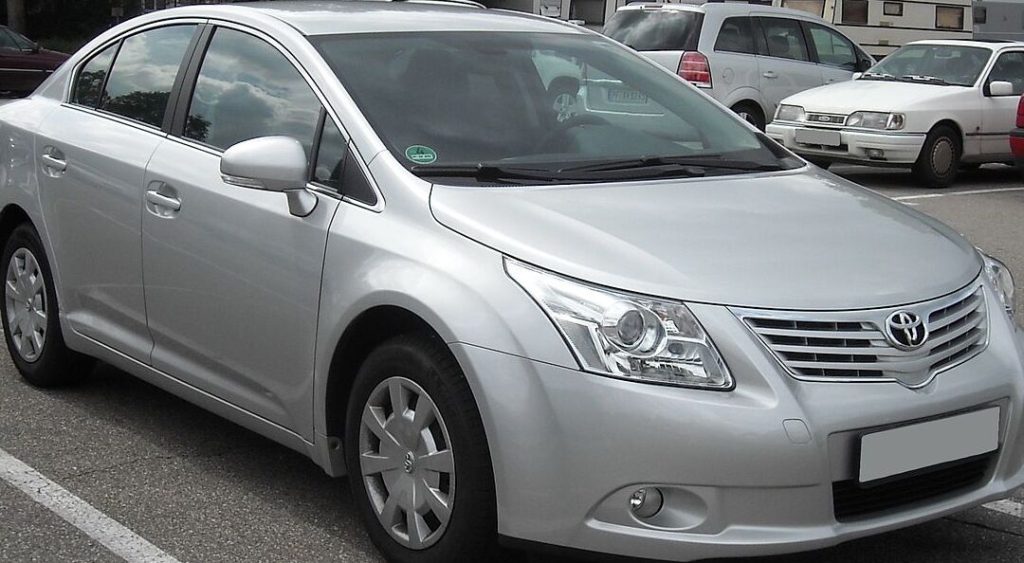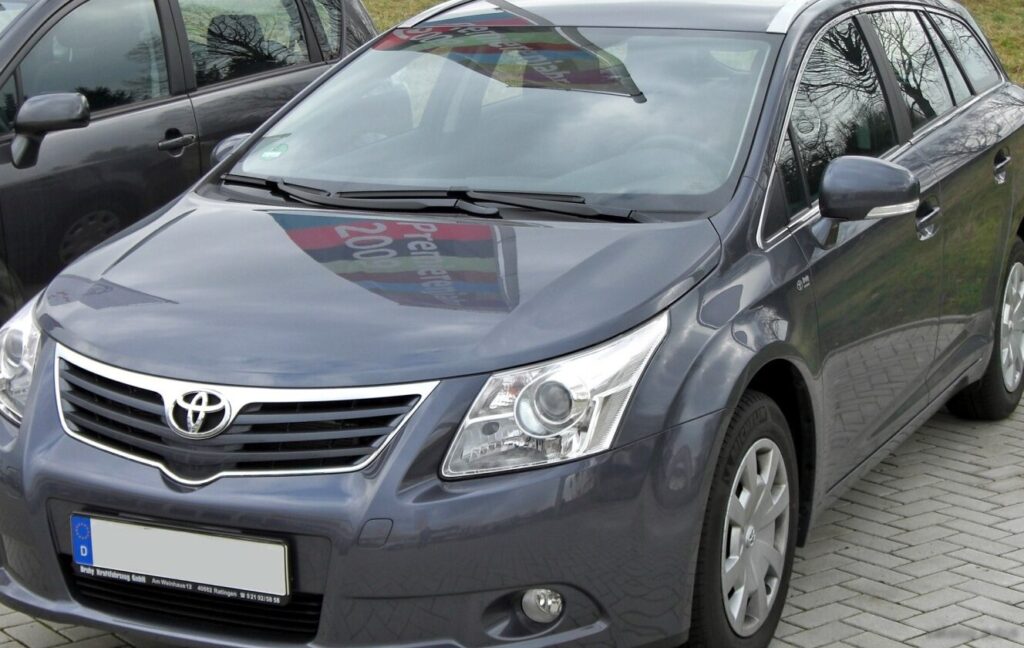
The Toyota Avensis III Wagon 2.2 D-CAT (177 hp) was a diesel-powered station wagon produced between 2009 and 2011. It represented a significant offering within the third generation (T27) Avensis lineup, specifically designed to appeal to buyers seeking a practical, fuel-efficient, and reasonably powerful vehicle for family or business use. Positioned as a mid-to-upper trim level, the 2.2 D-CAT offered a step up in performance compared to the lower-displacement engine options while remaining more affordable than the petrol-powered variants. The Avensis, in general, was Toyota’s offering in the highly competitive European D-segment, aiming to provide a blend of reliability, comfort, and value.
Technical Specifications
| Brand | Toyota |
| Model | Avensis |
| Generation | Avensis III Wagon |
| Type (Engine) | 2.2 D-CAT (177 Hp) |
| Start of production | 2009 |
| End of production | 2011 |
| Powertrain Architecture | Internal Combustion engine |
| Body type | Station wagon (estate) |
| Seats | 5 |
| Doors | 5 |
| Fuel consumption (urban) | 7.5 l/100 km (31.4 US mpg) |
| Fuel consumption (extra urban) | 5.1 l/100 km (46.1 US mpg) |
| Fuel consumption (combined) | 6 l/100 km (39.2 US mpg) |
| Fuel Type | Diesel |
| Acceleration 0 – 100 km/h | 8.8 sec |
| Acceleration 0 – 62 mph | 8.8 sec |
| Acceleration 0 – 60 mph | 8.4 sec |
| Maximum speed | 220 km/h (136.7 mph) |
| Emission standard | Euro 5 |
| Weight-to-power ratio | 8.8 kg/Hp |
| Weight-to-torque ratio | 3.9 kg/Nm |
| Power | 177 Hp @ 3600 rpm |
| Torque | 400 Nm @ 2000 rpm (295.02 lb.-ft. @ 2000 rpm) |
| Engine layout | Front, Transverse |
| Engine Model/Code | 2AD-FHV |
| Engine displacement | 2231 cm3 (136.14 cu. in.) |
| Number of cylinders | 4 |
| Engine configuration | Inline |
| Cylinder Bore | 86 mm (3.39 in.) |
| Piston Stroke | 96 mm (3.78 in.) |
| Compression ratio | 16.8:1 |
| Number of valves per cylinder | 4 |
| Fuel injection system | Diesel Commonrail |
| Engine aspiration | Turbocharger, Intercooler |
| Valvetrain | DOHC |
| Engine oil capacity | 5.9 l (6.23 US qt | 5.19 UK qt) |
| Coolant capacity | 7.4 l (7.82 US qt | 6.51 UK qt) |
| Kerb Weight | 1550 kg (3417.17 lbs.) |
| Max. weight | 2140 kg (4717.89 lbs.) |
| Max load | 590 kg (1300.73 lbs.) |
| Trunk (boot) space – minimum | 543 l (19.18 cu. ft.) |
| Trunk (boot) space – maximum | 1609 l (56.82 cu. ft.) |
| Fuel tank capacity | 60 l (15.85 US gal | 13.2 UK gal) |
| Length | 4765 mm (187.6 in.) |
| Width | 1810 mm (71.26 in.) |
| Height | 1480 mm (58.27 in.) |
| Wheelbase | 2700 mm (106.3 in.) |
| Front track | 1550 mm (61.02 in.) |
| Rear track | 1540 mm (60.63 in.) |
| Minimum turning circle | 10.8 m (35.43 ft.) |
| Drivetrain | Front wheel drive |
| Number of gears | 6 |
| Gearbox type | Manual transmission |
| Front suspension | Independent type McPherson |
| Rear suspension | Double wishbone |
| Front brakes | Ventilated discs |
| Rear brakes | Disc |
| Steering type | Steering rack and pinion |
| Power steering | Electric |
| Tires size | 215/55 R17 |
INTRODUCTION
The Avensis III Wagon 2.2 D-CAT, produced from 2009 to 2011, was a key variant within Toyota’s European D-segment offering. Built on the T27 platform (also known as the 1HX0 for the wagon), it aimed to provide a practical and refined alternative to competitors like the Ford Mondeo, Volkswagen Passat, and Vauxhall/Opel Insignia. The “D-CAT” designation signified Toyota’s Diesel Clean Advanced Technology, emphasizing the engine’s efforts to meet stringent Euro 5 emissions standards. This particular engine and transmission combination was positioned as a strong all-rounder, offering a balance between performance, fuel economy, and affordability within the Avensis range.
Powertrain & Engine Architecture
The heart of the Avensis 2.2 D-CAT was the 2AD-FHV engine, a 2.2-liter inline-four cylinder diesel. This engine utilized a common rail direct injection system, delivering fuel at extremely high pressure for optimized combustion. A turbocharger with an intercooler was employed to boost power and torque. The engine featured a Double Overhead Camshaft (DOHC) valvetrain with four valves per cylinder, contributing to its efficiency and power output. The 16.8:1 compression ratio was relatively high for a diesel, aiding in thermal efficiency. The engine was transversely mounted in the front of the vehicle. The 6-speed manual transmission was chosen for its balance of fuel efficiency and driver engagement. The transmission’s gear ratios were tuned to maximize the engine’s torque delivery, providing good acceleration and cruising ability.
Driving Characteristics
The 177 hp and 400 Nm (295 lb-ft) of torque provided by the 2.2 D-CAT engine delivered a respectable driving experience. Acceleration from 0-60 mph took approximately 8.4 seconds, making it adequately quick for everyday driving and overtaking maneuvers. Compared to the lower-powered 1.6 and 1.8 liter petrol engines, the 2.2 D-CAT offered significantly more pulling power, particularly noticeable when fully loaded or tackling inclines. While not as sporty as some of its rivals, the Avensis Wagon provided a comfortable and composed ride. The manual transmission allowed for greater driver control, although the gearshift action was sometimes criticized for being slightly notchy. The engine was relatively quiet for a diesel, but some engine noise was still audible during hard acceleration.
Equipment & Trim Levels
The Avensis 2.2 D-CAT typically came equipped with a good level of standard features. These included air conditioning, electric windows and mirrors, a CD stereo system, and alloy wheels. Higher trim levels, such as the T3 or T4, added features like automatic climate control, rain-sensing wipers, a multi-function steering wheel, and upgraded upholstery. Optional extras included satellite navigation, leather seats, and a sunroof. Interior materials were generally of good quality, providing a comfortable and durable cabin environment. The dashboard layout was functional and easy to use, with clear instrumentation.
Chassis & Braking
The Avensis Wagon featured an independent McPherson strut suspension at the front and a double wishbone suspension at the rear, providing a comfortable and controlled ride. The suspension was tuned to prioritize comfort over outright handling prowess. Front brakes were ventilated discs, while rear brakes were solid discs, providing adequate stopping power for the vehicle’s weight. Anti-lock Braking System (ABS) was standard, enhancing safety during emergency braking situations. The electric power steering provided light and precise steering feel.
Market Reception & Comparison
The Avensis 2.2 D-CAT was generally well-received by automotive critics. It was praised for its fuel efficiency, comfortable ride, and spacious interior. However, some reviewers found the styling to be somewhat conservative and the driving experience lacked the engagement of some rivals. Compared to the petrol-powered Avensis models, the 2.2 D-CAT offered significantly better fuel economy and torque. Against competitors like the Ford Mondeo and Volkswagen Passat, the Avensis offered a strong value proposition, often undercutting them on price while providing a comparable level of equipment and reliability. The 1.9 TDI Volkswagen Passat was a direct competitor, offering similar fuel economy and performance, but the Avensis was often seen as more reliable.
Legacy
The 2AD-FHV engine, while generally reliable, has been known to exhibit issues with the diesel particulate filter (DPF) if not properly maintained with regular long journeys. The turbocharger can also be a potential weak point if not serviced correctly. However, with regular maintenance, this powertrain has proven to be durable and long-lasting. On the used car market, the Avensis III Wagon 2.2 D-CAT remains a popular choice for buyers seeking a practical, reliable, and fuel-efficient estate car. Its reputation for dependability and relatively low running costs continues to make it a compelling option in the used car segment.