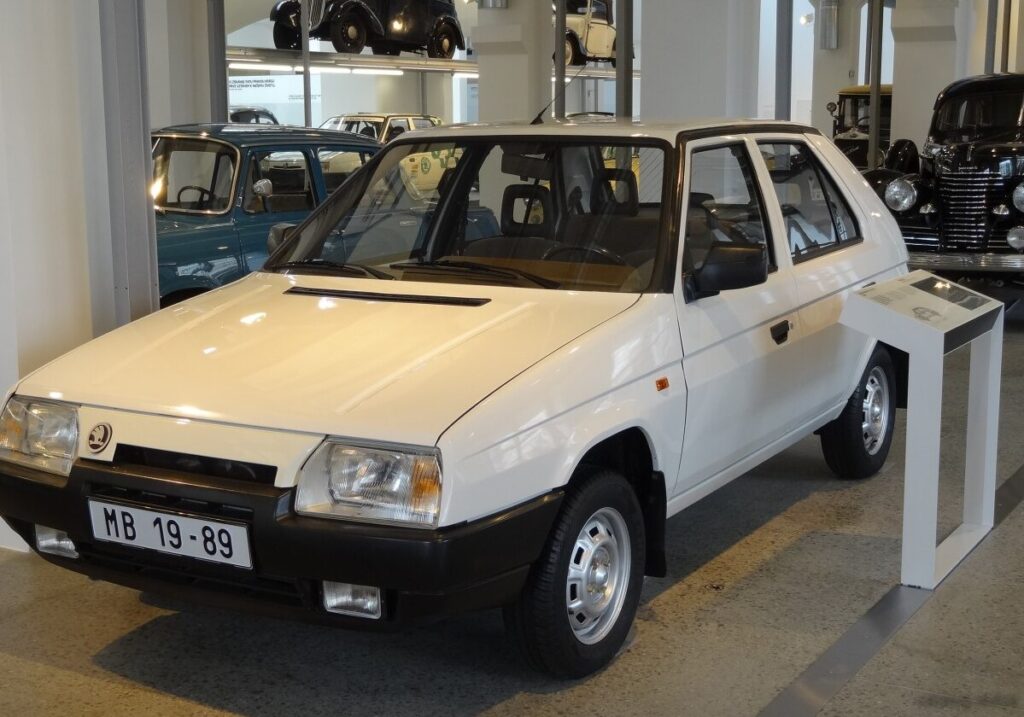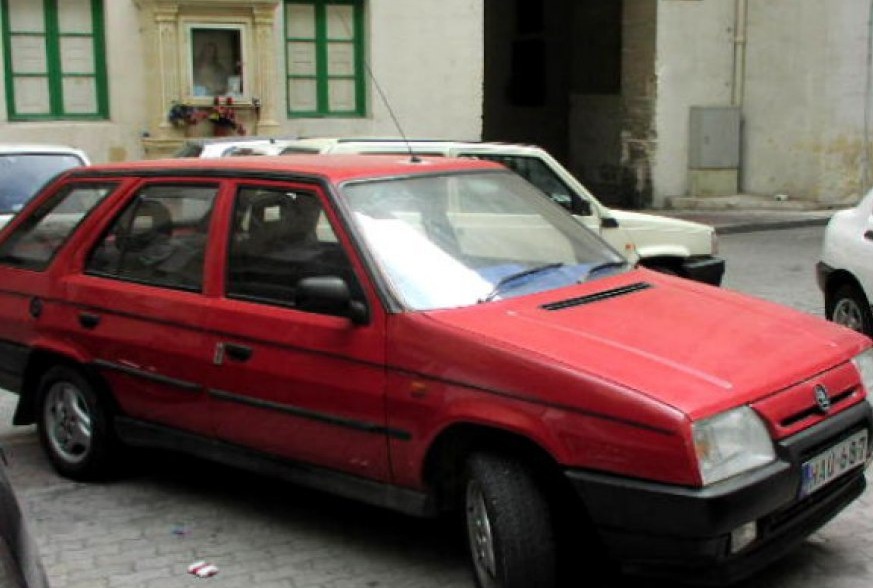
The Skoda Favorit Forman 1.3 (136), producing 61 horsepower, was a variant of the popular Favorit estate car produced between 1991 and 1995. Positioned as an entry-level offering within the Forman range, it provided affordable family transportation in Central and Eastern European markets. The Forman, a station wagon derivative of the Favorit hatchback, offered increased practicality and cargo space. This particular 1.3-liter engine and transmission combination represented a balance between economy and usability, appealing to buyers prioritizing cost-effectiveness over outright performance. It was built on the 785 series chassis, a rear-wheel drive platform that represented a significant departure from front-wheel drive layouts becoming increasingly common in Western Europe at the time.
Technical Specifications
| Brand | Skoda |
| Model | Favorit Forman |
| Generation | Favorit Forman (785) |
| Type (Engine) | 1.3 (136) (61 Hp) |
| Start of production | 1991 |
| End of production | 1995 |
| Powertrain Architecture | Internal Combustion engine |
| Body type | Station wagon (estate) |
| Seats | 5 |
| Doors | 5 |
| Fuel Type | Petrol (Gasoline) |
| Power | 61 Hp |
| Power per litre | 47.3 Hp/l |
| Engine Model/Code | 781.136 |
| Engine displacement | 1289 cm3 |
| Engine displacement (US/UK) | 78.66 cu. in. |
| Engine aspiration | Naturally aspirated engine |
| Engine oil capacity | 3.3 l |
| Engine oil capacity (US/UK) | 3.49 US qt | 2.9 UK qt |
| Coolant capacity | 6 l |
| Coolant capacity (US/UK) | 6.34 US qt | 5.28 UK qt |
Powertrain & Engine Architecture
The Skoda Favorit Forman 1.3 (136) was powered by the 781.136 engine, a 1.3-liter, inline-four cylinder, naturally aspirated gasoline engine. This engine featured a relatively simple overhead valve (OHV) valvetrain with two valves per cylinder. Fuel delivery was managed by a carburetor, a technology increasingly phased out in favor of fuel injection during this period, but still common in budget-oriented vehicles. The carburetor provided adequate fuel atomization for the engine’s modest power output. The engine’s block was cast iron, contributing to its durability, while the cylinder head was aluminum. The 1.3-liter engine produced 61 horsepower at approximately 5,500 rpm and 88 lb-ft of torque at 3,200 rpm. The transmission was a four-speed manual, a common configuration for this class of vehicle. The rear-wheel drive layout was a defining characteristic of the Favorit and Forman, setting it apart from many contemporary European cars.
Driving Characteristics
The driving experience in the Favorit Forman 1.3 was characterized by its simplicity and affordability. The 61 horsepower engine provided adequate, though not exhilarating, performance. Acceleration was modest, and highway passing required careful planning. The four-speed manual transmission offered a reasonable spread of gears, but the lack of a fifth gear meant higher engine speeds at cruising speeds. The rear-wheel drive configuration provided a balanced feel, although the car’s relatively narrow track width and basic suspension setup meant it wasn’t particularly adept at handling sharp corners. The suspension consisted of independent front suspension with coil springs and a rigid rear axle with leaf springs. The steering was a recirculating ball system, providing a somewhat vague but predictable feel. Overall, the driving experience was geared towards practicality and economy rather than sporty performance.
Equipment & Trim Levels
The Favorit Forman 1.3 (136) was typically equipped with basic amenities. Standard features included cloth upholstery, vinyl floor covering, and a simple dashboard layout. The instrument cluster consisted of a speedometer, fuel gauge, and temperature gauge. Power steering and air conditioning were generally not available on this base trim level. Optional extras included a radio, upgraded upholstery, and occasionally, a sunroof. The interior was functional and durable, designed to withstand the rigors of daily use. The exterior featured basic steel wheels with hubcaps, and chrome trim was minimal. The focus was on providing a reliable and affordable vehicle rather than luxurious appointments.
Chassis & Braking
The Skoda Favorit Forman 785 utilized a body-on-frame construction, a relatively archaic design for the early 1990s. The chassis was robust and durable, but also contributed to the car’s relatively heavy weight. The front suspension featured independent, double wishbone setup with coil springs and anti-roll bar. The rear suspension employed a rigid axle with leaf springs. Braking was accomplished via drum brakes on all four wheels, which was typical for vehicles in this price range at the time. The braking system was adequate for normal driving conditions, but lacked the stopping power of more modern disc brake systems. Steering was a recirculating ball type, providing a relatively indirect feel.
Market Reception & Comparison
The Skoda Favorit Forman 1.3 (136) was well-received in its target markets, particularly in Central and Eastern Europe, where affordability was a key consideration. Critics generally praised its practicality, durability, and low running costs. However, it was often criticized for its outdated technology, basic interior, and modest performance. Compared to other trims in the Forman lineup, such as the 1.6-liter versions, the 1.3 offered lower performance but superior fuel economy. The 1.6-liter models provided a noticeable increase in power and were better suited for highway driving, but came at a higher price point. The 1.3-liter version appealed to buyers who prioritized economy and reliability over outright performance.
Legacy
The Skoda Favorit Forman 1.3 (136) powertrain, while not particularly sophisticated, proved to be remarkably durable and reliable. The simple engine design and robust construction meant that many examples remained on the road for years after production ceased. In the used car market, these vehicles are now considered classic cars, appealing to enthusiasts seeking affordable and easily maintained transportation. Parts availability can be a challenge, but the engine’s simplicity makes it relatively easy to repair. The Favorit Forman represents a significant chapter in Skoda’s history, marking a transition period between its communist-era past and its integration into the Volkswagen Group. It remains a popular choice for restoration projects and a testament to the enduring appeal of simple, reliable automotive engineering.