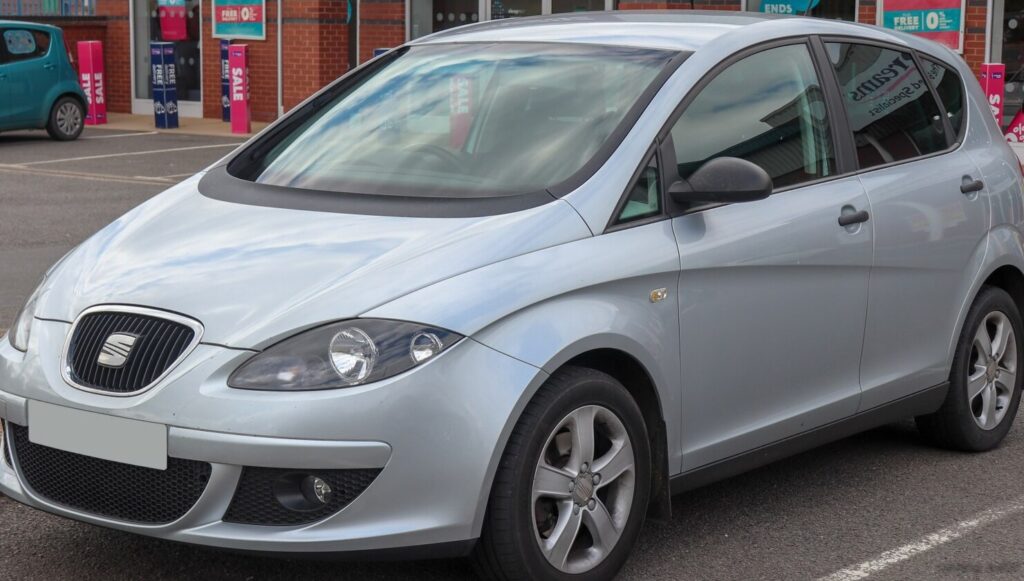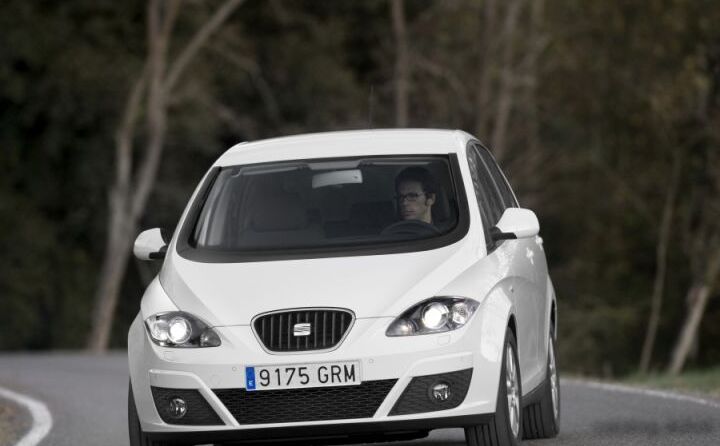
The Seat Altea, particularly the facelifted version introduced in 2009, represented Seat’s entry into the competitive compact multi-purpose vehicle (MPV) segment. Production of the 2.0 TDI variant with 140 horsepower and a dual-clutch gearbox (DSG) ran from September 2010 to August 2015. This model occupied a mid-range position within the Altea lineup, offering a balance between performance, fuel efficiency, and practicality. It was primarily marketed in Europe, where MPVs enjoyed significant popularity, and aimed to appeal to families and individuals seeking a versatile vehicle for both daily commuting and longer journeys.
Technical Specifications
| Brand | Seat |
| Model | Altea |
| Generation | Altea (facelift 2009) |
| Type (Engine) | 2.0 TDI (140 Hp) DSG |
| Start of production | September, 2010 |
| End of production | August, 2015 |
| Powertrain Architecture | Internal Combustion engine |
| Body type | MPV |
| Seats | 5 |
| Doors | 5 |
| Fuel consumption (urban) | 6.9 l/100 km (34.1 US mpg, 40.9 UK mpg, 14.5 km/l) |
| Fuel consumption (extra urban) | 4.7 l/100 km (50 US mpg, 60.1 UK mpg, 21.3 km/l) |
| Fuel consumption (combined) | 5.5 l/100 km (42.8 US mpg, 51.4 UK mpg, 18.2 km/l) |
| CO2 emissions | 144 g/km |
| Fuel Type | Diesel |
| Acceleration 0 – 100 km/h | 9.7 sec |
| Acceleration 0 – 62 mph | 9.7 sec |
| Acceleration 0 – 60 mph | 9.2 sec |
| Maximum speed | 201 km/h (124.9 mph) |
| Emission standard | Euro 5 |
| Weight-to-power ratio | 10.6 kg/Hp, 94.6 Hp/tonne |
| Weight-to-torque ratio | 4.6 kg/Nm, 216.2 Nm/tonne |
| Power | 140 Hp @ 4200 rpm |
| Torque | 320 Nm @ 1750-2500 rpm (236.02 lb.-ft. @ 1750-2500 rpm) |
| Engine layout | Front, Transverse |
| Engine Model/Code | CFHC |
| Engine displacement | 1968 cm3 (120.09 cu. in.) |
| Number of cylinders | 4 |
| Engine configuration | Inline |
| Cylinder Bore | 81 mm (3.19 in.) |
| Piston Stroke | 95.5 mm (3.76 in.) |
| Compression ratio | 16:1 |
| Number of valves per cylinder | 4 |
| Fuel injection system | Diesel Commonrail |
| Engine aspiration | Turbocharger, Intercooler |
| Engine oil capacity | 4.3 l (4.54 US qt | 3.78 UK qt) |
| Coolant | 8 l (8.45 US qt | 7.04 UK qt) |
| Kerb Weight | 1480 kg (3262.84 lbs.) |
| Max. weight | 2000 kg (4409.25 lbs.) |
| Max load | 520 kg (1146.4 lbs.) |
| Trunk (boot) space – minimum | 409 l (14.44 cu. ft.) |
| Fuel tank capacity | 55 l (14.53 US gal | 12.1 UK gal) |
| Length | 4282 mm (168.58 in.) |
| Width | 1768 mm (69.61 in.) |
| Height | 1576 mm (62.05 in.) |
| Wheelbase | 2578 mm (101.5 in.) |
| Front track | 1527-1535 mm (60.12 – 60.43 in.) |
| Rear (Back) track | 1503-1515 mm (59.17 – 59.65 in.) |
| Minimum turning circle | 10.7 m (35.1 ft.) |
| Drivetrain Architecture | Front wheel drive |
| Number of gears and type of gearbox | 6 gears, automatic transmission DSG |
| Front suspension | Independent, type McPherson with coil spring and anti-roll bar |
| Rear suspension | Independent multi-link suspension |
| Front brakes | Ventilated discs |
| Rear brakes | Disc |
| Assisting systems | ABS (Anti-lock braking system) |
| Steering type | Steering rack and pinion |
| Tires size | 205/55 R16 91V; 225/45 R17 91W; 225/40 R18 92Y |
| Wheel rims size | 6.5J x 16 ET50; 7J x 17 ET54; 7.5J x 18 ET51 |
Powertrain & Engine Architecture
The heart of the Altea 2.0 TDI was the CFHC engine, a four-cylinder, inline diesel engine displacing 1968cc. This engine utilized a common rail direct injection system, delivering fuel at extremely high pressures for optimized combustion. A turbocharger with an intercooler was employed to boost power output and improve efficiency. The engine produced 140 horsepower at 4200 rpm and a substantial 320 Nm (236 lb-ft) of torque between 1750 and 2500 rpm. This broad torque curve was a key characteristic of the engine, providing strong pulling power across a wide range of engine speeds. The engine featured four valves per cylinder and a compression ratio of 16:1. The engine also incorporated a diesel particulate filter (DPF) to reduce emissions, meeting Euro 5 standards.
Paired with the engine was a six-speed dual-clutch gearbox (DSG). This transmission offered quick and smooth gear changes, enhancing both performance and driving comfort. The DSG’s ability to pre-select the next gear allowed for near-seamless shifts, contributing to a more responsive driving experience compared to a traditional automatic transmission.
Driving Characteristics
The 2.0 TDI DSG-equipped Altea offered a comfortable and refined driving experience. The engine’s ample torque made it well-suited for everyday driving, providing effortless acceleration for overtaking and merging onto highways. While not a sports car, the Altea 2.0 TDI delivered respectable performance, achieving 0-60 mph in approximately 9.2 seconds. The DSG transmission contributed to a smooth and efficient power delivery, and the gear ratios were well-chosen for both urban and highway driving. Compared to the lower-powered 1.6 TDI variants, the 2.0 TDI offered a noticeable improvement in performance, while remaining more economical than the higher-output versions.
Equipment & Trim Levels
The Altea 2.0 TDI typically came equipped with a reasonable level of standard features, including air conditioning, power windows, central locking, and an audio system. Higher trim levels offered additional features such as alloy wheels, fog lights, a multi-function steering wheel, and upgraded interior upholstery. Optional extras included a navigation system, parking sensors, and a panoramic sunroof. Interior materials were generally of good quality, and the Altea’s cabin was well-designed and functional.
Chassis & Braking
The Altea’s chassis featured independent suspension all around, with a McPherson strut setup at the front and a multi-link system at the rear. This configuration provided a good balance between ride comfort and handling. The steering was precise and well-weighted, offering a confident feel on the road. Braking duties were handled by ventilated discs at the front and solid discs at the rear, assisted by an Anti-lock Braking System (ABS). The Altea’s suspension was tuned to prioritize comfort, but it still offered decent body control in corners.
Market Reception & Comparison
The Seat Altea 2.0 TDI DSG was generally well-received by automotive critics. It was praised for its spacious interior, practical design, and efficient engine. The DSG transmission was also a highlight, offering a smooth and responsive driving experience. Compared to rivals such as the Volkswagen Golf Plus and the Renault Scenic, the Altea offered a distinctive styling and a slightly more driver-focused feel. Fuel economy was a strong point, with combined figures around 5.5 l/100 km (42.8 US mpg). Reliability was generally good, although some owners reported issues with the DPF system.
Legacy
The Seat Altea, while discontinued in 2015, remains a popular choice in the used car market. The 2.0 TDI engine, when properly maintained, is known for its durability and longevity. However, potential buyers should be aware of the potential for DPF issues and ensure that the vehicle has a full service history. The Altea’s blend of practicality, comfort, and efficiency continues to appeal to buyers seeking a versatile and affordable MPV. The CFHC engine, in particular, is considered a robust and reliable unit, making the 2.0 TDI variant a relatively safe bet in the used car market.