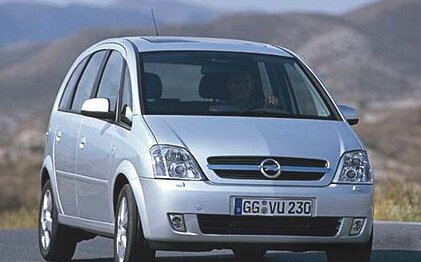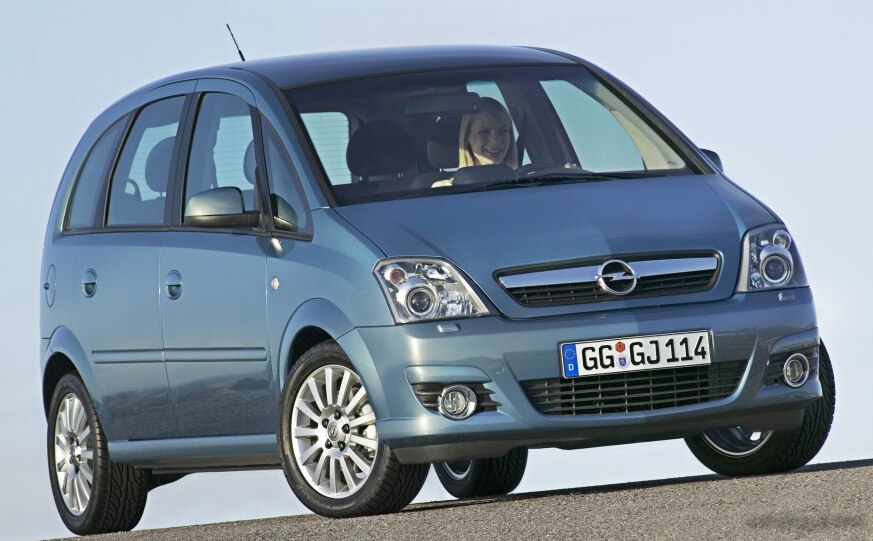
The Opel Meriva A, particularly the facelifted version introduced in 2006, represented Opel’s entry into the compact minivan segment. Produced from January 2006 to February 2010, this generation Meriva aimed to provide a practical and versatile vehicle for families. The 1.6i 16V (105 hp) Automatic variant occupied a middle ground within the Meriva A lineup, offering a balance between affordability and convenience. It was positioned as a step up from the base 1.4L engine, while remaining more accessible than the more powerful 1.8L options. This model was primarily sold in European markets, where compact MPVs were highly popular.
Technical Specifications
| Brand | Opel |
| Model | Meriva |
| Generation | Meriva A (facelift 2006) |
| Type (Engine) | 1.6i 16V (105 Hp) Automatic |
| Start of production | January, 2006 |
| End of production | February, 2010 |
| Powertrain Architecture | Internal Combustion engine |
| Body type | Minivan |
| Seats | 5 |
| Doors | 5 |
| Fuel consumption (urban) | 9.8 l/100 km (24 US mpg, 28.8 UK mpg, 10.2 km/l) |
| Fuel consumption (extra urban) | 5.7 l/100 km (41.3 US mpg, 49.6 UK mpg, 17.5 km/l) |
| Fuel consumption (combined) | 7.2 l/100 km (32.7 US mpg, 39.2 UK mpg, 13.9 km/l) |
| Fuel Type | Petrol (Gasoline) |
| Acceleration 0 – 100 km/h | 14.3 sec |
| Acceleration 0 – 62 mph | 14.3 sec |
| Acceleration 0 – 60 mph | 13.6 sec |
| Maximum speed | 176 km/h (109.36 mph) |
| Weight-to-power ratio | 13.1 kg/Hp, 76.4 Hp/tonne |
| Weight-to-torque ratio | 9.2 kg/Nm, 109.1 Nm/tonne |
| Power | 105 Hp @ 6000 rpm |
| Power per litre | 65.7 Hp/l |
| Torque | 150 Nm @ 3900 rpm (110.63 lb.-ft. @ 3900 rpm) |
| Engine layout | Front, Transverse |
| Engine Model/Code | Z16XEP |
| Engine displacement | 1598 cm3 (97.52 cu. in.) |
| Number of cylinders | 4 |
| Engine configuration | Inline |
| Cylinder Bore | 79 mm (3.11 in.) |
| Piston Stroke | 81.5 mm (3.21 in.) |
| Compression ratio | 10.5:1 |
| Number of valves per cylinder | 4 |
| Fuel injection system | Multi-port manifold injection |
| Engine aspiration | Naturally aspirated engine |
| Valvetrain | DOHC |
| Engine oil capacity | 4.5 l (4.76 US qt | 3.96 UK qt) |
| Coolant | 6.3 l (6.66 US qt | 5.54 UK qt) |
| Kerb Weight | 1375 kg (3031.36 lbs.) |
| Max. weight | 1830 kg (4034.46 lbs.) |
| Max load | 455 kg (1003.1 lbs.) |
| Trunk (boot) space – minimum | 350 l (12.36 cu. ft.) |
| Trunk (boot) space – maximum | 1410 l (49.79 cu. ft.) |
| Fuel tank capacity | 75 l (19.81 US gal | 16.5 UK gal) |
| Length | 4052 mm (159.53 in.) |
| Width | 1694 mm (66.69 in.) |
| Height | 1624 mm (63.94 in.) |
| Wheelbase | 2630 mm (103.54 in.) |
| Front track | 1449 mm (57.05 in.) |
| Rear (Back) track | 1464 mm (57.64 in.) |
| Drivetrain Architecture | The Internal combustion engine (ICE) drives the front wheels of the vehicle. |
| Drive wheel | Front wheel drive |
| Number of gears and type of gearbox | 5 gears, automatic transmission |
| Front suspension | Coil spring |
| Rear suspension | Coil spring |
| Front brakes | Ventilated discs |
| Rear brakes | Disc |
| Assisting systems | ABS (Anti-lock braking system) |
| Steering type | Steering rack and pinion |
| Power steering | Hydraulic Steering |
| Tires size | 185/60 R15 |
| Wheel rims size | 15 |
Powertrain & Engine Architecture
The heart of the Meriva A 1.6i Automatic is the Z16XEP engine, a 1.6-liter inline-four cylinder gasoline engine. This engine belongs to Opel’s ‘Ecotec’ family, known for its focus on efficiency and refinement. The Z16XEP features a dual overhead camshaft (DOHC) valvetrain with four valves per cylinder, contributing to improved breathing and power delivery. Fuel is delivered via a multi-port fuel injection system, providing precise fuel metering for optimal combustion. The engine produces 105 horsepower at 6000 rpm and 150 Nm (110.63 lb-ft) of torque at 3900 rpm. Paired with this engine is a five-speed automatic transmission. This transmission, while providing convenience, was not known for particularly quick shifts or sporty performance. It was selected for its smooth operation and ease of use, catering to drivers prioritizing comfort over outright speed.
Driving Characteristics
The 1.6L Automatic Meriva offered a comfortable, if not particularly exhilarating, driving experience. Acceleration from 0-60 mph took around 13.6 seconds, and top speed was limited to 109.36 mph. The automatic transmission, while smooth, resulted in some power loss compared to the available manual transmission options. Gear ratios were tuned for fuel efficiency and everyday drivability, rather than aggressive acceleration. The engine felt adequate for typical urban and highway driving, but struggled when fully loaded with passengers and luggage, or when attempting quick overtaking maneuvers. Compared to the 1.8L versions, the 1.6L Automatic felt noticeably less powerful, but offered better fuel economy.
Equipment & Trim Levels
The 1.6i 16V Automatic trim typically included features such as air conditioning, power windows, central locking, and an audio system. Safety features included ABS brakes and driver/passenger airbags. Higher trim levels offered options like alloy wheels, upgraded upholstery, a sunroof, and parking sensors. Interior materials were generally durable and practical, reflecting the Meriva’s family-oriented design. The dashboard layout was functional and easy to use, with clearly labeled controls. The ‘Enjoy’ and ‘Cosmo’ trim levels were common, with the Cosmo offering more premium features.
Chassis & Braking
The Meriva A utilized a relatively simple chassis design, featuring coil spring suspension at both the front and rear. The front suspension employed MacPherson struts, while the rear used a torsion beam setup. This configuration provided a comfortable ride, but didn’t offer particularly sporty handling. Braking duties were handled by ventilated discs at the front and solid discs at the rear. ABS (Anti-lock Braking System) was standard, enhancing safety during emergency braking situations. The steering was rack and pinion, with hydraulic power assistance for ease of maneuvering.
Market Reception & Comparison
The Opel Meriva A 1.6i Automatic was generally well-received as a practical and affordable family vehicle. Critics praised its spacious interior, versatile seating arrangements, and comfortable ride. However, the 1.6L engine and automatic transmission combination were often criticized for being underpowered and lacking responsiveness. Compared to the 1.8L versions, the 1.6L offered better fuel economy (around 32.7 US mpg combined) but significantly less performance. The 1.7L diesel (CDTI) models were also popular, offering superior fuel efficiency and torque, but at a higher initial cost.
Legacy
The Opel Meriva A, including the 1.6i 16V Automatic variant, has proven to be a relatively reliable vehicle in the used car market. The Z16XEP engine is generally considered durable, although regular maintenance is crucial. Common issues include occasional oil leaks and sensor failures. The automatic transmission, while not known for its speed, is generally reliable if properly maintained. Today, these Merivas represent an affordable and practical option for those seeking a compact MPV, though finding well-maintained examples can be challenging. The Meriva A laid the groundwork for subsequent generations, establishing the model as a popular choice in the European compact minivan segment.