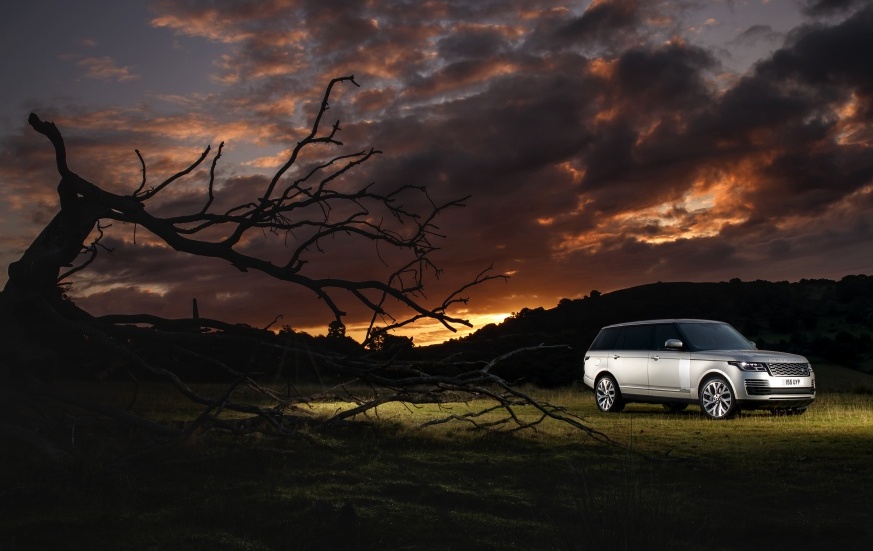
The Land Rover Range Rover IV (facelift, specifically the 2017-2018 model year) Long wheelbase configuration with the 3.0-liter V6 supercharged engine producing 340 horsepower represents a significant iteration of the iconic luxury SUV. Positioned as a mid-to-upper trim level within the fourth-generation Range Rover lineup, this variant aimed to balance performance, refinement, and practicality for discerning buyers. The “Long” designation indicates an extended wheelbase, providing increased rear passenger legroom, a key selling point for those prioritizing comfort. This model built upon the established reputation of the Range Rover for off-road capability and luxury, while incorporating updated technology and styling from the 2017 facelift.
Technical Specifications
| Brand | Land Rover |
| Model | Range Rover |
| Generation | Range Rover IV (facelift 2017) Long |
| Type (Engine) | 3.0 V6 (340 Hp) AWD Automatic Supercharged |
| Start of production | 2017 |
| End of production | 2018 |
| Powertrain Architecture | Internal Combustion engine |
| Body type | SUV |
| Seats | 5 |
| Doors | 5 |
| Fuel consumption (economy) – urban | 13.6 l/100 km (17.3 US mpg, 20.8 UK mpg, 7.4 km/l) |
| Fuel consumption (economy) – extra urban | 8.5 l/100 km (27.7 US mpg, 33.2 UK mpg, 11.8 km/l) |
| Fuel consumption (economy) – combined | 10.7 l/100 km (22 US mpg, 26.4 UK mpg, 9.3 km/l) |
| CO2 emissions | 248 g/km |
| Fuel Type | Petrol (Gasoline) |
| Acceleration 0 – 100 km/h | 7.8 sec |
| Acceleration 0 – 62 mph | 7.8 sec |
| Acceleration 0 – 60 mph | 7.4 sec |
| Maximum speed | 209 km/h (129.87 mph) |
| Emission standard | Euro 6 |
| Weight-to-power ratio | 7 kg/Hp, 142.4 Hp/tonne |
| Weight-to-torque ratio | 5.3 kg/Nm, 188.4 Nm/tonne |
| Power | 340 Hp |
| Power per litre | 113.5 Hp/l |
| Torque | 450 Nm (331.9 lb.-ft.) |
| Engine layout | Front, Longitudinal |
| Engine Model/Code | 306PS |
| Engine displacement | 2995 cm3 (182.77 cu. in.) |
| Number of cylinders | 6 |
| Engine configuration | V-engine |
| Cylinder Bore | 84.5 mm (3.33 in.) |
| Piston Stroke | 89 mm (3.5 in.) |
| Compression ratio | 10.5:1 |
| Number of valves per cylinder | 4 |
| Fuel injection system | Multi-port manifold injection |
| Engine aspiration | Supercharger, Intercooler |
| Engine oil capacity | 8 l (8.45 US qt | 7.04 UK qt) |
| Coolant | 8.05 l (8.51 US qt | 7.08 UK qt) |
| Kerb Weight | 2388 kg (5264.64 lbs.) |
| Trunk (boot) space – minimum | 900 l (31.78 cu. ft.) |
| Fuel tank capacity | 103.5 l (27.34 US gal | 22.77 UK gal) |
| Max. roof load | 100 kg (220.46 lbs.) |
| Permitted trailer load with brakes (12%) | 3500 kg (7716.18 lbs.) |
| Permitted trailer load without brakes | 750 kg (1653.47 lbs.) |
| Length | 5200 mm (204.72 in.) |
| Width with mirrors folded | 2073 mm (81.61 in.) |
| Width including mirrors | 2220 mm (87.4 in.) |
| Height | 1868 mm (73.54 in.) |
| Wheelbase | 3120 mm (122.83 in.) |
| Front track | 1693 mm (66.65 in.) |
| Rear (Back) track | 1685 mm (66.34 in.) |
| Ride height (ground clearance) | 220 mm (8.66 in.) |
| Drag coefficient (Cd) | 0.35 |
| Minimum turning circle (turning diameter) | 13.1 m (42.98 ft.) |
| Approach angle | 26° |
| Departure angle | 24.6° |
| Ramp-over (brakeover) angle | 18.3° |
| Wading depth | 900 mm (35.43 in.) |
| Drive wheel | All wheel drive (4×4) |
| Number of gears and type of gearbox | 8 gears, automatic transmission |
| Front suspension | Wishbone, Air suspension |
| Rear suspension | Independent multi-link suspension, Air suspension |
| Front brakes | Ventilated discs |
| Rear brakes | Ventilated discs |
| Assisting systems | ABS (Anti-lock braking system) |
| Steering type | Steering rack and pinion |
| Power steering | Electric Steering |
INTRODUCTION
The 2017-2018 Range Rover IV Long with the 3.0L V6 supercharged engine and automatic transmission represents a refinement of Land Rover’s flagship SUV. This model year benefitted from a significant facelift, introducing revised exterior styling, an upgraded interior with the Touch Pro Duo infotainment system, and enhanced driver assistance technologies. The “Long” wheelbase variant, extending the vehicle’s length by approximately 140mm (5.5 inches) compared to the standard wheelbase model, prioritized rear passenger space and comfort. Built on the 4×4 platform (often referred to as the L405), this Range Rover aimed to deliver a luxurious and capable experience, appealing to buyers seeking a blend of on-road refinement and off-road prowess.
Powertrain & Engine Architecture
At the heart of this Range Rover variant lies the Jaguar Land Rover AJ306 engine, a 3.0-liter V6 engine utilizing a roots-type supercharger and direct fuel injection. This engine, internally designated as the 306PS, produces 340 horsepower and 450 Nm (331.9 lb-ft) of torque. The supercharger, mounted centrally in the V, provides instant boost, contributing to responsive acceleration. The engine features a cast aluminum block and cylinder heads, along with variable valve timing on both intake and exhaust valves. The fuel injection system is a multi-point system, ensuring precise fuel delivery. Paired with this engine is an eight-speed automatic transmission (ZF 8HP70), known for its smooth shifting and efficiency. This transmission offers both manual shift control via paddle shifters and a variety of driving modes, including Sport, Eco, and Comfort.
Driving Characteristics
The 340 hp V6, coupled with the eight-speed automatic, delivers a refined and capable driving experience. Acceleration from 0-60 mph takes approximately 7.4 seconds, which is respectable for a large, luxurious SUV. The supercharger provides strong low-end torque, making overtaking maneuvers effortless. The automatic transmission is well-tuned, providing smooth and seamless gear changes. Compared to the more powerful supercharged V8 models, this V6 offers a more balanced driving experience, prioritizing fuel efficiency and refinement over outright performance. While not as overtly sporty as the V8, the V6 provides ample power for everyday driving and long-distance cruising. The long wheelbase contributes to a comfortable ride, absorbing bumps and imperfections in the road effectively.
Equipment & Trim Levels
The Range Rover IV Long 3.0 V6 Supercharged typically came standard with a high level of equipment, reflecting its luxury positioning. Standard features included leather upholstery, heated and ventilated front seats, a panoramic sunroof, a premium sound system, and the Touch Pro Duo infotainment system with dual 10-inch touchscreens. Optional extras included executive rear seating with individual climate control and massage functions, a rear entertainment system, and a variety of exterior styling enhancements. Trim levels varied depending on the market, but generally included options for different wood veneers, metal trim finishes, and exterior paint colors. The Long wheelbase models were often specified with higher-end trim packages, emphasizing rear passenger comfort and luxury.
Chassis & Braking
The Range Rover IV utilizes a robust aluminum monocoque chassis, contributing to its strength and relatively low weight. The suspension system features air suspension with electronic dampers, providing a comfortable ride and adjustable ride height. The front suspension employs a double-wishbone design, while the rear utilizes an independent multi-link setup. Braking duties are handled by ventilated discs on all four wheels, providing ample stopping power. The vehicle is equipped with ABS (Anti-lock Braking System), Electronic Stability Control, and Terrain Response system, allowing the driver to optimize the vehicle’s settings for various driving conditions, including grass, gravel, snow, mud, and sand.
Market Reception & Comparison
The Range Rover IV Long 3.0 V6 Supercharged was generally well-received by automotive critics. It was praised for its luxurious interior, comfortable ride, and capable performance. However, some critics noted that the V6 engine, while adequate, lacked the outright performance of the V8 models. Fuel economy, while improved compared to the V8, remained relatively low for a vehicle of this size. Compared to competitors such as the Porsche Cayenne and BMW X5, the Range Rover offered a unique blend of luxury, off-road capability, and British heritage. The V6 variant offered a more accessible price point compared to the V8, making it an attractive option for buyers seeking a luxurious SUV without the highest price tag.
Legacy
The 3.0L V6 supercharged engine, paired with the eight-speed automatic transmission, has proven to be a relatively reliable powertrain in the Range Rover IV. While some owners have reported issues with the air suspension system and infotainment system, the engine itself has generally been robust. On the used car market, these models hold their value reasonably well, reflecting the enduring appeal of the Range Rover brand and the desirability of the Long wheelbase configuration. Regular maintenance, including oil changes and fluid checks, is crucial for ensuring the long-term reliability of this powertrain. The 2017-2018 facelift models, with their updated styling and technology, are particularly sought after by buyers looking for a modern and luxurious SUV.