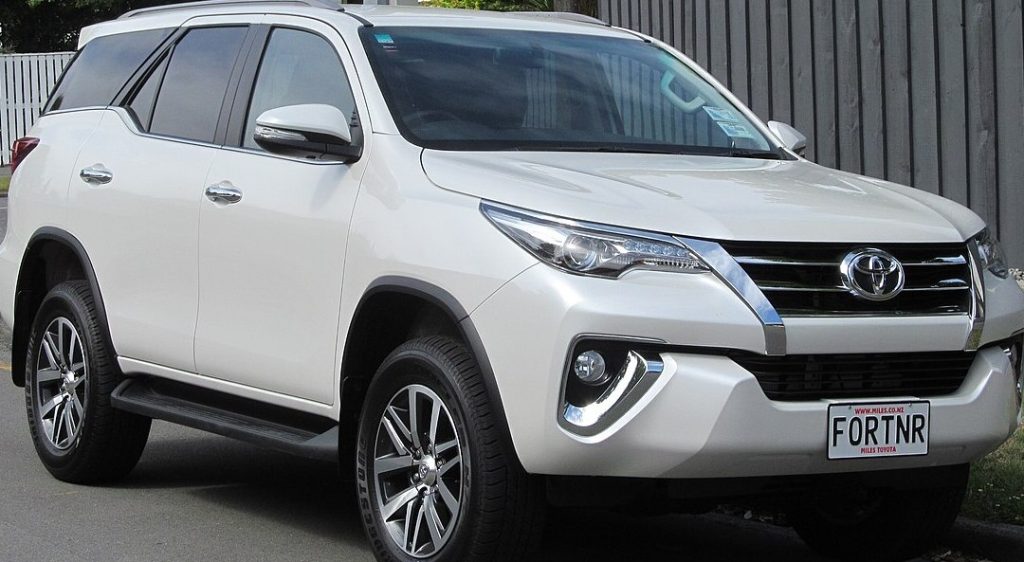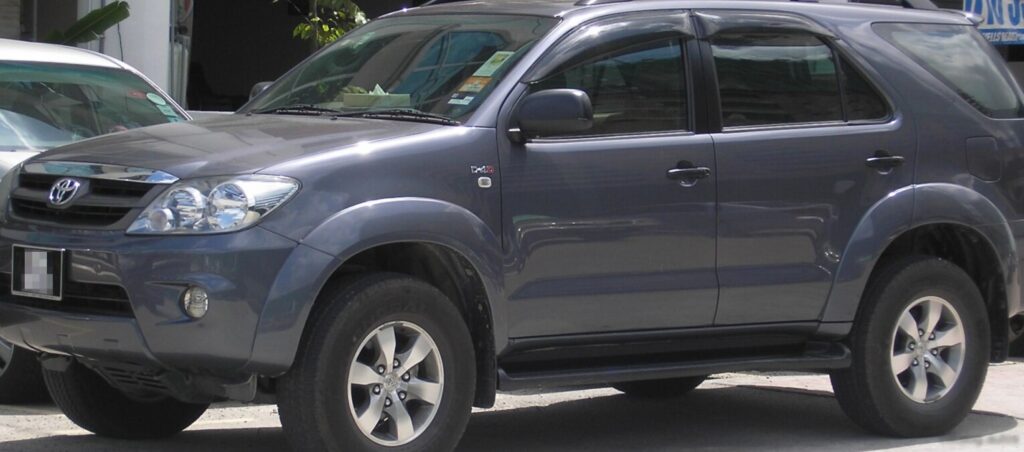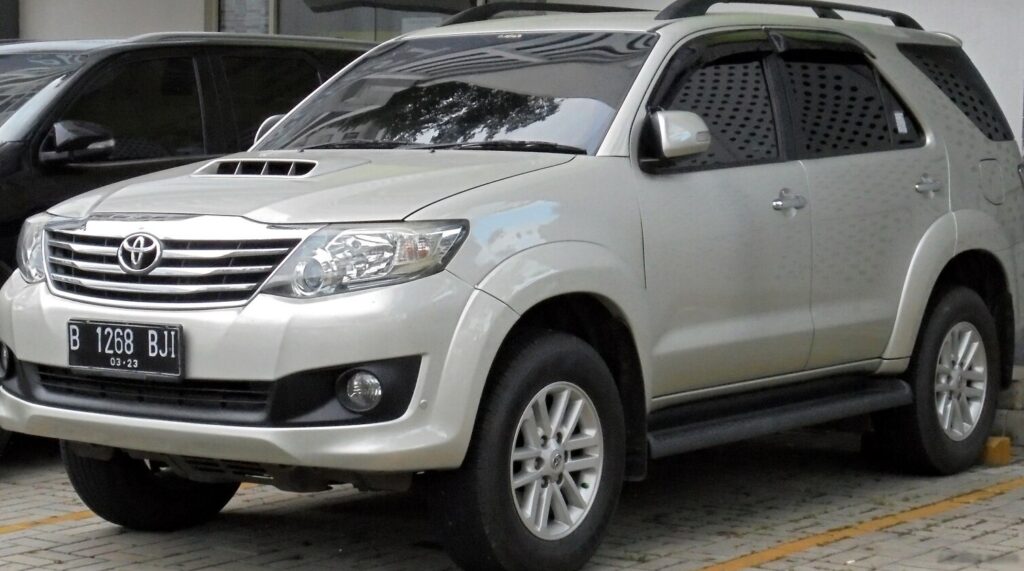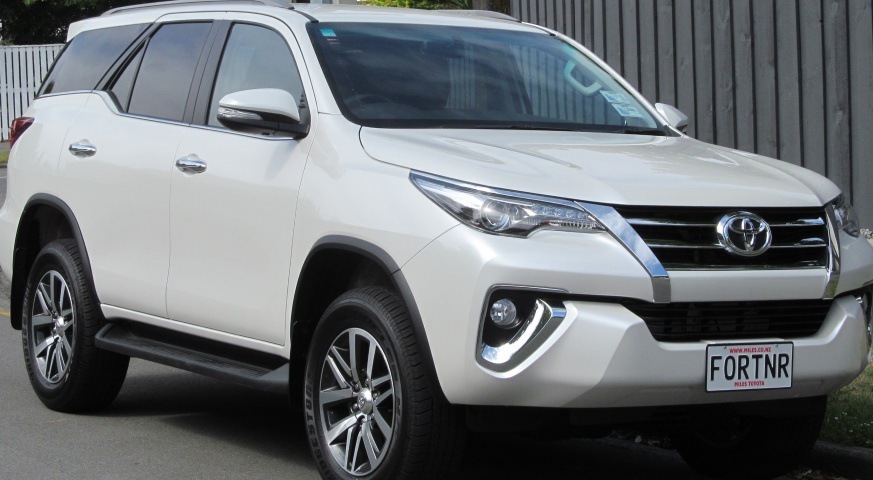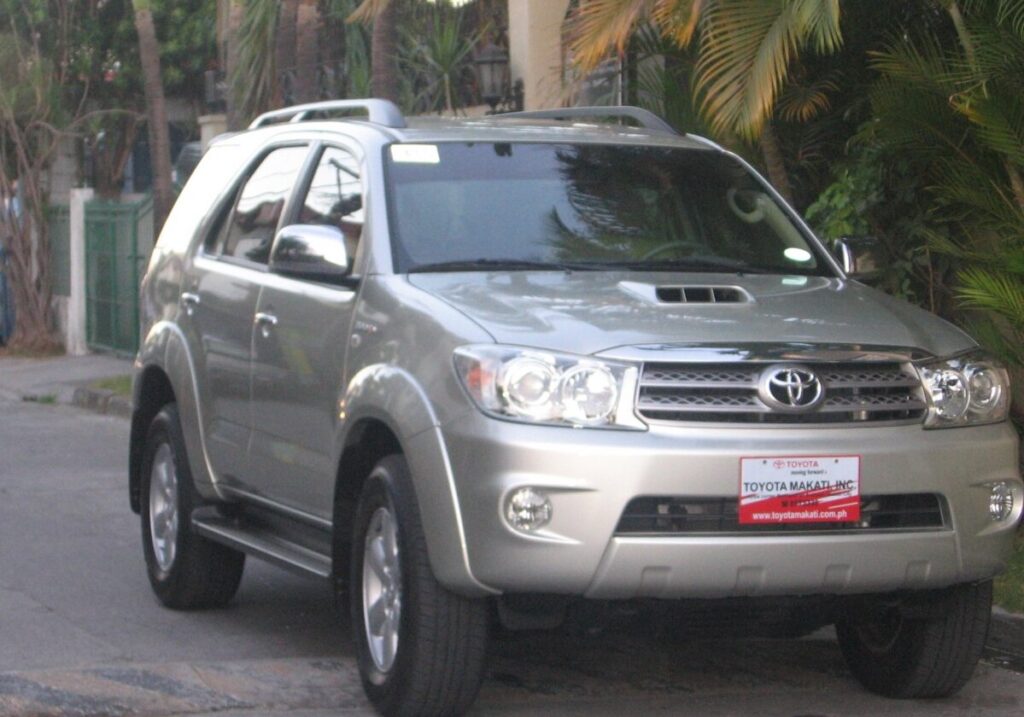
The Toyota Fortuner, launched in 2005, quickly became a popular choice in the mid-size SUV segment, particularly in markets outside of North America. The first generation (often referred to as the Fortuner I) underwent a significant facelift in 2008, bringing updated styling and minor mechanical revisions. This article focuses on the 2.5 D-4D variant of the facelifted Fortuner I, produced between 2008 and 2011, equipped with the 2KD-FTV engine producing 102 horsepower. This configuration represented an entry-level option within the Fortuner range, aimed at buyers prioritizing fuel efficiency and affordability over outright performance. It was primarily sold in Asia, Australia, South Africa, and parts of South America.
Technical Specifications
| Brand | Toyota |
| Model | Fortuner |
| Generation | Fortuner I (facelift 2008) |
| Type (Engine) | 2.5 D-4D (102 Hp) |
| Start of production | 2008 |
| End of production | 2011 |
| Powertrain Architecture | Internal Combustion engine |
| Body type | SUV |
| Seats | 7 |
| Doors | 5 |
| Fuel Type | Diesel |
| Weight-to-power ratio | 17.5 kg/Hp, 57 Hp/tonne |
| Weight-to-torque ratio | 6.9 kg/Nm, 145.3 Nm/tonne |
| Power | 102 Hp @ 3600 rpm |
| Power per litre | 40.9 Hp/l |
| Torque | 260 Nm @ 1600-2400 rpm (191.77 lb.-ft. @ 1600-2400 rpm) |
| Engine layout | Front, Longitudinal |
| Engine Model/Code | 2KD-FTV |
| Engine displacement | 2494 cm3 (152.19 cu. in.) |
| Number of cylinders | 4 |
| Engine configuration | Inline |
| Cylinder Bore | 92 mm (3.62 in.) |
| Piston Stroke | 93.8 mm (3.69 in.) |
| Number of valves per cylinder | 4 |
| Fuel injection system | Diesel Commonrail |
| Engine aspiration | Turbocharger |
| Valvetrain | DOHC |
| Engine oil capacity | 6.9 l (7.29 US qt | 6.07 UK qt) |
| Coolant | 9.8 l (10.36 US qt | 8.62 UK qt) |
| Kerb Weight | 1790 kg (3946.27 lbs.) |
| Max. weight | 2380 kg (5247 lbs.) |
| Max load | 590 kg (1300.73 lbs.) |
| Fuel tank capacity | 80 l (21.13 US gal | 17.6 UK gal) |
| Length | 4695 mm (184.84 in.) |
| Width | 1840 mm (72.44 in.) |
| Height | 1850 mm (72.83 in.) |
| Wheelbase | 2750 mm (108.27 in.) |
| Front track | 1540 mm (60.63 in.) |
| Rear (Back) track | 1540 mm (60.63 in.) |
| Ride height (ground clearance) | 221 mm (8.7 in.) |
| Minimum turning circle (turning diameter) | 11.8 m (38.71 ft.) |
| Approach angle | 30° |
| Departure angle | 25° |
| Ramp-over (brakeover) angle | 23° |
| Drivetrain Architecture | Rear wheel drive |
| Number of gears and type of gearbox | 5 gears, manual transmission |
| Front suspension | Coil spring, Double wishbone, Transverse stabilizer |
| Rear suspension | Rigid axle suspension, Coil spring |
| Front brakes | Ventilated discs |
| Rear brakes | Drum |
| Assisting systems | ABS (Anti-lock braking system) |
| Steering type | Steering rack and pinion |
| Power steering | Hydraulic Steering |
| Tires size | 265/65 R17 |
| Wheel rims size | 7.5J x 17 |
INTRODUCTION
The 2008 facelift of the Toyota Fortuner brought subtle but noticeable changes to the exterior, including a revised front grille, headlights, and bumper. However, the core mechanicals remained largely unchanged. The 2.5 D-4D variant, powered by the 2KD-FTV engine, was positioned as the entry point to the Fortuner lineup. It catered to buyers who needed a robust, seven-seater SUV with decent off-road capability but didn’t require the higher performance offered by the 3.0-liter D-4D engine. The Fortuner, built on a ladder-frame chassis, was designed to compete with vehicles like the Mitsubishi Pajero Sport and Isuzu MU-7, offering a compelling blend of practicality, durability, and value.
Powertrain & Engine Architecture
The heart of the 2.5 D-4D Fortuner is the 2KD-FTV, a 2.5-liter inline-four diesel engine. This engine is a member of Toyota’s ‘KD’ family of diesel engines, known for their reliability and longevity. The 2KD-FTV utilizes a common rail direct injection system, delivering fuel at extremely high pressure for improved combustion efficiency and reduced emissions. It’s turbocharged, providing a boost in power and torque. The engine features a double overhead camshaft (DOHC) valvetrain with four valves per cylinder, optimizing airflow for enhanced performance. The 102 horsepower output is achieved at 3600 rpm, while peak torque of 260 Nm (191.77 lb-ft) is available between 1600 and 2400 rpm. This engine was paired with a 5-speed manual transmission in most markets, providing a relatively simple and durable drivetrain.
Driving Characteristics
The 2.5 D-4D Fortuner, with its 102 horsepower and 260 Nm of torque, offered adequate, but not exhilarating, performance. Acceleration was modest, and overtaking required careful planning. Compared to the more powerful 3.0-liter D-4D variant, the 2.5 D-4D felt noticeably slower, especially when fully loaded with passengers and cargo. The 5-speed manual transmission was well-matched to the engine’s characteristics, providing a reasonable spread of gears for both on-road and off-road driving. The gear ratios were optimized for low-end torque, making it capable of tackling moderate off-road terrain. However, highway cruising at higher speeds could be somewhat noisy and require frequent downshifts.
Equipment & Trim Levels
The 2.5 D-4D Fortuner typically came with a fairly basic level of equipment, reflecting its position as the entry-level model. Standard features generally included air conditioning, power windows, power steering, and an AM/FM radio with a CD player. Interior upholstery was typically cloth, and the dashboard featured a functional, if somewhat utilitarian, design. Optional extras, depending on the market, could include alloy wheels, a rear parking sensor, and a more advanced audio system. Higher trim levels, available with the 3.0-liter engine, offered features like leather seats, automatic climate control, and a sunroof.
Chassis & Braking
The Fortuner’s chassis is a traditional ladder-frame construction, providing excellent strength and durability, essential for off-road use. The front suspension utilizes a double wishbone setup with coil springs and a transverse stabilizer bar, offering a reasonable level of ride comfort. The rear suspension employs a rigid axle with coil springs, prioritizing load-carrying capacity and off-road articulation. Braking duties are handled by ventilated discs at the front and drum brakes at the rear. While adequate for most driving conditions, the rear drum brakes were a point of criticism compared to the all-disc setup found on some competitors. Anti-lock braking system (ABS) was standard, enhancing safety during emergency braking situations.
Market Reception & Comparison
The 2.5 D-4D Fortuner was generally well-received in its target markets, praised for its reliability, durability, and affordability. Critics noted its modest performance but acknowledged that it was sufficient for most buyers’ needs. Compared to the 3.0-liter D-4D variant, the 2.5 D-4D offered significantly better fuel economy, making it a more attractive option for those who prioritized running costs. However, the 3.0-liter model was preferred by those who needed more power for towing or driving in challenging terrain. The Fortuner consistently outperformed competitors in terms of long-term reliability surveys.
Legacy
The 2KD-FTV engine, found in the 2.5 D-4D Fortuner, has earned a reputation for exceptional reliability and longevity. With proper maintenance, these engines can easily exceed 200,000 miles (320,000 kilometers). On the used car market, the 2.5 D-4D Fortuner remains a popular choice, particularly among buyers seeking a robust and affordable SUV. While it may not offer the performance of more modern vehicles, its proven reliability and off-road capability continue to make it a compelling option. Parts availability is generally good, and maintenance costs are relatively low, contributing to its enduring appeal.