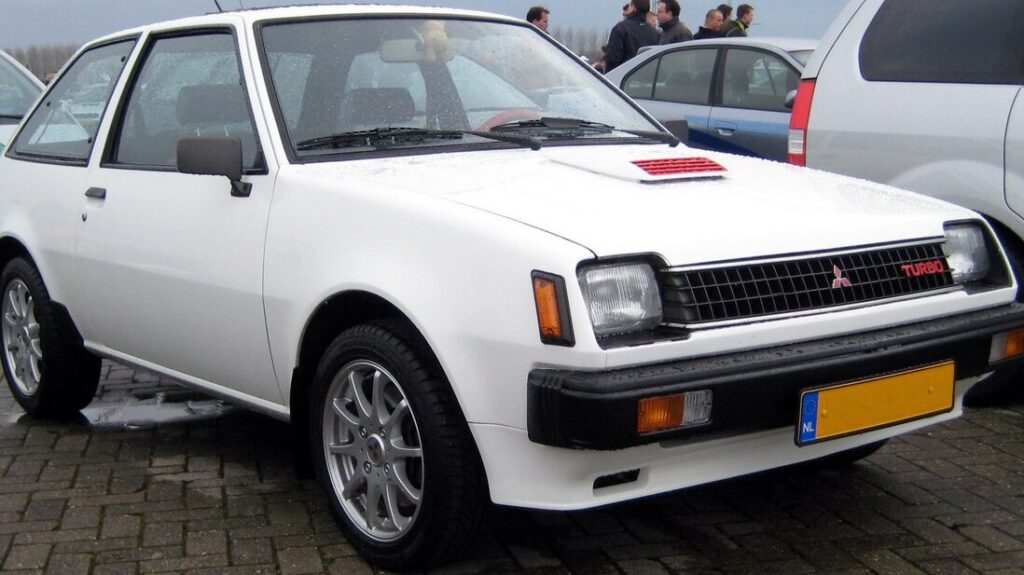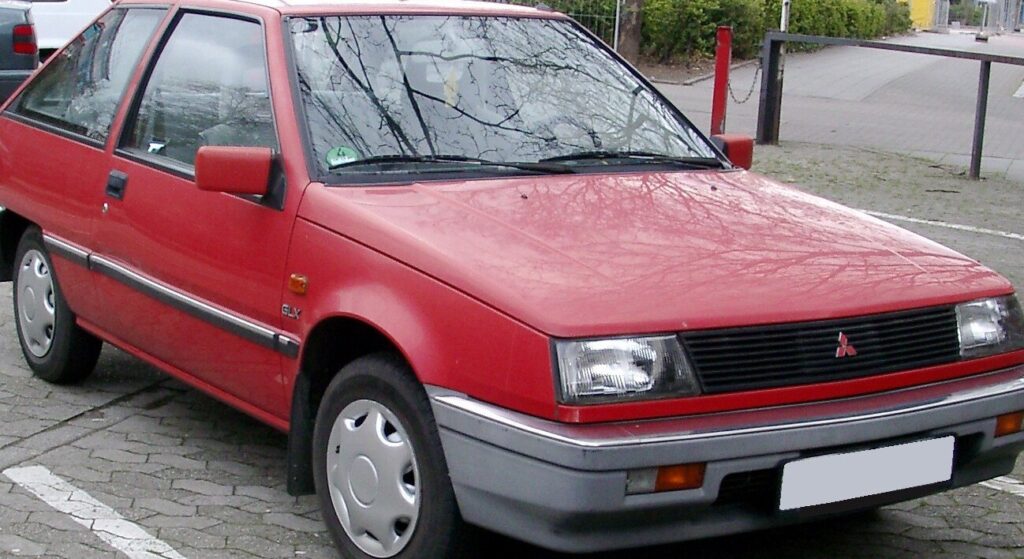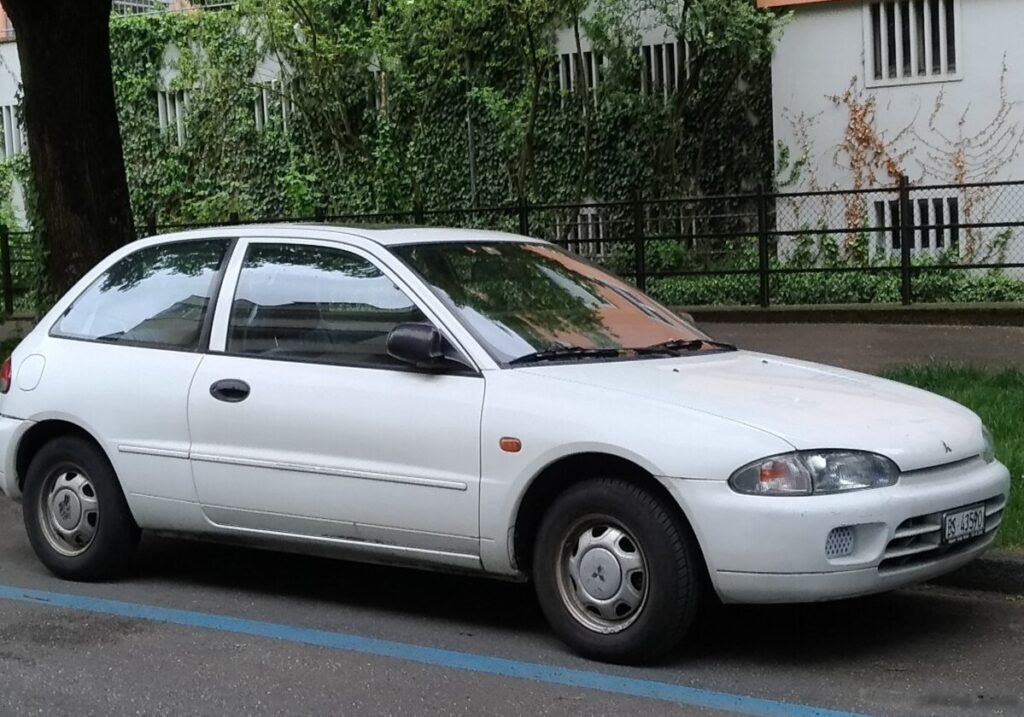
The Mitsubishi Colt IV (CAO) 1.8 GTi Automatic, produced between 1992 and 1996, represented a performance-oriented variant within the fourth generation of the Mitsubishi Colt. Positioned as a sporty offering in the subcompact hatchback segment, it aimed to provide a blend of practicality and engaging driving dynamics. This model was primarily sold in European and Asian markets, where the Colt enjoyed considerable popularity as an affordable and reliable vehicle. The CAO designation refers to the body code for the fourth-generation Colt, and the 1.8 GTi Automatic trim sat near the top of the range, offering a more powerful engine and the convenience of an automatic transmission compared to base models.
Technical Specifications
| Brand | Mitsubishi |
| Model | Colt |
| Generation | Colt IV (CAO) |
| Type | 1.8 GTi (140 Hp) Automatic |
| Start of production | 1992 |
| End of production | 1996 |
| Powertrain Architecture | Internal Combustion engine |
| Body type | Hatchback |
| Seats | 5 |
| Doors | 3 |
| Fuel Type | Petrol (Gasoline) |
| Acceleration 0 – 100 km/h | 7.6 sec |
| Acceleration 0 – 62 mph | 7.6 sec |
| Acceleration 0 – 60 mph | 7.2 sec |
| Maximum speed | 210 km/h (130.49 mph) |
| Weight-to-power ratio | 7.1 kg/Hp, 140.7 Hp/tonne |
| Weight-to-torque ratio | 6 kg/Nm, 167.8 Nm/tonne |
| Power | 140 Hp @ 6500 rpm |
| Power per litre | 76.3 Hp/l |
| Torque | 167 Nm (123.17 lb.-ft.) |
| Engine layout | Front, Transverse |
| Engine Model/Code | 4G93 |
| Engine displacement | 1834 cm3 (111.92 cu. in.) |
| Number of cylinders | 4 |
| Engine configuration | Inline |
| Cylinder Bore | 81 mm (3.19 in.) |
| Piston Stroke | 89 mm (3.5 in.) |
| Compression ratio | 10:1 |
| Number of valves per cylinder | 4 |
| Fuel injection system | Multi-port manifold injection |
| Engine aspiration | Naturally aspirated engine |
| Kerb Weight | 995 kg (2193.6 lbs.) |
| Trunk (boot) space – minimum | 240 l (8.48 cu. ft.) |
| Trunk (boot) space – maximum | 1070 l (37.79 cu. ft.) |
| Length | 3950 mm (155.51 in.) |
| Width | 1690 mm (66.54 in.) |
| Height | 1370 mm (53.94 in.) |
| Minimum turning circle | 10 m (32.81 ft.) |
| Drivetrain Architecture | Front wheel drive |
| Number of gears and type of gearbox | 4 gears, automatic transmission |
| Front suspension | Independent type McPherson |
| Front brakes | Ventilated discs |
| Rear brakes | Disc |
| Steering type | Steering rack and pinion |
| Power steering | Hydraulic Steering |
Powertrain & Engine Architecture
The heart of the 1.8 GTi Automatic was the 4G93 engine, an inline-four cylinder, naturally aspirated powerplant displacing 1834cc (1.8 liters). This engine featured multi-port fuel injection, a 10:1 compression ratio, and four valves per cylinder, contributing to its respectable power output of 140 horsepower at 6500 rpm and 167 Nm (123.17 lb.-ft.) of torque. The 4G93 was a well-regarded engine known for its durability and responsiveness. The automatic transmission was a conventional four-speed unit, chosen to provide ease of use for drivers who preferred not to operate a manual gearbox. While the automatic transmission offered convenience, it did impact acceleration times slightly compared to the five-speed manual version.
Driving Characteristics
The 1.8 GTi Automatic offered a comfortable yet engaging driving experience. The automatic transmission, while not as sporty as a manual, provided smooth shifts and allowed the engine to remain within its power band. Acceleration from 0 to 60 mph was achieved in approximately 7.2 seconds, a respectable figure for a vehicle of this class in the early 1990s. The McPherson strut front suspension and disc brakes on all four wheels provided competent handling and stopping power. Compared to the manual transmission version, the automatic felt slightly less eager to rev, and the gear ratios were tuned for fuel efficiency and smooth cruising rather than outright performance. The weight distribution, typical of front-wheel-drive cars, could lead to some understeer during aggressive cornering.
Equipment & Trim Levels
The 1.8 GTi Automatic trim level typically included features such as power steering, central locking, electric windows, and a basic audio system. Interior upholstery was usually cloth, with a sporty design. Optional extras could include alloy wheels, a sunroof, and upgraded audio systems. The dashboard layout was functional and straightforward, prioritizing ease of use over elaborate styling. The GTi designation also implied a slightly more aggressive body kit, including a rear spoiler and side skirts, differentiating it from lower trim levels.
Chassis & Braking
The Colt IV utilized a front-wheel-drive chassis with an independent McPherson strut suspension at the front and a torsion beam suspension at the rear. The front brakes were ventilated discs, providing good stopping power, while the rear brakes were solid discs. The hydraulic power steering offered a reasonable level of assistance, making maneuvering easy. The chassis was relatively lightweight, contributing to the car’s nimble handling characteristics. Stabilizer bars were fitted to both the front and rear axles to reduce body roll during cornering.
Market Reception & Comparison
The Mitsubishi Colt IV 1.8 GTi Automatic was generally well-received by automotive critics as a practical and enjoyable subcompact hatchback. It was praised for its reliable engine, comfortable ride, and reasonable performance. However, some reviewers noted that the automatic transmission dulled the driving experience compared to the manual version. Compared to other vehicles in its class, such as the Peugeot 205 GTi or the Volkswagen Golf, the Colt offered a more affordable alternative with a focus on reliability and ease of maintenance. Fuel economy was competitive for the time, averaging around 30-35 mpg in mixed driving conditions.
Legacy
The Mitsubishi Colt IV 1.8 GTi Automatic has proven to be a relatively durable and reliable vehicle over the long term. The 4G93 engine is known for its longevity, and the automatic transmission, while not particularly sophisticated, has generally held up well. Today, these cars are becoming increasingly rare and are sought after by enthusiasts who appreciate their simplicity and affordability. Parts availability can be a challenge, but many components are still available through aftermarket suppliers. The 1.8 GTi Automatic represents a charming example of 1990s Japanese automotive engineering, offering a blend of practicality, performance, and reliability.