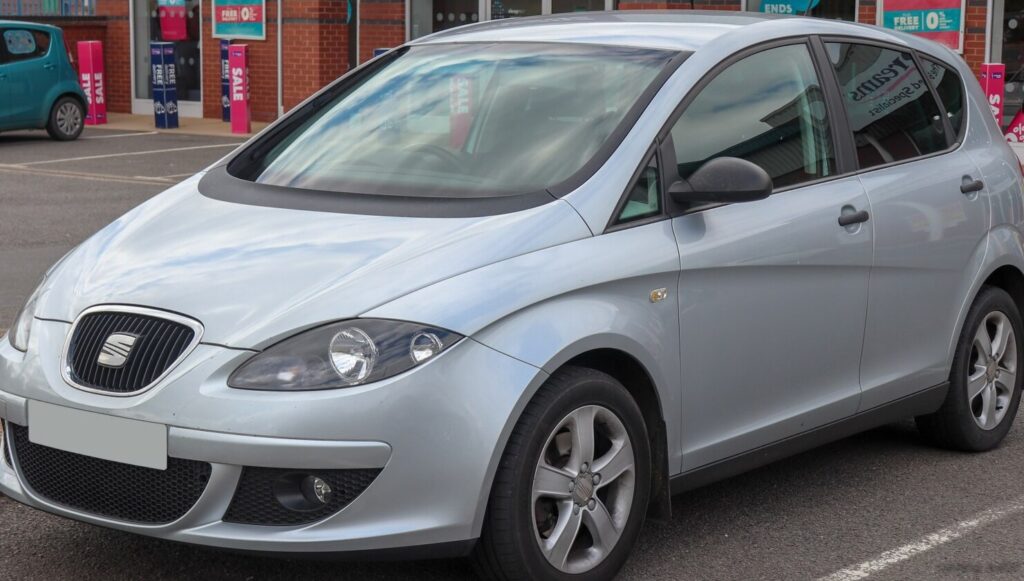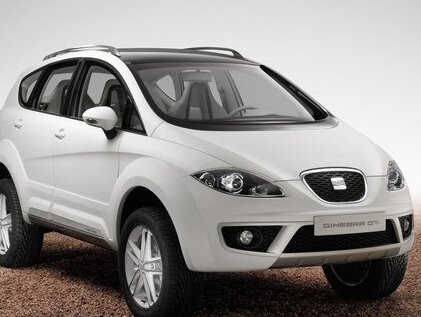
The Seat Altea Freetrack 2.0 TDI, produced from 2007 to 2009, represented Seat’s foray into the compact crossover SUV segment. Based on the Altea five-door hatchback, the Freetrack distinguished itself with increased ride height, rugged styling cues, and, crucially, a standard all-wheel-drive system. This variant, equipped with the 2.0-liter TDI engine producing 170 horsepower, occupied the upper echelon of the Freetrack lineup, offering a blend of performance, practicality, and all-weather capability. It was primarily marketed in Europe, where the demand for compact, versatile vehicles was strong, and positioned as a more adventurous alternative to traditional hatchbacks and small family cars.
Technical Specifications
| Brand | Seat |
| Model | Altea |
| Generation | Altea Freetrack |
| Type (Engine) | 2.0 TDI (170 Hp) 4WD DPF |
| Start of production | 2007 |
| End of production | 2009 |
| Powertrain Architecture | Internal Combustion engine |
| Body type | SUV |
| Seats | 5 |
| Doors | 5 |
| Fuel consumption (economy) – urban (NEDC) | 8.5 l/100 km (27.7 US mpg, 33.2 UK mpg, 11.8 km/l) |
| Fuel consumption (economy) – extra urban (NEDC) | 5.7 l/100 km (41.3 US mpg, 49.6 UK mpg, 17.5 km/l) |
| Fuel consumption (economy) – combined (NEDC) | 6.8 l/100 km (34.6 US mpg, 41.5 UK mpg, 14.7 km/l) |
| CO2 emissions (NEDC) | 179 g/km |
| Fuel Type | Diesel |
| Acceleration 0 – 100 km/h | 8.7 sec |
| Acceleration 0 – 62 mph | 8.7 sec |
| Acceleration 0 – 60 mph | 8.3 sec |
| Maximum speed | 204 km/h (126.76 mph) |
| Emission standard | Euro 4 |
| Weight-to-power ratio | 9.2 kg/Hp, 108.4 Hp/tonne |
| Weight-to-torque ratio | 4.5 kg/Nm, 223.2 Nm/tonne |
| Power | 170 Hp @ 4200 rpm |
| Power per litre | 86.4 Hp/l |
| Torque | 350 Nm @ 1800 rpm (258.15 lb.-ft. @ 1800 rpm) |
| Engine layout | Front, Transverse |
| Engine Model/Code | BMN |
| Engine displacement | 1968 cm3 (120.09 cu. in.) |
| Number of cylinders | 4 |
| Engine configuration | Inline |
| Cylinder Bore | 81 mm (3.19 in.) |
| Piston Stroke | 95.5 mm (3.76 in.) |
| Compression ratio | 18.5:1 |
| Number of valves per cylinder | 4 |
| Fuel injection system | Pump-nozzle (Unit Injector) |
| Engine aspiration | Turbocharger, Intercooler |
| Valvetrain | DOHC |
| Engine oil capacity | 4.3 l (4.54 US qt, 3.78 UK qt) |
| Coolant | 8 l (8.45 US qt, 7.04 UK qt) |
| Kerb Weight | 1568 kg (3456.85 lbs.) |
| Max. weight | 2168 kg (4779.62 lbs.) |
| Max load | 600 kg (1322.77 lbs.) |
| Trunk (boot) space – minimum | 490 l (17.3 cu. ft.) |
| Fuel tank capacity | 60 l (15.85 US gal, 13.2 UK gal) |
| Max. roof load | 75 kg (165.35 lbs.) |
| Permitted trailer load with brakes (12%) | 1650 kg (3637.63 lbs.) |
| Permitted trailer load without brakes | 750 kg (1653.47 lbs.) |
| Permitted towbar download | 75 kg (165.35 lbs.) |
| Length | 4493 mm (176.89 in.) |
| Width | 1788 mm (70.39 in.) |
| Height | 1622 mm (63.86 in.) |
| Wheelbase | 2576 mm (101.42 in.) |
| Front track | 1542 mm (60.71 in.) |
| Rear (Back) track | 1527 mm (60.12 in.) |
| Minimum turning circle | 10.9 m (35.76 ft.) |
| Drivetrain Architecture | All wheel drive (4×4). ICE drives front wheels, rear wheels engaged via clutch. |
| Drive wheel | All wheel drive (4×4) |
| Number of gears and type of gearbox | 6 gears, manual transmission |
| Front suspension | Independent, McPherson with coil spring and anti-roll bar |
| Rear suspension | Independent multi-link spring suspension with stabilizer |
| Front brakes | Ventilated discs |
| Rear brakes | Disc |
| Assisting systems | ABS (Anti-lock braking system) |
| Steering type | Steering rack and pinion |
| Power steering | Electric Steering |
| Tires size | 225/50 R17 |
| Wheel rims size | 7J x 17 |
Powertrain & Engine Architecture
The heart of the Altea Freetrack 2.0 TDI was the BMN engine code, a 1968cc inline-four cylinder diesel engine. This engine utilized a pump-nozzle (unit injector) fuel injection system, a technology known for its high injection pressures and precise fuel delivery, contributing to both performance and efficiency. The engine featured a single turbocharger with an intercooler, boosting power output to 170 horsepower at 4200 rpm and a substantial 350 Nm (258 lb-ft) of torque available from just 1800 rpm. The engine’s valvetrain employed a double overhead camshaft (DOHC) design with four valves per cylinder, optimizing gas flow for improved power and responsiveness. The six-speed manual transmission was standard, providing a good balance between fuel economy and driver control. The all-wheel-drive system was a Haldex system, a multi-plate clutch system that proactively distributed torque between the front and rear axles based on traction conditions.
Driving Characteristics
The 2.0 TDI engine in the Freetrack provided brisk acceleration, achieving 0-60 mph in approximately 8.3 seconds. The readily available torque made everyday driving effortless, with strong pull from low engine speeds. The all-wheel-drive system enhanced traction, particularly on slippery surfaces, providing a secure and confident driving experience. Compared to the lower-powered 1.9 TDI versions, the 2.0 TDI offered a noticeable performance upgrade, while remaining more fuel-efficient than the petrol-powered options. The six-speed gearbox was well-matched to the engine’s characteristics, allowing for comfortable cruising on the highway and responsive downshifts when needed. However, the Freetrack wasn’t a sports car; its focus was on practicality and all-weather capability rather than outright performance.
Equipment & Trim Levels
The Freetrack trim level was relatively well-equipped, even as standard. Features typically included alloy wheels, air conditioning, a CD stereo system, electric windows and mirrors, and ABS brakes. The interior featured supportive seats, often upholstered in a combination of cloth and Alcantara. Optional extras included a sunroof, parking sensors, and a more advanced audio system. The dashboard layout was functional and straightforward, with a focus on ergonomics. The Freetrack also featured unique exterior styling elements, such as plastic body cladding and roof rails, giving it a more rugged appearance.
Chassis & Braking
The Altea Freetrack utilized an independent suspension setup at all four corners. The front suspension employed a McPherson strut design with a coil spring and anti-roll bar, while the rear suspension featured a multi-link setup, also with a stabilizer bar. This configuration provided a comfortable ride quality and good handling characteristics. The braking system consisted of ventilated discs at the front and solid discs at the rear, providing adequate stopping power. ABS (Anti-lock Braking System) was standard, enhancing safety in emergency braking situations.
Market Reception & Comparison
The Seat Altea Freetrack 2.0 TDI was generally well-received by automotive critics. It was praised for its practicality, all-weather capability, and fuel efficiency. However, some critics noted that the interior quality wasn’t quite as refined as some of its competitors. Compared to other compact crossovers of the time, such as the Volkswagen Tiguan and the Skoda Yeti, the Freetrack offered a more distinctive styling and a slightly more affordable price point. The 2.0 TDI engine provided a good balance between performance and economy, making it a popular choice for drivers who needed a versatile and efficient vehicle.
Legacy
The Seat Altea Freetrack, while not a massive sales success, established Seat as a player in the compact crossover segment. The 2.0 TDI engine proved to be a reliable and durable unit, and many examples are still on the road today. The BMN engine, while known for its robust nature, can be susceptible to issues with the fuel injectors and turbocharger over time, requiring regular maintenance. In the used car market, the Freetrack 2.0 TDI represents a relatively affordable and practical option for those seeking a versatile and capable vehicle. Its all-wheel-drive system and fuel-efficient diesel engine continue to appeal to buyers looking for a vehicle that can handle a variety of conditions.