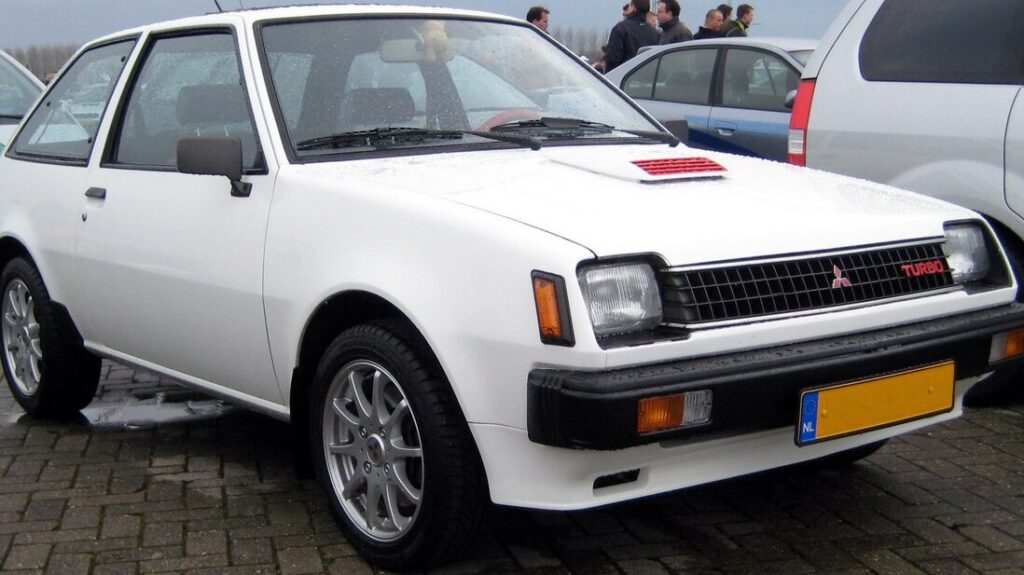
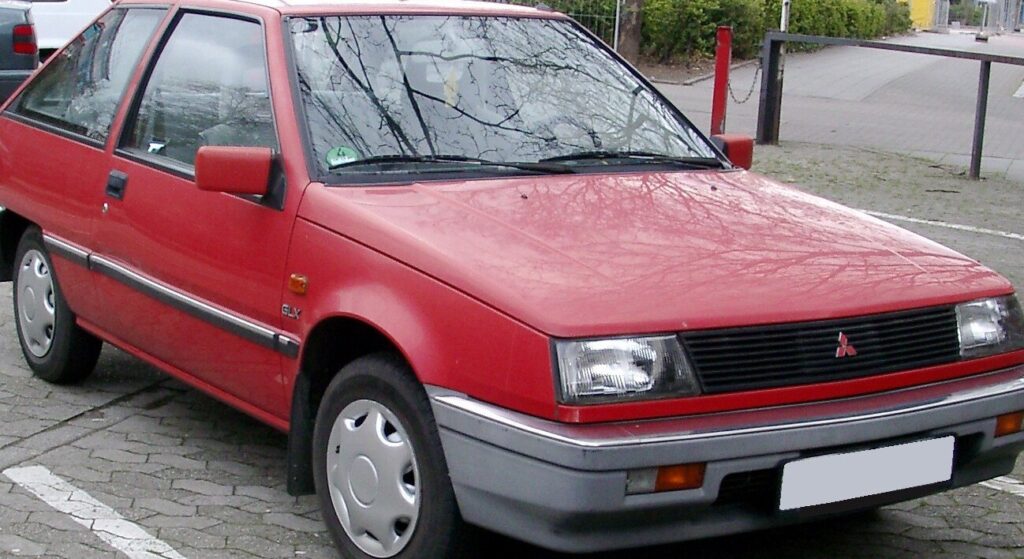
The Mitsubishi Colt Lancer 1.4, produced between 1978 and 1979 as part of the A7_ generation, represented an entry-level offering in Mitsubishi’s compact sedan lineup. This model, delivering 68 horsepower from a 1.4-liter engine, was primarily aimed at budget-conscious buyers seeking reliable and economical transportation. It served as the foundation for the Colt Lancer range, with more powerful and feature-rich variants available to those willing to spend more. The A7_ series marked a significant step for Mitsubishi, solidifying their presence in the global compact car market, particularly in regions where fuel efficiency and affordability were paramount.
Technical Specifications
| Brand | Mitsubishi |
| Model | Colt Lancer |
| Generation | Colt Lancer (A7_) |
| Type (Engine) | 1.4 (68 Hp) |
| Start of production | 1978 |
| End of production | 1979 |
| Powertrain Architecture | Internal Combustion engine |
| Body type | Sedan |
| Fuel Type | Petrol (Gasoline) |
| Power | 68 Hp |
| Engine aspiration | Naturally aspirated engine |
Powertrain & Engine Architecture
The heart of the Colt Lancer 1.4 was a 1.4-liter (1397cc) inline-four cylinder gasoline engine. This engine, while modest in output, was designed for durability and fuel economy. It featured a single overhead camshaft (SOHC) valvetrain, operating two valves per cylinder. Fuel delivery was managed by a carburetor, a common technology for the era, rather than fuel injection. This carburetor system, while simpler and less expensive than injection, contributed to the engine’s relatively low power output and slightly less refined throttle response. The engine’s block was constructed from cast iron, providing robustness, while the cylinder head was made of aluminum alloy to reduce weight. The 68 horsepower peak was achieved at approximately 6,000 rpm, with a torque output of around 88 lb-ft at 3,000 rpm. The transmission paired with this engine was typically a four-speed manual, although a three-speed automatic transmission was also offered, albeit less frequently. The automatic transmission was a conventional hydraulic unit, offering smooth but not particularly quick shifts.
Driving Characteristics
The driving experience in the Colt Lancer 1.4 was characterized by its practicality and ease of use. With only 68 horsepower, acceleration was leisurely, and overtaking required careful planning. The four-speed manual transmission allowed drivers to make the most of the available power, while the optional three-speed automatic prioritized comfort over performance. The gear ratios were geared towards fuel efficiency, resulting in a relatively high cruising speed at lower engine revolutions. The suspension, consisting of MacPherson struts at the front and a leaf spring rear suspension, provided a comfortable ride, although it wasn’t particularly sporty. Handling was predictable but lacked the precision of more modern vehicles. The steering was unassisted, requiring a bit more effort at low speeds, but providing a direct feel for the road. Compared to higher-spec Colt Lancer models equipped with larger engines (like the 1.6L or 2.0L variants), the 1.4 felt noticeably slower and less refined. However, it offered a more economical and accessible entry point into the Colt Lancer range.
Equipment & Trim Levels
The Colt Lancer 1.4 was typically offered in a base trim level, focusing on essential features. Standard equipment generally included cloth upholstery, vinyl floor covering, and basic instrumentation – a speedometer, fuel gauge, and temperature gauge. The steering wheel was typically made of plastic, and the interior trim was functional rather than luxurious. Options were limited but could include a radio, heater, and upgraded seat fabric. The exterior featured basic chrome trim, steel wheels with hubcaps, and relatively simple lighting. The overall interior design was straightforward and utilitarian, reflecting the car’s budget-oriented positioning. The emphasis was on providing a reliable and functional vehicle at an affordable price point.
Chassis & Braking
The Colt Lancer 1.4 utilized a body-on-frame construction, a common practice for vehicles of that era. The chassis was designed for durability and simplicity. The front suspension employed MacPherson struts, providing a reasonable level of ride comfort. The rear suspension utilized a leaf spring setup, which was cost-effective but less sophisticated than independent suspension systems. Braking was accomplished via drum brakes on all four wheels, which were adequate for the car’s weight and performance. Power steering and power brakes were not available on the base 1.4 model. The tires were typically narrow, prioritizing fuel economy over grip. The overall chassis and braking setup were designed to provide safe and reliable stopping power, but they weren’t intended for high-performance driving.
Market Reception & Comparison
The Mitsubishi Colt Lancer 1.4 was generally well-received as an affordable and reliable compact sedan. Critics praised its fuel efficiency and durability, but noted its lack of power and refinement compared to competitors. In the US market, it competed with vehicles like the Toyota Corolla and Honda Civic, offering a similar value proposition. However, the Colt Lancer 1.4 often lagged behind these rivals in terms of performance and features. Within the Colt Lancer lineup, the 1.4 served as the entry-level model, attracting buyers who prioritized economy over performance. The larger-engined variants offered more power and features, but at a higher price point. Fuel economy was a key selling point for the 1.4, achieving around 30-35 mpg in typical driving conditions. Reliability was also a strong suit, with the engine and transmission proving to be durable and long-lasting.
Legacy
The Mitsubishi Colt Lancer 1.4, while not a particularly groundbreaking vehicle, played an important role in establishing Mitsubishi’s presence in the global compact car market. The A7_ generation Colt Lancer laid the foundation for future Mitsubishi models, and the 1.4-liter engine proved to be a reliable and durable powerplant. Today, the Colt Lancer 1.4 is a relatively rare sight on the roads, but it remains a popular choice among classic car enthusiasts and collectors. Its simplicity, affordability, and reliability make it an appealing option for those seeking a vintage Japanese sedan. Parts availability can be a challenge, but the engine and mechanical components are generally robust and can be maintained with relative ease. The 1.4 variant, in particular, is remembered as a practical and economical choice for budget-conscious buyers in the late 1970s.