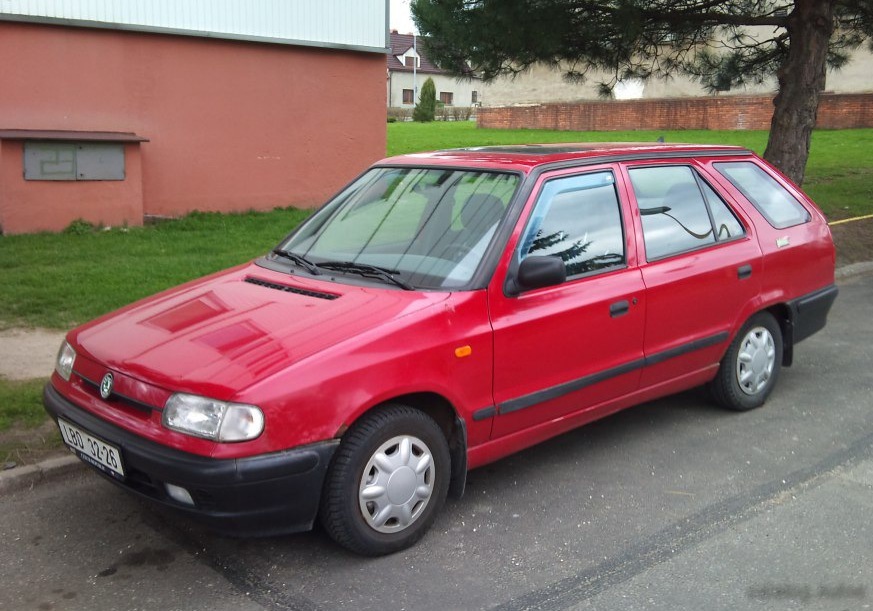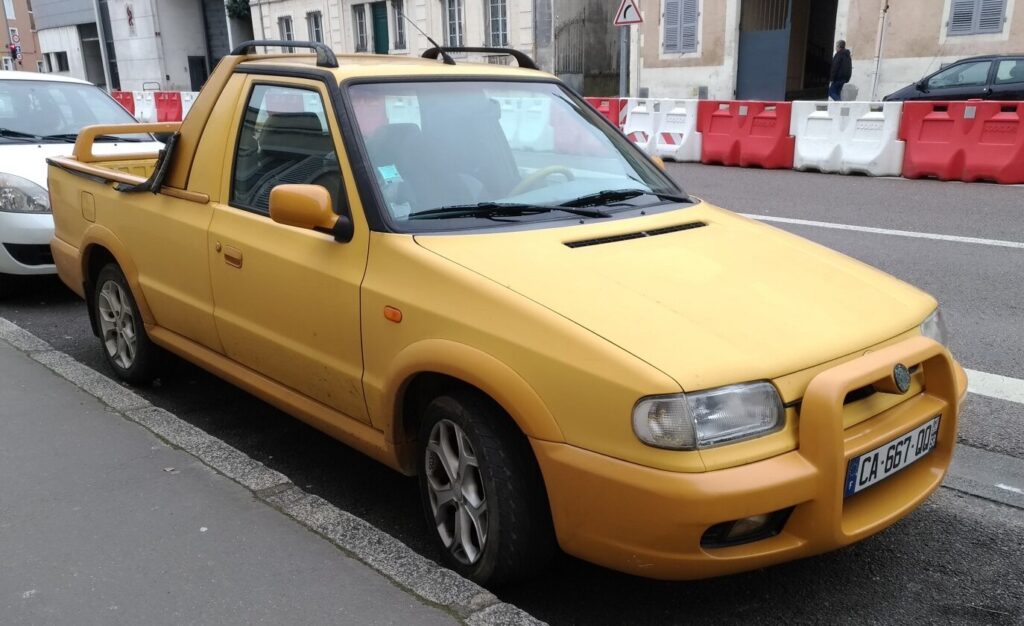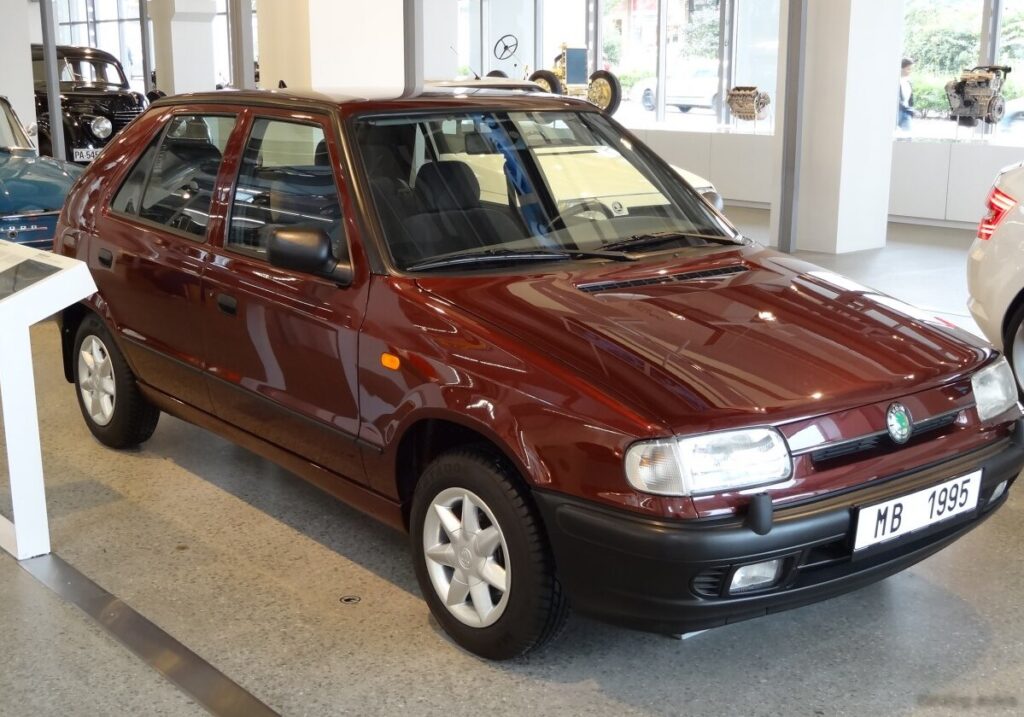
The Skoda Felicia I 1.9 D, produced between 1995 and 1997, represented an important step in Skoda’s modernization following its acquisition by the Volkswagen Group. This variant, powered by a 1.9-liter diesel engine producing 64 horsepower, was positioned as the entry-level diesel offering within the Felicia range, primarily aimed at buyers seeking fuel efficiency and practicality. The Felicia itself was a significant model for Skoda, replacing the aging Favorit and serving as a bridge to the more modern vehicles that would follow under VW ownership. It was built on the 791 series platform, a design that represented a substantial improvement over its predecessor in terms of safety, comfort, and overall build quality.
Technical Specifications
| Brand | Skoda |
| Model | Felicia |
| Generation | Felicia I (791) |
| Type (Engine) | 1.9 D (64 Hp) |
| Start of production | October, 1995 |
| End of production | 1997 |
| Powertrain Architecture | Internal Combustion engine |
| Body type | Hatchback |
| Seats | 5 |
| Doors | 5 |
| Fuel consumption (urban) | 7.7 l/100 km (30.5 US mpg, 36.7 UK mpg, 13 km/l) |
| Fuel consumption (extra urban) | 4.8 l/100 km (49 US mpg, 58.9 UK mpg, 20.8 km/l) |
| Fuel consumption (combined) | 5.8 l/100 km (40.6 US mpg, 48.7 UK mpg, 17.2 km/l) |
| Fuel Type | Diesel |
| Acceleration 0 – 100 km/h | 16.5 sec |
| Acceleration 0 – 62 mph | 16.5 sec |
| Acceleration 0 – 60 mph | 15.7 sec |
| Maximum speed | 156 km/h (96.93 mph) |
| Weight-to-power ratio | 15.9 kg/Hp, 62.7 Hp/tonne |
| Weight-to-torque ratio | 8.2 kg/Nm, 121.6 Nm/tonne |
| Power | 64 Hp @ 4300 rpm |
| Power per litre | 33.8 Hp/l |
| Torque | 124 Nm @ 2500 rpm (91.46 lb.-ft. @ 2500 rpm) |
| Engine layout | Front, Transverse |
| Engine Model/Code | AEF |
| Engine displacement | 1896 cm3 (115.7 cu. in.) |
| Number of cylinders | 4 |
| Engine configuration | Inline |
| Cylinder Bore | 79.5 mm (3.13 in.) |
| Piston Stroke | 95.5 mm (3.76 in.) |
| Compression ratio | 22.5:1 |
| Number of valves per cylinder | 2 |
| Fuel injection system | Precombustion chamber injection |
| Engine aspiration | Naturally aspirated engine |
| Valvetrain | OHC |
| Engine oil capacity | 5 l (5.28 US qt | 4.4 UK qt) |
| Coolant capacity | 6 l (6.34 US qt | 5.28 UK qt) |
| Kerb Weight | 1020 kg (2248.72 lbs.) |
| Max. weight | 1480 kg (3262.84 lbs.) |
| Max load | 460 kg (1014.13 lbs.) |
| Trunk (boot) space – minimum | 272 l (9.61 cu. ft.) |
| Trunk (boot) space – maximum | 965 l (34.08 cu. ft.) |
| Fuel tank capacity | 42 l (11.1 US gal | 9.24 UK gal) |
| Length | 3885 mm (152.95 in.) |
| Width | 1635 mm (64.37 in.) |
| Height | 1415 mm (55.71 in.) |
| Wheelbase | 2450 mm (96.46 in.) |
| Front track | 1420 mm (55.91 in.) |
| Rear (Back) track | 1380 mm (54.33 in.) |
| Drivetrain Architecture | The Internal combustion engine (ICE) drives the front wheels of the vehicle. |
| Drive wheel | Front wheel drive |
| Number of gears and type of gearbox | 5 gears, manual transmission |
| Front suspension | Coil spring |
| Rear suspension | Coil spring |
| Front brakes | Disc |
| Rear brakes | Drum |
| Assisting systems | ABS (Anti-lock braking system) |
| Steering type | Steering rack and pinion |
| Power steering | Hydraulic Steering |
| Tires size | 165/70 R13 |
| Wheel rims size | 5.5J x 13 |
Powertrain & Engine Architecture
The heart of the Felicia 1.9 D is the AEF engine, a naturally aspirated, inline-four cylinder diesel. This engine utilizes a precombustion chamber injection system, a common design for diesel engines of that era. This system involves injecting fuel into a small precombustion chamber within the cylinder head, where it ignites and then ignites the main charge in the cylinder. The AEF engine features an overhead camshaft (OHC) valvetrain operating two valves per cylinder. The 1.9-liter displacement (1896 cc) provided a reasonable balance between fuel economy and usable power, although it was not known for its performance. The engine produced 64 horsepower at 4300 rpm and 124 Nm (91.46 lb-ft) of torque at 2500 rpm. The engine’s relatively high compression ratio of 22.5:1 was typical for diesel engines, contributing to its efficiency. The engine was transversely mounted in the front of the vehicle, driving the front wheels.
Driving Characteristics
The 1.9 D variant of the Felicia offered a decidedly utilitarian driving experience. Acceleration was slow, with a 0-60 mph time of around 15.7 seconds. The focus was firmly on fuel economy rather than outright speed. The five-speed manual transmission was well-matched to the engine’s characteristics, allowing drivers to keep the engine in its relatively narrow power band. Compared to the more powerful petrol (gasoline) versions of the Felicia, the 1.9 D felt significantly slower, particularly when fully loaded or climbing hills. However, the diesel engine’s torque delivery provided decent pulling power at lower speeds, making it suitable for everyday driving and carrying loads. The steering was light and precise, and the suspension provided a comfortable, if somewhat basic, ride.
Equipment & Trim Levels
The Felicia 1.9 D typically came with a fairly basic level of equipment, reflecting its position as the entry-level diesel model. Standard features generally included power steering, central locking, and a basic stereo system. Interior upholstery was typically cloth, and the dashboard featured a simple, functional design. Optional extras included power windows, a sunroof, and upgraded audio systems. Trim levels were relatively limited, with most examples being fairly similar in terms of standard equipment. The emphasis was on providing a practical and affordable vehicle rather than luxury features.
Chassis & Braking
The Felicia 1.9 D utilized a relatively simple chassis design. Front suspension consisted of coil springs, while the rear suspension also employed coil springs. The front brakes were discs, providing adequate stopping power, while the rear brakes were drums, a cost-saving measure common in vehicles of this class. An Anti-lock Braking System (ABS) was often included as standard equipment, enhancing safety. The car’s relatively light weight (around 1020 kg or 2248.72 lbs) helped to offset the engine’s modest power output.
Market Reception & Comparison
The Skoda Felicia 1.9 D was generally well-received in markets where fuel economy was a primary concern. Critics praised its affordability and practicality, but noted its lack of performance. Compared to other diesel-powered hatchbacks of the time, such as the Volkswagen Polo or the Ford Fiesta, the Felicia offered a competitive price point and a spacious interior. However, it lacked the refinement and performance of some of its rivals. The 1.9 D was often seen as a more sensible alternative to the more powerful petrol versions of the Felicia, particularly for drivers who covered long distances or frequently carried heavy loads.
Legacy
The Skoda Felicia 1.9 D, while not a performance icon, proved to be a reliable and durable vehicle. The AEF diesel engine, while somewhat agricultural by modern standards, was known for its longevity and relatively low maintenance costs. Today, the Felicia 1.9 D is a relatively rare sight on the roads, but well-maintained examples are sought after by enthusiasts and collectors. Its simple construction and readily available parts make it a relatively easy vehicle to maintain and repair. The Felicia 1.9 D represents a significant chapter in Skoda’s history, marking a turning point in the brand’s journey towards becoming a mainstream automotive manufacturer.