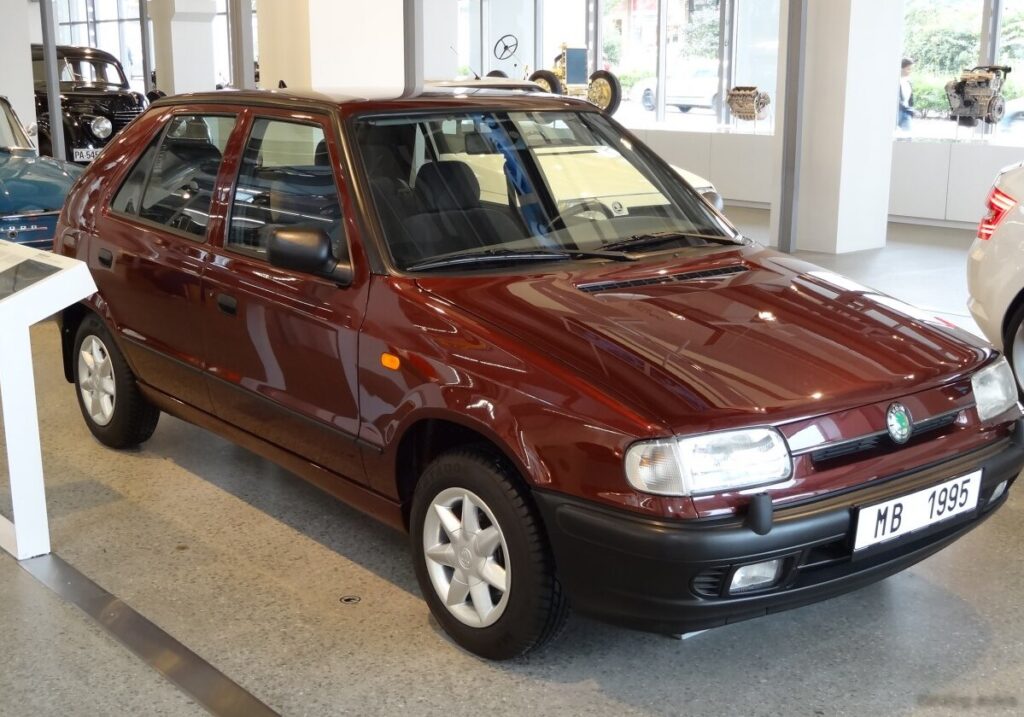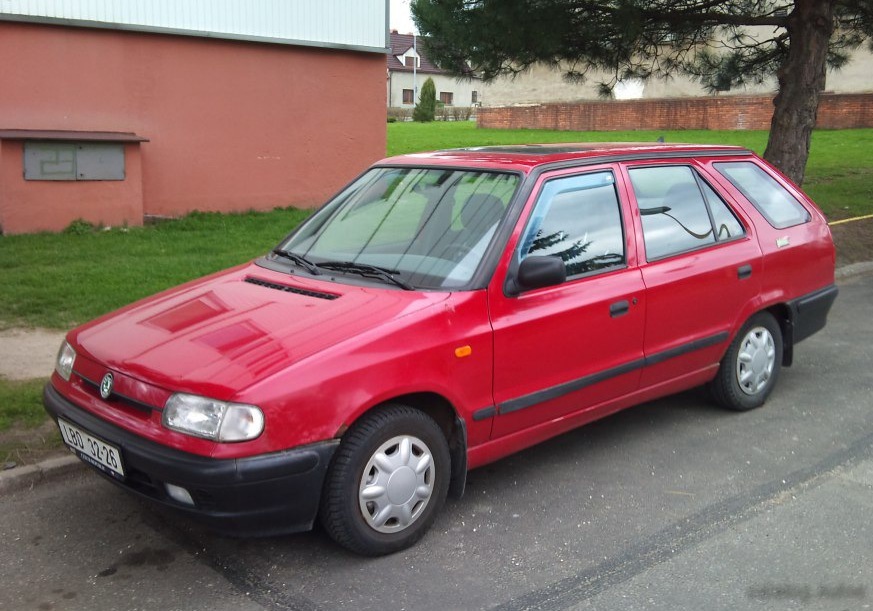
The Skoda Felicia I Combi 1.3, produced between 1995 and 1997, represented an important step in Skoda’s modernization following its acquisition by the Volkswagen Group. This particular variant, designated internally as type 795, was a five-door station wagon (estate) powered by a 1.3-liter naturally aspirated gasoline engine producing 58 horsepower. It occupied the entry-level position within the Felicia Combi range, offering affordable family transportation with a focus on practicality and fuel economy. The Felicia itself was a significant model for Skoda, being the first entirely new vehicle developed under Volkswagen ownership, and the Combi version expanded its appeal to those needing greater cargo capacity.
Technical Specifications
| Brand | Skoda |
| Model | Felicia |
| Generation | Felicia I Combi (795) |
| Type (Engine) | 1.3 (58 Hp) |
| Start of production | October, 1995 |
| End of production | 1997 |
| Powertrain Architecture | Internal Combustion engine |
| Body type | Station wagon (estate) |
| Seats | 5 |
| Doors | 5 |
| Fuel Type | Petrol (Gasoline) |
| Power | 58 Hp |
| Engine layout | Front, Transverse |
| Engine Model/Code | AMJ |
| Engine aspiration | Naturally aspirated engine |
| Engine oil capacity | 4.5 l (4.76 US qt | 3.96 UK qt) |
| Coolant capacity | 6 l (6.34 US qt | 5.28 UK qt) |
| Fuel tank capacity | 42 l (11.1 US gal | 9.24 UK gal) |
Powertrain & Engine Architecture
The Skoda Felicia 1.3 Combi utilized the AMJ engine code, a 1289cc inline-four cylinder engine. This engine was a relatively simple design, featuring a single overhead camshaft (SOHC) operating two valves per cylinder. Fuel delivery was managed by a Bosch Mono-Jetronic single-point fuel injection system, a cost-effective solution common in vehicles of this era. While not offering the performance of multi-point injection systems, Mono-Jetronic provided adequate fuel atomization for the engine’s modest power output. The engine’s compression ratio was 9.5:1. The engine was transversely mounted at the front of the vehicle, driving the front wheels. The transmission paired with the 1.3-liter engine was a four-speed automatic gearbox. This automatic transmission was chosen to provide ease of use, particularly appealing to family buyers who prioritized convenience over sporty driving dynamics.
Driving Characteristics
The 1.3-liter, 58 horsepower engine coupled with the four-speed automatic transmission resulted in a driving experience focused on practicality rather than performance. Acceleration was modest, and overtaking required careful planning. The automatic transmission’s gear ratios were optimized for fuel efficiency and smooth cruising, rather than rapid acceleration. The transmission lacked the responsiveness of more modern automatic gearboxes, exhibiting a noticeable delay between throttle input and gear changes. Compared to the manual transmission versions of the Felicia 1.3, the automatic variant felt noticeably slower. Higher-spec Felicia models, equipped with larger engines like the 1.6-liter, offered significantly more power and a more engaging driving experience. However, the 1.3 automatic provided a comfortable and undemanding ride, well-suited for urban driving and longer journeys where outright speed wasn’t a priority.
Equipment & Trim Levels
The Felicia 1.3 Combi, as the entry-level trim, was equipped with a fairly basic level of standard equipment. Interior upholstery was typically a durable cloth material, often in a grey or blue color scheme. The dashboard featured a simple layout with basic instrumentation, including a speedometer, fuel gauge, and temperature gauge. Power steering was often an optional extra, and air conditioning was rarely fitted to this base model. Other optional extras included electric front windows and a radio/cassette player. Safety features were also limited, with only a driver’s airbag being standard in some markets. The focus was on providing a functional and affordable vehicle, with buyers able to add optional extras as desired.
Chassis & Braking
The Felicia Combi utilized a relatively simple chassis design. The front suspension consisted of MacPherson struts, while the rear suspension employed a twist beam axle. This setup provided a comfortable ride, but didn’t offer the handling precision of more sophisticated suspension systems. The braking system featured disc brakes on the front wheels and drum brakes on the rear wheels. This configuration was typical for vehicles in this price range during the mid-1990s. Anti-lock braking system (ABS) was not standard on the 1.3 Combi, and was typically only available as an optional extra on higher-spec models. Stabilizer bars were fitted to both the front and rear axles to reduce body roll during cornering, but their effectiveness was limited by the overall suspension design.
Market Reception & Comparison
The Skoda Felicia 1.3 Combi was generally well-received as an affordable and practical family car. Critics praised its spacious interior, large cargo area, and fuel efficiency. However, the engine’s lack of power and the automatic transmission’s sluggishness were often cited as drawbacks. Compared to other vehicles in its class, such as the Renault Clio Estate or the Peugeot 305 Break, the Felicia offered a competitive price point and a generous amount of interior space. The 1.6-liter Felicia Combi offered a significant performance upgrade, but at a higher price. The 1.9 TDI diesel version provided excellent fuel economy, but was more expensive to purchase and maintain. The 1.3 automatic appealed to buyers who prioritized comfort and convenience over performance, and who were looking for a reliable and affordable station wagon.
Legacy
The Skoda Felicia I Combi 1.3, while not a performance icon, proved to be a reliable and durable vehicle. The AMJ engine, although simple in design, was generally robust and capable of covering high mileages with proper maintenance. The four-speed automatic transmission, while not particularly sophisticated, was also relatively reliable. Today, the Felicia 1.3 Combi is a relatively rare sight on the roads, but it remains a popular choice among classic car enthusiasts and those seeking an affordable and practical vintage vehicle. Parts availability can be a challenge, but many components are still available from Skoda dealerships or specialist parts suppliers. The Felicia’s significance lies in its role as the first Skoda model developed under Volkswagen ownership, paving the way for the brand’s subsequent success in the European and global automotive markets.