Technical Specifications
| Brand | Nissan |
| Model | Pick UP |
| Generation | Pick UP (D22) |
| Type | 2.4 i King Cab (120 Hp) 4WD |
| Start of production | 1998 |
| End of production | 2007 |
| Powertrain Architecture | Internal Combustion engine |
| Body type | Pick-up |
| Seats | 4 |
| Doors | 4 |
| Fuel consumption (combined) | 12.2 l/100 km (19.3 US mpg, 23.2 UK mpg, 8.2 km/l) |
| Fuel Type | Petrol (Gasoline) |
| Weight-to-power ratio | 13.6 kg/Hp, 73.4 Hp/tonne |
| Weight-to-torque ratio | 8.4 kg/Nm, 119.3 Nm/tonne |
| Power | 120 Hp @ 5200 rpm |
| Power per litre | 50.2 Hp/l |
| Torque | 195 Nm @ 3600 rpm (143.82 lb.-ft. @ 3600 rpm) |
| Engine layout | Front, Longitudinal |
| Engine displacement | 2389 cm3 (145.79 cu. in.) |
| Number of cylinders | 4 |
| Engine configuration | Inline |
| Number of valves per cylinder | 2 |
| Fuel injection system | Multi-port manifold injection |
| Engine aspiration | Naturally aspirated engine |
| Valvetrain | OHC |
| Kerb Weight | 1635 kg (3604.56 lbs.) |
| Max. weight | 2740 kg (6040.67 lbs.) |
| Max load | 1105 kg (2436.11 lbs.) |
| Fuel tank capacity | 60 l (15.85 US gal | 13.2 UK gal) |
| Length | 4975 mm (195.87 in.) |
| Width | 1820 mm (71.65 in.) |
| Height | 1700 mm (66.93 in.) |
| Wheelbase | 2950 mm (116.14 in.) |
| Front track | 1525 mm (60.04 in.) |
| Rear track | 1505 mm (59.25 in.) |
| Drive wheel | All wheel drive (4×4) |
| Number of gears and type of gearbox | 5 gears, manual transmission |
| Front suspension | Coil spring |
| Rear suspension | Coil spring |
| Front brakes | Disc |
| Rear brakes | Disc |
| Tires size | 205/80 R16 |
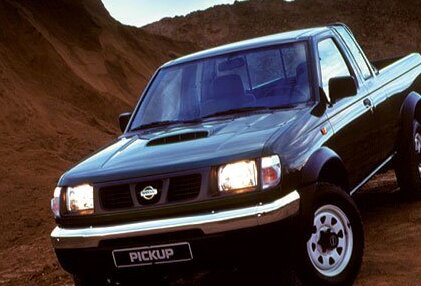
The Nissan Pick-Up (D22) 2.4 i King Cab, producing 120 horsepower and featuring a four-wheel drive configuration, was a popular mid-size pickup truck sold from 1998 to 2007. Positioned as a versatile vehicle suitable for both work and family use, the King Cab variant offered extended cabin space compared to the standard cab models, making it a practical choice for owners needing to carry passengers alongside cargo. This particular engine and drivetrain combination represented a balance between affordability, capability, and fuel efficiency within the D22 lineup, appealing to a broad range of buyers in markets including North America, Europe, Australia, and Latin America. The D22 generation represented a significant update to Nissan’s pickup truck offerings, building upon the success of the previous D21 (Hardbody) model.
Powertrain & Engine Architecture
The D22’s 2.4-liter inline-four engine, often referred to as the KA24E in some markets, was a relatively simple and robust design. It featured a cast iron block and an aluminum cylinder head with a single overhead camshaft (OHC) operating two valves per cylinder. The multi-port fuel injection system, while not as sophisticated as later direct injection systems, provided adequate fuel delivery for the engine’s output. The engine’s 120 horsepower and 195 Nm (143.82 lb-ft) of torque were achieved through a relatively conservative compression ratio and a focus on durability rather than outright performance. The five-speed manual transmission was a standard offering, providing a reasonable spread of gears for both on-road driving and off-road crawling. The transmission was known for its durability, but wasn’t particularly refined in terms of shift feel. The engine’s longitudinal mounting allowed for a traditional front-engine, rear-wheel-drive layout, with the transfer case adding the capability for four-wheel drive.
Driving Characteristics
The 2.4-liter engine and five-speed manual transmission combination in the D22 King Cab offered a practical, if not exhilarating, driving experience. Acceleration was adequate for everyday driving, but the truck wasn’t particularly quick. The engine felt strongest in the mid-range, making it suitable for hauling moderate loads or navigating hilly terrain. The manual transmission allowed for good control, especially when off-roading, and the four-wheel drive system provided enhanced traction in slippery conditions. Compared to the larger V6 engines offered in the D22, this 2.4L variant felt less powerful, but it also offered better fuel economy and a lighter front end, which some drivers preferred for handling. The gear ratios were tuned for utility, prioritizing torque over high-speed cruising. The steering felt somewhat vague compared to more modern pickups, but provided adequate feedback for most driving situations. The suspension, while comfortable, could feel somewhat bouncy when the truck was lightly loaded.
Equipment & Trim Levels
The 2.4 i King Cab typically came with a fairly basic level of equipment, reflecting its position as a work-oriented vehicle. Standard features generally included air conditioning, a basic AM/FM radio, and vinyl or cloth upholstery. The King Cab configuration added extended rear seating, offering limited but usable space for passengers. Optional extras could include power windows and locks, upgraded audio systems with a cassette player, and alloy wheels. The interior design was functional and durable, prioritizing practicality over luxury. Trim levels varied by market, but generally offered incremental upgrades in terms of interior materials and exterior styling. Higher trim levels might include features like cruise control and a more comprehensive instrument cluster.
Chassis & Braking
The D22 Pick-Up utilized a body-on-frame construction, providing a robust and durable platform for hauling and off-road use. The suspension consisted of coil springs at both the front and rear, offering a comfortable ride quality for a pickup truck. Brakes were disc brakes on all four wheels, providing adequate stopping power for the vehicle’s weight. The four-wheel drive system typically included a part-time transfer case, allowing the driver to switch between two-wheel drive and four-wheel drive modes as needed. The chassis was designed to withstand the stresses of both on-road and off-road driving, and the relatively simple suspension setup contributed to the truck’s reliability. Rear leaf springs were sometimes used on lower trim levels or in specific markets, offering a more robust but less comfortable ride.
Market Reception & Comparison
The Nissan Pick-Up D22 2.4 i King Cab was generally well-received by critics and consumers alike. It was praised for its reliability, durability, and versatility. The 2.4-liter engine offered a good balance between power and fuel economy, making it a practical choice for a wide range of buyers. Compared to other mid-size pickups of the era, such as the Toyota Tacoma and Ford Ranger, the D22 offered a competitive price point and a spacious King Cab configuration. However, some critics noted that the interior was somewhat basic and that the engine lacked the refinement of some of its competitors. Fuel economy was respectable for the time, but not class-leading. The Tacoma, in particular, was often cited as offering a more refined driving experience and a stronger resale value.
Legacy
The Nissan Pick-Up D22, particularly the 2.4 i King Cab 4WD variant, has developed a reputation for long-term reliability. Many examples are still on the road today, testament to the durability of the engine and chassis. The KA24E engine is known for its ability to withstand high mileage with proper maintenance. In the used car market, these trucks are often sought after by those looking for a dependable and affordable work vehicle or a capable off-road platform. While not as collectible as some other classic pickups, the D22 remains a popular choice for those who value practicality and reliability over modern amenities. Parts availability remains good, further contributing to its continued viability as a used vehicle. The D22 paved the way for the later Nissan Frontier, continuing Nissan’s presence in the competitive mid-size pickup truck segment.