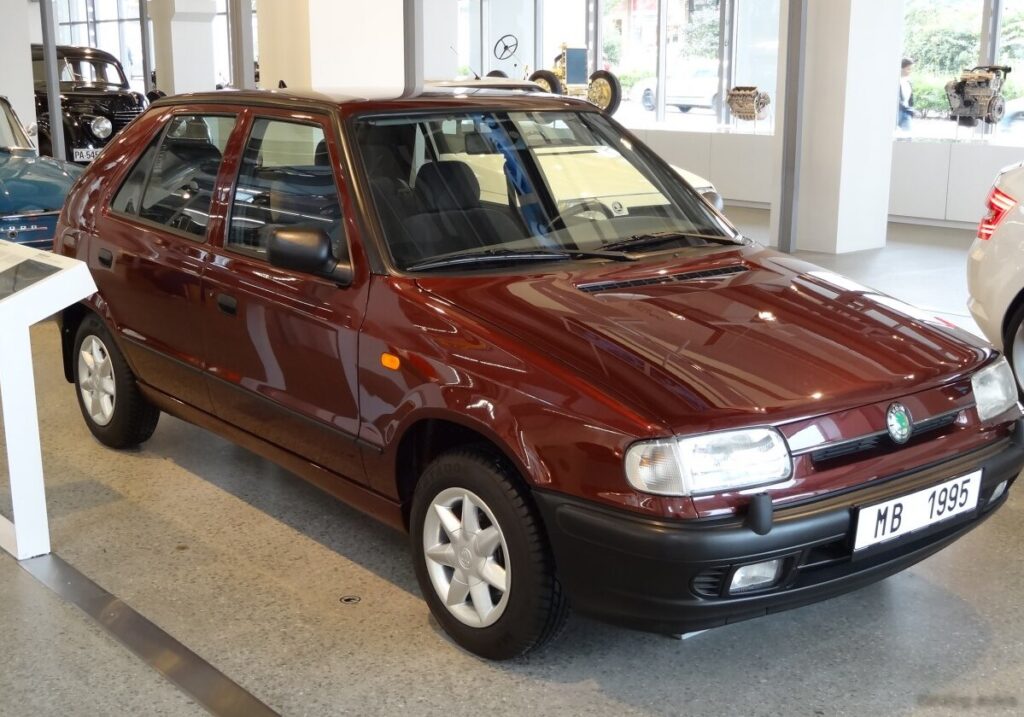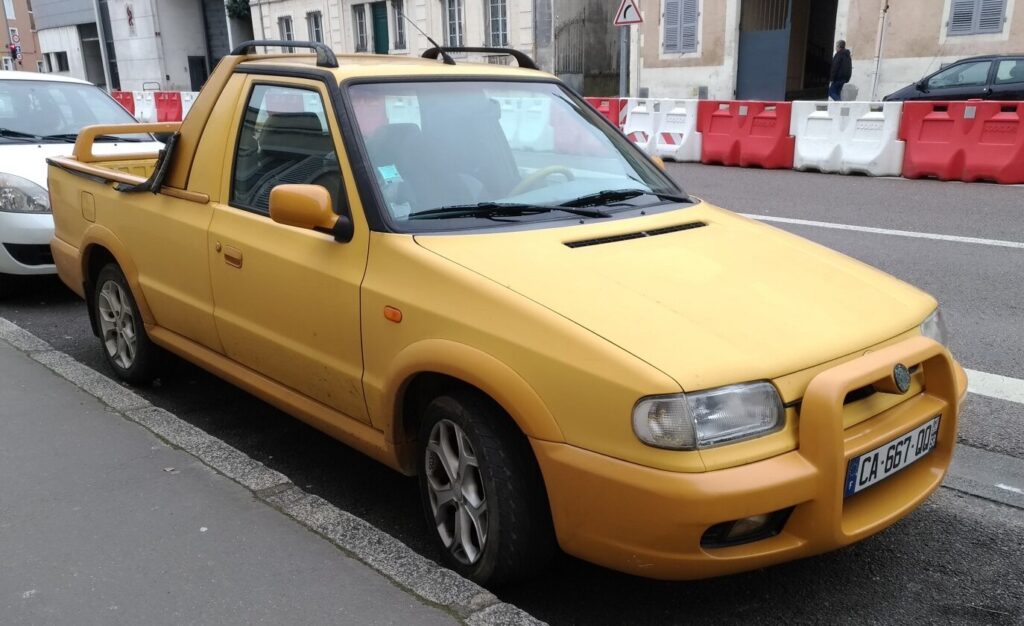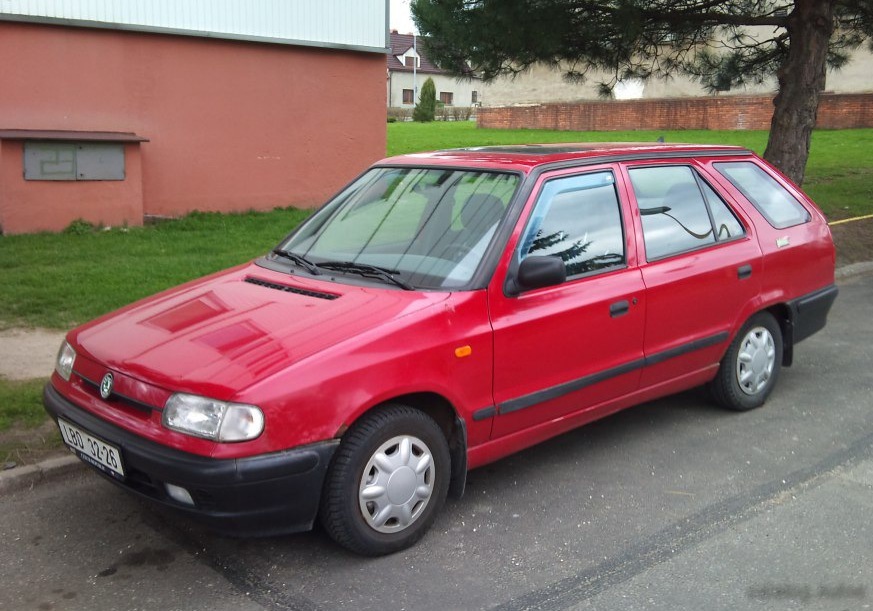
The Skoda Felicia I Combi 1.3 LXI (68 hp) was a practical and affordable station wagon produced between 1996 and 1997. Positioned as an entry-level trim within the Felicia Combi range, it offered a spacious interior and reasonable fuel economy, making it a popular choice for families in European markets. The Felicia, as a whole, represented a significant step forward for Skoda after being acquired by the Volkswagen Group, utilizing a heavily revised chassis from the previous Favorit model – the 795 series – and incorporating modern design and engineering principles. This particular variant, with its 1.3-liter engine and five-speed manual transmission, aimed to provide a balance between cost-effectiveness and usability.
Technical Specifications
| Brand | Skoda |
| Model | Felicia |
| Generation | Felicia I Combi (795) |
| Type (Engine) | 1.3 LXI (68 Hp) |
| Start of production | August, 1996 |
| End of production | 1997 |
| Powertrain Architecture | Internal Combustion engine |
| Body type | Station wagon (estate) |
| Seats | 5 |
| Doors | 5 |
| Fuel consumption (urban) | 9.3 l/100 km (25.3 US mpg, 30.4 UK mpg, 10.8 km/l) |
| Fuel consumption (extra urban) | 5.1 l/100 km (46.1 US mpg, 55.4 UK mpg, 19.6 km/l) |
| Fuel consumption (combined) | 6.9 l/100 km (34.1 US mpg, 40.9 UK mpg, 14.5 km/l) |
| Fuel Type | Petrol (Gasoline) |
| Acceleration 0 – 100 km/h | 14 sec |
| Acceleration 0 – 62 mph | 14 sec |
| Acceleration 0 – 60 mph | 13.3 sec |
| Maximum speed | 162 km/h (100.66 mph) |
| Weight-to-power ratio | 14.3 kg/Hp, 69.7 Hp/tonne |
| Weight-to-torque ratio | 9.2 kg/Nm, 108.7 Nm/tonne |
| Power | 68 Hp @ 5000 rpm |
| Power per litre | 52.8 Hp/l |
| Torque | 106 Nm @ 2600 rpm (78.18 lb.-ft. @ 2600 rpm) |
| Engine layout | Front, Transverse |
| Engine Model/Code | AMH |
| Engine displacement | 1289 cm3 (78.66 cu. in.) |
| Number of cylinders | 4 |
| Engine configuration | Inline |
| Cylinder Bore | 75.5 mm (2.97 in.) |
| Piston Stroke | 72 mm (2.83 in.) |
| Compression ratio | 9.7:1 |
| Number of valves per cylinder | 2 |
| Fuel injection system | Multi-port manifold injection |
| Engine aspiration | Naturally aspirated engine |
| Engine oil capacity | 4.5 l (4.76 US qt | 3.96 UK qt) |
| Coolant | 6 l (6.34 US qt | 5.28 UK qt) |
| Kerb Weight | 975 kg (2149.51 lbs.) |
| Max. weight | 1410 kg (3108.52 lbs.) |
| Max load | 435 kg (959.01 lbs.) |
| Trunk (boot) space – minimum | 445 l (15.72 cu. ft.) |
| Trunk (boot) space – maximum | 1365 l (48.2 cu. ft.) |
| Fuel tank capacity | 42 l (11.1 US gal | 9.24 UK gal) |
| Length | 4235 mm (166.73 in.) |
| Width | 1635 mm (64.37 in.) |
| Height | 1420 mm (55.91 in.) |
| Wheelbase | 2450 mm (96.46 in.) |
| Front track | 1420 mm (55.91 in.) |
| Rear (Back) track | 1380 mm (54.33 in.) |
| Drivetrain Architecture | The Internal combustion engine (ICE) drives the front wheels of the vehicle. |
| Drive wheel | Front wheel drive |
| Number of gears and type of gearbox | 5 gears, manual transmission |
| Front suspension | Transverse stabilizer |
| Rear suspension | Coil spring |
| Front brakes | Disc |
| Rear brakes | Drum |
| Assisting systems | ABS (Anti-lock braking system) |
| Steering type | Steering rack and pinion |
| Tires size | 165/70 R13 |
| Wheel rims size | 5.5J x 13 |
Powertrain & Engine Architecture
The heart of the Felicia 1.3 LXI was the AMH engine, a 1.3-liter inline-four cylinder petrol engine. This engine was a relatively simple design, featuring a single overhead camshaft (SOHC) operating two valves per cylinder. It utilized a multi-port fuel injection system, a significant upgrade from the carburetor systems found in older Skoda models. The AMH engine produced 68 horsepower at 5000 rpm and 106 Nm (78.18 lb-ft) of torque at 2600 rpm. The five-speed manual transmission was a standard feature, providing a reasonable spread of gears for both urban driving and highway cruising. The engine’s design prioritized reliability and fuel efficiency over outright performance.
Driving Characteristics
The 1.3 LXI variant of the Felicia Combi offered modest performance. Acceleration from 0 to 100 km/h (0-62 mph) took around 14 seconds, making it no sports car. However, the engine’s torque delivery was adequate for everyday driving, providing sufficient power for overtaking and climbing hills. The five-speed gearbox allowed drivers to keep the engine in its optimal power band, although frequent shifting was often necessary. Compared to the more powerful 1.6-liter versions of the Felicia, the 1.3 LXI felt noticeably slower, but it offered a smoother and more economical driving experience. The manual transmission provided a more engaging driving experience than the optional automatic transmission available on other Felicia trims.
Equipment & Trim Levels
The 1.3 LXI trim level was considered the base model for the Felicia Combi. Standard equipment included basic cloth upholstery, a simple dashboard layout, and manual windows and door locks. Safety features were limited, typically including only a driver’s airbag and ABS (Anti-lock Braking System). Optional extras included power windows, central locking, and a radio/cassette player. The interior was functional and durable, prioritizing practicality over luxury. The exterior featured black plastic trim and steel wheels with hubcaps.
Chassis & Braking
The Felicia Combi utilized a relatively simple chassis design. The front suspension consisted of MacPherson struts with a transverse stabilizer bar, while the rear suspension employed a twist beam axle with coil springs. The braking system featured disc brakes on the front wheels and drum brakes on the rear. The ABS system provided improved braking performance in slippery conditions. The suspension setup was tuned for comfort, providing a reasonably smooth ride over uneven surfaces. The steering was a rack and pinion system, offering precise and responsive handling.
Market Reception & Comparison
The Skoda Felicia 1.3 LXI was well-received in its target market as an affordable and practical family car. Critics praised its spacious interior, good fuel economy, and reasonable price. However, some reviewers noted its lack of refinement and modest performance. Compared to other station wagons in its class, such as the Opel/Vauxhall Astra Estate or the Ford Focus Estate, the Felicia offered a more basic but also more affordable package. The 1.3 LXI was often seen as a sensible choice for budget-conscious buyers who prioritized practicality over performance.
Legacy
The Skoda Felicia played a crucial role in establishing Skoda as a credible automotive manufacturer in the European market. The 1.3 LXI variant, while not the most powerful or luxurious version, was a popular choice for many buyers and helped to build Skoda’s reputation for reliability and value. Today, the Felicia is remembered as a simple, honest, and dependable car. While not highly sought after by collectors, well-maintained examples of the 1.3 LXI can still be found on the used car market, offering a cost-effective and practical transportation option. The AMH engine, while not known for its high performance, proved to be a durable and reliable unit, contributing to the Felicia’s overall longevity.