Technical Specifications
| Brand | Seat |
| Model | Altea |
| Generation | Altea Freetrack (facelift 2009) |
| Type (Engine) | 2.0 TSI (211 Hp) DSG |
| Start of production | May, 2009 |
| End of production | August, 2015 |
| Powertrain Architecture | Internal Combustion engine |
| Body type | SUV |
| Seats | 5 |
| Doors | 5 |
| Fuel consumption (urban) | 11 l/100 km (21.4 US mpg, 25.7 UK mpg, 9.1 km/l) |
| Fuel consumption (extra urban) | 7 l/100 km (33.6 US mpg, 40.4 UK mpg, 14.3 km/l) |
| Fuel consumption (combined) | 8.4 l/100 km (28 US mpg, 33.6 UK mpg, 11.9 km/l) |
| CO2 emissions | 197 g/km |
| Fuel Type | Petrol (Gasoline) |
| Acceleration 0 – 100 km/h | 7.6 sec |
| Acceleration 0 – 62 mph | 7.6 sec |
| Acceleration 0 – 60 mph | 7.2 sec |
| Maximum speed | 218 km/h (135.46 mph) |
| Emission standard | Euro 5 |
| Weight-to-power ratio | 7.9 kg/Hp, 127 Hp/tonne |
| Weight-to-torque ratio | 5.9 kg/Nm, 168.6 Nm/tonne |
| Power | 211 Hp @ 5300-6200 rpm |
| Power per litre | 106.4 Hp/l |
| Torque | 280 Nm @ 1700-5200 rpm (206.52 lb.-ft. @ 1700-5200 rpm) |
| Engine layout | Front, Transverse |
| Engine Model/Code | CCZB |
| Engine displacement | 1984 cm3 (121.07 cu. in.) |
| Number of cylinders | 4 |
| Engine configuration | Inline |
| Cylinder Bore | 82.5 mm (3.25 in.) |
| Piston Stroke | 92.8 mm (3.65 in.) |
| Compression ratio | 9.6:1 |
| Number of valves per cylinder | 4 |
| Fuel injection system | Direct injection |
| Engine aspiration | Turbocharger, Intercooler |
| Engine oil capacity | 4.6 l (4.86 US qt | 4.05 UK qt) |
| Coolant | 7.5 l (7.93 US qt | 6.6 UK qt) |
| Kerb Weight | 1661 kg (3661.88 lbs.) |
| Max. weight | 2205 kg (4861.19 lbs.) |
| Max load | 544 kg (1199.31 lbs.) |
| Trunk (boot) space – minimum | 490 l (17.3 cu. ft.) |
| Fuel tank capacity | 60 l (15.85 US gal | 13.2 UK gal) |
| Length | 4493 mm (176.89 in.) |
| Width | 1788 mm (70.39 in.) |
| Height | 1622 mm (63.86 in.) |
| Wheelbase | 2576 mm (101.42 in.) |
| Front track | 1542 mm (60.71 in.) |
| Rear (Back) track | 1518 mm (59.76 in.) |
| Minimum turning circle | 10.7 m (35.1 ft.) |
| Drivetrain Architecture | Front wheel drive |
| Number of gears and type of gearbox | 6 gears, automatic transmission DSG |
| Front suspension | Independent, type McPherson with coil spring and anti-roll bar |
| Rear suspension | Independent multi-link suspension |
| Front brakes | Ventilated discs |
| Rear brakes | Disc |
| Assisting systems | ABS (Anti-lock braking system) |
| Steering type | Steering rack and pinion |
| Tires size | 225/50 R17 94W |
| Wheel rims size | 7J x 17 ET 46 |
The Seat Altea Freetrack 2.0 TSI (211 hp) DSG, introduced with the facelift in May 2009 and continuing through August 2015, represented the performance pinnacle of the Altea Freetrack range. Positioned as the premium offering within the Altea lineup, this variant combined a potent turbocharged gasoline engine with the convenience of a dual-clutch transmission and a rugged, crossover-inspired aesthetic. The Altea Freetrack itself was a unique offering from SEAT, blending the practicality of a compact family car with the raised ride height and styling cues of a small SUV, primarily aimed at the European market where compact crossovers were gaining popularity. It was built on the Volkswagen Group’s PQ46 platform, also known as the A5 platform, shared with models like the Volkswagen Golf Mk5 and Audi A3.
Powertrain & Engine Architecture
The heart of the Altea Freetrack 2.0 TSI was the CCZB engine code, a 1.984-liter (121.07 cubic inches) inline-four cylinder gasoline engine. This engine featured direct fuel injection (FSI) and a turbocharger with an intercooler, allowing it to produce 211 horsepower at 5300-6200 rpm and 280 Nm (206.52 lb-ft) of torque between 1700 and 5200 rpm. The direct injection system precisely meters fuel into the combustion chamber, improving efficiency and reducing emissions. The turbocharger provides a significant boost in power, overcoming the limitations of a relatively small displacement engine. The engine’s 9.6:1 compression ratio was a compromise between performance and reliability. Paired with the engine was the Volkswagen Group’s renowned 6-speed DSG (Direct-Shift Gearbox), a dual-clutch transmission known for its quick and smooth shifts. The DSG allowed for both fully automatic operation and manual gear selection via steering wheel-mounted paddles or the gear selector.
Driving Characteristics
The 2.0 TSI DSG powertrain transformed the Altea Freetrack into a surprisingly capable performer. Acceleration from 0 to 62 mph (0-100 km/h) took approximately 7.6 seconds, making it competitive with many contemporary hot hatchbacks. The DSG transmission contributed to this performance by providing rapid gear changes without the torque interruption associated with traditional automatic transmissions. The broad torque curve meant that strong acceleration was available across a wide range of engine speeds, making it easy to overtake and maintain highway speeds. Compared to the lower-powered 1.6-liter gasoline or 1.9 TDI diesel variants, the 2.0 TSI offered a significantly more engaging and responsive driving experience. While the diesel offered superior fuel economy, the TSI provided a more exhilarating power delivery. The raised suspension and all-wheel drive (available on some Freetrack models, but not standard with the 2.0 TSI) provided added confidence on slippery surfaces and light off-road conditions.
Equipment & Trim Levels
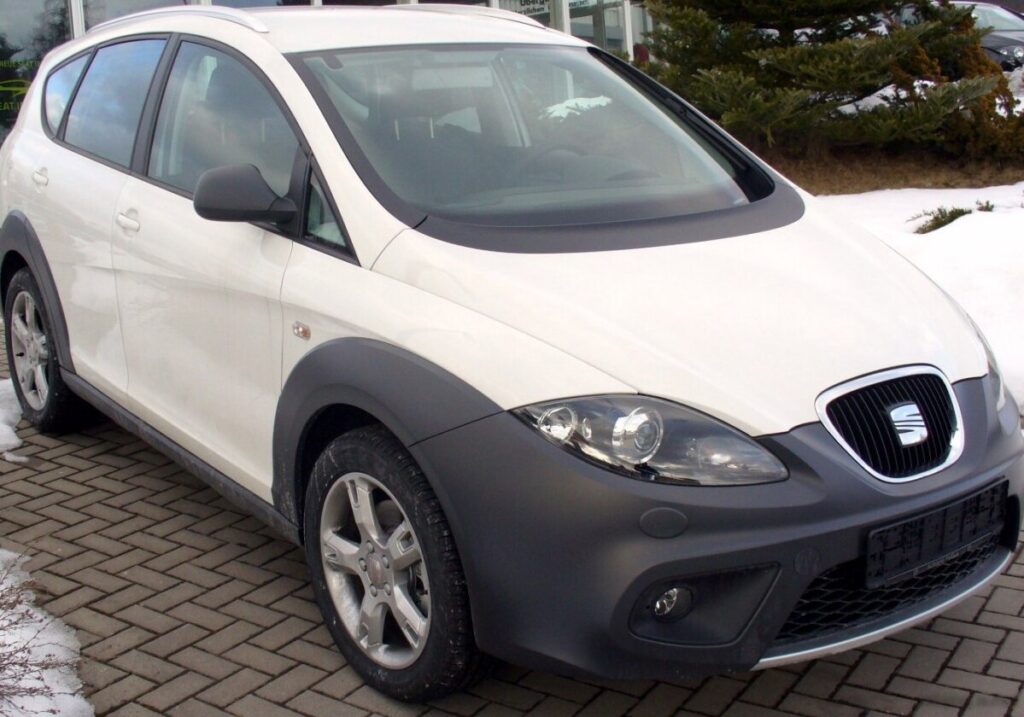
The Altea Freetrack 2.0 TSI DSG typically came well-equipped as the range-topping model. Standard features included alloy wheels, climate control, a multi-function steering wheel, and a comprehensive safety package including ABS, ESP (Electronic Stability Program), and multiple airbags. Interior upholstery was typically a combination of cloth and Alcantara, with options for full leather. Optional extras included a navigation system, parking sensors, a sunroof, and upgraded audio systems. The Freetrack also featured unique exterior styling elements, such as plastic body cladding, roof rails, and distinctive alloy wheel designs, to emphasize its crossover character.
Chassis & Braking
The Altea Freetrack utilized an independent suspension setup at all four wheels. The front suspension employed a McPherson strut design with coil springs and an anti-roll bar, while the rear featured a multi-link suspension. This configuration provided a good balance between ride comfort and handling. Braking duties were handled by ventilated discs at the front and solid discs at the rear, providing adequate stopping power for the vehicle’s weight and performance. ABS (Anti-lock Braking System) was standard, enhancing braking performance and stability in emergency situations.
Market Reception & Comparison
The Altea Freetrack 2.0 TSI DSG was generally well-received by automotive critics, who praised its strong performance, comfortable ride, and practical interior. However, some reviewers noted that the styling was somewhat polarizing and that the fuel economy, while respectable, was not as good as that of the diesel variants. Compared to rivals like the Skoda Octavia Scout or Volkswagen Golf Estate 4Motion, the Altea Freetrack offered a unique blend of style and practicality. The DSG transmission was also a selling point, offering a more engaging driving experience than traditional automatics.
Legacy
The CCZB engine, while generally reliable, is known to require regular maintenance, particularly regarding the timing chain. Proper oil changes and adherence to the manufacturer’s service schedule are crucial for long-term durability. The DSG transmission also requires periodic servicing, including fluid and filter changes. Today, the Altea Freetrack 2.0 TSI DSG represents a relatively affordable entry point into the world of performance crossovers. Well-maintained examples are sought after by enthusiasts who appreciate its unique character and engaging driving experience. Its blend of practicality, performance, and distinctive styling ensures its continued appeal in the used car market.