Technical Specifications
| Brand | Land Rover |
| Model | Range Rover |
| Generation | Range Rover IV (facelift 2017) Long |
| Type (Engine) | P400e (404 Hp) Plug-in Hybrid AWD Automatic |
| Start of production | 2017 |
| End of production | October, 2021 |
| Powertrain Architecture | PHEV (Plug-in Hybrid Electric Vehicle) |
| Body type | SUV |
| Seats | 5 |
| Doors | 5 |
| Combined fuel consumption (WLTP) | 3.5-4 l/100 km (67.2 – 58.8 US mpg, 80.7 – 70.6 UK mpg, 28.6 – 25 km/l) |
| CO2 emissions (WLTP) | 78-91 g/km |
| Fuel consumption (economy) – combined | 2.8 l/100 km (84 US mpg, 100.9 UK mpg, 35.7 km/l) |
| CO2 emissions | 64 g/km |
| Fuel Type | Petrol / electricity |
| Acceleration 0 – 100 km/h | 6.9 sec |
| Acceleration 0 – 62 mph | 6.9 sec |
| Acceleration 0 – 60 mph | 6.6 sec |
| Maximum speed | 220 km/h (136.7 mph) |
| Emission standard | Euro 6 |
| Weight-to-power ratio | 6.4 kg/Hp, 155.6 Hp/tonne |
| Weight-to-torque ratio | 4.1 kg/Nm, 246.5 Nm/tonne |
| Gross battery capacity | 13 kWh |
| Battery technology | Lithium-ion (Li-Ion) |
| Battery location | Inside the trunk |
| All-electric range (WLTP) | 40 km (24.85 mi) |
| All-electric range | 41-45 km (25.48 – 27.96 mi) |
| Average Energy consumption (WLTP) | 25.8 kWh/100 km (41.52 kWh/100 mi, 81 MPGe, 3.9 km/kWh, 2.4 mi/kWh) |
| Average Energy consumption | 22.5-23.1 kWh/100 km (36.21 – 37.18 kWh/100 mi, 93 – 91 MPGe, 4.4 – 4.3 km/kWh, 2.8 – 2.7 mi/kWh) |
| Max speed (electric) | 137 km/h (85.13 mph) |
| System power | 404 Hp |
| System torque | 640 Nm (472.04 lb.-ft.) |
| Power | 300 Hp |
| Power per litre | 150.2 Hp/l |
| Engine layout | Front, Transverse |
| Engine Model/Code | PT204 |
| Engine displacement | 1997 cm3 (121.86 cu. in.) |
| Number of cylinders | 4 |
| Engine configuration | Inline |
| Cylinder Bore | 83 mm (3.27 in.) |
| Piston Stroke | 92 mm (3.62 in.) |
| Compression ratio | 9.5:1 |
| Number of valves per cylinder | 4 |
| Fuel injection system | Direct injection |
| Engine aspiration | Turbocharger, Intercooler |
| Engine oil capacity | 7 l (7.4 US qt | 6.16 UK qt) |
| Coolant | 11.2 l (11.83 US qt | 9.85 UK qt) |
| Kerb Weight | 2596 kg (5723.2 lbs.) |
| Max. weight | 3250 kg (7165.02 lbs.) |
| Max load | 654 kg (1441.82 lbs.) |
| Trunk (boot) space – minimum | 802 l (28.32 cu. ft.) |
| Fuel tank capacity | 90 l (23.78 US gal | 19.8 UK gal) |
| Max. roof load | 100 kg (220.46 lbs.) |
| Permitted trailer load with brakes (12%) | 2500 kg (5511.56 lbs.) |
| Permitted trailer load without brakes | 750 kg (1653.47 lbs.) |
| Permitted towbar download | 100 kg (220.46 lbs.) |
| Length | 5200 mm (204.72 in.) |
| Width with mirrors folded | 2073 mm (81.61 in.) |
| Width including mirrors | 2220 mm (87.4 in.) |
| Height | 1868 mm (73.54 in.) |
| Wheelbase | 3120 mm (122.83 in.) |
| Front track | 1693 mm (66.65 in.) |
| Rear (Back) track | 1685 mm (66.34 in.) |
| Ride height (ground clearance) | 220 mm (8.66 in.) |
| Drag coefficient (Cd) | 0.34 |
| Minimum turning circle (turning diameter) | 13.1 m (42.98 ft.) |
| Approach angle | 26° |
| Departure angle | 24.6° |
| Ramp-over (brakeover) angle | 18.3° |
| Wading depth | 900 mm (35.43 in.) |
| Drivetrain Architecture | The Internal combustion engine (ICE) and the electric motor permanently drive the four wheels of the car with the ability to work in full electric or mixed mode. |
| Drive wheel | All wheel drive (4×4) |
| Number of gears and type of gearbox | 8 gears, automatic transmission |
| Front suspension | Double wishbone, Air suspension |
| Rear suspension | Independent multi-link suspension, Air suspension |
| Front brakes | Ventilated discs, 380 mm |
| Rear brakes | Ventilated discs, 365 mm |
| Steering type | Steering rack and pinion |
| Power steering | Electric Steering |
| Tires size | 255/55 R20; 275/45 R21; 275/40 R22 |
| Wheel rims size | 8.5J x 20; 9.5J x 21; 9.5J x 22 |
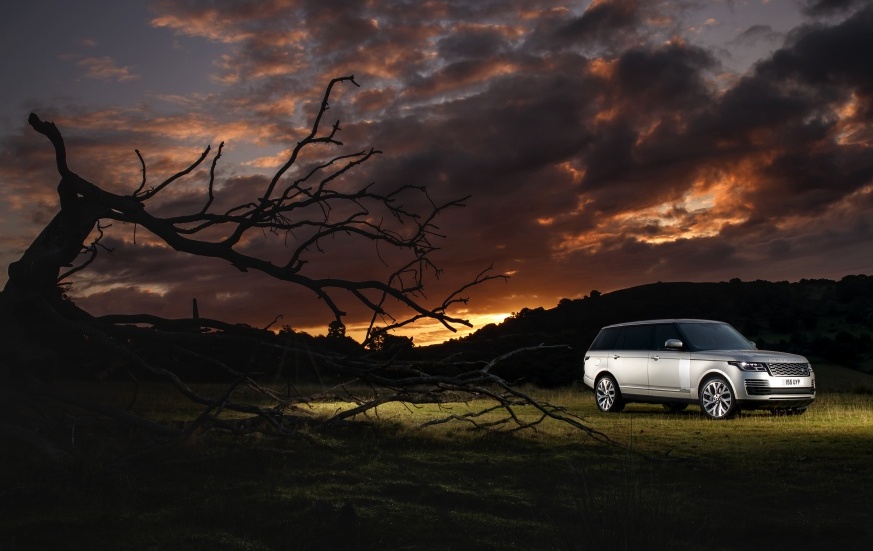
The Land Rover Range Rover IV (facelift 2017) Long P400e, produced from 2017 to October 2021, represents a significant step in the iconic Range Rover lineage, integrating plug-in hybrid technology into the luxury SUV segment. This variant, positioned as a premium offering within the fourth-generation Range Rover (L405) series, aimed to provide a balance of performance, efficiency, and refinement. The “Long” designation indicates an extended wheelbase, offering increased rear passenger space, catering to buyers prioritizing comfort and luxury. The P400e specifically denotes the powertrain configuration: a 2.0-liter turbocharged inline-four engine paired with an electric motor, delivering a combined output of 404 horsepower.
Powertrain & Engine Architecture
The P400e’s powertrain centers around Land Rover’s Ingenium engine family, specifically the PT204, a 2.0-liter turbocharged inline-four cylinder gasoline engine. This engine produces 300 horsepower and utilizes direct fuel injection and an intercooled turbocharger for enhanced efficiency and power delivery. The engine is paired with an 8-speed automatic transmission, a staple in modern Land Rover vehicles, known for its smooth shifts and wide gear ratio spread. Integrated into the drivetrain is a 143 horsepower electric motor, positioned between the engine and the transmission. This configuration allows for both electric-only driving and a combined power output of 404 horsepower and 640 Nm (472 lb-ft) of torque. The 13 kWh lithium-ion battery pack, located under the boot floor, provides an all-electric range of approximately 40 kilometers (25 miles) under WLTP testing. The system intelligently manages the interplay between the gasoline engine and electric motor, optimizing for efficiency or performance as needed.
Driving Characteristics
The P400e offers a unique driving experience compared to other Range Rover IV variants. In electric mode, it provides near-silent operation and instant torque, making it ideal for urban driving. Switching to hybrid mode allows the engine and motor to work in tandem, delivering strong acceleration – 0-60 mph in around 6.6 seconds. While not as overtly sporty as the supercharged six-cylinder models, the P400e provides ample power for everyday driving and overtaking maneuvers. The eight-speed automatic transmission is well-tuned, offering smooth and responsive shifts. The added weight of the battery pack (approximately 300 kg) is noticeable, particularly in handling, but the air suspension system effectively mitigates body roll and provides a comfortable ride. Compared to the 3.0-liter SDV6 diesel, the P400e offers a quieter and more refined experience, albeit with a slightly reduced overall range when operating in hybrid mode.
Equipment & Trim Levels
The P400e typically came equipped with a high level of standard features, reflecting its premium positioning. These included leather upholstery, heated and ventilated front seats, a panoramic sunroof, a premium sound system, and a comprehensive suite of driver-assistance technologies such as adaptive cruise control, lane departure warning, and automatic emergency braking. The infotainment system featured a touchscreen display with navigation, smartphone integration (Apple CarPlay and Android Auto), and a rear-seat entertainment system. Optional extras included upgraded leather trims, executive rear seating packages, and various exterior styling enhancements. The “Long” wheelbase version specifically prioritized rear passenger comfort, offering increased legroom and dedicated climate control settings.
Chassis & Braking
The Range Rover IV’s chassis is built around a lightweight aluminum monocoque construction, contributing to its overall rigidity and strength. The P400e utilizes a double-wishbone front suspension and an independent multi-link rear suspension, both equipped with air suspension as standard. This air suspension system provides adjustable ride height and damping, allowing drivers to tailor the vehicle’s handling and comfort to their preferences. Braking duties are handled by ventilated discs on all four wheels, with larger diameter discs at the front for improved stopping power. The electronic stability control system and anti-lock braking system (ABS) work in conjunction to enhance safety and control in various driving conditions.
Market Reception & Comparison
The Range Rover P400e was generally well-received by critics, who praised its blend of luxury, performance, and efficiency. The plug-in hybrid powertrain was seen as a significant step forward for Land Rover, offering a viable alternative to traditional gasoline and diesel engines. However, some reviewers noted the reduced boot space due to the battery pack and the relatively high price compared to other Range Rover variants. In terms of fuel economy, the P400e offered a substantial improvement over the gasoline-only models, particularly for drivers who frequently utilize the electric-only driving mode. Compared to the diesel-powered Range Rovers, the P400e provided a quieter and more refined driving experience, but with a slightly shorter overall range.
Legacy
The Range Rover P400e represents a pivotal moment in Land Rover’s transition towards electrification. While early plug-in hybrid systems sometimes faced reliability concerns, the Ingenium powertrain has proven to be relatively robust. On the used car market, the P400e holds its value well, appealing to buyers seeking a luxurious and efficient SUV. Regular maintenance, including battery health checks and software updates, is crucial for ensuring the long-term reliability of the hybrid system. As environmental regulations become increasingly stringent, the P400e’s blend of luxury and efficiency is likely to continue to make it a desirable option for discerning buyers.