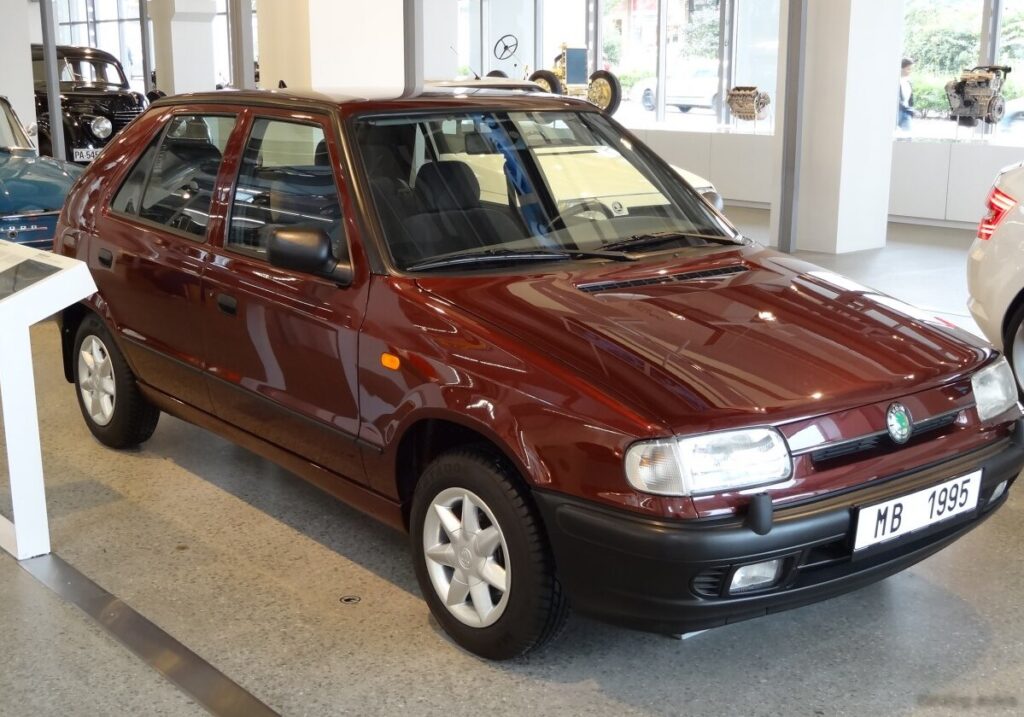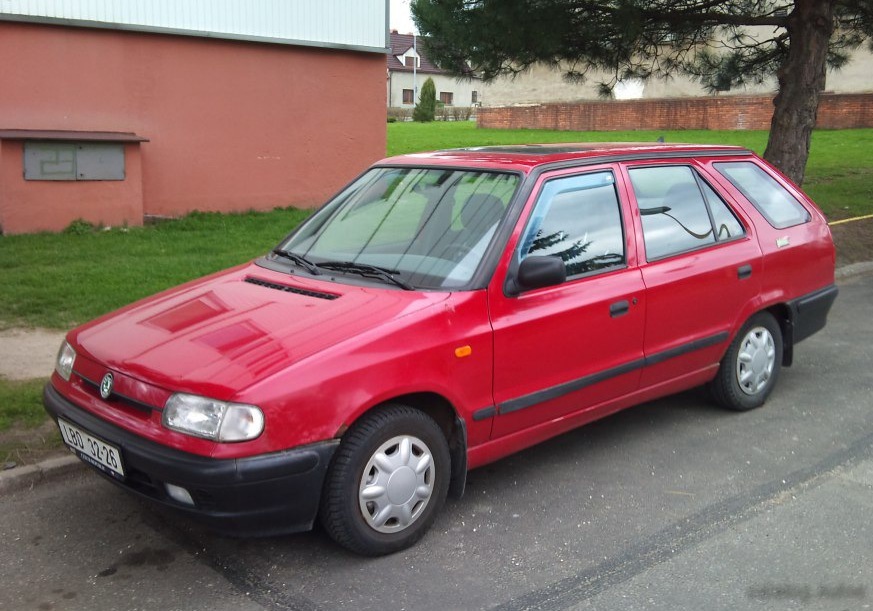
The Skoda Felicia I Combi 1.9 D (795) represents a practical and economical offering from the Czech automaker during the mid-to-late 1990s. Produced from October 1995 to 1997, this variant of the Felicia Combi – Skoda’s station wagon – was positioned as a budget-friendly, utilitarian vehicle primarily aimed at markets where diesel fuel efficiency and load-carrying capacity were highly valued. It sat within the broader Felicia I range, which utilized the 1HX0/A3 platform shared with the Volkswagen Polo and SEAT Ibiza of the era. The 1.9 D model offered a no-frills transportation solution, prioritizing fuel economy over outright performance.
Technical Specifications
| Brand | Skoda |
| Model | Felicia |
| Generation | Felicia I Combi (795) |
| Type (Engine) | 1.9 D (64 Hp) |
| Start of production | October, 1995 |
| End of production | 1997 |
| Powertrain Architecture | Internal Combustion engine |
| Body type | Station wagon (estate) |
| Seats | 5 |
| Doors | 5 |
| Fuel consumption (urban) | 7.7 l/100 km (30.5 US mpg, 36.7 UK mpg, 13 km/l) |
| Fuel consumption (extra urban) | 4.8 l/100 km (49 US mpg, 58.9 UK mpg, 20.8 km/l) |
| Fuel consumption (combined) | 6.3 l/100 km (37.3 US mpg, 44.8 UK mpg, 15.9 km/l) |
| Fuel Type | Diesel |
| Acceleration 0 – 100 km/h | 17.5 sec |
| Acceleration 0 – 62 mph | 17.5 sec |
| Acceleration 0 – 60 mph | 16.6 sec |
| Maximum speed | 156 km/h (96.93 mph) |
| Emission standard | Euro 2 |
| Weight-to-power ratio | 16.6 kg/Hp, 60.4 Hp/tonne |
| Weight-to-torque ratio | 8.5 kg/Nm, 117 Nm/tonne |
| Power | 64 Hp @ 4300 rpm |
| Power per litre | 33.8 Hp/l |
| Torque | 124 Nm @ 2500 rpm (91.46 lb.-ft. @ 2500 rpm) |
| Engine layout | Front, Transverse |
| Engine Model/Code | AEF |
| Engine displacement | 1896 cm3 (115.7 cu. in.) |
| Number of cylinders | 4 |
| Engine configuration | Inline |
| Cylinder Bore | 79.5 mm (3.13 in.) |
| Piston Stroke | 95.5 mm (3.76 in.) |
| Compression ratio | 22.5:1 |
| Number of valves per cylinder | 2 |
| Fuel injection system | Precombustion chamber injection |
| Engine aspiration | Naturally aspirated engine |
| Valvetrain | OHC |
| Engine oil capacity | 5 l (5.28 US qt | 4.4 UK qt) |
| Coolant capacity | 6 l (6.34 US qt | 5.28 UK qt) |
| Kerb Weight | 1060 kg (2336.9 lbs.) |
| Max. weight | 1520 kg (3351.03 lbs.) |
| Max load | 460 kg (1014.13 lbs.) |
| Trunk (boot) space – minimum | 445 l (15.72 cu. ft.) |
| Trunk (boot) space – maximum | 1365 l (48.2 cu. ft.) |
| Fuel tank capacity | 42 l (11.1 US gal | 9.24 UK gal) |
| Length | 4235 mm (166.73 in.) |
| Width | 1635 mm (64.37 in.) |
| Height | 1420 mm (55.91 in.) |
| Wheelbase | 2450 mm (96.46 in.) |
| Front track | 1420 mm (55.91 in.) |
| Rear track | 1380 mm (54.33 in.) |
| Drivetrain Architecture | Front wheel drive |
| Number of gears | 5 |
| Gearbox type | Manual transmission |
| Front suspension | Transverse stabilizer |
| Rear suspension | Coil spring |
| Front brakes | Disc |
| Rear brakes | Drum |
| Assisting systems | ABS (Anti-lock braking system) |
| Steering type | Steering rack and pinion |
| Tires size | 165/70 R13 |
| Wheel rims size | 5.5J x 13 |
Powertrain & Engine Architecture
The Felicia Combi 1.9 D was powered by the AEF engine, a 1.9-liter, naturally aspirated diesel engine. This engine was a relatively simple design, utilizing precombustion chamber injection – a common diesel technology of the time. This system involved injecting fuel into a precombustion chamber connected to the main cylinder, where it was partially ignited before entering the main combustion chamber. This aided in cold starting and reduced engine noise compared to direct injection systems. The engine featured an overhead camshaft (OHC) valvetrain with two valves per cylinder. The 1.9-liter diesel produced 64 horsepower at 4300 rpm and 124 Nm (91.46 lb-ft) of torque at 2500 rpm. The engine was transversely mounted, driving the front wheels through a five-speed manual transmission. This configuration was typical for European compact cars of the era, maximizing interior space and improving front-wheel drive handling.
Driving Characteristics
The 1.9 D variant of the Felicia Combi was not known for its speed. Acceleration was leisurely, taking around 17.5 seconds to reach 100 km/h (62 mph). The focus was on fuel efficiency and low-speed torque. The five-speed manual transmission helped to keep the engine within its optimal operating range, but the limited horsepower meant that overtaking maneuvers required careful planning. Compared to the more powerful (and often more expensive) petrol versions of the Felicia, the 1.9 D offered a more utilitarian driving experience. The gear ratios were geared towards maximizing fuel economy, resulting in a relatively relaxed cruising speed. While not sporty, the 1.9 D provided adequate performance for everyday driving and hauling loads.
Equipment & Trim Levels
The Felicia Combi 1.9 D was generally offered with a basic level of equipment. Standard features typically included cloth upholstery, a simple dashboard layout, and manual windows and door locks. Power steering was often an optional extra. The interior was designed for practicality and durability rather than luxury. Optional extras could include a radio/cassette player, upgraded seat fabrics, and central locking. The trim level was generally considered entry-level, appealing to buyers prioritizing affordability and functionality.
Chassis & Braking
The Felicia Combi 1.9 D utilized a relatively simple chassis design. The front suspension featured independent suspension with a transverse stabilizer, while the rear suspension employed a twist beam setup with coil springs. This configuration provided a reasonable balance between ride comfort and handling. The braking system consisted of disc brakes on the front wheels and drum brakes on the rear wheels. ABS (Anti-lock Braking System) was often included as standard equipment, enhancing safety. The suspension was tuned for comfort and load-carrying capacity, reflecting the vehicle’s intended use as a practical family car or small commercial vehicle.
Market Reception & Comparison
The Skoda Felicia Combi 1.9 D was well-received in markets where diesel economy was a priority. Critics praised its fuel efficiency and spacious interior. However, its lack of power and relatively basic equipment levels were also noted. Compared to other trims in the Felicia lineup, such as the 1.6 MPI petrol version, the 1.9 D offered significantly lower performance but superior fuel economy. It competed with other small diesel estate cars of the time, such as the Peugeot 205 Break and the Renault 19 Estate. The Felicia’s relatively low price point made it an attractive option for budget-conscious buyers.
Legacy
The Skoda Felicia Combi 1.9 D, while not a performance icon, proved to be a reliable and durable vehicle. The AEF engine, though simple in design, was known for its longevity. Today, these vehicles are relatively rare, but well-maintained examples can still be found. They are often sought after by enthusiasts looking for a classic, economical, and practical vehicle. The 1.9 D powertrain is generally considered to be robust and relatively easy to maintain, making it a viable option for those willing to invest in restoration and upkeep. The Felicia Combi 1.9 D represents a significant chapter in Skoda’s history, showcasing the brand’s commitment to producing affordable and practical vehicles.