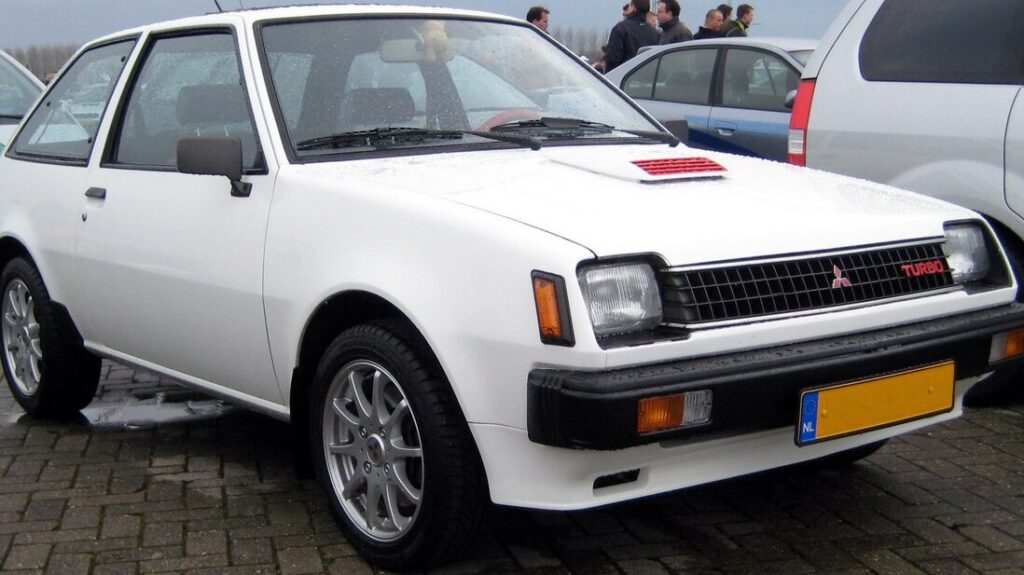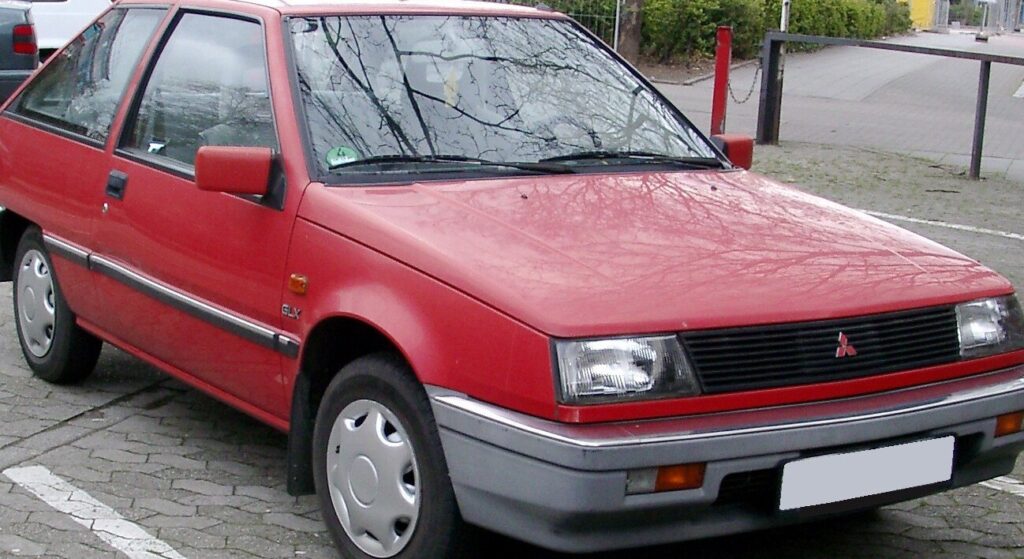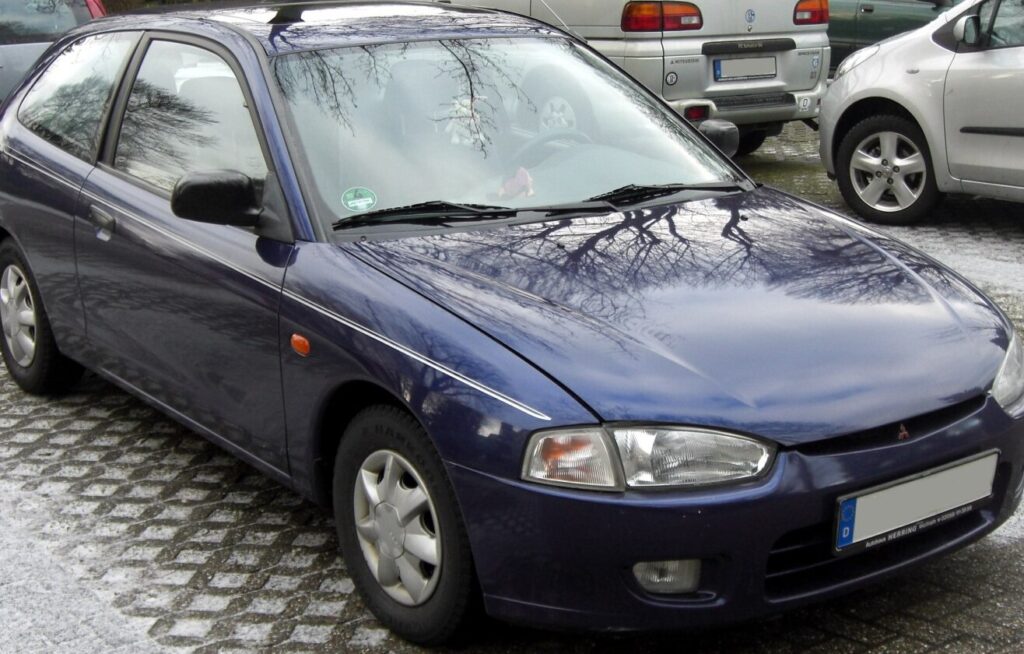
The Mitsubishi Colt V (CJO) 1600 GLX (CJ 4A), producing 90 horsepower, was a mainstay of Mitsubishi’s European lineup from 1996 to 2001. Positioned as a mid-range offering within the Colt V series, it aimed to provide a balance between affordability, practicality, and reasonable performance. This variant was particularly popular in Europe, where the compact hatchback segment was – and remains – highly competitive. The CJO Colt represented Mitsubishi’s attempt to capture a larger share of this market with a vehicle that offered a modern design and a relatively efficient powertrain. It was built on the 1HX0 platform, shared with other compact Mitsubishi models of the era.
Technical Specifications
| Brand | Mitsubishi |
| Model | Colt |
| Generation | Colt V (CJO) |
| Type | 1600 GLX (CJ 4A) (90 Hp) |
| Start of production | 1996 |
| End of production | 2001 |
| Powertrain Architecture | Internal Combustion engine |
| Body type | Hatchback |
| Seats | 5 |
| Doors | 3 |
| Fuel consumption (urban) | 9.8 l/100 km (24 US mpg) |
| Fuel consumption (extra urban) | 5.8 l/100 km (40.6 US mpg) |
| Fuel Type | Petrol (Gasoline) |
| Acceleration 0 – 100 km/h | 10.5 sec |
| Acceleration 0 – 62 mph | 10.5 sec |
| Acceleration 0 – 60 mph | 10 sec |
| Maximum speed | 185 km/h (114.95 mph) |
| Weight-to-power ratio | 11.3 kg/Hp |
| Weight-to-torque ratio | 7.4 kg/Nm |
| Power | 90 Hp @ 5500 rpm |
| Power per litre | 56.4 Hp/l |
| Torque | 137 Nm @ 4000 rpm (101.05 lb.-ft. @ 4000 rpm) |
| Engine layout | Front, Transverse |
| Engine displacement | 1597 cm3 (97.45 cu. in.) |
| Number of cylinders | 4 |
| Engine configuration | Inline |
| Cylinder Bore | 81 mm (3.19 in.) |
| Piston Stroke | 77.5 mm (3.05 in.) |
| Compression ratio | 10:1 |
| Number of valves per cylinder | 4 |
| Fuel injection system | Multi-port manifold injection |
| Engine aspiration | Naturally aspirated engine |
| Valvetrain | OHC |
| Kerb Weight | 1015 kg (2237.69 lbs.) |
| Max. weight | 1480 kg (3262.84 lbs.) |
| Max load | 465 kg (1025.15 lbs.) |
| Trunk (boot) space – minimum | 240 l (8.48 cu. ft.) |
| Trunk (boot) space – maximum | 830 l (29.31 cu. ft.) |
| Fuel tank capacity | 50 l (13.21 US gal | 11 UK gal) |
| Length | 3900 mm (153.54 in.) |
| Width | 1680 mm (66.14 in.) |
| Height | 1365 mm (53.74 in.) |
| Wheelbase | 2415 mm (95.08 in.) |
| Front track | 1450 mm (57.09 in.) |
| Rear (Back) track | 1460 mm (57.48 in.) |
| Drivetrain Architecture | The Internal combustion engine (ICE) drives the front wheels of the vehicle. |
| Drive wheel | Front wheel drive |
| Number of gears and type of gearbox | 5 gears, manual transmission |
| Front suspension | Coil spring |
| Rear suspension | Coil spring |
| Front brakes | Disc |
| Rear brakes | Drum |
| Assisting systems | ABS (Anti-lock braking system) |
| Steering type | Steering rack and pinion |
| Power steering | Hydraulic Steering |
| Tires size | 175/70 R13 |
| Wheel rims size | 13 |
Powertrain & Engine Architecture
The heart of the 1600 GLX was the 4G18 engine, a 1.6-liter inline-four cylinder gasoline engine. This engine utilized a single overhead camshaft (SOHC) valvetrain and multi-point fuel injection. The 4G18 was a relatively simple and robust design, prioritizing reliability and fuel efficiency over outright performance. The engine’s 10:1 compression ratio was typical for the era, and the engine was known for its smooth, if not particularly exciting, power delivery. The 90 horsepower output was achieved at 5500 rpm, while peak torque of 137 Nm (101 lb-ft) arrived at 4000 rpm. The engine was transversely mounted, driving the front wheels. The five-speed manual transmission was the standard offering, providing adequate gear ratios for everyday driving. The transmission itself was a conventional design, known for its durability but lacking the sophistication of more modern gearboxes.
Driving Characteristics
The 1600 GLX, with its 90 hp engine and manual transmission, offered a reasonably sprightly driving experience for its class. Acceleration to 60 mph took around 10 seconds, and the top speed was approximately 115 mph. While not a sports car, the Colt V 1600 GLX was capable of keeping pace with traffic and offered enough power for comfortable highway cruising. The gear ratios were well-chosen, providing adequate acceleration in each gear. Compared to the higher-output versions of the Colt V, such as those equipped with larger engines, the 1600 GLX felt less powerful, particularly when fully loaded or climbing hills. However, it also offered better fuel economy and a more relaxed driving experience. The suspension provided a comfortable ride, absorbing bumps and imperfections in the road surface effectively. Steering was light and precise, making the car easy to maneuver in urban environments.
Equipment & Trim Levels
The GLX trim level represented a step up from the base model Colt V. Standard equipment included power steering, central locking, electric front windows, and an AM/FM radio. The interior featured cloth upholstery and a relatively simple dashboard layout. Optional extras included air conditioning, a sunroof, and upgraded audio systems. The GLX trim also featured body-colored bumpers and door handles, adding a touch of visual appeal. The interior was designed with practicality in mind, offering ample space for passengers and luggage. The rear seats could be folded down to increase cargo capacity, making the Colt V a versatile vehicle for families and individuals alike.
Chassis & Braking
The Colt V utilized a relatively simple chassis design, featuring coil springs and dampers at all four corners. The front suspension employed MacPherson struts, while the rear suspension utilized a torsion beam axle. This setup provided a good balance between ride comfort and handling. The braking system consisted of disc brakes at the front and drum brakes at the rear. Anti-lock braking system (ABS) was included as standard equipment, enhancing safety and stability during emergency braking. The steering was a rack-and-pinion system, providing precise and responsive steering feel. The 13-inch wheels were fitted with 175/70 R13 tires, offering adequate grip in most driving conditions.
Market Reception & Comparison
The Mitsubishi Colt V 1600 GLX was generally well-received by automotive critics. It was praised for its practicality, fuel efficiency, and affordable price. However, some critics noted that the engine lacked power and refinement compared to its rivals. Compared to other compact hatchbacks of the era, such as the Ford Fiesta and the Volkswagen Polo, the Colt V offered a competitive package, particularly in terms of value for money. The 1.6-liter engine provided a good balance between performance and fuel economy, making it a popular choice for drivers who prioritized practicality over outright speed. The manual transmission was also praised for its smooth operation and durability.
Legacy
The Mitsubishi Colt V 1600 GLX (CJ 4A) has proven to be a relatively reliable vehicle over the long term. The 4G18 engine is known for its durability, and the manual transmission is also generally trouble-free. However, like all older vehicles, the Colt V is susceptible to age-related issues, such as rust and wear and tear on suspension components. Today, the Colt V 1600 GLX is a popular choice among budget-conscious buyers and classic car enthusiasts. Its affordability, practicality, and reliability make it a compelling option for those seeking a simple and dependable hatchback. Parts availability is generally good, and the car is relatively easy to maintain, making it a viable option for DIY mechanics.