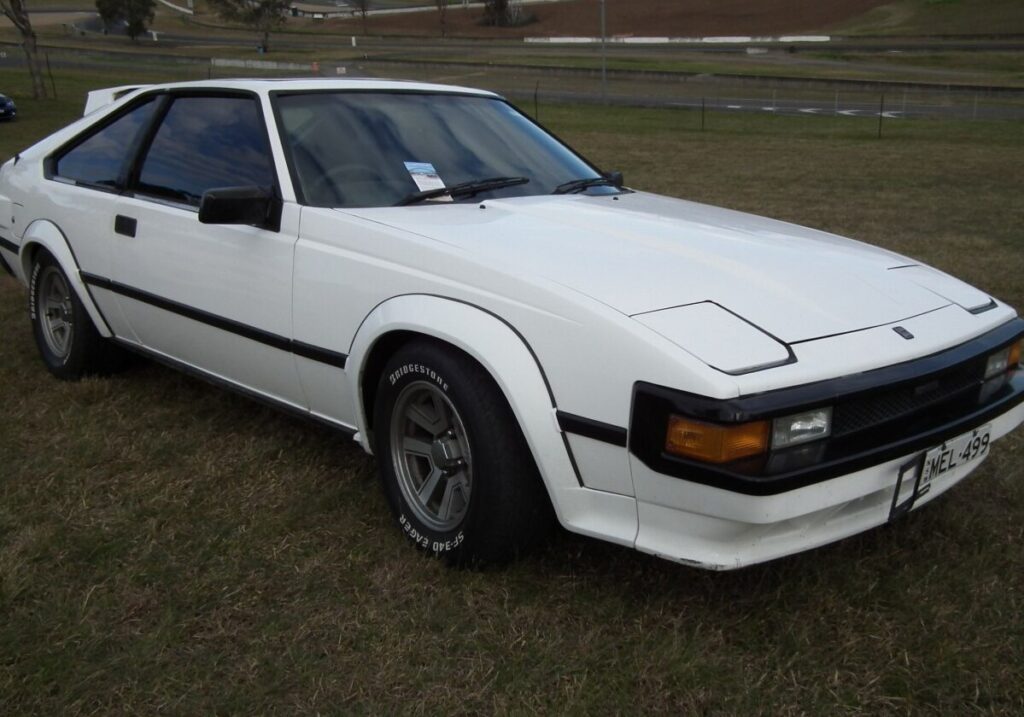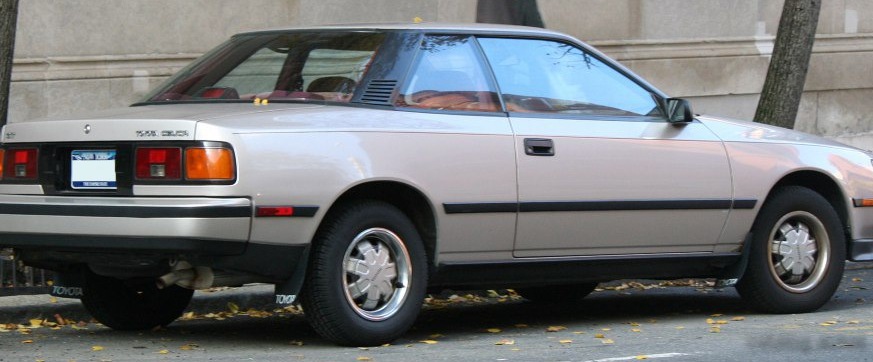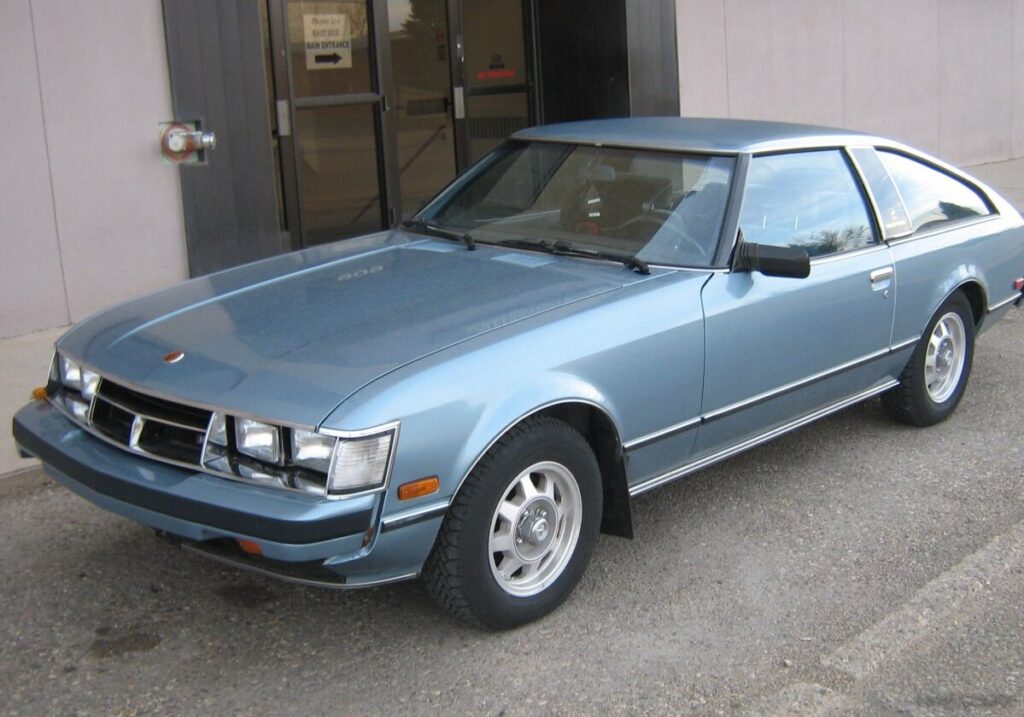
The Toyota Celica Supra Mark I, internally designated as the A40 and A50 series, represented Toyota’s initial foray into the dedicated sports car market. Produced between 1979 and 1981, this first-generation Supra was essentially a longer, wider, and more luxurious evolution of the Celica, sharing its basic architecture but boasting a more powerful engine and a focus on grand touring capabilities. The 2.8-liter (5M-E) variant, producing 116 horsepower, occupied a significant position in the lineup, offering a balance between performance and relative affordability within the burgeoning sports coupe segment. It served as the top-tier engine option for the Celica Supra during its production run.
Technical Specifications
| Brand | Toyota |
| Model | Supra |
| Generation | Celica Supra I (A40/A50) |
| Type (Engine) | 2.8 (116 Hp) |
| Start of production | 1979 |
| End of production | 1981 |
| Powertrain Architecture | Internal Combustion engine |
| Body type | Coupe |
| Seats | 4 |
| Doors | 3 |
| Fuel Type | Petrol (Gasoline) |
| Weight-to-power ratio | 11.2 kg/Hp, 89.2 Hp/tonne |
| Weight-to-torque ratio | 6.6 kg/Nm, 151.5 Nm/tonne |
| Power | 116 Hp @ 4800 rpm |
| Power per litre | 42 Hp/l |
| Torque | 197 Nm @ 3600 rpm, 145.3 lb.-ft. @ 3600 rpm |
| Engine layout | Front, Longitudinal |
| Engine Model/Code | 5M-E |
| Engine displacement | 2759 cm3, 168.36 cu. in. |
| Number of cylinders | 6 |
| Engine configuration | Inline |
| Cylinder Bore | 83 mm, 3.27 in. |
| Piston Stroke | 85 mm, 3.35 in. |
| Number of valves per cylinder | 2 |
| Fuel injection system | Single-point injection |
| Engine aspiration | Naturally aspirated engine |
| Valvetrain | SOHC |
| Engine oil capacity | 5.1 l, 5.39 US qt | 4.49 UK qt |
| Coolant | 8 l, 8.45 US qt | 7.04 UK qt |
| Kerb Weight | 1300 kg, 2866.01 lbs |
| Trunk (boot) space – maximum | 688 l, 24.3 cu. ft |
| Fuel tank capacity | 61 l, 16.11 US gal | 13.42 UK gal |
| Length | 4615 mm, 181.69 in |
| Width | 1651 mm, 65 in |
| Height | 1316 mm, 51.81 in |
| Wheelbase | 2629 mm, 103.5 in |
| Front track | 1364 mm, 53.7 in |
| Rear (Back) track | 1364 mm, 53.7 in |
| Drivetrain Architecture | The Internal combustion engine (ICE) drives the rear wheels of the vehicle. |
| Drive wheel | Rear wheel drive |
| Number of gears and type of gearbox | 5 gears, manual transmission |
| Front suspension | Independent, type McPherson with coil spring and anti-roll bar |
| Rear suspension | Independent multi-link suspension, Transverse stabilizer |
| Front brakes | Disc |
| Rear brakes | Disc |
| Steering type | Cone worm with recirculation balls |
| Tires size | 195/70 R14 |
Powertrain & Engine Architecture
The heart of the 2.8-liter Supra was the 5M-E inline-six engine. This engine, displacing 2759 cc, featured a single overhead camshaft (SOHC) valvetrain operating two valves per cylinder. It utilized a single-point fuel injection system, a relatively common technology for the era, which delivered fuel to the intake manifold rather than directly into the cylinders. This system, while less efficient than later multi-port injection, provided a good balance of performance and cost. The engine’s longitudinal mounting and rear-wheel-drive configuration were key elements of the Supra’s sporting character. The 5M-E produced 116 horsepower at 4800 rpm and 197 Nm (145.3 lb-ft) of torque at 3600 rpm. The standard transmission was a five-speed manual, although an optional four-speed automatic was available, impacting performance slightly.
Driving Characteristics
The 2.8-liter Supra, equipped with the five-speed manual transmission, offered respectable performance for its time. Acceleration to 60 mph was estimated to be around 8.5 seconds, making it competitive with other sports coupes of the late 1970s and early 1980s. The automatic transmission version naturally reduced this performance. The engine delivered a smooth powerband, with usable torque available from relatively low rpm, making it a comfortable car for everyday driving. However, it lacked the outright punch of later Supra models with turbocharged engines. The rear-wheel-drive layout provided a balanced handling experience, although the relatively soft suspension tuning prioritized ride comfort over razor-sharp handling. The gear ratios in the five-speed manual were well-spaced, allowing the driver to keep the engine in its sweet spot during spirited driving.
Equipment & Trim Levels
The 2.8-liter Supra was generally well-equipped for its price point. Standard features included power steering, power brakes, and a comprehensive instrument cluster. Interior appointments typically featured cloth upholstery, although leather was available as an option. Air conditioning was a popular option, as were power windows and a premium sound system. The dashboard layout was functional and driver-focused, with easy-to-read gauges. The Supra’s interior was noticeably more refined than that of the standard Celica, reflecting its positioning as a more upscale sports coupe. Trim levels were relatively simple, with the 2.8-liter model representing the highest level of specification available.
Chassis & Braking
The Celica Supra Mark I utilized a McPherson strut front suspension with coil springs and an anti-roll bar, providing a comfortable ride and predictable handling. The rear suspension employed an independent multi-link setup with a transverse stabilizer, further enhancing stability. Braking duties were handled by disc brakes on all four wheels, a relatively advanced feature for a car in this class at the time. The steering system was a cone worm type with recirculation balls, offering a reasonable level of precision. The 195/70 R14 tires provided adequate grip for both dry and wet conditions.
Market Reception & Comparison
The Celica Supra Mark I was generally well-received by automotive critics. It was praised for its stylish design, comfortable interior, and smooth-running engine. However, some critics noted that it lacked the outright performance of more focused sports cars, such as the Datsun 280Z. Compared to the base Celica models, the Supra offered a significant step up in terms of performance, luxury, and refinement. Within the Toyota lineup, it served as a bridge between the more affordable Celica and the upcoming, more powerful turbocharged Supra models. Fuel economy was reasonable for the era, averaging around 18-22 mpg in mixed driving.
Legacy
The first-generation Celica Supra laid the foundation for the Supra’s future success. While the 5M-E engine is known for its durability, age and mileage can lead to issues such as oil leaks and worn valve stem seals. The single-point fuel injection system can also require maintenance. Today, the A40/A50 Supra is a sought-after classic car, particularly among Toyota enthusiasts. Well-maintained examples command a premium in the used car market. The 2.8-liter variant, while not the most powerful Supra ever made, represents a significant piece of Toyota’s sports car heritage and offers a unique blend of style, comfort, and reliability.