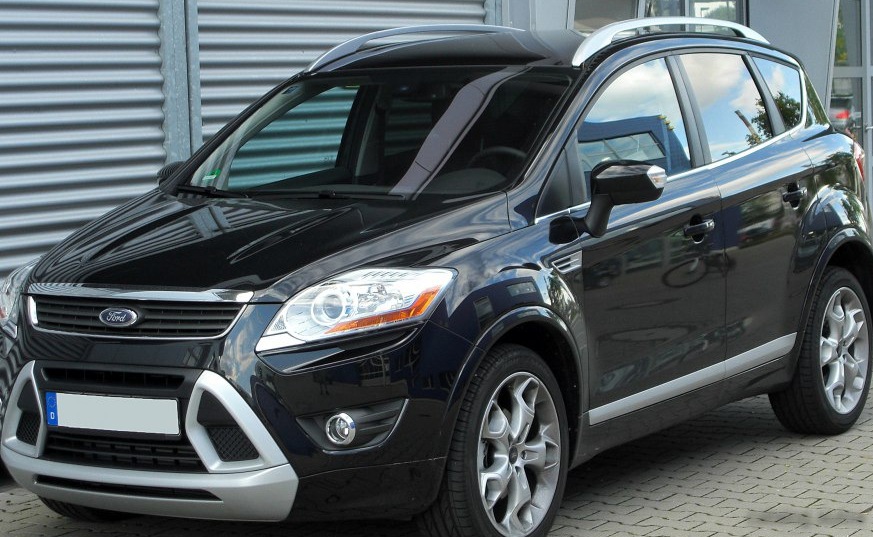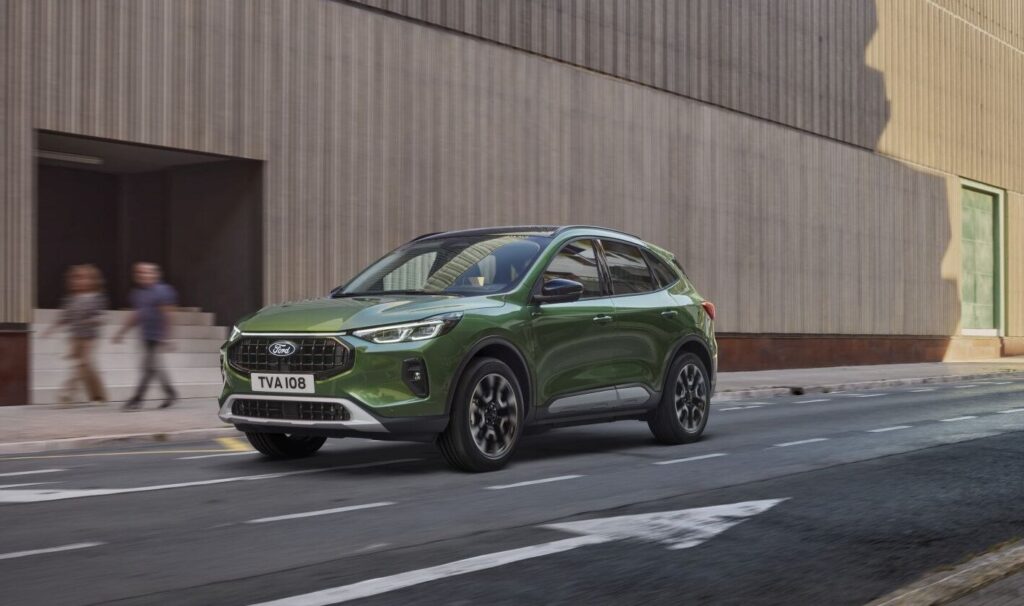
The Ford Kuga III Active 2.5 (243 Hp) Plug-in Hybrid CVT, introduced in January 2024 as part of the Kuga III facelift, represents a significant offering in Ford’s European and increasingly North American SUV lineup. Positioned as a premium trim within the Kuga range, it combines a gasoline engine with an electric motor and a Continuously Variable Transmission (CVT) to deliver both efficiency and performance. This variant builds upon the established Kuga III platform (also known as the Puma platform, sharing architecture with models like the Ford Escape) and aims to appeal to buyers seeking a versatile and environmentally conscious vehicle. The facelift brought updated styling, enhanced technology, and refinements to the powertrain options, including this plug-in hybrid configuration.
Technical Specifications
| Brand | Ford |
| Model | Kuga |
| Generation | Kuga III (facelift 2024) |
| Type (Engine) | Active 2.5 (243 Hp) Plug-in Hybrid CVT |
| Start of production | January, 2024 |
| Powertrain Architecture | PHEV (Plug-in Hybrid Electric Vehicle) |
| Body type | SUV |
| Seats | 5 |
| Doors | 5 |
| Combined fuel consumption (WLTP) | 0.9-1.2 l/100 km (261.3 – 196 US mpg, 313.9 – 235.4 UK mpg, 111.1 – 83.3 km/l) |
| CO2 emissions (WLTP) | 20-28 g/km |
| Fuel Type | Petrol / electricity |
| Acceleration 0 – 100 km/h | 7.3 sec |
| Acceleration 0 – 62 mph | 7.3 sec |
| Acceleration 0 – 60 mph | 6.9 sec |
| Maximum speed | 200 km/h (124.27 mph) |
| Emission standard | Euro 6d |
| Gross battery capacity | 14.4 kWh |
| Battery technology | Lithium-ion (Li-Ion) |
| Battery location | Below the floor, under the front seats / Between front and rear seats |
| All-electric range (WLTP) | 60-69 km (37.28 – 42.87 mi) |
| System power | 243 Hp |
| Engine layout | Front, Transverse |
| Engine displacement | 2488 cm3 (151.83 cu. in.) |
| Number of cylinders | 4 |
| Engine configuration | Inline |
| Cylinder Bore | 89 mm (3.5 in.) |
| Piston Stroke | 100 mm (3.94 in.) |
| Compression ratio | 13:1 |
| Number of valves per cylinder | 4 |
| Fuel injection system | Multi-port manifold injection |
| Engine aspiration | Naturally aspirated engine |
| Valvetrain | DOHC, VCT |
| Engine oil capacity | 5.4 l (5.71 US qt | 4.75 UK qt) |
| Trunk (boot) space – minimum | 412 l (14.55 cu. ft.) |
| Trunk (boot) space – maximum | 1534 l (54.17 cu. ft.) |
| Fuel tank capacity | 43 l (11.36 US gal | 9.46 UK gal) |
| Max. roof load | 75 kg (165.35 lbs.) |
| Permitted trailer load with brakes (12%) | 2100 kg (4629.71 lbs.) |
| Permitted trailer load without brakes | 750 kg (1653.47 lbs.) |
| Length | 4645 mm (182.87 in.) |
| Width | 1882 mm (74.09 in.) |
| Width with mirrors folded | 2000 mm (78.74 in.) |
| Width including mirrors | 2177 mm (85.71 in.) |
| Height | 1683 mm (66.26 in.) |
| Wheelbase | 2711 mm (106.73 in.) |
| Front track | 1599 mm (62.95 in.) |
| Rear (Back) track | 1590 mm (62.6 in.) |
| Ride height (ground clearance) | 168-191 mm (6.61 – 7.52 in.) |
| Minimum turning circle (turning diameter) | 11.38 m (37.34 ft.) |
| Front suspension | Independent type McPherson, Transverse stabilizer |
| Rear suspension | Torsion |
| Front brakes | Ventilated discs, 308×27 mm |
| Rear brakes | Disc, 302×11 mm |
| Drive wheel | Front wheel drive |
| Number of gears and type of gearbox | automatic transmission CVT |
| Tires size | 225/60 R18 |
| Wheel rims size | 7.5J x 18 |
INTRODUCTION
The Ford Kuga Active 2.5 Plug-in Hybrid CVT, launched in 2024, is a key component of Ford’s strategy to offer a wider range of electrified vehicles. It’s built on the Kuga III platform, which debuted in 2019 and received a significant facelift in 2024. This generation Kuga represents a move towards more sophisticated styling and technology compared to its predecessors. The “Active” designation denotes a trim level focused on a blend of style, practicality, and efficiency. The plug-in hybrid powertrain is designed to appeal to environmentally conscious consumers and those seeking to reduce their fuel costs, particularly in urban environments where electric-only driving is more feasible. This variant is primarily marketed in Europe and is gaining traction in North America as Ford expands its hybrid and electric offerings.
Powertrain & Engine Architecture
At the heart of the Kuga Active 2.5 PHEV is a 2.5-liter naturally aspirated inline-four cylinder gasoline engine. This engine, while not directly related to Ford’s EcoBoost turbocharged engines, is designed for efficiency and smooth operation. It utilizes multi-port fuel injection and a double overhead camshaft (DOHC) valvetrain with variable camshaft timing (VCT) to optimize performance and fuel economy. The engine produces approximately 150 horsepower. Coupled with the electric motor, the combined system output reaches 243 horsepower. The electric motor is integrated into the CVT transmission, providing seamless transitions between gasoline and electric power. The 14.4 kWh lithium-ion battery pack is strategically located under the floor, minimizing impact on passenger and cargo space. The CVT, while offering smooth acceleration and fuel efficiency, is a point of contention for some drivers who prefer the more direct feel of a traditional automatic transmission. Ford’s calibration of the CVT aims to mitigate the “rubber band” effect often associated with this type of transmission.
Driving Characteristics
The Kuga Active 2.5 PHEV delivers a refined driving experience. In electric-only mode, it offers quiet and smooth acceleration, ideal for city driving. The all-electric range of 60-69 km (37-43 miles) allows for many daily commutes to be completed without using any gasoline. When the battery is depleted or when more power is needed, the gasoline engine seamlessly kicks in. The combined power output of 243 hp provides brisk acceleration, with a 0-60 mph time of around 6.9 seconds. The CVT transmission prioritizes fuel efficiency over sporty responsiveness, resulting in a more relaxed driving experience. Compared to the 1.5L EcoBoost versions of the Kuga, the PHEV offers significantly better fuel economy, but slightly slower acceleration. Compared to diesel variants, the PHEV provides a quieter and more refined driving experience, albeit with a higher initial purchase price.
Equipment & Trim Levels
The Active trim level of the Kuga typically includes a generous amount of standard equipment. This includes features like Ford’s SYNC 4 infotainment system with a 13.2-inch touchscreen, a digital instrument cluster, automatic climate control, and a suite of advanced driver-assistance systems (ADAS) such as adaptive cruise control, lane-keeping assist, and automatic emergency braking. Interior upholstery is typically a combination of cloth and leatherette, with options for full leather available. Optional extras include a panoramic sunroof, premium sound system, and heated/ventilated front seats. The Active trim also features unique exterior styling elements, such as distinctive alloy wheels and body cladding.
Chassis & Braking
The Kuga III utilizes a front-wheel-drive platform, although all-wheel drive is available as an option on some trims. The front suspension consists of independent McPherson struts with a transverse stabilizer bar, while the rear suspension employs a torsion beam setup. This configuration provides a good balance between ride comfort and handling. The braking system features ventilated discs on the front wheels and solid discs on the rear wheels. ABS (Anti-lock Braking System) is standard, along with electronic brake-force distribution (EBD) and emergency brake assist. The suspension tuning is geared towards comfort, making the Kuga a pleasant vehicle for long journeys.
Market Reception & Comparison
The Kuga Active 2.5 Plug-in Hybrid CVT has been generally well-received by automotive critics. Reviewers praise its fuel efficiency, comfortable ride, and spacious interior. The plug-in hybrid powertrain is seen as a significant step forward in terms of reducing emissions and fuel consumption. However, some critics note that the CVT transmission can feel somewhat disconnected and that the overall driving experience is not as engaging as some of its competitors. Compared to other plug-in hybrid SUVs in its class, the Kuga offers a competitive price point and a good level of standard equipment. Its fuel economy is comparable to other PHEVs, and its all-electric range is sufficient for many daily commutes.
Legacy
The Ford Kuga III Active 2.5 Plug-in Hybrid CVT represents Ford’s commitment to electrification and sustainable mobility. While it’s still relatively new to the market, the powertrain is expected to be reliable, benefiting from Ford’s extensive experience in hybrid technology. The long-term durability of the CVT transmission remains to be seen, but Ford has made improvements to its CVT designs in recent years. On the used car market, this variant is likely to hold its value well due to its fuel efficiency and environmental benefits. As demand for electric and hybrid vehicles continues to grow, the Kuga Active 2.5 PHEV is poised to become a popular choice for buyers seeking a versatile and eco-friendly SUV.