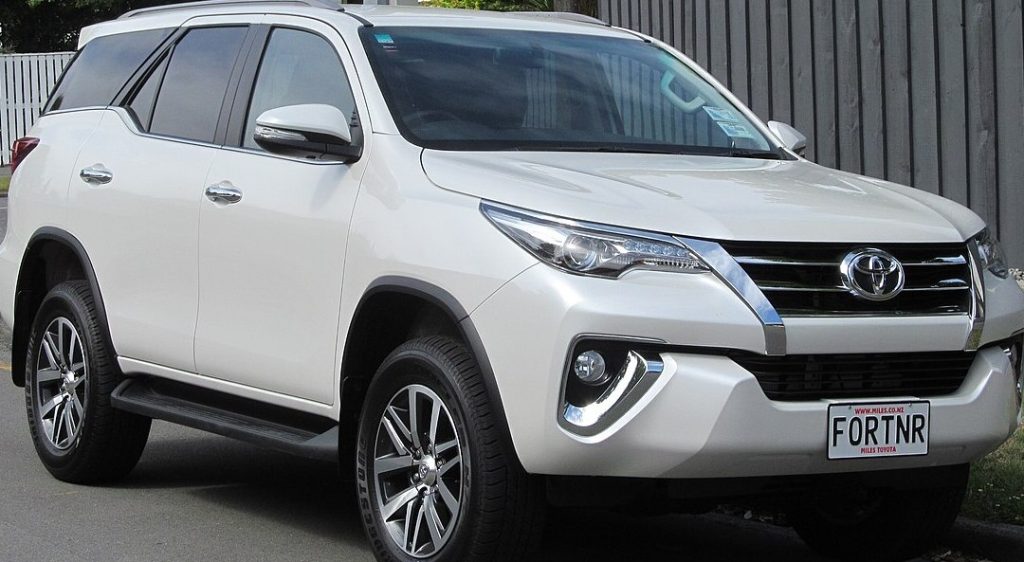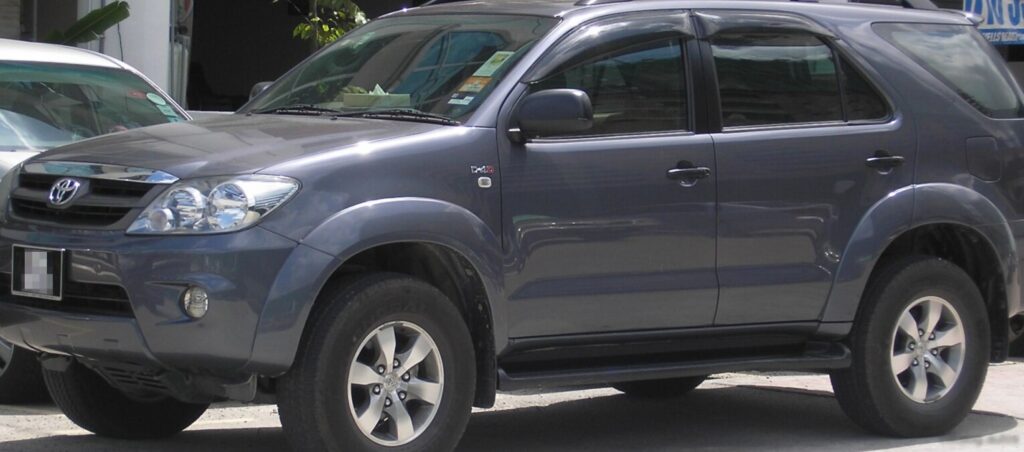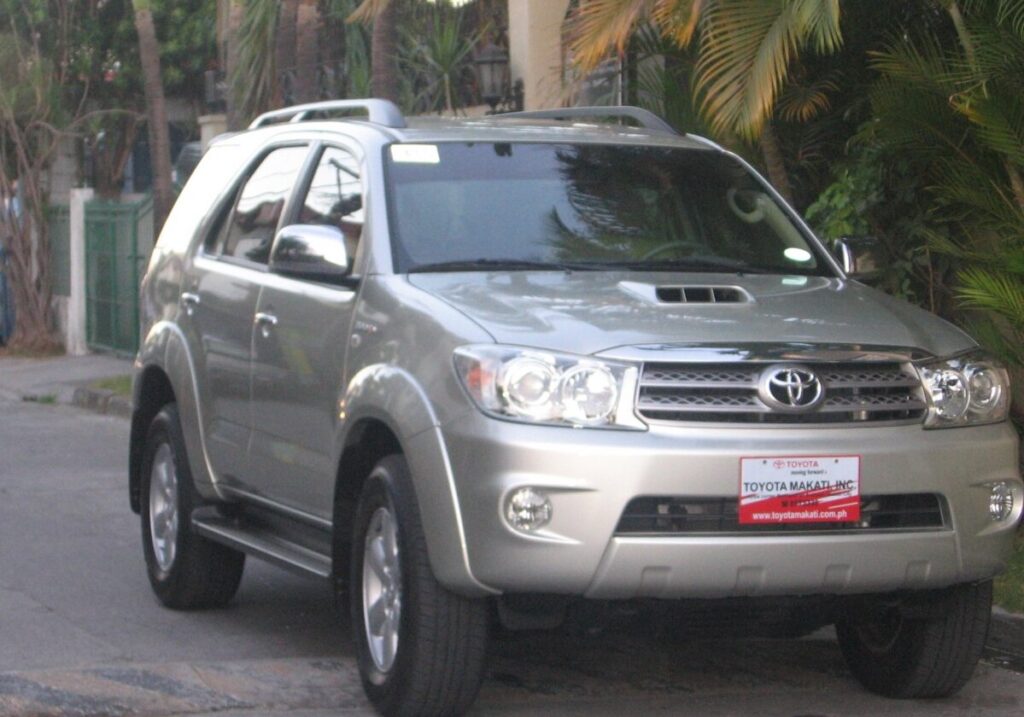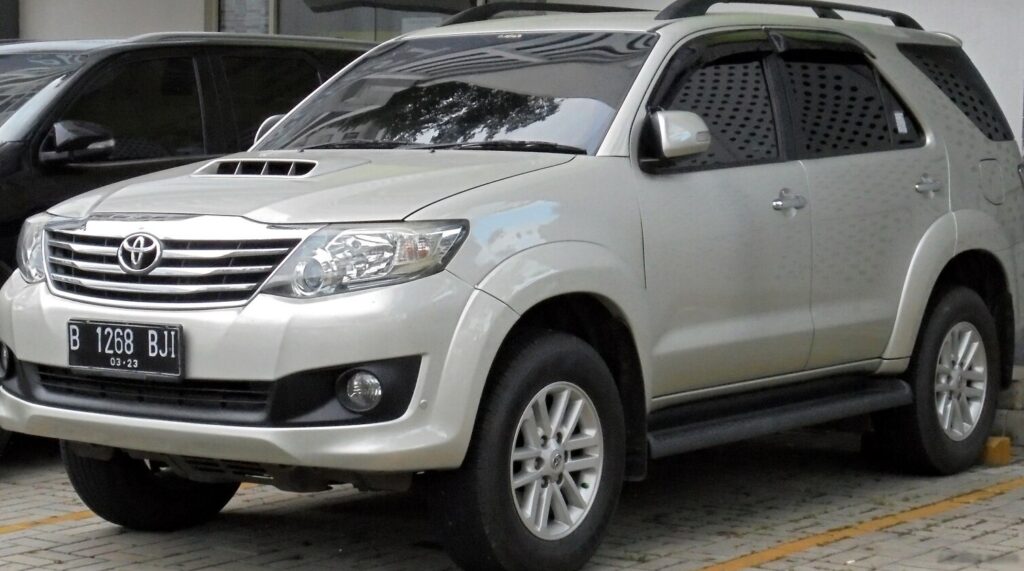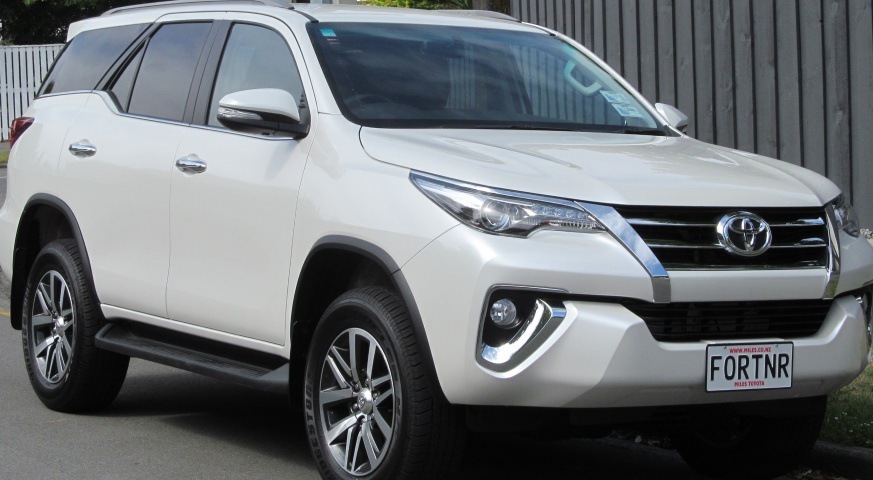
The Toyota Fortuner II 2.8 D-4D 4WD Automatic, produced between 2015 and 2020, represents a significant iteration of Toyota’s popular body-on-frame SUV. Positioned as a robust and capable vehicle, the Fortuner II aimed to blend off-road prowess with family-oriented practicality. This particular variant, equipped with the 1GD-FTV 2.8-liter diesel engine and a six-speed automatic transmission, served as a mid-to-high range offering within the Fortuner II lineup, appealing to buyers seeking a balance of performance, convenience, and four-wheel-drive capability. It was primarily marketed in regions like Australia, South Africa, South America, and Southeast Asia, where demand for durable, versatile SUVs remains strong.
Technical Specifications
| Brand | Toyota |
| Model | Fortuner |
| Generation | Fortuner II |
| Type (Engine) | 2.8 D-4D (177 Hp) 4WD Automatic |
| Start of production | 2015 |
| End of production | 2020 |
| Powertrain Architecture | Internal Combustion engine |
| Body type | SUV |
| Seats | 7 |
| Doors | 5 |
| Fuel consumption (combined) | 8.5 l/100 km (27.7 US mpg, 33.2 UK mpg, 11.8 km/l) |
| CO2 emissions | 224 g/km |
| Fuel Type | Diesel |
| Acceleration 0 – 100 km/h | 10.8 sec |
| Acceleration 0 – 62 mph | 10.8 sec |
| Acceleration 0 – 60 mph | 10.3 sec |
| Maximum speed | 180 km/h (111.85 mph) |
| Weight-to-power ratio | 15.5 kg/Hp, 64.7 Hp/tonne |
| Weight-to-torque ratio | 6.1 kg/Nm, 164.5 Nm/tonne |
| Power | 177 Hp @ 3400 rpm |
| Power per litre | 64.2 Hp/l |
| Torque | 450 Nm @ 1600-2400 rpm (331.9 lb.-ft. @ 1600-2400 rpm) |
| Engine layout | Front, Longitudinal |
| Engine Model/Code | 1GD-FTV |
| Engine displacement | 2755 cm3 (168.12 cu. in.) |
| Number of cylinders | 4 |
| Engine configuration | Inline |
| Cylinder Bore | 92 mm (3.62 in.) |
| Piston Stroke | 103.6 mm (4.08 in.) |
| Compression ratio | 15.6:1 |
| Number of valves per cylinder | 4 |
| Fuel injection system | Diesel Commonrail |
| Engine aspiration | Turbocharger, Intercooler |
| Valvetrain | DOHC |
| Engine oil capacity | 7.5 l (7.93 US qt | 6.6 UK qt) |
| Coolant | 9.1 l (9.62 US qt | 8.01 UK qt) |
| Kerb Weight | 2735 kg (6029.64 lbs.) |
| Fuel tank capacity | 80 l (21.13 US gal | 17.6 UK gal) |
| Length | 4795 mm (188.78 in.) |
| Width | 1855 mm (73.03 in.) |
| Height | 1835 mm (72.24 in.) |
| Wheelbase | 2745 mm (108.07 in.) |
| Minimum turning circle | 11.6 m (38.06 ft.) |
| Drive wheel | All wheel drive (4×4) |
| Number of gears | 6 |
| Gearbox type | automatic transmission |
| Front suspension | Double wishbone |
| Rear suspension | Independent multi-link suspension |
| Front brakes | Ventilated discs |
| Rear brakes | Ventilated discs |
| Assisting systems | ABS (Anti-lock braking system) |
| Tires size | 265/60 R18 |
| Wheel rims size | 18 |
Powertrain & Engine Architecture
The heart of this Fortuner variant is the 1GD-FTV 2.8-liter inline-four diesel engine. This engine is a member of Toyota’s GD series, known for its durability and efficiency. The 1GD-FTV utilizes a common-rail direct injection system, delivering fuel at extremely high pressure for optimized combustion. A variable geometry turbocharger (VGT) and intercooler further enhance performance and reduce emissions. The engine features a double overhead camshaft (DOHC) valvetrain with four valves per cylinder, contributing to its broad torque curve. The six-speed automatic transmission, a widely used unit within the Toyota lineup, is designed for smooth shifting and efficient power delivery. It’s programmed to prioritize fuel economy during normal driving conditions but can quickly downshift when needed for acceleration or tackling challenging terrain.
Driving Characteristics
The 2.8 D-4D Automatic Fortuner offers a comfortable and capable driving experience. While not a sports SUV, the 177 horsepower and 331.9 lb.-ft. of torque provide ample power for everyday driving and towing. The automatic transmission contributes to ease of use, particularly in urban environments. Acceleration to 60 mph takes around 10.3 seconds, which is respectable for a vehicle of this size and weight. The 4WD system, typically selectable with a rotary dial, allows drivers to switch between two-wheel drive for fuel efficiency and four-wheel drive for enhanced traction in slippery conditions. Compared to the base model with a smaller engine, this variant offers a noticeable improvement in performance, especially when fully loaded or towing. It also feels more refined than manual transmission versions, offering a smoother and more relaxed driving experience.
Equipment & Trim Levels
The 2.8 D-4D 4WD Automatic trim typically included a generous array of standard features. These commonly included air conditioning, power windows and locks, a touchscreen infotainment system with Bluetooth connectivity, and a rearview camera. Higher trim levels often added features like leather upholstery, heated front seats, a sunroof, and a premium audio system. Safety features such as ABS, multiple airbags, and stability control were standard across the range. Optional extras could include a navigation system, roof rails, and a tow hitch.
Chassis & Braking
The Fortuner II utilizes a traditional body-on-frame construction, providing robust durability and off-road capability. The suspension consists of double wishbones at the front and an independent multi-link setup at the rear, designed to balance ride comfort with handling stability. Ventilated disc brakes are fitted on all four wheels, providing adequate stopping power. The 4WD system typically includes a limited-slip differential for improved traction in challenging conditions. Stabilizer bars are present on both axles to reduce body roll during cornering.
Market Reception & Comparison
The Toyota Fortuner II 2.8 D-4D 4WD Automatic was generally well-received by automotive critics and consumers alike. It was praised for its reliability, durability, and off-road capability. Fuel economy, at around 27.7 US mpg, was considered reasonable for a vehicle of its size and type. Compared to other trims in the Fortuner II lineup, this variant offered a significant performance upgrade over the smaller engine options, making it a popular choice for those who frequently tow or drive in challenging conditions. However, some critics noted that the ride quality could be firm, particularly on rough roads. Competitors included the Mitsubishi Pajero Sport, Isuzu MU-X, and Ford Everest.
Legacy
The 1GD-FTV engine has proven to be exceptionally reliable, and the Fortuner II 2.8 D-4D Automatic continues to hold its value in the used car market. The powertrain is known for its longevity and relatively low maintenance costs. Common issues are rare, but regular servicing, including oil changes and filter replacements, is crucial for maintaining its performance and reliability. Today, these Fortuners are sought after by those looking for a dependable and capable SUV that can handle both on-road and off-road adventures. Its reputation for durability and practicality ensures its continued presence on roads and trails for years to come.