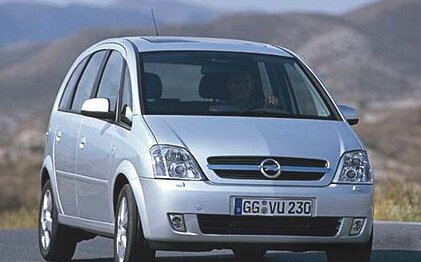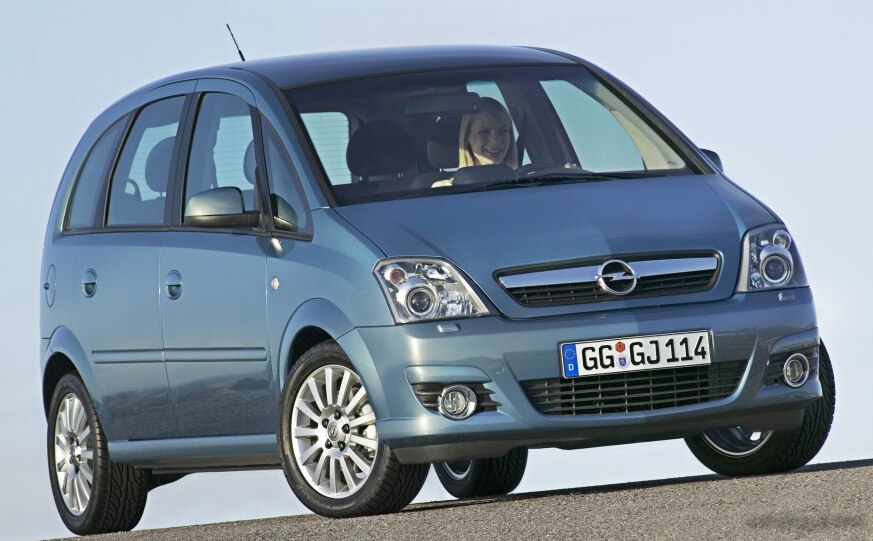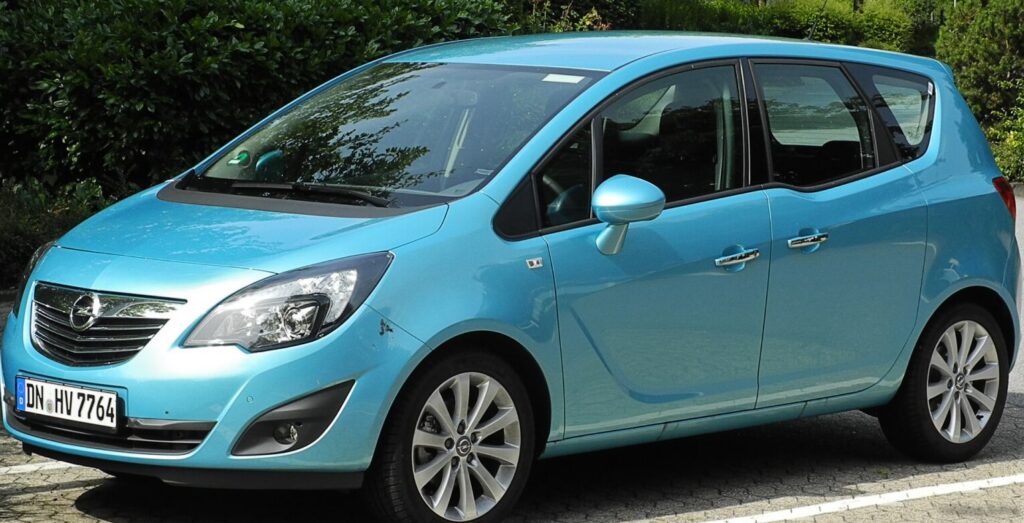
The Opel Meriva B 1.4 Turbo (120 hp) start/stop, produced from December 2011 to October 2013, represented a key offering within the second generation of Opel’s popular compact minivan. Positioned as a mid-range trim, it aimed to balance fuel efficiency with respectable performance for family transport. This variant played a significant role in the Meriva B’s success in the European market, offering a modern, turbocharged engine option in a practical and versatile package. The Meriva B itself was built on the General Motors Gamma platform, shared with other models like the Opel Corsa D and Fiat Punto Evo, emphasizing its focus on affordability and space optimization.
Technical Specifications
| Brand | Opel |
| Model | Meriva |
| Generation | Meriva B |
| Type (Engine) | 1.4 Turbo (120 Hp) start/stop |
| Start of production | December, 2011 |
| End of production | October, 2013 |
| Powertrain Architecture | Internal Combustion engine |
| Body type | Minivan |
| Seats | 5 |
| Doors | 5 |
| Fuel consumption (combined) | 5.4 l/100 km (43.6 US mpg, 52.3 UK mpg, 18.5 km/l) |
| CO2 emissions | 127 g/km |
| Fuel Type | Petrol (Gasoline) |
| Acceleration 0 – 100 km/h | 11.5 sec |
| Acceleration 0 – 62 mph | 11.5 sec |
| Acceleration 0 – 60 mph | 10.9 sec |
| Maximum speed | 188 km/h (116.82 mph) |
| Emission standard | Euro 5 |
| Weight-to-power ratio | 10.7 kg/Hp, 93.3 Hp/tonne |
| Weight-to-torque ratio | 7.3 kg/Nm, 136.1 Nm/tonne |
| Power | 120 Hp @ 4800-6000 rpm |
| Power per litre | 88 Hp/l |
| Torque | 175 Nm @ 1750-4800 rpm (129.07 lb.-ft. @ 1750-4800 rpm) |
| Engine layout | Front, Transverse |
| Engine Model/Code | A14NEL |
| Engine displacement | 1364 cm3 (83.24 cu. in.) |
| Number of cylinders | 4 |
| Engine configuration | Inline |
| Cylinder Bore | 72.5 mm (2.85 in.) |
| Piston Stroke | 82.6 mm (3.25 in.) |
| Compression ratio | 9.5:1 |
| Number of valves per cylinder | 4 |
| Fuel injection system | Direct injection |
| Engine aspiration | Turbocharger, Intercooler |
| Valvetrain | DOHC |
| Engine oil capacity | 4 l (4.23 US qt | 3.52 UK qt) |
| Coolant | 6.2 l (6.55 US qt | 5.46 UK qt) |
| Kerb Weight | 1286 kg (2835.14 lbs.) |
| Max. weight | 1890 kg (4166.74 lbs.) |
| Max load | 604 kg (1331.59 lbs.) |
| Trunk (boot) space – minimum | 400 l (14.13 cu. ft.) |
| Trunk (boot) space – maximum | 1500 l (52.97 cu. ft.) |
| Fuel tank capacity | 54 l (14.27 US gal | 11.88 UK gal) |
| Length | 4288 mm (168.82 in.) |
| Width | 1994 mm (78.5 in.) |
| Height | 1615 mm (63.58 in.) |
| Wheelbase | 2644 mm (104.09 in.) |
| Front track | 1488 mm (58.58 in.) |
| Rear (Back) track | 1509 mm (59.41 in.) |
| Minimum turning circle | 11.48 m (37.66 ft.) |
| Drivetrain Architecture | The Internal combustion engine (ICE) drives the front wheels of the vehicle. |
| Drive wheel | Front wheel drive |
| Number of gears and type of gearbox | 5 gears, manual transmission |
| Front brakes | Ventilated discs |
| Rear brakes | Disc |
| Assisting systems | ABS (Anti-lock braking system) |
| Steering type | Steering rack and pinion |
| Tires size | 225/45 R17 |
| Wheel rims size | 17 |
Powertrain & Engine Architecture
The heart of the Meriva B 1.4 Turbo was the A14NEL engine, a 1.4-liter inline-four cylinder gasoline engine featuring direct fuel injection and a turbocharger with an intercooler. This engine was part of Opel/Vauxhall’s family of small-displacement turbocharged engines designed to deliver improved fuel economy and reduced emissions without sacrificing performance. The direct injection system, coupled with the turbocharger, allowed for precise fuel delivery and increased power output. The engine utilized a double overhead camshaft (DOHC) valvetrain, optimizing airflow into and out of the cylinders. The 5-speed manual transmission was the standard offering for this variant, providing a balance between fuel efficiency and driver engagement. The start/stop system, a key feature of this trim, automatically shut off the engine when the vehicle came to a halt, further enhancing fuel savings in urban driving conditions.
Driving Characteristics
The 120 hp 1.4 Turbo engine provided adequate performance for everyday driving. Acceleration from 0-60 mph took around 10.9 seconds, and the top speed was 116.82 mph. While not a particularly sporty vehicle, the turbocharger provided a noticeable boost in power during acceleration, making overtaking maneuvers relatively easy. Compared to the base 1.2-liter engine, the 1.4 Turbo offered a significant improvement in performance. However, it didn’t match the responsiveness of higher-performance variants, such as those equipped with larger engines. The 5-speed manual transmission was well-matched to the engine’s torque curve, offering smooth gear changes and a reasonable spread of ratios. The gear ratios were tuned for fuel efficiency, prioritizing comfortable cruising over outright acceleration.
Equipment & Trim Levels
The 1.4 Turbo trim typically included features such as air conditioning, power windows, power mirrors, a CD/MP3 stereo system, and ABS brakes. Higher trim levels offered additional features like alloy wheels, a multi-function steering wheel, cruise control, and parking sensors. Interior upholstery was typically cloth, with options for upgraded materials available. The dashboard layout was functional and user-friendly, with a clear instrument cluster and logically placed controls. The FlexSpace rear seating system, a hallmark of the Meriva B, allowed for versatile configuration of the rear seats, providing increased cargo space when needed.
Chassis & Braking
The Meriva B featured a MacPherson strut front suspension and a torsion beam rear suspension. This setup provided a comfortable ride quality, suitable for everyday driving. The front brakes were ventilated discs, while the rear brakes were solid discs, offering adequate stopping power for the vehicle’s weight and performance. The steering was a rack and pinion system, providing precise and responsive handling. The standard tire size was 225/45 R17, offering a good balance between grip and ride comfort. The suspension was tuned for comfort rather than sporty handling, prioritizing a smooth and stable ride over aggressive cornering.
Market Reception & Comparison
The Opel Meriva B 1.4 Turbo was generally well-received by automotive critics. It was praised for its fuel efficiency, versatile interior, and comfortable ride. However, some critics noted that the engine could feel strained when fully loaded or driving uphill. Compared to other trims in the Meriva B lineup, the 1.4 Turbo offered a good balance between performance and fuel economy. It was more expensive than the base 1.2-liter engine but offered significantly more power. It was a more practical choice than the higher-performance variants for drivers who prioritized fuel efficiency and everyday usability.
Legacy
The A14NEL engine, while generally reliable, has been known to exhibit issues with turbocharger failure and oil consumption in some cases. Regular maintenance, including oil changes and turbocharger inspections, is crucial for ensuring long-term reliability. Today, the Meriva B 1.4 Turbo can be found on the used car market at relatively affordable prices. It remains a practical and versatile option for families seeking a compact minivan with good fuel economy. Its reputation for reliability, combined with its spacious interior and comfortable ride, makes it a popular choice among budget-conscious buyers.