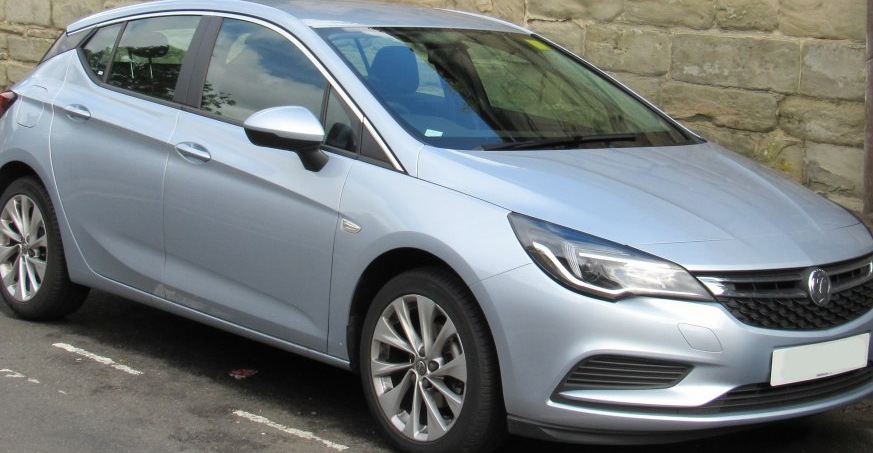
The Vauxhall Astra Mk VII 1.6 CDTi Automatic, produced between 2015 and 2019, represented a significant offering in the British compact hatchback market. Part of the J-series Astra (internally designated as the Mk VII), this variant utilized a diesel engine paired with a six-speed automatic transmission. It occupied a middle ground within the Astra lineup, aiming to provide a balance of fuel efficiency, reasonable performance, and convenience for drivers prioritizing comfort over outright sportiness. The Mk VII Astra was built on the General Motors Delta platform, shared with models like the Chevrolet Cruze and Buick Verano, and was a key model for Vauxhall in the highly competitive C-segment.
Technical Specifications
| Brand | Vauxhall |
| Model | Astra |
| Generation | Astra Mk VII |
| Type (Engine) | 1.6 CDTi (136 Hp) Automatic |
| Start of production | 2015 |
| End of production | 2019 |
| Powertrain Architecture | Internal Combustion engine |
| Body type | Hatchback |
| Seats | 5 |
| Doors | 5 |
| Fuel consumption (urban) | 5.8 l/100 km (40.6 US mpg, 48.7 UK mpg, 17.2 km/l) |
| Fuel consumption (extra urban) | 3.9 l/100 km (60.3 US mpg, 72.4 UK mpg, 25.6 km/l) |
| Fuel consumption (combined) | 4.6 l/100 km (51.1 US mpg, 61.4 UK mpg, 21.7 km/l) |
| CO2 emissions | 122 g/km |
| Fuel Type | Diesel |
| Acceleration 0 – 100 km/h | 9.7 sec |
| Acceleration 0 – 62 mph | 9.7 sec |
| Acceleration 0 – 60 mph | 9.2 sec |
| Maximum speed | 204 km/h (126.76 mph) |
| Emission standard | Euro 6 |
| Power | 136 Hp @ 3500-4000 rpm |
| Power per litre | 85.1 Hp/l |
| Torque | 320 Nm @ 2000-2500 rpm (236.02 lb.-ft. @ 2000-2500 rpm) |
| Engine layout | Front, Transverse |
| Engine Model/Code | B16DTH |
| Engine displacement | 1598 cm3 (97.52 cu. in.) |
| Number of cylinders | 4 |
| Engine configuration | Inline |
| Cylinder Bore | 79.7 mm (3.14 in.) |
| Piston Stroke | 80.1 mm (3.15 in.) |
| Compression ratio | 16:1 |
| Fuel injection system | Diesel Commonrail |
| Engine aspiration | Turbocharger, Intercooler |
| Engine oil capacity | 5 l (5.28 US qt | 4.4 UK qt) |
| Max. weight | 1900 kg (4188.78 lbs.) |
| Trunk (boot) space – minimum | 370 l (13.07 cu. ft.) |
| Trunk (boot) space – maximum | 1210 l (42.73 cu. ft.) |
| Fuel tank capacity | 48 l (12.68 US gal | 10.56 UK gal) |
| Max. roof load | 75 kg (165.35 lbs.) |
| Permitted trailer load with brakes (12%) | 750 kg (1653.47 lbs.) |
| Permitted trailer load without brakes | 620 kg (1366.87 lbs.) |
| Length | 4370 mm (172.05 in.) |
| Width | 1809 mm (71.22 in.) |
| Width with mirrors folded | 1871 mm (73.66 in.) |
| Width including mirrors | 2042 mm (80.39 in.) |
| Height | 1485 mm (58.46 in.) |
| Wheelbase | 2662 mm (104.8 in.) |
| Front track | 1548 mm (60.94 in.) |
| Rear (Back) track | 1565 mm (61.61 in.) |
| Front overhang | 960 mm (37.8 in.) |
| Rear overhang | 748 mm (29.45 in.) |
| Ride height (ground clearance) | 150 mm (5.91 in.) |
| Drag coefficient (Cd) | 0.31 |
| Minimum turning circle (turning diameter) | 11.05 m (36.25 ft.) |
| Drivetrain Architecture | The Internal combustion engine (ICE) drives the front wheels of the vehicle. |
| Drive wheel | Front wheel drive |
| Number of gears and type of gearbox | 6 gears, automatic transmission |
| Front brakes | Ventilated discs |
| Rear brakes | Disc |
| Assisting systems | ABS (Anti-lock braking system) |
| Steering type | Steering rack and pinion |
| Tires size | 205/55 R16 |
| Wheel rims size | 6 J x 15 |
Powertrain & Engine Architecture
The heart of this Astra variant is the 1.6-liter (1598 cc) B16DTH diesel engine. This engine is a member of General Motors’ ‘A’ family of diesel engines, known for its relatively compact size and efficiency. It features a cast iron block and aluminum cylinder head, incorporating a turbocharger with intercooling to boost power output. The B16DTH utilizes a common rail direct injection system, delivering fuel at extremely high pressures for optimized combustion. The engine’s valvetrain employs two overhead camshafts (DOHC) operating four valves per cylinder. Paired with this engine is a six-speed automatic transmission, providing smooth gear changes and enhancing the car’s usability in urban environments. This transmission isn’t known for being particularly sporty, prioritizing comfort and fuel economy over rapid shifts.
Driving Characteristics
The 136 horsepower and 236 lb-ft of torque produced by the 1.6 CDTi Automatic offered adequate, but not exhilarating, performance. Acceleration from 0-60 mph took around 9.2 seconds, making it competitive with other diesel automatics in its class. The automatic transmission, while smooth, did contribute to a slight reduction in responsiveness compared to the manual versions. Gear ratios were tuned for fuel efficiency, meaning the engine often felt slightly strained during quick overtaking maneuvers. However, in steady-state cruising, the engine was relaxed and quiet, providing a comfortable driving experience. The automatic transmission’s programming favored early upshifts to maximize fuel economy, which could sometimes feel intrusive during spirited driving.
Equipment & Trim Levels
The 1.6 CDTi Automatic typically came equipped as a mid-range trim level, often designated as ‘Design’ or ‘Tech Line’ depending on the specific year and market. Standard features generally included air conditioning, alloy wheels, a touchscreen infotainment system with Bluetooth connectivity, cruise control, and electric windows. Higher trim levels offered upgrades such as leather upholstery, heated seats, a more advanced infotainment system with navigation, and parking sensors. Optional extras included a panoramic sunroof, upgraded sound system, and various safety features like lane departure warning and automatic emergency braking.
Chassis & Braking
The Astra Mk VII utilized a MacPherson strut front suspension and a torsion beam rear suspension. This setup provided a good balance between ride comfort and handling. The torsion beam rear suspension, while cost-effective, wasn’t as sophisticated as a multi-link setup found on some higher-spec Astra models. Braking duties were handled by ventilated discs at the front and solid discs at the rear. Anti-lock Braking System (ABS) was standard, providing enhanced braking performance and stability. Steering was via a rack and pinion system, offering reasonable precision and feedback.
Market Reception & Comparison
The Astra 1.6 CDTi Automatic was generally well-received by automotive critics as a practical and economical choice. Its fuel economy of around 51.1 US mpg combined was a major selling point. Compared to the more powerful Astra variants, such as the 1.4 Turbo petrol, the 1.6 CDTi Automatic offered superior fuel efficiency but lacked the same level of performance. Against competitors like the Ford Focus and Volkswagen Golf, the Astra offered a competitive package in terms of price, features, and running costs. However, some reviewers noted that the automatic transmission wasn’t as refined as those offered by some rivals.
Legacy
The B16DTH engine, while generally reliable, is known to require regular maintenance, particularly regarding the diesel particulate filter (DPF). Owners should ensure the car is used on longer journeys periodically to allow the DPF to regenerate effectively. The six-speed automatic transmission is also relatively robust, but fluid changes should be performed according to the manufacturer’s recommendations. Today, the Astra Mk VII 1.6 CDTi Automatic represents a relatively affordable and fuel-efficient used car option. Its practicality and reasonable running costs continue to make it a popular choice for drivers seeking a dependable compact hatchback.