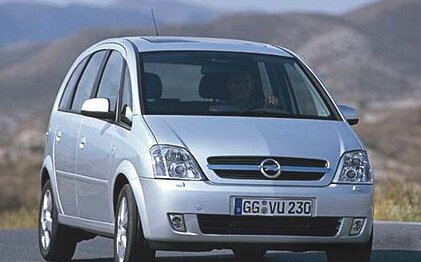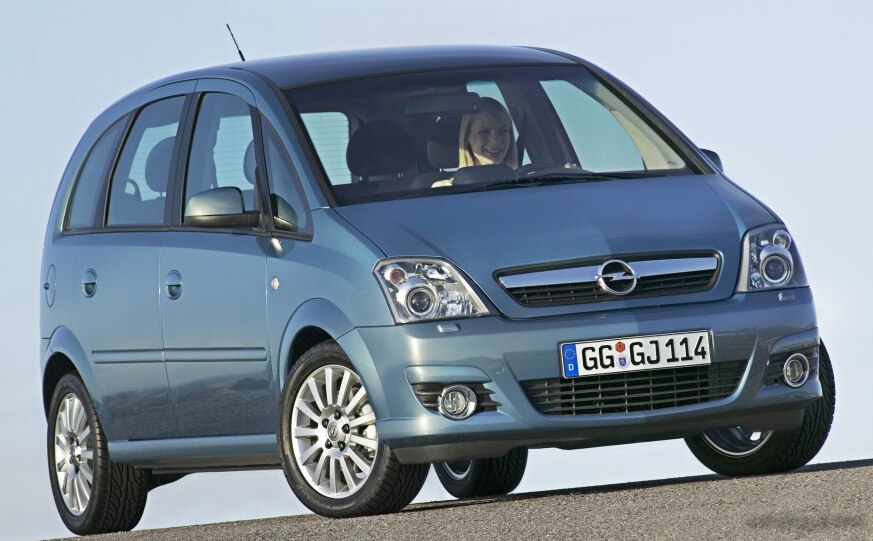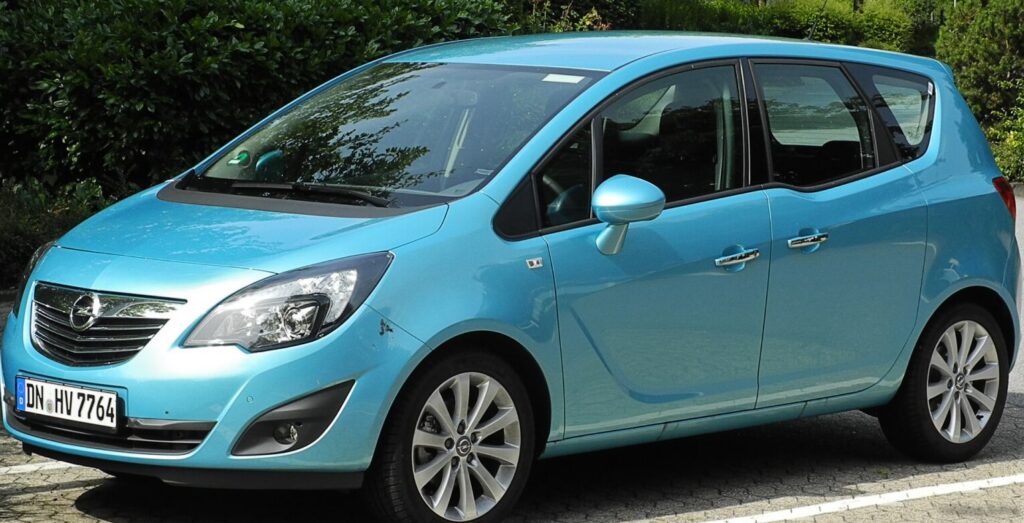
The Opel Meriva B 1.4 Turbo (140 hp) Automatic, produced from June 2010 to October 2013, represented a mid-range offering within the second generation of the Opel/Vauxhall Meriva. Positioned as a practical and versatile compact minivan, the Meriva B aimed to provide family-friendly transportation with a focus on interior space and innovative features like the FlexDoors – rear-hinged back doors. This particular variant, combining a turbocharged 1.4-liter engine with a six-speed automatic transmission, sought to balance performance with convenience, appealing to buyers prioritizing ease of driving over outright sportiness. It was built on the General Motors Gamma platform, shared with other small Opel/Vauxhall and Chevrolet models.
Technical Specifications
| Brand | Opel |
| Model | Meriva |
| Generation | Meriva B |
| Type (Engine) | 1.4 Turbo (140 Hp) Automatic |
| Start of production | June, 2010 |
| End of production | October, 2013 |
| Powertrain Architecture | Internal Combustion engine |
| Body type | Minivan |
| Seats | 5 |
| Doors | 5 |
| Fuel consumption (combined) | 7.2 l/100 km |
| Fuel consumption (US mpg) | 32.7 US mpg |
| Fuel consumption (UK mpg) | 39.2 UK mpg |
| Fuel consumption (km/l) | 13.9 km/l |
| CO2 emissions | 169 g/km |
| Fuel Type | Petrol (Gasoline) |
| Acceleration 0 – 100 km/h | 11.9 sec |
| Acceleration 0 – 62 mph | 11.9 sec |
| Acceleration 0 – 60 mph | 11.3 sec |
| Maximum speed | 185 km/h (114.95 mph) |
| Emission standard | Euro 5 |
| Weight-to-power ratio | 9.2 kg/Hp, 108.9 Hp/tonne |
| Weight-to-torque ratio | 6.4 kg/Nm, 155.5 Nm/tonne |
| Power | 140 Hp @ 4900-6000 rpm |
| Power per litre | 102.6 Hp/l |
| Torque | 200 Nm @ 1850-4900 rpm (147.51 lb.-ft. @ 1850-4900 rpm) |
| Engine layout | Front, Transverse |
| Engine Model/Code | A14NET |
| Engine displacement | 1364 cm3 (83.24 cu. in.) |
| Number of cylinders | 4 |
| Engine configuration | Inline |
| Cylinder Bore | 72.5 mm (2.85 in.) |
| Piston Stroke | 82.6 mm (3.25 in.) |
| Compression ratio | 9.5:1 |
| Number of valves per cylinder | 4 |
| Fuel injection system | Multi-port manifold injection |
| Engine aspiration | Turbocharger, Intercooler |
| Valvetrain | DOHC |
| Engine oil capacity | 4 l (4.23 US qt | 3.52 UK qt) |
| Coolant | 6.2 l (6.55 US qt | 5.46 UK qt) |
| Kerb Weight | 1286 kg (2835.14 lbs.) |
| Max. weight | 1890 kg (4166.74 lbs.) |
| Max load | 604 kg (1331.59 lbs.) |
| Trunk (boot) space – minimum | 400 l (14.13 cu. ft.) |
| Trunk (boot) space – maximum | 1500 l (52.97 cu. ft.) |
| Fuel tank capacity | 54 l (14.27 US gal | 11.88 UK gal) |
| Length | 4288 mm (168.82 in.) |
| Width | 1994 mm (78.5 in.) |
| Height | 1615 mm (63.58 in.) |
| Wheelbase | 2644 mm (104.09 in.) |
| Front track | 1488 mm (58.58 in.) |
| Rear (Back) track | 1509 mm (59.41 in.) |
| Minimum turning circle | 11.48 m (37.66 ft.) |
| Drivetrain Architecture | The Internal combustion engine (ICE) drives the front wheels of the vehicle. |
| Drive wheel | Front wheel drive |
| Number of gears and type of gearbox | 6 gears, automatic transmission |
| Assisting systems | ABS (Anti-lock braking system) |
| Steering type | Steering rack and pinion |
| Tires size | 205/55 R16 |
| Wheel rims size | 16 |
Powertrain & Engine Architecture
The heart of this Meriva variant is the A14NET engine, a 1.4-liter inline-four cylinder gasoline engine equipped with a turbocharger and intercooler. This engine belongs to Opel’s family of small displacement, turbocharged engines designed for fuel efficiency and adequate performance. The A14NET utilizes multi-point fuel injection and a double overhead camshaft (DOHC) valvetrain, contributing to its relatively smooth operation. The turbocharger provides a boost in power, helping to overcome the limitations of the small displacement. The six-speed automatic transmission, a common unit in General Motors vehicles of the era, was chosen for its convenience and ease of use. While not known for particularly rapid shifts, it offered a comfortable driving experience, especially in urban environments. The transmission’s gear ratios were tuned for fuel economy and smooth acceleration rather than outright performance.
Driving Characteristics
The 1.4 Turbo Automatic Meriva B offered a comfortable, if not particularly exhilarating, driving experience. With 140 horsepower and 200 Nm (147.5 lb-ft) of torque, acceleration from 0-60 mph took around 11.3 seconds. Compared to the base 1.2-liter engine, the 1.4 Turbo provided a noticeable improvement in responsiveness, particularly when overtaking or climbing hills. However, it didn’t match the performance of the more powerful (and typically more expensive) 1.7 CDTI diesel variant. The automatic transmission, while convenient, did result in some power loss compared to the available manual transmission. The gear ratios were spaced to prioritize fuel efficiency, meaning the engine sometimes felt strained during hard acceleration. Overall, the driving experience was geared towards practicality and ease of use, making it well-suited for daily commuting and family trips.
Equipment & Trim Levels
The 1.4 Turbo Automatic trim typically included features such as air conditioning, power windows, power mirrors, a CD/MP3 stereo system, and ABS brakes. Higher trim levels, such as the Cosmo, added features like alloy wheels, a panoramic sunroof, parking sensors, and upgraded interior trim. Interior upholstery was typically cloth, with options for leather available on higher-spec models. The dashboard layout was functional and straightforward, with a focus on ergonomics. Optional extras included a navigation system, heated seats, and a more advanced audio system.
Chassis & Braking
The Meriva B utilized a MacPherson strut front suspension and a torsion beam rear suspension. This setup provided a comfortable ride, although it wasn’t particularly sporty. The torsion beam rear suspension was a cost-effective solution that helped to maximize interior space. Braking was typically accomplished with disc brakes on the front wheels and drum brakes on the rear wheels, although some higher trim levels featured rear disc brakes. The ABS system provided enhanced braking control, particularly in slippery conditions. Stabilizer bars were fitted to both the front and rear axles to reduce body roll during cornering.
Market Reception & Comparison
The Opel Meriva B 1.4 Turbo Automatic was generally well-received by critics as a practical and versatile family vehicle. However, some reviewers noted that the automatic transmission could feel sluggish at times, and the engine wasn’t as refined as some of its competitors. Fuel economy was considered reasonable, averaging around 32.7 US mpg in combined driving. Compared to the 1.7 CDTI diesel variant, the 1.4 Turbo offered less fuel economy but a smoother and quieter driving experience. The 1.4 Turbo also offered a more affordable price point than the diesel, making it an attractive option for budget-conscious buyers.
Legacy
The A14NET engine, while generally reliable, is known to have some potential issues with the turbocharger and fuel injectors. Regular maintenance, including oil changes and fuel system cleaning, is crucial for ensuring long-term reliability. The six-speed automatic transmission is also relatively durable, but it’s important to check the fluid level and condition regularly. Today, the Meriva B 1.4 Turbo Automatic can be found on the used car market at relatively affordable prices. It remains a practical and versatile option for families seeking a spacious and comfortable vehicle, but potential buyers should be aware of the potential maintenance issues associated with the engine and transmission.