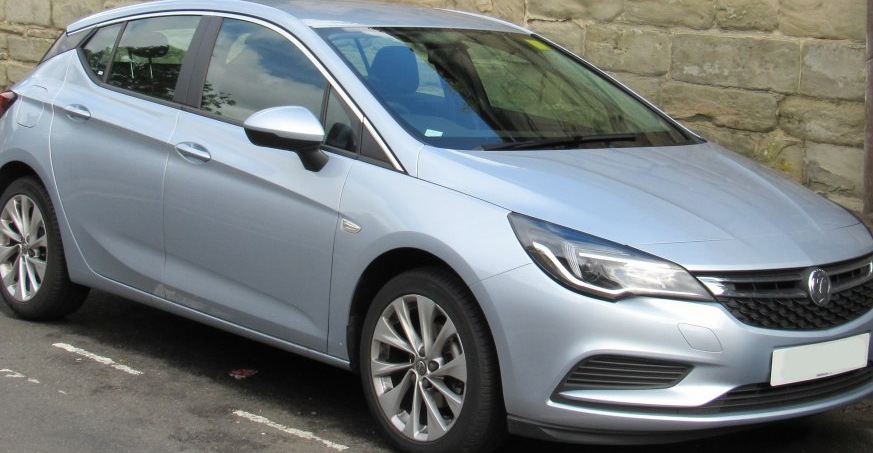
The Vauxhall Astra Mk VII 1.6 CDTi (160 hp) start&stop, produced from 2015 to 2019, represented a significant offering in the British market’s compact hatchback segment. Part of the Astra Mk VII generation (introduced in 2015, based on the GM Delta platform), this variant aimed to balance fuel efficiency with respectable performance, appealing to drivers seeking a practical and economical vehicle. The “start&stop” system, a key feature, further enhanced its fuel-saving credentials. This model occupied a mid-range position within the Mk VII Astra lineup, slotting in above the lower-powered diesel options and below the more performance-oriented trims like the GTC.
Technical Specifications
| Brand | Vauxhall |
| Model | Astra |
| Generation | Astra Mk VII |
| Type (Engine) | 1.6 CDTi (160 Hp) start&stop |
| Start of production | 2015 |
| End of production | 2019 |
| Powertrain Architecture | Internal Combustion engine |
| Body type | Hatchback |
| Seats | 5 |
| Doors | 5 |
| Fuel consumption (urban) | 5.1 l/100 km (46.1 US mpg, 55.4 UK mpg, 19.6 km/l) |
| Fuel consumption (extra urban) | 3.6 l/100 km (65.3 US mpg, 78.5 UK mpg, 27.8 km/l) |
| Fuel consumption (combined) | 4.1 l/100 km (57.4 US mpg, 68.9 UK mpg, 24.4 km/l) |
| CO2 emissions | 109 g/km |
| Fuel Type | Diesel |
| Emission standard | Euro 6 |
| Weight-to-power ratio | 8.4 kg/Hp, 118.5 Hp/tonne |
| Weight-to-torque ratio | 3.9 kg/Nm, 259.3 Nm/tonne |
| Power | 160 Hp @ 4000 rpm |
| Power per litre | 100.1 Hp/l |
| Torque | 350 Nm @ 1500-2250 rpm (258.15 lb.-ft. @ 1500-2250 rpm) |
| Engine layout | Front, Transverse |
| Engine Model/Code | B16DTR |
| Engine displacement | 1598 cm3 (97.52 cu. in.) |
| Number of cylinders | 4 |
| Engine configuration | Inline |
| Cylinder Bore | 79.7 mm (3.14 in.) |
| Piston Stroke | 80.1 mm (3.15 in.) |
| Compression ratio | 16:1 |
| Fuel injection system | Diesel Commonrail |
| Engine aspiration | BiTurbo, Intercooler |
| Engine oil capacity | 5 l (5.28 US qt | 4.4 UK qt) |
| Kerb Weight | 1350 kg (2976.24 lbs.) |
| Max. weight | 1875 kg (4133.67 lbs.) |
| Max load | 525 kg (1157.43 lbs.) |
| Trunk (boot) space – minimum | 370 l (13.07 cu. ft.) |
| Trunk (boot) space – maximum | 1210 l (42.73 cu. ft.) |
| Fuel tank capacity | 48 l (12.68 US gal | 10.56 UK gal) |
| Max. roof load | 75 kg (165.35 lbs.) |
| Permitted trailer load with brakes (12%) | 750 kg (1653.47 lbs.) |
| Permitted trailer load without brakes | 620 kg (1366.87 lbs.) |
| Length | 4370 mm (172.05 in.) |
| Width | 1809 mm (71.22 in.) |
| Width with mirrors folded | 1871 mm (73.66 in.) |
| Width including mirrors | 2042 mm (80.39 in.) |
| Height | 1485 mm (58.46 in.) |
| Wheelbase | 2662 mm (104.8 in.) |
| Front track | 1548 mm (60.94 in.) |
| Rear (Back) track | 1565 mm (61.61 in.) |
| Front overhang | 960 mm (37.8 in.) |
| Rear overhang | 748 mm (29.45 in.) |
| Ride height (ground clearance) | 150 mm (5.91 in.) |
| Drag coefficient (Cd) | 0.31 |
| Minimum turning circle (turning diameter) | 11.05 m (36.25 ft.) |
| Drivetrain Architecture | The Internal combustion engine (ICE) drives the front wheels of the vehicle. |
| Drive wheel | Front wheel drive |
| Number of gears and type of gearbox | 6 gears, manual transmission |
| Front brakes | Ventilated discs |
| Rear brakes | Disc |
| Assisting systems | ABS (Anti-lock braking system) |
| Steering type | Steering rack and pinion |
| Tires size | 205/55 R16 |
| Wheel rims size | 6 J x 15 |
INTRODUCTION
The Vauxhall Astra Mk VII 1.6 CDTi (160 hp) start&stop was a key component of Vauxhall’s strategy to offer a diverse range of efficient and practical vehicles. Introduced in 2015 as part of the seventh generation Astra, this model aimed to provide a compelling alternative to petrol-powered options, capitalizing on the growing demand for diesel engines in Europe. The Mk VII Astra represented a significant step forward in terms of design, technology, and refinement compared to its predecessor. The 1.6 CDTi engine, equipped with a bi-turbocharger and start&stop technology, was designed to deliver both strong performance and excellent fuel economy.
Powertrain & Engine Architecture
At the heart of this Astra variant lies the B16DTR engine, a 1.6-liter inline-four cylinder diesel. This engine is notable for its sophisticated bi-turbocharger system, employing two turbochargers of different sizes to optimize performance across the rev range. A smaller turbocharger provides quick response at low engine speeds, minimizing turbo lag, while a larger turbocharger delivers increased power at higher speeds. The engine utilizes a common rail direct injection system, injecting fuel directly into the combustion chamber at extremely high pressure for improved combustion efficiency. The start&stop system automatically shuts off the engine when the vehicle is stationary (e.g., at traffic lights) and restarts it instantly when the driver depresses the clutch pedal (in the manual transmission version) or releases the brake pedal. The 6-speed manual transmission was standard, offering precise gear changes and contributing to the vehicle’s overall efficiency.
Driving Characteristics
The 160 hp output and 350 Nm (258 lb-ft) of torque provided by the 1.6 CDTi engine delivered a respectable driving experience. While not a performance-focused model, the Astra 1.6 CDTi offered ample power for everyday driving, including overtaking maneuvers and motorway cruising. The bi-turbo setup minimized turbo lag, providing a relatively linear power delivery. Compared to the lower-powered diesel variants, the 160 hp version felt noticeably more responsive. However, it didn’t possess the outright acceleration of the petrol-powered Astra GTC models. The 6-speed manual transmission allowed drivers to effectively manage the engine’s torque, optimizing fuel economy and performance. The gear ratios were well-chosen for both urban and highway driving.
Equipment & Trim Levels
The Astra Mk VII 1.6 CDTi (160 hp) start&stop was typically offered in mid-range trim levels, such as ‘Tech Line’ or ‘Sportive’. Standard equipment generally included air conditioning, electric front windows, a touchscreen infotainment system with Bluetooth connectivity, and alloy wheels. Higher trim levels added features like automatic headlights and rain-sensing wipers, cruise control, and upgraded upholstery. Optional extras included a panoramic sunroof, heated seats, and a more advanced navigation system. Interior upholstery was typically cloth, with higher trims offering partial leather options. The dashboard layout was modern and functional, with a focus on ergonomics.
Chassis & Braking
The Astra Mk VII utilized a MacPherson strut front suspension and a torsion beam rear suspension. This setup provided a good balance between ride comfort and handling. The chassis was relatively lightweight, contributing to the vehicle’s agility. The front brakes were ventilated discs, providing ample stopping power, while the rear brakes were solid discs. Anti-lock Braking System (ABS) was standard, enhancing safety. Stabilizer bars were fitted to both the front and rear axles to reduce body roll during cornering. The steering was electrically assisted, providing a light and precise feel.
Market Reception & Comparison
The Astra Mk VII 1.6 CDTi (160 hp) start&stop was generally well-received by automotive critics. It was praised for its fuel efficiency, comfortable ride, and refined engine. However, some reviewers noted that the interior materials weren’t as premium as those found in some rival vehicles. Compared to the lower-powered diesel versions, the 160 hp variant offered a noticeable improvement in performance, making it a more appealing option for drivers who frequently undertake longer journeys. Against competitors like the Ford Focus and Volkswagen Golf, the Astra 1.6 CDTi offered a competitive package in terms of price, fuel economy, and equipment.
Legacy
The B16DTR engine, while generally reliable, has been known to exhibit issues with the diesel particulate filter (DPF) if not driven on longer journeys regularly. Proper maintenance, including regular oil changes and DPF regeneration, is crucial for ensuring the longevity of this powertrain. In the used car market, the Astra Mk VII 1.6 CDTi (160 hp) start&stop remains a popular choice for buyers seeking an economical and practical hatchback. Its combination of fuel efficiency, performance, and equipment makes it a compelling option in its price range. The availability of spare parts is good, and the Astra’s relatively simple mechanical design makes it relatively easy to maintain.