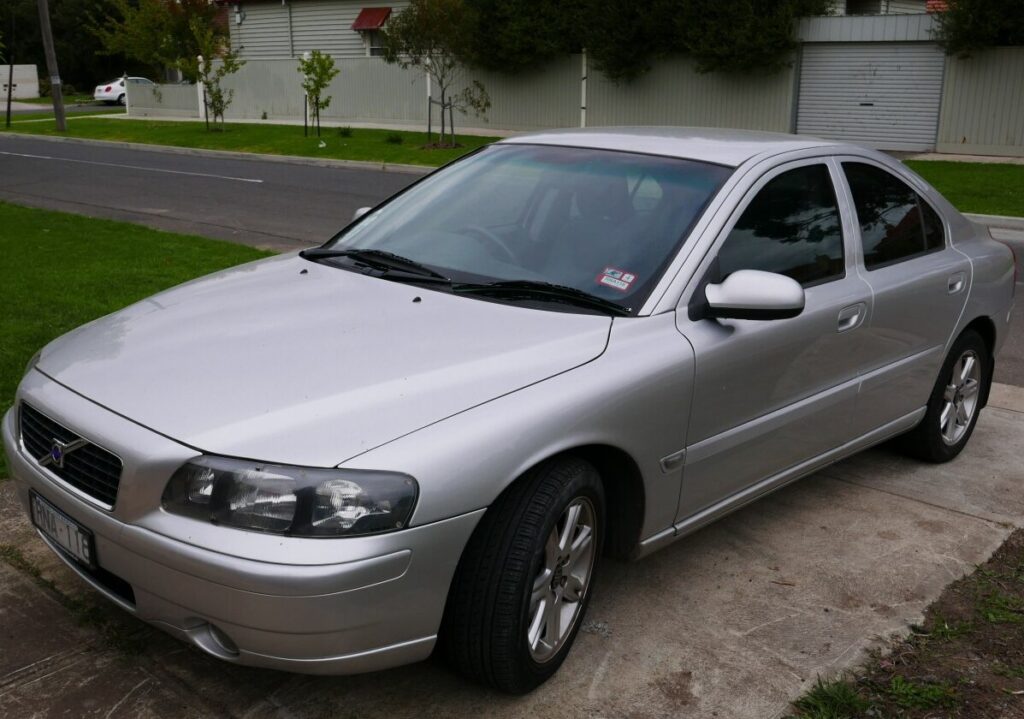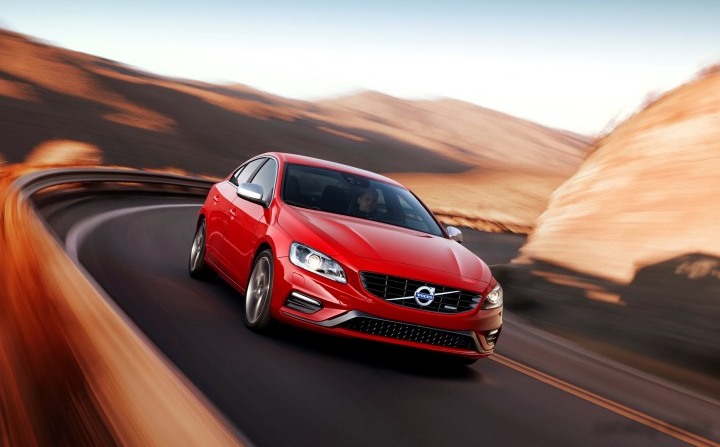
The Volvo S60 II facelift, specifically the 2.0 D4 variant producing 190 horsepower, was a key model in Volvo’s lineup from 2015 to 2018. Positioned as a mid-range offering within the S60 range, it aimed to balance fuel efficiency with respectable performance, appealing to buyers seeking a comfortable and economical executive sedan. This iteration of the S60, built on the Y20 platform (internally known as the 1HX0/A3 platform), represented a significant refresh of the second-generation S60, introducing updated styling, improved technology, and refined engine options. The D4 model was particularly important in European markets, where diesel engines held a substantial share of the premium sedan segment.
Technical Specifications
| Brand | Volvo |
| Model | S60 |
| Generation | S60 II (facelift 2013) |
| Type (Engine) | 2.0 D4 (190 Hp) |
| Start of production | 2015 |
| End of production | 2018 |
| Powertrain Architecture | Internal Combustion engine |
| Body type | Sedan |
| Seats | 5 |
| Doors | 4 |
| Fuel consumption (urban) | 4.5 l/100 km (52.3 US mpg, 62.8 UK mpg, 22.2 km/l) |
| Fuel consumption (extra urban) | 3.6 l/100 km (65.3 US mpg, 78.5 UK mpg, 27.8 km/l) |
| Fuel consumption (combined) | 3.9 l/100 km (60.3 US mpg, 72.4 UK mpg, 25.6 km/l) |
| CO2 emissions | 102 g/km |
| Fuel Type | Diesel |
| Acceleration 0 – 100 km/h | 7.6 sec |
| Acceleration 0 – 62 mph | 7.6 sec |
| Acceleration 0 – 60 mph | 7.2 sec |
| Maximum speed | 230 km/h (142.92 mph) |
| Power | 190 Hp @ 4250 rpm |
| Torque | 400 Nm @ 1750-2500 rpm (295.02 lb.-ft. @ 1750-2500 rpm) |
| Maximum engine speed | 5000 rpm |
| Engine layout | Front, Transverse |
| Engine Model/Code | D4204T14 |
| Engine displacement | 1969 cm3 (120.16 cu. in.) |
| Number of cylinders | 4 |
| Engine configuration | Inline |
| Cylinder Bore | 82 mm (3.23 in.) |
| Piston Stroke | 93.2 mm (3.67 in.) |
| Compression ratio | 15.8:1 |
| Number of valves per cylinder | 4 |
| Fuel injection system | Diesel Commonrail |
| Engine aspiration | Turbocharger, Intercooler |
| Valvetrain | DOHC |
| Engine oil capacity | 5.2 l (5.49 US qt | 4.58 UK qt) |
| Coolant | 8.9 l (9.4 US qt | 7.83 UK qt) |
| Kerb Weight | 1605-1746 kg (3538.42 – 3849.27 lbs.) |
| Max. weight | 2060-2200 kg (4541.52 – 4850.17 lbs.) |
| Max load | 454-455 kg (1000.9 – 1003.1 lbs.) |
| Fuel tank capacity | 67.5 l (17.83 US gal | 14.85 UK gal) |
| Length | 4635 mm (182.48 in.) |
| Width with mirrors folded | 1899 mm (74.76 in.) |
| Width including mirrors | 2097 mm (82.56 in.) |
| Height | 1484 mm (58.43 in.) |
| Wheelbase | 2776 mm (109.29 in.) |
| Front track | 1588 mm (62.52 in.) |
| Rear track | 1585 mm (62.4 in.) |
| Ride height (ground clearance) | 124 mm (4.88 in.) |
| Drag coefficient (Cd) | 0.28 |
| Minimum turning circle | 11.3 m (37.07 ft.) |
| Drivetrain Architecture | Front wheel drive |
| Number of gears | 6 |
| Front suspension | Independent, type McPherson with coil spring and anti-roll bar |
| Rear suspension | Independent coil spring |
| Front brakes | Ventilated discs |
| Rear brakes | Ventilated discs |
Powertrain & Engine Architecture
The heart of the S60 D4 was the Volvo’s 2.0-liter four-cylinder diesel engine, designated the D4204T14. This engine was part of Volvo’s VEA (Volvo Engine Architecture) family, designed for modularity and scalability. The D4 variant featured a single turbocharger and a diesel commonrail fuel injection system, delivering a balance of power and efficiency. The engine produced 190 horsepower at 4250 rpm and a substantial 400 Nm (295 lb-ft) of torque between 1750 and 2500 rpm. This torque curve provided strong mid-range acceleration, making it well-suited for everyday driving and highway cruising. The engine also incorporated a particulate filter to meet stringent Euro 6 emission standards. The engine’s DOHC valvetrain, with four valves per cylinder, contributed to its efficient combustion process. The engine was transversely mounted in the front of the vehicle.
Driving Characteristics
The S60 D4 offered a comfortable and refined driving experience. While not a sports sedan, the 190 hp engine provided adequate power for most driving situations. Acceleration from 0 to 60 mph took around 7.2 to 7.6 seconds, depending on testing conditions. The engine’s strong low-end torque made overtaking maneuvers relatively effortless. Compared to the higher-output D5 variant, the D4 felt less urgent in its acceleration, but it offered significantly better fuel economy. The six-speed manual transmission (also available as an automatic) was well-matched to the engine’s characteristics, providing smooth and precise gear changes. The front-wheel-drive configuration offered predictable handling, although it lacked the all-weather capability of Volvo’s all-wheel-drive models.
Equipment & Trim Levels
The S60 D4 typically came well-equipped, even in base trim. Standard features included climate control, power windows and mirrors, a leather-wrapped steering wheel, and a basic audio system. Higher trim levels added features such as leather upholstery, heated front seats, a premium audio system, navigation, and a sunroof. Optional extras included advanced safety features like blind-spot monitoring, lane departure warning, and adaptive cruise control. Interior upholstery options typically included cloth and various grades of leather. Dashboard configurations were generally consistent across the D4 range, with a focus on Scandinavian design principles – clean lines and a minimalist aesthetic.
Chassis & Braking
The S60 II utilized an independent suspension system on both the front and rear axles. The front suspension employed a McPherson strut design with coil springs and an anti-roll bar, while the rear suspension featured an independent multi-link setup with coil springs. This configuration provided a comfortable ride and decent handling characteristics. Braking duties were handled by ventilated discs on all four wheels, providing ample stopping power. Anti-lock braking system (ABS) was standard, enhancing safety and control during emergency braking situations. Stabilizer bars were fitted front and rear to reduce body roll during cornering.
Market Reception & Comparison
The S60 D4 was generally well-received by automotive critics. It was praised for its fuel efficiency, comfortable ride, and refined interior. However, some reviewers noted that its performance was not as engaging as some of its rivals, such as the BMW 3 Series or Audi A4. Compared to the S60 D5, the D4 offered lower running costs but sacrificed some performance. The D4’s fuel economy of around 60 mpg combined made it an attractive option for drivers who prioritized efficiency. Reliability reports generally indicated that the D4 powertrain was robust and dependable, although routine maintenance was essential to ensure long-term durability.
Legacy
The Volvo S60 D4 (2015-2018) remains a popular choice in the used car market, particularly for buyers seeking a comfortable, economical, and reliable executive sedan. The 2.0-liter D4 engine has proven to be a durable and relatively trouble-free unit, provided it has been properly maintained. While newer Volvo models have moved towards smaller, more efficient engines and hybrid technology, the S60 D4 represents a solid and well-rounded offering from a period of significant development for the Swedish automaker. Its blend of practicality, comfort, and fuel efficiency continues to appeal to a wide range of drivers.