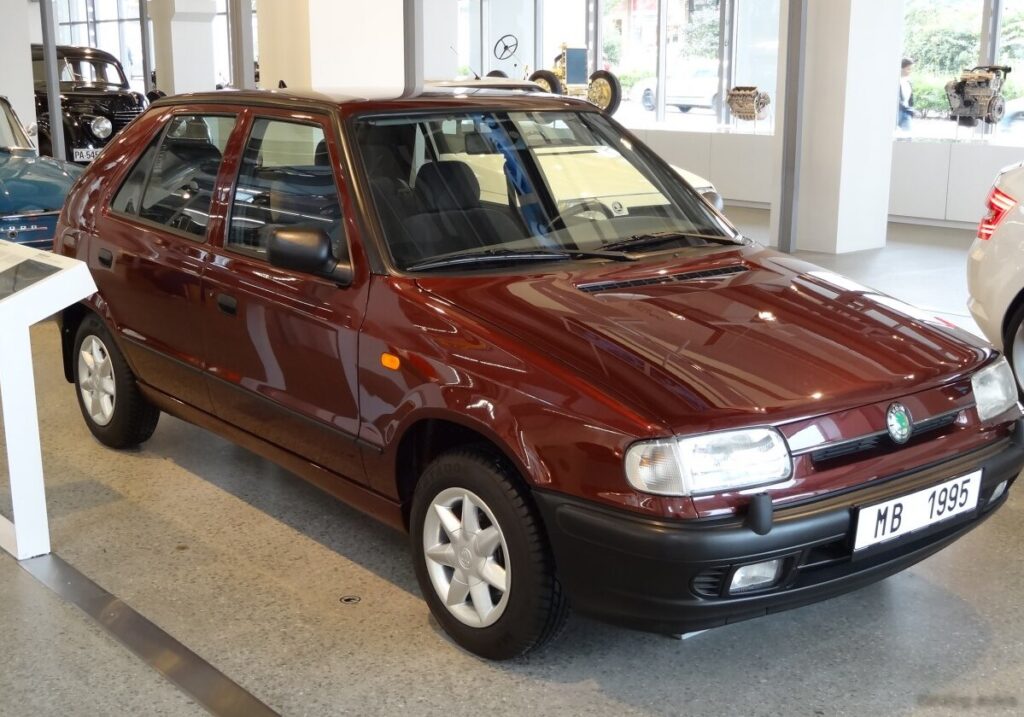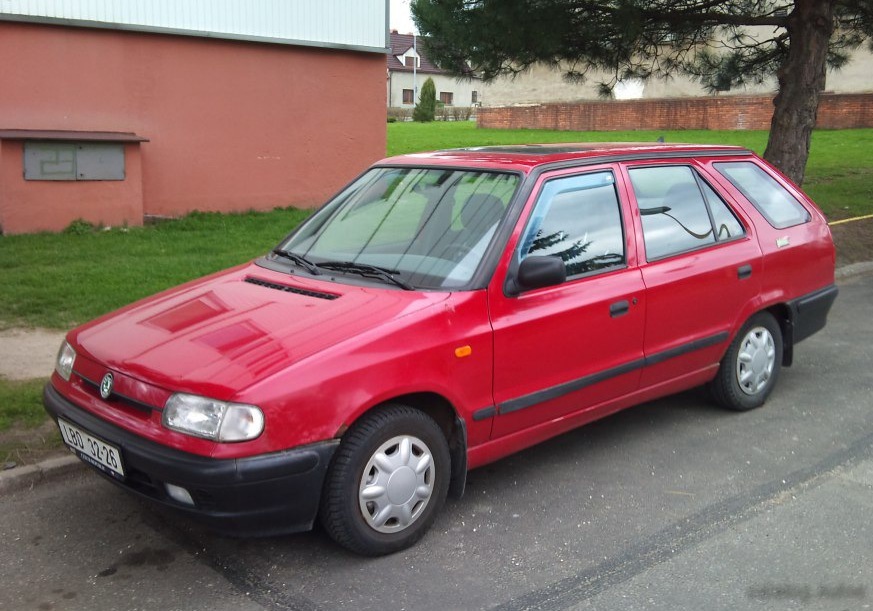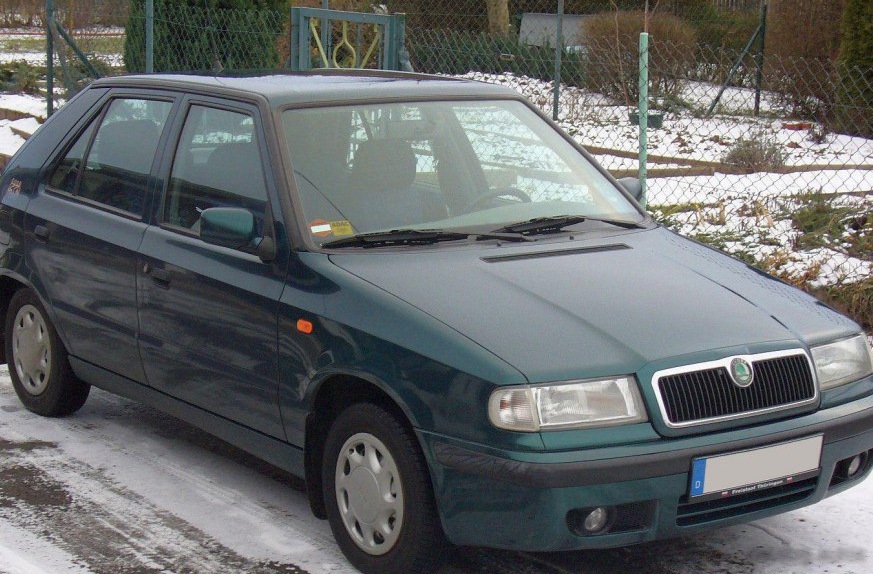
The Skoda Felicia II 1.3, producing 68 horsepower, was a mainstay of Skoda’s lineup from January 1998 to August 2001. Positioned as the entry-level variant of the Felicia II range, it represented an affordable and practical option for buyers in Central and Eastern Europe, and increasingly, Western European markets as Skoda’s reputation for value improved. The Felicia II itself was a significant step forward for Skoda, building upon the original Felicia’s success and utilizing a modernized platform – a heavily revised version of the Favorit’s underpinnings – while offering improved safety, comfort, and styling. This 1.3-liter model played a crucial role in establishing Skoda as a credible competitor in the small hatchback segment.
Technical Specifications
| Brand | Skoda |
| Model | Felicia |
| Generation | Felicia II |
| Type (Engine) | 1.3 (68 Hp) |
| Start of production | January, 1998 |
| End of production | August, 2001 |
| Powertrain Architecture | Internal Combustion engine |
| Body type | Hatchback |
| Seats | 5 |
| Doors | 5 |
| Fuel consumption (urban) | 9.3 l/100 km (25.3 US mpg) |
| Fuel consumption (extra urban) | 5.1 l/100 km (46.1 US mpg) |
| Fuel consumption (combined) | 6.7 l/100 km (35.1 US mpg) |
| Fuel Type | Petrol (Gasoline) |
| Acceleration 0 – 100 km/h | 13.5 sec |
| Acceleration 0 – 62 mph | 13.5 sec |
| Acceleration 0 – 60 mph | 12.8 sec |
| Maximum speed | 162 km/h (100.66 mph) |
| Weight-to-power ratio | 14.9 kg/Hp |
| Weight-to-torque ratio | 9.5 kg/Nm |
| Power | 68 Hp @ 5000 rpm |
| Power per litre | 52.8 Hp/l |
| Torque | 106 Nm @ 2600 rpm (78.18 lb.-ft. @ 2600 rpm) |
| Engine layout | Front, Transverse |
| Engine Model/Code | AMH |
| Engine displacement | 1289 cm3 (78.66 cu. in.) |
| Number of cylinders | 4 |
| Engine configuration | Inline |
| Cylinder Bore | 75.5 mm (2.97 in.) |
| Piston Stroke | 72 mm (2.83 in.) |
| Compression ratio | 9.7:1 |
| Number of valves per cylinder | 2 |
| Fuel injection system | Multi-port manifold injection |
| Engine aspiration | Naturally aspirated engine |
| Engine oil capacity | 4.5 l (4.76 US qt | 3.96 UK qt) |
| Coolant | 6 l (6.34 US qt | 5.28 UK qt) |
| Kerb Weight | 1010 kg (2226.67 lbs.) |
| Max. weight | 1420 kg (3130.56 lbs.) |
| Max load | 410 kg (903.9 lbs.) |
| Trunk (boot) space – minimum | 272 l (9.61 cu. ft.) |
| Trunk (boot) space – maximum | 967 l (34.15 cu. ft.) |
| Fuel tank capacity | 42 l (11.1 US gal | 9.24 UK gal) |
| Length | 3883 mm (152.87 in.) |
| Width | 1635 mm (64.37 in.) |
| Height | 1415 mm (55.71 in.) |
| Wheelbase | 2450 mm (96.46 in.) |
| Front track | 1420 mm (55.91 in.) |
| Rear (Back) track | 1380 mm (54.33 in.) |
| Drivetrain Architecture | The Internal combustion engine (ICE) drives the front wheels of the vehicle. |
| Drive wheel | Front wheel drive |
| Number of gears and type of gearbox | 5 gears, manual transmission |
| Front suspension | Coil spring |
| Rear suspension | Coil spring |
| Front brakes | Ventilated discs |
| Rear brakes | Disc |
| Assisting systems | ABS (Anti-lock braking system) |
| Steering type | Steering rack and pinion |
| Tires size | 165/70 R13 |
| Wheel rims size | 5.5J x 13 |
Powertrain & Engine Architecture
The heart of the Felicia II 1.3 was the AMH engine, a 1.3-liter inline-four cylinder petrol engine. This engine was a descendant of the units used in the Favorit and earlier Felicia models, but with refinements to improve efficiency and reduce emissions. It featured a single overhead camshaft (SOHC) operating two valves per cylinder. Fuel delivery was handled by a multi-port fuel injection system, a significant upgrade over the carburetor systems found in older Skoda models. The AMH engine produced 68 horsepower at 5000 rpm and 106 Nm (78.18 lb-ft) of torque at 2600 rpm. The engine’s relatively simple design contributed to its reliability and ease of maintenance. The five-speed manual transmission was the standard offering, providing a reasonable spread of gears for both urban and highway driving. While an automatic transmission was available on some Felicia II models, it was not typically paired with the 1.3-liter engine due to the powertrain’s limited torque output.
Driving Characteristics
The 1.3-liter Felicia II offered modest performance. Acceleration from 0 to 60 mph took around 12.8 seconds, and top speed was approximately 100 mph. The engine felt somewhat strained when fully loaded or climbing hills, requiring frequent downshifts to maintain momentum. The five-speed manual transmission helped to keep the engine in its optimal power band, but it wasn’t a particularly sporty driving experience. Compared to the more powerful 1.6-liter versions, the 1.3 felt noticeably slower, but it offered a more economical driving experience. The suspension provided a comfortable ride, absorbing bumps and imperfections in the road reasonably well. Steering was light and easy, making it well-suited for city driving.
Equipment & Trim Levels
The 1.3-liter Felicia II typically came with a basic level of equipment. Standard features included power steering, central locking, and a basic stereo system. Interior upholstery was typically cloth, and the dashboard featured a simple, functional design. Optional extras included power windows, air conditioning, and alloy wheels. Trim levels varied depending on the market, but the 1.3 generally represented the entry point to the Felicia II range. It was aimed at buyers who prioritized affordability and practicality over luxury and performance.
Chassis & Braking
The Felicia II utilized a relatively simple chassis design. Front suspension consisted of coil springs and independent wishbones, while the rear suspension employed a twist beam setup. Brakes were ventilated discs at the front and solid discs at the rear. ABS (Anti-lock Braking System) was available as an option, and became increasingly common on later models. The relatively lightweight construction of the Felicia II helped to offset the modest power output of the 1.3-liter engine, resulting in acceptable handling characteristics. The suspension was tuned for comfort rather than outright sportiness.
Market Reception & Comparison
The Skoda Felicia II 1.3 was generally well-received as an affordable and reliable small hatchback. Critics praised its value for money and practical interior. However, the engine’s lack of power was often cited as a drawback. Compared to rivals such as the Volkswagen Polo, Ford Fiesta, and Opel Corsa, the Felicia II 1.3 offered a lower price point but less refinement and performance. Fuel economy was a strong point, with combined fuel consumption figures around 35 mpg. Reliability was generally good, although the engine’s timing belt required periodic replacement to prevent catastrophic failure.
Legacy
The Skoda Felicia II 1.3 remains a popular choice among budget-conscious used car buyers. Its simple mechanical design and readily available parts make it relatively easy and inexpensive to maintain. While not a performance car, it offers a reliable and practical mode of transportation. The AMH engine, while not known for its power, is generally considered to be durable and long-lasting if properly maintained. Today, the Felicia II 1.3 is often seen as a testament to Skoda’s transformation from a state-owned manufacturer to a respected player in the global automotive market.