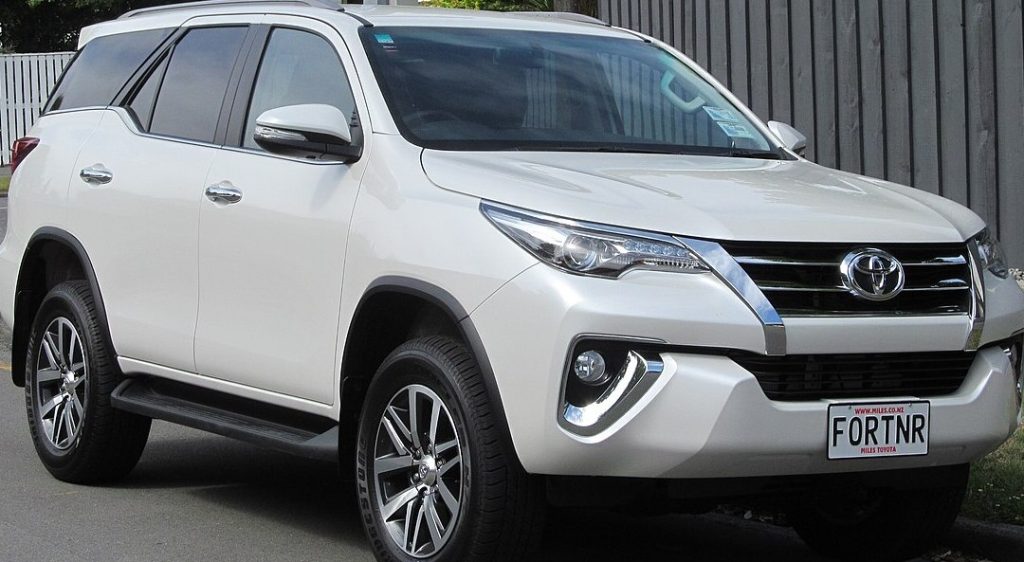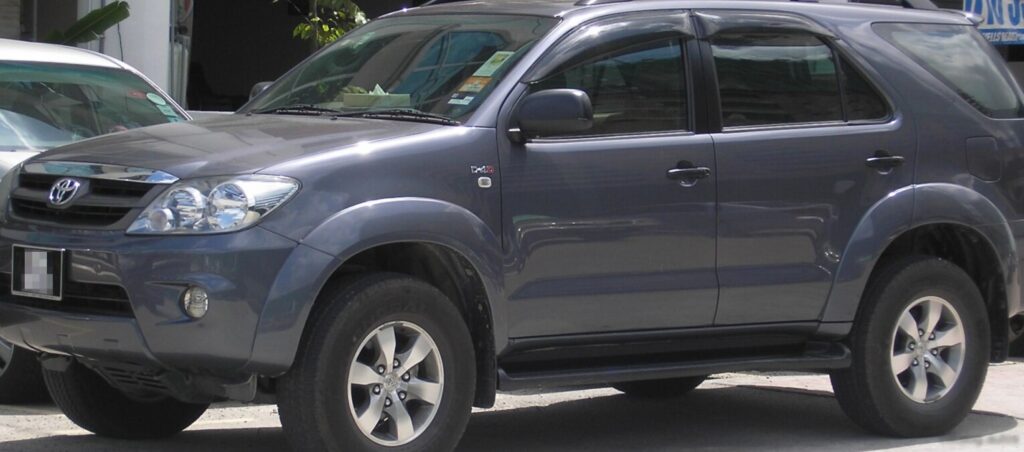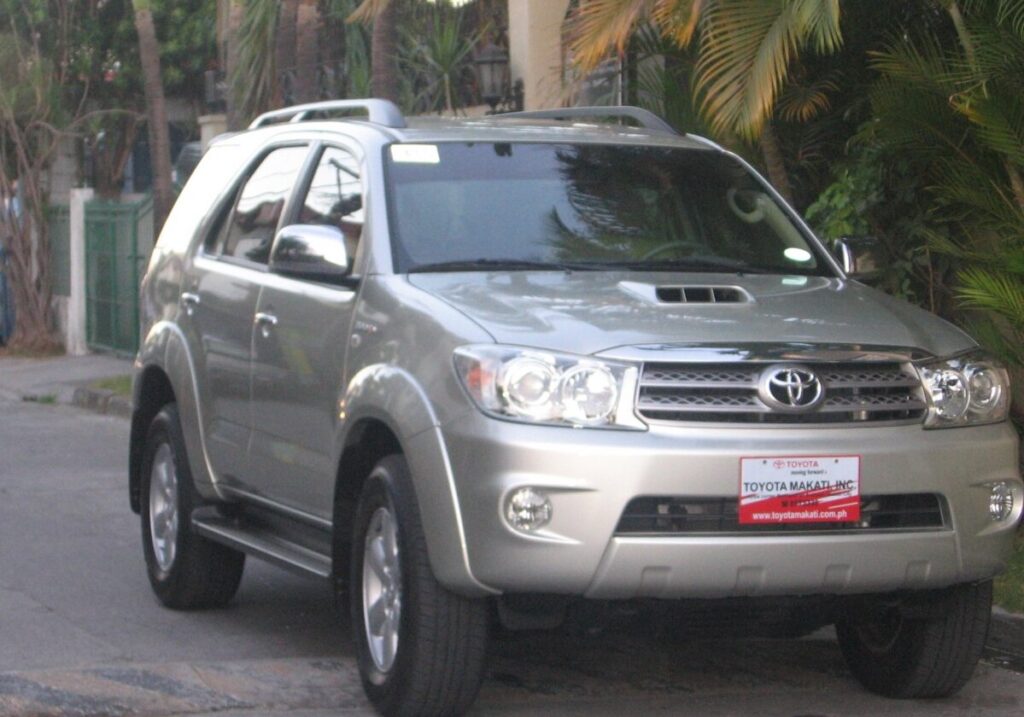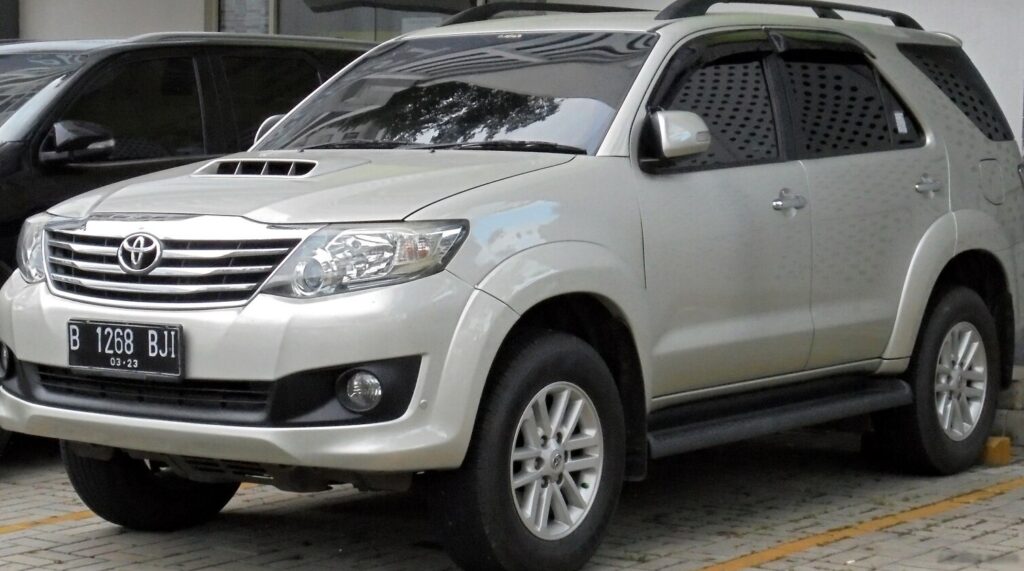
The Toyota Fortuner II, specifically the 2.4d variant introduced with the 2020 facelift, represents a significant iteration of Toyota’s popular body-on-frame SUV. Launched in 2020, this version aimed to refine the Fortuner’s appeal, balancing off-road capability with on-road comfort and efficiency. Positioned as a mid-range offering within the Fortuner II lineup, the 2.4d Automatic served as a compelling alternative to the more powerful, yet more expensive, variants, and the more basic entry-level models. It was primarily marketed towards families and individuals seeking a versatile SUV with seven-passenger capacity, capable of handling both daily commutes and occasional off-road adventures. The Fortuner, in general, is a crucial model for Toyota in markets across Asia, South America, and Africa, where robust SUVs are highly valued.
Technical Specifications
| Brand | Toyota |
| Model | Fortuner |
| Generation | Fortuner II (facelift 2020) |
| Type (Engine) | 2.4d (150 Hp) Automatic |
| Start of production | 2020 |
| Powertrain Architecture | Internal Combustion engine |
| Body type | SUV |
| Seats | 7 |
| Doors | 5 |
| Fuel Type | Diesel |
| Power | 150 Hp @ 3400 rpm |
| Power per litre | 62.7 Hp/l |
| Torque | 400 Nm @ 1600-2000 rpm / 295.02 lb.-ft. @ 1600-2000 rpm |
| Engine layout | Front, Longitudinal |
| Engine Model/Code | 2GD-FTV |
| Engine displacement | 2393 cm3 / 146.03 cu. in. |
| Number of cylinders | 4 |
| Engine configuration | Inline |
| Number of valves per cylinder | 4 |
| Fuel injection system | Diesel Commonrail |
| Engine aspiration | Turbocharger, Intercooler |
| Valvetrain | DOHC |
| Engine oil capacity | 7.5 l / 7.93 US qt | 6.6 UK qt |
| Coolant | 9.2 l / 9.72 US qt | 8.09 UK qt |
| Fuel tank capacity | 80 l / 21.13 US gal | 17.6 UK gal |
| Length | 4795 mm / 188.78 in. |
| Width | 1855 mm / 73.03 in. |
| Height | 1835 mm / 72.24 in. |
| Drivetrain Architecture | Rear wheel drive, ICE |
| Drive wheel | Rear wheel drive |
| Number of gears and type of gearbox | 6 gears, automatic transmission |
| Front suspension | Double wishbone |
| Rear suspension | Independent multi-link suspension |
| Front brakes | Ventilated discs |
| Rear brakes | Ventilated discs |
| Assisting systems | ABS (Anti-lock braking system) |
| Steering type | Steering rack and pinion |
| Tires size | 265/65 R17 |
| Wheel rims size | 17 |
Powertrain & Engine Architecture
The heart of the 2020 Fortuner 2.4d is the 2GD-FTV engine, a 2.4-liter inline-four cylinder diesel. This engine is a member of Toyota’s GD series of diesel engines, known for their durability and relatively good fuel economy. The 2GD-FTV utilizes a common-rail direct injection system, delivering fuel at extremely high pressure for optimized combustion. A turbocharger with an intercooler further enhances performance by forcing more air into the cylinders. The engine features a Double Overhead Camshaft (DOHC) valvetrain with four valves per cylinder, contributing to efficient gas exchange. The 2GD-FTV is paired with a six-speed automatic transmission. This transmission is designed to provide smooth shifts and efficient power delivery, although it isn’t known for particularly sporty responsiveness. The transmission’s gear ratios are tuned for a balance between fuel economy and towing capacity.
Driving Characteristics
The 150 horsepower and 400 Nm (295 lb-ft) of torque produced by the 2.4d powertrain provide adequate, but not exhilarating, performance. Acceleration is reasonable for everyday driving, but the Fortuner 2.4d doesn’t offer the briskness of the higher-output variants. The automatic transmission contributes to a relaxed driving experience, particularly in urban environments. However, it can sometimes feel hesitant during quick overtaking maneuvers. The engine’s peak torque is available from 1600-2000 rpm, providing good low-end grunt for tackling inclines or carrying a full load. Compared to the manual transmission versions of the 2.4d, the automatic sacrifices some fuel efficiency and responsiveness. Against the more powerful 2.8-liter engine options, the 2.4d feels noticeably less potent, especially when fully loaded or towing.
Equipment & Trim Levels
The 2.4d Automatic trim typically included standard features such as air conditioning, power windows, power door locks, and a basic audio system. Safety features generally included ABS, multiple airbags, and stability control. Higher trim levels within the 2.4d range, and certainly compared to the base models, offered upgrades like alloy wheels, a touchscreen infotainment system with navigation, automatic climate control, and leather upholstery. Optional extras could include a sunroof, rear parking sensors, and a reverse camera. The interior design was functional and durable, prioritizing practicality over luxury. The seating configuration provided ample space for seven passengers, although third-row legroom was somewhat limited.
Chassis & Braking
The Fortuner II utilizes a traditional body-on-frame construction, providing robust durability and off-road capability. The front suspension consists of a double wishbone setup, while the rear employs an independent multi-link suspension. This configuration aims to balance ride comfort with off-road articulation. The 2.4d variant typically came equipped with ventilated disc brakes on all four wheels, providing adequate stopping power for its weight class. The steering system is a rack and pinion setup, offering reasonable precision and feedback. The standard tire size was 265/65 R17, providing a good compromise between on-road comfort and off-road traction.
Market Reception & Comparison
The 2020 Fortuner 2.4d Automatic was generally well-received by critics as a practical and reliable SUV. It was praised for its comfortable ride, spacious interior, and fuel efficiency. However, some reviewers noted that the engine lacked the punch of its larger counterparts. Compared to competitors like the Mitsubishi Pajero Sport and Isuzu MU-X, the Fortuner 2.4d offered a competitive package in terms of features, reliability, and resale value. Fuel economy figures typically ranged from 8.0 to 10.0 liters per 100 kilometers (approximately 29-35 mpg) in mixed driving conditions, depending on driving style and load. Reliability was a strong point, with the 2GD-FTV engine proving to be durable and relatively trouble-free.
Legacy
The Toyota Fortuner II 2.4d Automatic has established a solid reputation for reliability and durability in the used car market. The 2GD-FTV engine is known for its longevity, and with proper maintenance, it can easily exceed 200,000 kilometers (125,000 miles) without major issues. The automatic transmission, while not the most refined, is generally dependable. Common maintenance items include regular oil changes, filter replacements, and inspection of the turbocharger and fuel injection system. The Fortuner’s body-on-frame construction contributes to its long-term durability, making it a popular choice for buyers seeking a robust and dependable SUV. As of today, well-maintained examples of the 2020 Fortuner 2.4d Automatic continue to command reasonable prices in the used car market, reflecting its enduring appeal and reputation for reliability.