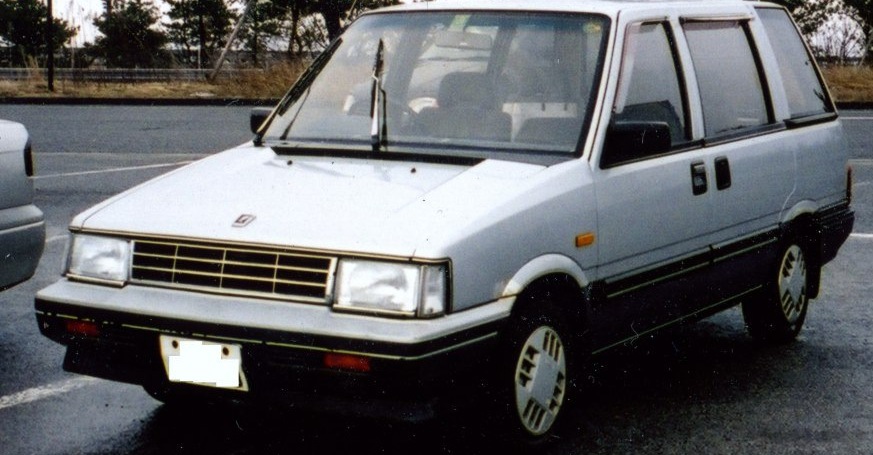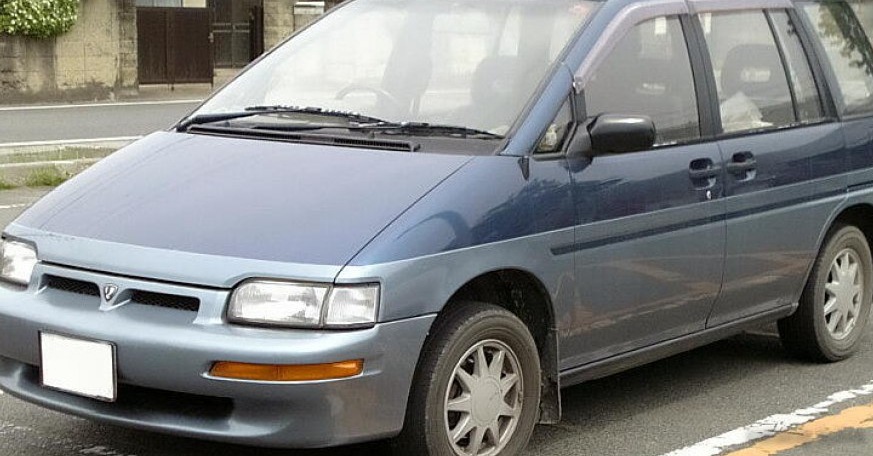
The Nissan Prairie (M11), specifically the 2.0-liter four-wheel-drive variant producing 91 horsepower, was a compact minivan produced by Nissan from 1989 to 1995. Positioned as a practical and affordable family vehicle, the M11 Prairie occupied a unique niche, blending the maneuverability of a smaller car with the spaciousness expected of a minivan. It was primarily marketed in Japan and select export markets, including Australia and parts of Europe, but saw limited official sales in the United States. This particular 2.0L 4WD configuration represented a mid-range offering within the Prairie lineup, providing all-weather capability without the higher cost of more powerful or luxurious trims.
Technical Specifications
| Brand | Nissan |
| Model | Prairie |
| Generation | Prairie (M11) |
| Type | 2.0 4WD (91 Hp) |
| Start of Production | 1989 |
| End of Production | 1995 |
| Powertrain Architecture | Internal Combustion Engine |
| Body Type | Minivan |
| Fuel Type | Petrol (Gasoline) |
| Power | 91 Hp |
| Engine Aspiration | Naturally Aspirated |
| Engine Displacement | 1998 cc (2.0 Liters) |
| Transmission | 4-Speed Automatic |
| Drivetrain | Four-Wheel Drive (4WD) |
| Curb Weight (approx.) | 1,395 kg (3,075 lbs) |
Powertrain & Engine Architecture
The heart of the Prairie 2.0 4WD was the Nissan CA20S engine, a 2.0-liter inline-four cylinder gasoline engine. This engine was a naturally aspirated design, meaning it did not utilize a turbocharger or supercharger. The CA20S featured a single overhead camshaft (SOHC) valvetrain, operating two valves per cylinder. Fuel delivery was managed by a multi-point fuel injection system, contributing to improved fuel efficiency and smoother operation compared to earlier carbureted engines. The engine produced 91 horsepower at 5,200 rpm and approximately 138 lb-ft of torque at 3,200 rpm.
Paired with the CA20S was a four-speed automatic transmission. This transmission was chosen for its ease of use and suitability for family transportation. While not offering the driver engagement of a manual gearbox, the automatic provided convenient shifting, particularly in urban driving conditions. The 4WD system was typically a part-time system, allowing the driver to engage or disengage four-wheel drive as needed. This system generally employed a viscous coupling to distribute torque between the front and rear axles, enhancing traction on slippery surfaces.
Driving Characteristics
The 91-horsepower output of the Prairie 2.0 4WD resulted in modest, but adequate, performance. Acceleration was not brisk, and the vehicle was geared more towards comfortable cruising than spirited driving. The automatic transmission, while convenient, contributed to a somewhat leisurely pace. Gear ratios were optimized for fuel economy and everyday usability rather than outright speed. In real-world conditions, the Prairie 2.0 4WD felt most comfortable at highway speeds, where the engine could operate within its optimal power band. The 4WD system provided enhanced stability and traction in inclement weather, making it a practical choice for regions experiencing rain, snow, or gravel roads. Compared to the base 1.6-liter Prairie, the 2.0-liter offered noticeably more power, especially when fully loaded with passengers and cargo. However, it lacked the punch of the later, more powerful 2.4-liter engines offered in some markets.
Equipment & Trim Levels
The Prairie 2.0 4WD typically came equipped with a reasonable level of standard features for its time. These generally included power steering, central locking, and basic instrumentation. Interior upholstery was typically cloth, with a durable and practical design. Dashboard configuration was straightforward, prioritizing functionality over aesthetics. Optional extras available for this trim level often included air conditioning, power windows, and an upgraded audio system. Some models also featured a tilt sunroof. The overall interior ambiance was functional and family-oriented, rather than luxurious.
Chassis & Braking
The Prairie M11 utilized a relatively simple chassis design, featuring a MacPherson strut front suspension and a twist-beam rear suspension. This setup provided a comfortable ride quality, although it wasn’t particularly sporty. The 2.0 4WD variant, due to its increased weight, often featured slightly stiffer springs and dampers compared to the lighter front-wheel-drive models. Braking was typically accomplished with disc brakes on the front wheels and drum brakes on the rear. The braking system was adequate for normal driving conditions, but lacked the stopping power of more modern vehicles. Stabilizer bars were often included to reduce body roll during cornering, although the Prairie was not designed for aggressive handling.
Market Reception & Comparison
The Nissan Prairie 2.0 4WD was generally well-received as a practical and affordable family vehicle. Critics praised its spacious interior, comfortable ride, and all-weather capability. However, its modest performance and somewhat dated styling were often noted. Compared to other minivans available at the time, such as the Toyota Estima (Previa) or Honda Odyssey, the Prairie was positioned as a more budget-friendly option. Fuel economy was reasonable for a vehicle of its size and class, averaging around 22-26 mpg in mixed driving conditions. Reliability was generally good, although the automatic transmission could be prone to issues if not properly maintained. The 2.0L engine proved to be durable and relatively inexpensive to repair.
Legacy
The Nissan Prairie M11, including the 2.0 4WD variant, has become a popular choice among enthusiasts seeking a unique and affordable classic minivan. The CA20S engine is known for its reliability and relative simplicity, making it a relatively easy engine to maintain and repair. Parts availability can be a challenge in some markets, but a dedicated community of Prairie owners and enthusiasts helps to keep these vehicles on the road. Today, the Prairie 2.0 4WD is often sought after by collectors and those looking for a distinctive and practical vehicle with a touch of retro charm. While not a performance icon, it represents a significant chapter in Nissan’s minivan history and remains a testament to the brand’s commitment to building functional and reliable vehicles.