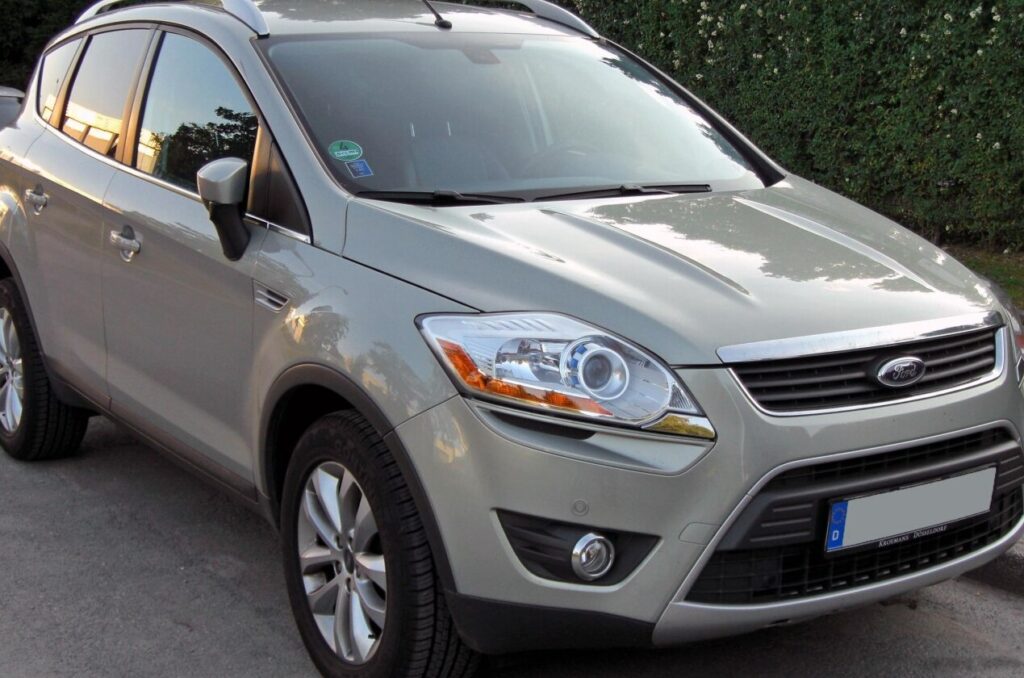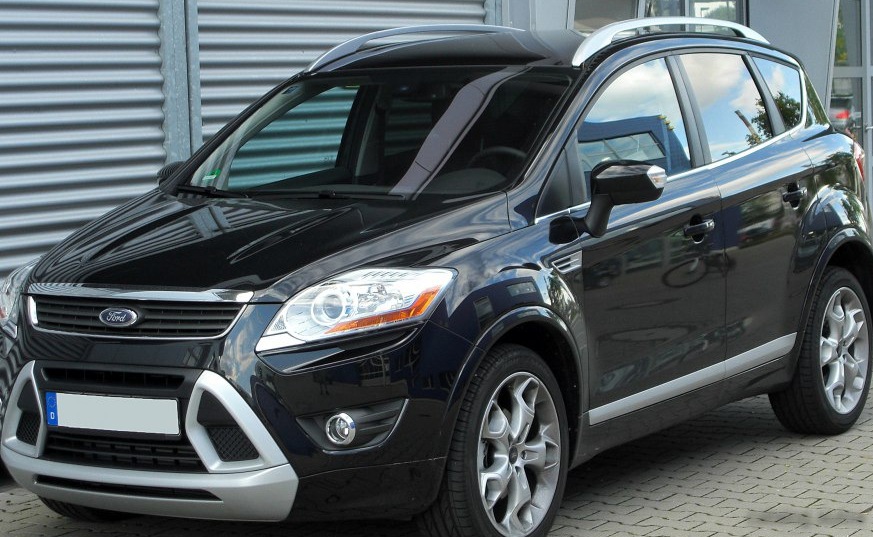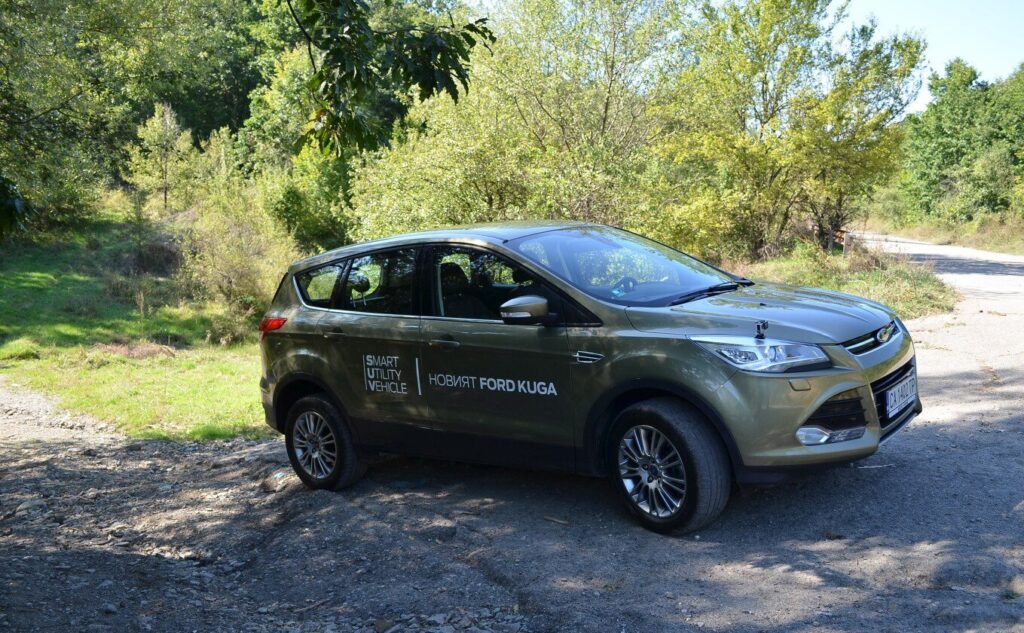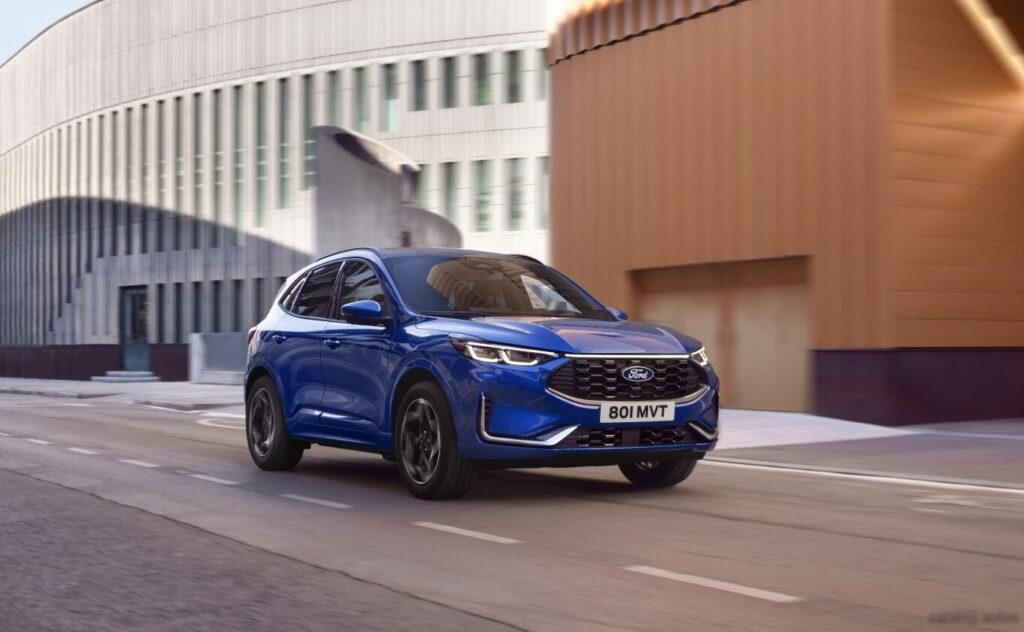
The Ford Kuga III Titanium 1.5 EcoBoost (150 hp) represents a significant iteration within the Kuga lineup, introduced with the facelift in January 2024. Positioned as a mid-range offering, this variant balances fuel efficiency with adequate performance for everyday driving. It builds upon the foundation of the Kuga III, which debuted on the C2 platform (shared with the Ford Focus and other models), and aims to appeal to buyers seeking a practical and well-equipped compact SUV. The 2024 facelift brought styling updates, enhanced technology, and refinements to the powertrain options, including this 1.5-liter EcoBoost engine.
Technical Specifications
| Brand | Ford |
| Model | Kuga |
| Generation | Kuga III (facelift 2024) |
| Type (Engine) | Titanium 1.5 EcoBoost (150 Hp) |
| Start of production | January, 2024 |
| Powertrain Architecture | Internal Combustion engine |
| Body type | SUV |
| Seats | 5 |
| Doors | 5 |
| Combined fuel consumption (WLTP) | 6.3-7.2 l/100 km (37.3 – 32.7 US mpg, 44.8 – 39.2 UK mpg, 15.9 – 13.9 km/l) |
| CO2 emissions (WLTP) | 144-163 g/km |
| Fuel Type | Petrol (Gasoline) |
| Acceleration 0 – 100 km/h | 9.5 sec |
| Acceleration 0 – 62 mph | 9.5 sec |
| Acceleration 0 – 60 mph | 9 sec |
| Maximum speed | 195 km/h (121.17 mph) |
| Emission standard | Euro 6d |
| Weight-to-power ratio | 9.7 kg/Hp, 103.4 Hp/tonne |
| Weight-to-torque ratio | 6 kg/Nm, 165.4 Nm/tonne |
| Power | 150 Hp @ 6000 rpm |
| Power per litre | 100.2 Hp/l |
| Torque | 240 Nm @ 1600-4000 rpm (177.01 lb.-ft. @ 1600-4000 rpm) |
| Engine layout | Front, Transverse |
| Engine Model/Code | YZDA, YZDB |
| Engine displacement | 1497 cm3 (91.35 cu. in.) |
| Number of cylinders | 3 |
| Engine configuration | Inline |
| Cylinder Bore | 84 mm (3.31 in.) |
| Piston Stroke | 90 mm (3.54 in.) |
| Compression ratio | 11:1 |
| Number of valves per cylinder | 4 |
| Fuel injection system | Direct injection |
| Engine aspiration | Turbocharger, Intercooler |
| Valvetrain | DOHC, Ti-VCT |
| Engine oil capacity | 5.05 l (5.34 US qt | 4.44 UK qt) |
| Coolant | 7.2 l (7.61 US qt | 6.34 UK qt) |
| Kerb Weight | 1451 kg (3198.91 lbs.) |
| Max. weight | 2075 kg (4574.59 lbs.) |
| Max load | 624 kg (1375.68 lbs.) |
| Trunk (boot) space – minimum | 412 l (14.55 cu. ft.) |
| Trunk (boot) space – maximum | 1534 l (54.17 cu. ft.) |
| Max. roof load | 75 kg (165.35 lbs.) |
| Permitted trailer load with brakes (12%) | 1730 kg (3814 lbs.) |
| Permitted trailer load without brakes | 750 kg (1653.47 lbs.) |
| Length | 4604 mm (181.26 in.) |
| Width | 1882 mm (74.09 in.) |
| Width with mirrors folded | 2000 mm (78.74 in.) |
| Width including mirrors | 2177 mm (85.71 in.) |
| Height | 1679 mm (66.1 in.) |
| Wheelbase | 2711 mm (106.73 in.) |
| Front track | 1599 mm (62.95 in.) |
| Rear (Back) track | 1590 mm (62.6 in.) |
| Ride height (ground clearance) | 166-174 mm (6.54 – 6.85 in.) |
| Minimum turning circle (turning diameter) | 11.38 m (37.34 ft.) |
| Approach angle | 20° |
| Departure angle | 24.7° |
| Drivetrain Architecture | The Internal combustion engine (ICE) drives the front wheels of the vehicle. |
| Drive wheel | Front wheel drive |
| Number of gears and type of gearbox | 6 gears, manual transmission |
| Front suspension | Independent type McPherson, Transverse stabilizer |
| Rear suspension | Torsion |
| Front brakes | Ventilated discs, 308×27 mm |
| Rear brakes | Disc, 302×11 mm |
| Assisting systems | ABS (Anti-lock braking system) |
| Steering type | Steering rack and pinion |
| Power steering | Electric Steering |
| Tires size | 225/65 R17 |
| Wheel rims size | 7J x 17 |
Powertrain & Engine Architecture
The heart of the Kuga Titanium 1.5 EcoBoost is the Ford 1.5-liter turbocharged inline-three cylinder engine, specifically the YZDA or YZDB engine code depending on the exact specification. This engine is part of Ford’s EcoBoost family, known for combining direct fuel injection with turbocharging to deliver a balance of power and efficiency. The direct injection system precisely meters fuel into the cylinders, optimizing combustion and reducing emissions. The engine utilizes a twin-scroll turbocharger, which improves responsiveness by harnessing exhaust gas energy more effectively. The valvetrain features a double overhead camshaft (DOHC) configuration with Twin Independent Variable Camshaft Timing (Ti-VCT), allowing for precise control of valve timing to optimize performance across the rev range. This particular engine is paired with a 6-speed manual transmission, sending power to the front wheels.
Driving Characteristics
The 150 hp and 240 Nm (177 lb-ft) of torque provided by the 1.5 EcoBoost engine offer adequate performance for typical driving scenarios. Acceleration from 0-60 mph takes approximately 9 seconds, and the top speed is rated at 195 km/h (121 mph). While not a particularly sporty setup, the engine delivers usable power for merging onto highways and overtaking. The turbocharger provides a noticeable boost in mid-range acceleration. The 6-speed manual transmission allows for driver engagement and control, but the gear ratios are tuned more for fuel economy than outright performance. Compared to higher-output versions of the Kuga, such as those with larger engines or more powerful tuning, this variant feels less eager to accelerate. However, it offers a more refined and economical driving experience.
Equipment & Trim Levels
The Titanium trim level, as the name suggests, offers a generous level of standard equipment. Typical features include alloy wheels, a touchscreen infotainment system with Apple CarPlay and Android Auto compatibility, automatic climate control, and a suite of driver-assistance technologies such as lane-keeping assist and automatic emergency braking. Interior upholstery is typically cloth, with options for leather upgrades. Optional extras available for the Titanium trim could include a panoramic sunroof, upgraded sound system, and parking assist features. The 2024 facelift brought updated interior materials and a more modern dashboard layout.
Chassis & Braking
The Kuga III utilizes an independent McPherson strut suspension setup at the front, providing a comfortable ride and responsive handling. The rear suspension employs a torsion beam configuration, which is a cost-effective and space-efficient solution. The braking system consists of ventilated discs at the front and solid discs at the rear. Anti-lock Braking System (ABS) is standard. The suspension tuning is geared towards comfort and stability, rather than sporty handling. The steering is electrically assisted, providing a light and easy driving experience.
Market Reception & Comparison
The Kuga III, and specifically the 1.5 EcoBoost Titanium variant, has been generally well-received by automotive critics. It’s praised for its practicality, comfortable ride, and well-equipped interior. The 1.5 EcoBoost engine is considered a good compromise between performance and fuel economy. Compared to diesel variants, the 1.5 EcoBoost offers lower CO2 emissions but may not match the diesel’s fuel efficiency in long-distance driving. Compared to higher-horsepower gasoline engines, the 1.5 EcoBoost is more affordable and offers better fuel economy, but at the expense of some performance.
Legacy
The 1.5 EcoBoost engine has proven to be a relatively reliable powertrain in the Kuga III. While some early versions of the EcoBoost engines experienced issues with carbon buildup on the intake valves, these issues have been largely addressed in later iterations. The Kuga III, in general, has a good reputation for build quality and reliability. On the used car market, the 1.5 EcoBoost Titanium variant represents a good value proposition, offering a well-equipped and practical SUV at a reasonable price. Regular maintenance, including oil changes and adherence to Ford’s recommended service intervals, is crucial for ensuring the long-term reliability of this powertrain.